Daily Global Market Overview By zForex

++ Update​


US inflation data came in broadly in line with expectations, but the annual CPI increase marked the strongest rise since May 2024.

Core CPI rose 2.6% year-on-year, slightly below forecasts, while the monthly core figure held steady at 0.2%, indicating some stabilization in underlying price pressures.

On the headline side, CPI surged 0.9% month-on-month, driven largely by energy components, highlighting that inflation risks remain sensitive to commodity price movements.
 

Iran Talks Collapse and USD Gains Again (04.13.2026)

The dollar index moved back above 99, regaining ground as demand for safety increased. Persistent geopolitical strain and elevated energy costs continued to support the currency.

The euro retreated under renewed dollar strength, while sterling also softened amid rising geopolitical uncertainty. USD/JPY remained near the 160 level, with intervention risks limiting further upside. The offshore yuan weakened to around 6.83 per dollar, ending a six-session advance.

In commodities, gold and silver declined as inflation fears and expectations of tighter monetary policy outweighed safe-haven demand. Overall, sentiment deteriorated significantly as escalating tensions drove investors toward the dollar.

Brent crude surged about 8% to around $103 per barrel, recovering last week’s losses after the United States announced a blockade targeting vessels entering or leaving Iranian ports following failed negotiations.

US stock futures started the week lower after Donald Trump announced a blockade of the Strait of Hormuz following the collapse of US–Iran negotiations. Major indexes fell by more than 1%, while JD Vance left Islamabad without progress, citing unresolved disputes over Iran’s nuclear policy. Rising energy prices added pressure just as earnings season began, with major banks set to report.

The US 10-year Treasury yield rose to around 4.35%, reversing last week’s decline as tension intensified. Higher oil prices reinforced inflation risks, strengthening expectations that the Federal Reserve may keep policy tight for longer.

Bitcoin traded at 71,234, rising 0.71% from the previous session. Over the past four weeks, performance has remained nearly flat with a gain of 0.01%.

Check More on zForex.com - Technical Outlook on Charts

  • Euro Falls as Diplomacy Falters
  • Gold Slips on Blockade Concerns
  • USD/JPY Finds Resistance Near 160.00
  • Sterling Softens Against the Dollar
  • Silver Slides Under $74
 

A Reset in US Employment

US-labor-market-2026.jpg
The threshold for maintaining a stable unemployment rate in the United States has shifted significantly.

On average, the economy now needs to add roughly negative 3,000 jobs monthly to keep the rate steady, a sharp drop from the 250,000 monthly jobs required in mid 2023.

This decline is primarily driven by a fall in net migration. Unauthorized migration turned negative in early 2025 and averaged a loss of 55,000 people per month in the latter half of the year as departures outpaced arrivals.

With total net unauthorized migration reaching negative 548,000 for 2025, the shrinking labor pool means the economy requires much lower job growth to prevent unemployment from climbing.

This represents a major structural change in the U.S. labor market.
 

Markets Embrace Cautious Optimism (04.14.2026)

Markets shifted toward risk-on sentiment as easing geopolitical tensions and uncertainty around Federal Reserve policy pressured the U.S. dollar.

The dollar index hovered near 98.3, holding close to six-week lows as improving sentiment encouraged a shift toward riskier assets.

Bond markets reflected the same shift. The US 10-year Treasury yield remained near recent lows around 4.29%, while Japan’s 10-year government bond yield eased to roughly 2.45%, pulling back from multi-decade highs as softer oil prices reduced inflation pressure.

EUR/USD climbed toward 1.18, reaching multi-month highs, while sterling also advanced to a seven-week peak. The Japanese yen strengthened as USD/JPY pulled back from the 160 level, supported by improving sentiment and expectations of a potential Bank of Japan rate hike.

In commodities, gold and silver rebounded on diplomatic hopes and easing inflation concerns, though both remain below earlier highs.

Brent crude surged roughly 8% to around $103 per barrel, recovering last week’s losses after the United States confirmed a blockade targeting vessels entering or leaving Iranian ports following unsuccessful negotiations.

Nasdaq 100 traded at 25,465, gaining 1.06%. Over the past four weeks, the index has risen about 3.29%, while annual performance remains strong at 35.24%

Bitcoin traded at $74,423, slipping 0.15% from the previous session. Over the past four weeks, the cryptocurrency has declined by approximately 2.20%.

Overall, markets remain optimistic but cautious, with attention on upcoming U.S. data and developments in Middle East negotiations.

Economic Calendar

eco-calendar-14-april.jpg

>> Check more on zForex.com - Technical Outlook on Charts

 
bond-markets.png

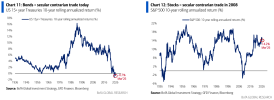
Bonds in 2026: Contrarian Trade Opportunity

Bonds are no longer seen as the safe anchor they once were, pressured by inflation, geopolitical risks, and rising government spending. As volatility becomes more common, investors are starting to question the long-term reliability of sovereign debt.

A Challenging Macro Climate

Higher interest rates have significantly reduced bond prices, especially for long-duration assets. At the same time, deglobalization and growing fiscal deficits are raising concerns about debt sustainability, weakening the “risk-free” perception of government bonds.

The Case for a Turning Point

Despite the negative sentiment, current yield levels near 5% are attracting contrarian interest. If inflation stabilizes and policy shifts toward easing, bonds could offer strong long-term value. This environment may present a rare entry point for patient investors.
 

AI Hardware Crisis

hardware.jpg

The AI boom in the United States is hitting a hardware blockage. Imports of critical electrical equipment, including transformers, batteries, and switching devices.

The equipment surged to $411 billion in 2025, a nearly 80% increase since 2020. This spike is driven by AI companies racing to construct data centers that domestic manufacturing simply cannot support.

Because domestic production is failing to keep pace with this massive demand, the industry faces a looming standstill. Projections suggest that approximately half of all US data centers planned for 2026 will be delayed or canceled.

Without a drastic increase in available hardware, the infrastructure required to power the AI revolution remains at risk. Investors need to be extra cautious.

The energy footprint of AI is rising quickly.


photo_2026-04-14_11-45-19.jpg

Electricity demand from data centers is accelerating rapidly. According to Goldman Sachs, global demand is projected to rise about 220% from 2023 levels, reaching roughly 1,350 terawatt-hours by 2030, driven by the expansion of AI infrastructure and more energy-intensive servers.

Around 60% of this growth is expected to come from the United States, where demand alone could reach about 750 terawatt-hours, while the rest of the world accounts for roughly 600 terawatt-hours. U.S. data center capacity is also forecast to expand nearly 197% between 2025 and 2030, reaching a record 95 gigawatts.
 

Risk-On Mood Lifts Currencies and Metals (04.15.2026)

While the United States continues to enforce a naval blockade on Iranian oil exports through the Strait of Hormuz, Tehran is reportedly considering a temporary suspension of shipments to support renewed negotiations.

This shift in tone helped ease defensive demand for the US dollar, leaving the dollar index hovering near 98 on Wednesday, close to six-week lows and nearly wiping out the gains recorded since the conflict began.

The US 10-year Treasury yield held near 4.25% after two consecutive sessions of decline. Hopes for renewed diplomatic progress helped moderate inflation pressure, allowing yields to settle near recent lows.

Japan’s 10-year government bond yield stabilized around 2.41% after easing in the previous session, as uncertainty surrounding the Bank of Japan’s policy path remained in focus. Governor Kazuo Ueda highlighted the need to closely assess the economic consequences of the conflict, noting that higher oil prices could place additional strain on Japan’s growth outlook.

EUR/USD held near 1.1800, supported by improved sentiment and easing inflation concerns, while sterling climbed to multi-month highs on similar drivers. USD/JPY remained subdued below 159 as mixed forces limited movement, with Japan’s energy vulnerability offsetting weaker dollar dynamics.

In commodities, gold extended gains above $4,800 and silver surged past $79, driven by easing inflation fears, lower oil prices, and a softer dollar. Brent crude traded near $95 per barrel, holding onto recent losses as attention turned to the possibility of renewed negotiations before the current two-week ceasefire expires.

NASDAQ 100 traded near 25,872, gaining 458 points or 1.81%. Over the past four weeks, the index has advanced approximately 4.93%, while yearly performance remains strong at 41.71%.

Despite the optimism, markets remain cautious as geopolitical risks and energy supply concerns persist.

Check More on zForex.com - Technical Outlook on Charts

  • EUR/USD Holds Near 1.1800
  • Gold Climbs Above $4,800
  • USD/JPY Stabilizes Below 159.00
  • Pound Climbs Toward $1.36
  • Silver Surges Past $79

Economic Calendar​


eco-calendar-15-april.jpg
 

Producer Inflation Slows, Energy Keeps the Pressure

producer-inflation.png

Recent U.S. producer inflation data delivered a dose of short-term relief after coming in below expectations. The Producer Price Index (PPI) rose 0.5% month over month in March, falling well short of the 1.1% forecast. The reading points to easing price pressures at the production level and suggests that the earlier surge in costs may be starting to lose momentum.

Still, the broader picture is more layered than the headline suggests.

Energy Drives the Upside

A closer look shows that the monthly increase was largely fueled by a sharp rise in energy prices. Gasoline costs, in particular, recorded a strong jump and stood out as the primary force lifting the overall index.

This dynamic highlights a persistent vulnerability: inflation remains closely tied to commodity movements, and energy continues to carry outsized influence over price trends. As long as fuel markets stay volatile, the path toward stable inflation will remain uneven.

Core Prices Offer a Calmer Signal

The underlying trend appears more stable once volatile components are removed. Core PPI, which excludes food and energy, increased by just 0.1% monthly, coming in below expectations. Food prices declined, while service costs held steady. Together, these developments point to a more controlled pace of price growth beneath the surface, suggesting that broader inflation pressures are not spreading aggressively across the economy.

Normalization Is Possible If Energy Cooperates

On an annual basis, both headline and core inflation remain relatively high, but the recent trajectory leaves room for gradual normalization, provided energy prices do not stage another sharp rally. This setting could give the Federal Reserve more flexibility in shaping its next policy steps, reinforcing a measured and data-driven approach rather than a rapid shift in direction.

Progress, With One Key Variable

There are clear signs of improvement in the inflation trend, yet the process is far from complete. Energy price swings remain the single most decisive factor for the outlook in the months ahead. Inflation is cooling, but the energy story will determine how steady that cooling becomes.
 

Optimism Supports Markets (04.16.2026)

EUR/USD held near pre-war highs, while sterling stayed close to multi-month peaks despite lingering geopolitical uncertainty. The Japanese yen strengthened on renewed intervention signals. The offshore yuan strengthened above 6.81 per dollar

Commodities maintained their upward bias, with gold holding above $4,800 and silver pushing past $80.

Brent crude stabilized above $94 per barrel after sharp volatility earlier in the week.

The Nasdaq 100 climbed to 26,293, marking a strong daily advance and extending its upward trajectory.

Bitcoin edged up to $75,083, gaining 0.36% on the day. Short-term momentum remains modest.

Market behavior pointed to a gradual return of confidence rather than a full risk rally. Participants are responding to improving signals, but sentiment remains closely tied to the next developments in diplomacy and energy supply conditions.

Economic Calendar​

eco-calendar-16-april.jpg

Check more on zForex.com - Technical Outlook on Charts

  • Euro Holds Near Pre-War Highs​

  • Gold Still Above $4,800
  • Yen Recovers to 158.8
  • Pound Stabilizes Near $1.36
  • Silver Tops $80 Amid Peace Hopes
 

US Debt Interest Hits Record High

US-debt-interest.jpg

The interest burden on US federal debt has reached an unprecedented peak. During the first half of fiscal year 2025, servicing costs hit a record $623 billion, reflecting a 7% annual increase. This total surpasses the interest paid during the height of the 2021 pandemic response.

Over the past year, total interest expenses reached $1.3 trillion, making them the government’s second-largest expenditure, trailing only Social Security.

Remarkably, debt interest now costs $300 billion more than health programs and $400 billion more than national defense, signaling that a fiscal crisis is firmly established.
 

Markets End Week on a Positive Note (04.17.2026)

Markets closed the week with a cautiously positive tone as expectations of continued US–Iran ceasefire discussions supported risk appetite. Progress around ceasefire discussions reduced immediate pressure and softened demand for the US dollar.

EUR/USD maintained its position near the 1.18 level as growing optimism over potential US–Iran peace progress supported the pair. The yen dropped beyond 159 per dollar as Governor Ueda avoided clear policy guidance. The British pound eased to $1.356 as markets lowered expectations for a Bank of England rate increase. The offshore yuan strengthened beyond 6.81 per dollar, reaching multi-year high

Gold held firm near $4,800 on Friday, heading for a fourth consecutive weekly rise, and silver remained stable around $79 on Friday, positioned for its fourth weekly advance.

Brent crude eased toward $98 per barrel, trimming part of the previous session’s gains.

The Nasdaq 100 climbed to 26,335, posting a moderate daily gain and extending its upward trend.

Check more on zForex.com - Technical Outlook on Charts

  • Euro Remains Near 1.18
  • Gold Steady Near $4,800
  • Yen Weakens Past 159
  • Sterling Dips to $1.356
  • Silver Nears $79
 

EUR/USD Drops as Risk Sentiment Fades (04.20.2026)

Markets turned cautious as renewed US–Iran tensions revived safe-haven demand and strengthened the US dollar. Brent crude surged more than 5% to trade above $95 per barrel.

EUR/USD came under pressure near 1.1750, while gold slipped below $4,800 and silver retreated toward $79 as rising oil prices fueled inflation concerns. The Japanese yen weakened again amid energy-related risks, highlighting Japan’s vulnerability to higher import costs. Meanwhile, sterling showed relative resilience near 1.3600, supported by expectations of continued Bank of England tightening.

U.S. stock futures declined as shipping disruptions in Hormuz returned to the spotlight. Dow futures fell nearly 1%, while the S&P 500 and Nasdaq-100 dropped 0.8% and 0.6%, giving back part of last week’s record-setting rally.

U.S. 10-year Treasury yields climbed to around 4.27%, rebounding as renewed friction between Washington and Tehran revived inflation concerns. U.S. forces seized an Iranian vessel in the Gulf of Oman, while Iran halted plans to reopen the Strait of Hormuz and stepped back from talks. The resulting energy shock has reinforced expectations that the Federal Reserve may keep rates unchanged through 2026.

In China, policymakers held lending rates steady for an 11th straight month, with the one-year LPR at 3.0% and the five-year rate at 3.5%. First-quarter growth accelerated to 5% from 4.5%, keeping the official 4.5%–5% target in focus as authorities maintained a supportive policy stance.

Japan’s 10-year yield eased to around 2.4%, extending its recent slide as uncertainty persisted around the Bank of Japan’s next step. Higher energy costs may lift inflation forecasts, though the International Monetary Fund expects the longer-term impact to remain limited.

Check more on zForex.com - Technical Outlook on Charts

  • EUR/USD Pressured Near 1.1750
  • Gold Slips Below $4,800
  • Yen Retreats as Energy Risks Mount
  • Sterling Climbs Near 1.3600
  • Silver Drops to $79

Economic Calendar​


eco-calendar-20-april.jpg
 

Germany PPI: Stabilizing, But Volatility Back


germany-PPI-stabilizing.png

Germany’s PPI is starting to stabilize. Annual decline slowed to -0.2% in March from -3.3%. Deflation pressure is easing, but not fully gone.

Energy Still Driving the Story


Energy prices are still negative YoY (-3.2%), but the drop is slowing. Gas and electricity eased, while oil-related products moved higher. Middle East tensions are starting to show impact again.

Mixed Signals Across Sectors

  • Non-durables: -0.3% (food prices softer)​

  • Capital & durable goods: +1.9%
  • Intermediate goods: +1.5%

Ex-energy PPI is +1.3%, which shows underlying cost pressure is still there.

Monthly Data Tells Another Story


PPI jumped 2.5% MoM, biggest rise since 2022. Energy surged 7.5%. Short-term inflation pressure is clearly back.
 

Markets Stabilize Amid Diplomatic Standoff (04.21.2026)

The US dollar index hovered near the 98 level as investors assessed the potential for a long-term peace agreement between the United States and Iran. Such a resolution could diminish the demand for safe-haven assets.

Vice President JD Vance is scheduled to lead the American delegation in Pakistan, with Iranian officials also expected to attend. However, President Donald Trump has cautioned that the current truce is unlikely to be extended without tangible progress. This geopolitical backdrop, combined with softer oil prices, has mitigated inflation fears, strengthening the consensus that the Federal Reserve will maintain current interest rates.

US stock futures edged higher
as the market focused on the negotiations in Islamabad ahead of the impending ceasefire deadline. Despite earlier reluctance, Tehran’s decision to send delegates has provided a slight support to sentiment, even as the Strait of Hormuz remains closed. This follows a cautious Monday session where the S&P 500 and Nasdaq Composite retreated from recent peaks, partly influenced by a dip in Apple shares following the appointment of a new CEO.

The U.S. 10-year Treasury yield slipped to approximately 4.25%, reversing earlier gains as prospects of a diplomatic breakthrough eased hawkish policy expectations. Investors are also closely monitoring Kevin Warsh’s confirmation hearing as a potential successor to Jerome Powell.

In Asia, the 10-year Japanese government bond yield fell to 2.38% for a second consecutive day. This decline reflects ongoing ambiguity regarding the Bank of Japan’s policy trajectory. While the BOJ is expected to hold rates steady to monitor Middle East risks, it may soon signal a shift toward normalization. The bank is anticipated to hike inflation forecasts while trimming growth outlooks. However, the combination of lower oil prices and a stabilizing dollar has provided much-needed relief for both the yen and the Japanese bond market.

EUR/USD slipped toward 1.1785, while gold held steady above $4,800 and silver stabilized near $80 as traders awaited the next round of talks in Pakistan. The Japanese yen remained under pressure amid Bank of Japan policy uncertainty, and sterling edged closer to key support despite maintaining a broader bullish structure. The offshore yuan remained stable around 6.81 per dollar on Tuesday, hovering near its strongest point since February 2023.

Nasdaq 100 dropped to 26,658 on Tuesday, April 21, declining 0.31% from the prior session. Brent crude retreated toward $95 per barrel on Tuesday, reversing some of Monday's gains. Bitcoin traded at $75,632, easing by 0.33% from the prior session.

Check more on zForex.com - Technical Outlook on Charts

EUR/USD Slips on Renewed Iran Tensions
Gold Holds Near $4,800Yen Weakens Amid BOJ Uncertainty
Yen Weakens Amid BOJ Uncertainty
Sterling Approaches Key Support
Silver Stabilizes Near $80

Economic Calendar​

eco-calendar-21-april.jpg
 

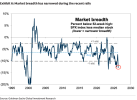
Market Reality Check: Breadth Shrinks, Expectations Cool


Markets are still holding near highs, but the move looks less convincing under the surface. The rally is being carried by a smaller group of large-cap names, while broader participation keeps fading. That kind of narrowing usually points to a more fragile structure, even if indices look strong.

At the same time, earnings expectations are no longer moving in the same direction. Earlier optimism pushed estimates higher, but recent revisions have turned more cautious. The typical pattern is downward adjustments over time, and 2026 is starting to drift away from the earlier bullish path.

So there’s a clear divergence building. Prices remain supported by momentum and liquidity, but internals and expectations are softening. This type of setup is often seen in later stages of a cycle, where upside continues but becomes increasingly dependent on fewer drivers.

The trend is still up, but the quality of the move is weakening. If breadth doesn’t improve and revisions keep slipping, the market becomes more sensitive to any negative catalyst.

market-breadth.png

EPS-estimates.png
 

Global debt is quietly building into a major risk

global-debt.jpg

The latest International Monetary Fund report highlights a clear trend. Global government debt is expected to reach around 102% of GDP by 2031, a level last seen after World War II. Today, it already stands near 94%.

Since 2015, the ratio has risen by about 16 percentage points, largely driven by the United States and China.
The US is running deficits of 7 to 8% of GDP, with debt projected to hit 142% by 2031. China is on a similar path, with debt expected near 127% as deficits approach 8%.

Meanwhile, rising rates are pushing interest costs higher. Global debt servicing is forecast to reach about 5% of GDP, up from around 3% today.

The takeaway: the global economy is becoming more reliant on debt, while the cost of carrying it is increasing.
 

Markets Lose Confidence in Ceasefire (04.22.2026)

U.S. Treasury yields held near 4.3% on Wednesday, supported by resilient economic data and ongoing tension in the Middle East after planned U.S.–Iran talks were scrapped. Strong retail sales reinforced expectations that the Federal Reserve will keep rates steady, while Kevin Warsh signaled a firm, hawkish policy stance.

The dollar index stayed above 98.3, reflecting continued demand for safety as Tehran indicated the Strait of Hormuz would remain closed during U.S. naval operations, even as the ceasefire was extended to allow new proposals.

Equity futures moved higher, with the Dow Jones and S&P 500 up about 0.4% and the Nasdaq-100 rising 0.5%, as the ceasefire reduced immediate escalation risks. Attention now turns to earnings from Tesla, AT&T, Boeing, GE Vernova, and CME Group.

Japan’s 10-year government bond yield held around 2.4%, with policymakers expected to leave rates unchanged while weighing the economic impact of higher energy costs and persistent external risks.

EUR/USD slipped toward 1.1750, while gold and silver extended their declines amid rising yields and reduced demand for non-yielding assets. The Japanese yen remained under pressure due to Bank of Japan uncertainty and stronger dollar flows, while sterling hovered near $1.35 with limited direction. The offshore yuan strengthened slightly to around 6.82 per dollar.

Brent crude jumped roughly 8% to trade around $103 per barrel. Tehran’s demands (including broader regional concessions and access to frozen assets) highlighted the depth of the standoff.

Bitcoin traded near $77,542 and continues its steady advance over recent weeks. Over the past month, prices have increased by approximately 9.36%.

Despite a temporary extension of the ceasefire, persistent geopolitical risks and hawkish policy signals continue to weigh on sentiment across global markets.

Technical Outlook on Charts

Euro Slips as Ceasefire Remains Fragile
Gold Holds Below $4,750
Yen Weakens Amid BOJ and Geopolitical Shifts
Sterling Nears $1.35 as Dollar Weakens
Silver Slips Toward $79

Economic Calendar​

eco-calendar-22-april.jpg
 

Strait Standoff Won’t Let Inflation Cool (04.23.2026)

The United States and Iran remain locked in a standoff over the Strait of Hormuz, restricting access following failed peace talks.

EUR/USD traded near 1.1710, Gold drifted toward $4,700 per ounce, Silver slipped to roughly $76 per ounce, GBP/USD slipped below 1.3500, USD/JPY remained steady around 159.5, Bitcoin hovered around $77,700, Brent crude climbed to around $104 per barrel, Nasdaq 100 advanced to 26,74, and The offshore yuan weakened to around 6.83 per dollar.

Trump confirmed that the ceasefire will stay in place without a fixed timeline as Washington awaits Tehran’s proposal, while Iran continues to resist negotiations under current conditions.

The ongoing disruption has pushed oil prices higher, pushing inflation concerns worldwide and raising fresh worries about supply shortages and broader economic strain.

With energy risks still in focus, inflation pressures remain persistent, strengthening expectations that the Federal Reserve will keep interest rates unchanged while markets look to upcoming economic data for clearer direction.

The US 10-year Treasury yield climbed to around 4.31%, its highest level in more than a week, as elevated energy costs reinforced expectations that interest rates will stay steady. The dollar index held near 98.5, close to a one-week high, supported by continued demand for safety.

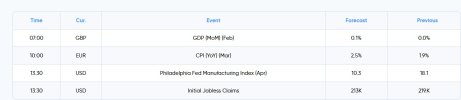
Attention now turns to jobless claims and PMI data for clearer economic signals.

Check more on zForex.com - Technical Outlook on Charts

  • Policy Patience Keeps Euro Afloat
  • Gold’s Shine Fades for Now
  • Waiting on Tokyo, Watching Oil
  • Pound Tests the Floor at 1.35
  • Silver Feels the Weight of Energy Costs

Economic Calendar​

eco-calendar-23-april.jpg
 
Germany’s Growth Engine Stumbles Again
Germany’s PMI data signals renewed weakness, with activity slipping toward contraction. The early-year stability now looks fragile. The slowdown is broad and becoming harder to ignore.

Manufacturing Holds the Line, Momentum is Fading
Manufacturing PMI edged down to 51.2, still in expansion but losing strength. Output continues, but momentum is clearly softer. Demand looks weaker and production expectations are turning cautious.

Services Slip Into Contraction Territory
Services PMI dropped sharply to 46.9, well below expectations. This is a key shift, as services had been supporting growth. Weakness here raises concerns about consumer demand.

Composite Index Sends a Clear Warning
Composite PMI fell to 48.3, marking the first contraction in nearly a year. Both manufacturing and services are now under pressure. This suggests a broader slowdown, not a temporary dip.

Weakness Extends Beyond Germany
France and the wider Eurozone show similar weakness, with PMIs also below forecasts. The slowdown is spreading across the region. Business confidence is clearly under pressure.

Policy Tension Builds
Slower growth supports the case for rate cuts, but inflation risks remain. Energy prices continue to complicate the outlook. The next data will be key for policy direction.


eurozone-PMI.png

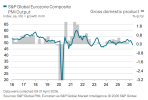
Eurozone PMI Slips Into Contraction
Eurozone Composite PMI fell to 48.6, back below the 50 level. This is a 17-month low and signals a shift into contraction. Momentum is clearly weakening as Q2 begins.

Services Sector Leads the Decline
Services PMI dropped to 47.4, the lowest in over five years. This is critical since services had been driving growth. Demand is now visibly slowing.

Manufacturing Holds Up, But with Caution
Manufacturing PMI rose to 52.2, showing continued expansion. However, much of this looks like inventory building, not real demand. Companies are acting defensively amid uncertainty.

Energy and Costs Add Pressure
Middle East tensions are pushing energy prices higher, increasing input costs. Inflation pressures are rising again, while supply chains are slowing. This creates a difficult operating environment.

Confidence Drops, Outlook Weakens
Business confidence has fallen to its lowest since late 2022. Growth is slowing while inflation risks remain, putting the ECB in a tight spot. The next few months will be key for direction.
 

Attachments

  • eurozone-PMI.png
    eurozone-PMI.png
    47.9 KB · Views: 0

Japan’s Exports Gain Momentum Despite Iran Conflict


japan-export.jpg

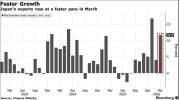
Japan’s exports rose 11.7% year-on-year in March, reaching their second-highest level since May 2024 and accelerating from 4.0% growth in February Shipments to China led the advance, climbing 17.7%, supported by strong demand for chips, electronic components, and industrial metals.

Imports also increased 10.9% annually, lifting the trade surplus to roughly $4.2 billion, the highest level since December 2020. Crude oil imports by value declined 7.3%, as deliveries scheduled before the conflict continued to arrive through mid-March.

China’s demand remains a key engine behind Japan’s economic activity.