Daily Global Market Overview By zForex

++ Update​


US inflation data came in broadly in line with expectations, but the annual CPI increase marked the strongest rise since May 2024.

Core CPI rose 2.6% year-on-year, slightly below forecasts, while the monthly core figure held steady at 0.2%, indicating some stabilization in underlying price pressures.

On the headline side, CPI surged 0.9% month-on-month, driven largely by energy components, highlighting that inflation risks remain sensitive to commodity price movements.
 

Iran Talks Collapse and USD Gains Again (04.13.2026)

The dollar index moved back above 99, regaining ground as demand for safety increased. Persistent geopolitical strain and elevated energy costs continued to support the currency.

The euro retreated under renewed dollar strength, while sterling also softened amid rising geopolitical uncertainty. USD/JPY remained near the 160 level, with intervention risks limiting further upside. The offshore yuan weakened to around 6.83 per dollar, ending a six-session advance.

In commodities, gold and silver declined as inflation fears and expectations of tighter monetary policy outweighed safe-haven demand. Overall, sentiment deteriorated significantly as escalating tensions drove investors toward the dollar.

Brent crude surged about 8% to around $103 per barrel, recovering last week’s losses after the United States announced a blockade targeting vessels entering or leaving Iranian ports following failed negotiations.

US stock futures started the week lower after Donald Trump announced a blockade of the Strait of Hormuz following the collapse of US–Iran negotiations. Major indexes fell by more than 1%, while JD Vance left Islamabad without progress, citing unresolved disputes over Iran’s nuclear policy. Rising energy prices added pressure just as earnings season began, with major banks set to report.

The US 10-year Treasury yield rose to around 4.35%, reversing last week’s decline as tension intensified. Higher oil prices reinforced inflation risks, strengthening expectations that the Federal Reserve may keep policy tight for longer.

Bitcoin traded at 71,234, rising 0.71% from the previous session. Over the past four weeks, performance has remained nearly flat with a gain of 0.01%.

Check More on zForex.com - Technical Outlook on Charts

  • Euro Falls as Diplomacy Falters
  • Gold Slips on Blockade Concerns
  • USD/JPY Finds Resistance Near 160.00
  • Sterling Softens Against the Dollar
  • Silver Slides Under $74
 

A Reset in US Employment

US-labor-market-2026.jpg
The threshold for maintaining a stable unemployment rate in the United States has shifted significantly.

On average, the economy now needs to add roughly negative 3,000 jobs monthly to keep the rate steady, a sharp drop from the 250,000 monthly jobs required in mid 2023.

This decline is primarily driven by a fall in net migration. Unauthorized migration turned negative in early 2025 and averaged a loss of 55,000 people per month in the latter half of the year as departures outpaced arrivals.

With total net unauthorized migration reaching negative 548,000 for 2025, the shrinking labor pool means the economy requires much lower job growth to prevent unemployment from climbing.

This represents a major structural change in the U.S. labor market.
 

Markets Embrace Cautious Optimism (04.14.2026)

Markets shifted toward risk-on sentiment as easing geopolitical tensions and uncertainty around Federal Reserve policy pressured the U.S. dollar.

The dollar index hovered near 98.3, holding close to six-week lows as improving sentiment encouraged a shift toward riskier assets.

Bond markets reflected the same shift. The US 10-year Treasury yield remained near recent lows around 4.29%, while Japan’s 10-year government bond yield eased to roughly 2.45%, pulling back from multi-decade highs as softer oil prices reduced inflation pressure.

EUR/USD climbed toward 1.18, reaching multi-month highs, while sterling also advanced to a seven-week peak. The Japanese yen strengthened as USD/JPY pulled back from the 160 level, supported by improving sentiment and expectations of a potential Bank of Japan rate hike.

In commodities, gold and silver rebounded on diplomatic hopes and easing inflation concerns, though both remain below earlier highs.

Brent crude surged roughly 8% to around $103 per barrel, recovering last week’s losses after the United States confirmed a blockade targeting vessels entering or leaving Iranian ports following unsuccessful negotiations.

Nasdaq 100 traded at 25,465, gaining 1.06%. Over the past four weeks, the index has risen about 3.29%, while annual performance remains strong at 35.24%

Bitcoin traded at $74,423, slipping 0.15% from the previous session. Over the past four weeks, the cryptocurrency has declined by approximately 2.20%.

Overall, markets remain optimistic but cautious, with attention on upcoming U.S. data and developments in Middle East negotiations.

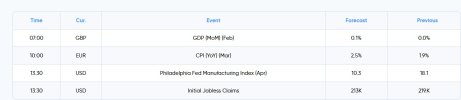
Economic Calendar

eco-calendar-14-april.jpg

>> Check more on zForex.com - Technical Outlook on Charts

 
bond-markets.png

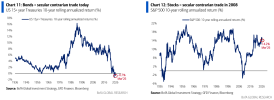
Bonds in 2026: Contrarian Trade Opportunity

Bonds are no longer seen as the safe anchor they once were, pressured by inflation, geopolitical risks, and rising government spending. As volatility becomes more common, investors are starting to question the long-term reliability of sovereign debt.

A Challenging Macro Climate

Higher interest rates have significantly reduced bond prices, especially for long-duration assets. At the same time, deglobalization and growing fiscal deficits are raising concerns about debt sustainability, weakening the “risk-free” perception of government bonds.

The Case for a Turning Point

Despite the negative sentiment, current yield levels near 5% are attracting contrarian interest. If inflation stabilizes and policy shifts toward easing, bonds could offer strong long-term value. This environment may present a rare entry point for patient investors.
 

AI Hardware Crisis

hardware.jpg

The AI boom in the United States is hitting a hardware blockage. Imports of critical electrical equipment, including transformers, batteries, and switching devices.

The equipment surged to $411 billion in 2025, a nearly 80% increase since 2020. This spike is driven by AI companies racing to construct data centers that domestic manufacturing simply cannot support.

Because domestic production is failing to keep pace with this massive demand, the industry faces a looming standstill. Projections suggest that approximately half of all US data centers planned for 2026 will be delayed or canceled.

Without a drastic increase in available hardware, the infrastructure required to power the AI revolution remains at risk. Investors need to be extra cautious.

The energy footprint of AI is rising quickly.


photo_2026-04-14_11-45-19.jpg

Electricity demand from data centers is accelerating rapidly. According to Goldman Sachs, global demand is projected to rise about 220% from 2023 levels, reaching roughly 1,350 terawatt-hours by 2030, driven by the expansion of AI infrastructure and more energy-intensive servers.

Around 60% of this growth is expected to come from the United States, where demand alone could reach about 750 terawatt-hours, while the rest of the world accounts for roughly 600 terawatt-hours. U.S. data center capacity is also forecast to expand nearly 197% between 2025 and 2030, reaching a record 95 gigawatts.