The 10-day average of LNG exports has fallen to around 33k tons, the lowest level since the 2008 financial crisis.
That is about 90% lower than February levels and 85% below the 10-year average.
The Ras Laffan LNG terminal, the world’s largest export facility, has not shipped any cargo for 5 days. This is the longest gap since data tracking started in 2008.
Qatar supplies roughly 20% of global LNG, with most cargo heading to Asian markets. Because of this disruption, some Asian buyers are now searching for alternative supply or cutting deliveries to industrial users, including fertilizer plants and heavy industry.
Two Interesting Charts in the S&P 500: Options Signal and Tech Financing
Sometimes a few indicators give useful clues about investor behavior and market direction. Recently, two charts related to the S&P 500 have been getting attention. One shows an unusual signal from the options market, while the other highlights massive financing activity by big technology companies.
Together, they create an interesting picture for equity markets.
Rare Options Signal in the S&P 500
The first chart looks at how many S&P 500 companies currently have high option skew levels. Skew basically shows how much investors are willing to pay for downside protection using put options.
What stands out is that around 74% of S&P 500 stocks have a 1-month skew above the 80th percentile. In simple terms, investors are paying up for protection against a possible market drop.
Historically, it is quite rare to see such a large share of companies showing elevated skew at the same time. It usually means the market is heavily hedged and positioned defensively.
Backtest: What Happens After High Skew Periods
Nomura also ran a historical backtest to see what typically happens after these skew extremes.
Interestingly, past data suggests that when a large portion of the index shows this type of skew, the S&P 500 often performs well over the medium and long term.
Short-term moves can still be volatile, but over the following months the index has historically delivered above-average returns in many cases.
This does not guarantee the same outcome this time, but it shows an important behavioral pattern. When investors hedge aggressively, markets sometimes move stronger than expected.
Big Tech Is Raising Huge Capital for AI
The second chart focuses on the technology sector and AI infrastructure spending.
Companies like Amazon, Alphabet, Meta, Microsoft and Oracle have been issuing large amounts of debt and loans to fund AI data centers and infrastructure.
The numbers are striking:
The 2015–2024 yearly average funding was about $23B
In 2025, funding jumped to around $108B
By March 2026, issuance had already reached $108B again
This suggests that hyperscalers are entering a major investment cycle in AI infrastructure.
Global markets remained dominated by dollar strength as geopolitical tensions and rising energy prices reshaped monetary expectations.
The euro fell toward $1.15, its weakest level in months, as traders fully priced in upcoming ECB rate hikes in response to inflation risks. Meanwhile, the Japanese yen weakened toward levels that previously triggered government intervention, highlighting growing pressure from surging oil prices and imported inflation.
Sterling remained subdued near multi-month lows as investors reassessed the outlook for Bank of England policy amid persistent energy-driven inflation concerns. Offshore yuan weakened to around 6.88 per dollar, extending the previous session’s decline
Precious metals showed mixed performance, with gold recovering modestly despite a strong dollar and rising yields, while silver rebounded toward $85.
Brent crude traded near $100 per barrel after a sharp rally in the previous sessions. International Energy Agency approved a 400-million-barrel reserve release, though supply may take weeks or months to reach buyers.
Nasdaq 100 traded at 24,579, falling 431 points (1.73%) from the previous session. Forecast models suggest levels near 23,530 by the end of the quarter
Is Volatility Being Priced Too High?
Recent tensions around Iran and the Middle East have increased concern, but market prices have not reacted strongly. This creates a gap between market expectations and real price action.
The Rising Cost of Protection
Options markets currently show high implied volatility, meaning investors are paying more for protection against possible shocks. However, realized volatility remains relatively low, showing that actual price movements are still limited.
Pricing the Possibility of Stress
Across several markets, the gap between implied and realized volatility has reached unusually high levels. In simple terms, markets are pricing in turbulence, even though current trading conditions still appear calm.
Opportunity in the Volatility Gap
Some investors see opportunities in this environment. Volatility-selling strategies can benefit when option premiums are high. However, risks remain, especially if tensions in the Middle East escalate or energy supply routes such as the Strait of Hormuz face disruptions.
Expectation Versus Reality
For now, markets are caught between future fears and present stability. Investors continue to pay high premiums for protection, even though real market swings remain limited. Fear of potential shocks is currently stronger than the movements seen in prices.
Global markets remain dominated by geopolitical tensions and energy risks as the conflict in the Middle East continues to shape investor sentiment. The US dollar index slipped toward the 100 level on Monday, giving back part of last week’s gains
The U.S. dollar strengthened further, pushing the euro to a new yearly low near 1.1440, while the Japanese yen recovered slightly amid fears of possible government intervention near the 160 level. Precious metals remained under pressure, with gold hovering around the key $5,000 level and silver falling toward$80 as rising oil prices and inflation concerns dampened expectations for central bank rate cuts. The offshore yuan strengthened slightly to around 6.901 per dollar, recovering from losses recorded last week.
Brent crude climbed above $104 per barrel, reaching its highest level since July 2022. The rally followed US strikes on Iranian military facilities on Kharg Island.
Nasdaq 100 traded at 24,508, falling 0.62% from the previous session. Over the past four weeks the index has slipped 0.78%, although it still shows a strong 23.70% increase over the past year.
Meanwhile, attention is shifting to a packed week of central bank meetings, where the Federal Reserve, ECB, Bank of England, and Bank of Canada are all expected to hold rates steady while providing guidance on inflation risks and future policy moves.
EUR/USD rebounded toward 1.1500 as the US Dollar softened during the session. Improved risk sentiment, driven by reports that the US may form a naval coalition to secure the Strait of Hormuz, reduced safe-haven demand for the dollar and helped the pair move higher.
From a technical perspective, the pair is testing the upper boundary of a long-term descending channel around the 1.15 area. A clean break above this zone could open the door toward 1.17–1.18, while rejection from the trendline may bring the pair back toward 1.13–1.14 support.
Market attention now shifts to this week’s Fed and ECB policy decisions.
On the European side, expectations are for the Riksbank to keep rates at 1.75%, as rising energy prices linked to Middle East tensions create upside inflation risks despite weak growth data.
Dollar Strength Continues Ahead of Central Banks (03.17.2026)
Markets remained cautious as a stronger U.S. dollar pressured major currency pairs ahead of key central bank decisions.
The impact of the Middle East conflict and volatile oil prices on growth and inflation stayed in focus. Declining oil prices helped ease inflation concerns following the safe passage of several tankers through the Strait of Hormuz.
Brent crude moved back toward $103 per barrel after falling nearly 3% in the previous session. India is reportedly negotiating for six additional vessels, while several countries continue discussions with Iran to secure safe passage for shipments.
Precious metals showed limited recovery, with gold stabilizing near $5,020 as geopolitical tensions capped upside, while silver edged higher on easing oil prices and softer yields.
EUR/USD slipped below 1.1500 amid fading expectations for Federal Reserve rate cuts and ongoing energy-related risks in Europe. The Japanese yen weakened again despite intervention warnings, while sterling hovered near critical support levels under persistent selling pressure. Investor focus now shifts to upcoming Fed and ECB policy signals, which are expected to drive near-term market direction. The People’s Bank of China set the USD/CNH reference rate at 6.8961, stronger than the previous 6.9057 fixing and slightly above the Reuters estimate of 6.8874, indicating a firmer yuan bias.
Nasdaq 100 traded at 24,604, rising 1.13% from the previous session. Over the past four weeks, the index has gained 1.19%, while on a yearly basis it shows a 26.28% increase.
Global markets entered a holding pattern as investors awaited key central bank decisions from the Federal Reserve, ECB, and Bank of England.
The dollar index hovered near 99.5 on Wednesday, extending its recent pullback as markets turned their attention to the Fed’s policy decision. Rates are expected to remain unchanged, with focus shifting to Chair Jerome Powell’s guidance, particularly on how oil market volatility may shape the outlook.
EUR/USD stabilized near 1.1550 as the dollar paused its recent rally, while the Japanese yen held steady amid ongoing geopolitical developments and diplomatic tensions. Sterling edged higher as traders positioned ahead of policy announcements, with overall market sentiment cautious and highly sensitive to forward guidance from central banks. The offshore yuan traded near 6.88 per dollar, showing resilience. Markets also assessed reports that Donald Trump asked Xi Jinping to delay their planned summit by about a month to focus on developments in the Middle East.
Precious metals remained subdued, with gold hovering near monthly lows and silver trading sideways as markets priced in a higher-for-longer interest rate environment driven by energy-related inflation risks.
Brent crude slipped below $103 per barrel, giving back part of the previous session’s advance as markets reassessed developments in the Middle East and uncertainty surrounding the Strait of Hormuz.
Nasdaq 100 traded at 24,927, rising 125 points or 0.51% on the session. Over the past four weeks, the index has gained 0.52%, while showing a 26.30% increase year-over-year.
Markets reacted to a firm Federal Reserve stance as policymakers held rates steady and signaled limited easing ahead, reinforcing U.S. dollar strength. The dollar index held above 100, building on its rebound.
Rates stayed at 3.50%-3.75%, with policymakers pointing to uncertainty tied to the Iran conflict and rising inflation risks. Guidance suggests cuts remain conditional, although projections still show one reduction this year and another in 2027.
The 10-year yield in Japan rose over 5 basis points to around 2.26% after the Bank of Japan kept rates at 0.75%. Board member Hajime Takata dissented again, calling for a hike to 1% as inflation risks tilt higher. US yields followed, with the 10-year Treasury climbing to 4.28%, near its highest since August.
EUR/USD remained stable near 1.1550 as investors balanced Fed guidance with expectations that the ECB will also keep rates unchanged. The Japanese yen weakened toward the 160 level following the Bank of Japan’s decision to hold policy despite internal calls for tightening, while rising oil prices added further pressure. Sterling also came under pressure, breaking key support levels as broader dollar strength dominated sentiment. The offshore yuan edged toward 6.89 per dollar, recovering part of its previous decline.
The US 100 index declined to 24,474, falling 355 points or 1.43% on the session. Over the past month, it has slipped 2.15%, though it remains up 24.38% year-on-year.
Brent crude moved above $110 per barrel, extending its rally as fresh strikes on critical energy infrastructure raised concerns over supply disruptions. Iran targeted a Qatari site linked to the world’s largest LNG export facility, following earlier damage to its South Pars gas field. While Trump acknowledged awareness of the initial Israeli strike, he urged restraint regarding further attacks on energy assets.
Precious metals stayed subdued, with goldstabilizing after a prolonged decline and silver holding near recent lows, reflecting the impact of higher yields and a stronger dollar.
The Swiss National Bank kept interest rates at 0%, meeting expectations while slightly raising inflation forecasts to 0.5% for 2026 and 0.6% for 2028. Amid heightened Middle East uncertainty, the SNB increased its readiness to intervene in currency markets to prevent an "excessive appreciation" of the Franc.
The President reaffirmed that the bank will utilize both interest rates and active FX intervention to maintain price stability as inflation likely rises next quarter.
The Bank of England kept interest rates steady at 3.75%, matching market expectations as it evaluates the ongoing conflict in the Middle East.
Governor Andrew Bailey warned that surging global energy prices are already hitting gasoline costs and could inflate household bills by year-end. The BoE remains cautious of "secondary effects" from this energy shock, noting that risks to the UK economy intensify the longer prices remain high.
Global markets shifted toward a more hawkish outlook as central banks maintained rates while signaling caution over persistent inflation risks.
The euro climbed to $1.15 after the ECB held rates steady and emphasized a data-driven approach amid rising energy costs linked to Middle East tensions. The Japanese yen recovered as the Bank of Japan maintained a tightening bias, while sterling gained strength following a firm stance from the Bank of England. Despite these currency move.
Precious metals remained under pressure overall, with gold and silver attempting to stabilize after recent losses as higher yields and delayed rate-cut expectations continued to weigh on sentiment.
Brent crude fell below $107 after briefly nearing $120, as comments from Donald Trump and Benjamin Netanyahu eased fears of further infrastructure damage.
The European Central Bank kept its policy settings unchanged in March, but the message carried more weight than the decision itself. The main rate stands at 2.15%, the deposit rate at 2.00%, and the marginal lending facility at 2.40%. Stability in rates, however, contrasts with a shifting economic backdrop.
Energy Drives the Narrative Again
The conflict in the Middle East is now feeding directly into the ECB’s outlook. Rising energy costs are adding upward pressure on prices, while at the same time weakening growth dynamics across the region. This combination is challenging to manage, as inflation risks and growth concerns influence each other in opposing ways.
Inflation Takes Longer to Cool
The ECB now sees inflation reaching 2.6% in 2026, before easing toward 2.0% in 2027 and stabilizing near 2.1% in 2028. Core inflation was also revised higher, reinforcing the idea that price pressures are proving more persistent than previously expected. Economic expansion is predicted to remain modest. The Eurozone is projected to grow by 0.9% in 2026, followed by 1.3% in 2027 and 1.4% in 2028. Higher commodity costs, reduced purchasing power, and weaker confidence are all contributing to a slower trajectory.
A Precarious Journey with No Finish Line
The ECB now finds itself walking a narrow path. Energy-driven inflation keeps price risks alive, while the same forces weigh on economic activity. With no clear resolution in sight, decisions are likely to remain data-driven and assessed meeting by meeting, leaving the policy path open and the outlook uncertain.
Post automatically merged:
BoE Hits Pause as Costs Keep Climbing
The Bank of England kept its policy rate at 3.75% in March, with a unanimous vote that reflected consensus, but not comfort. Beneath the unchanged decision, the outlook is becoming more complex as energy markets reshape the inflation path.
Energy Moves From Background to Driver
What was once a supporting factor is now at the center of the story. Rising energy and commodity prices are feeding directly into household bills and business costs, tightening conditions across the economy and reshaping expectations for the months ahead.
When Costs Start Spreading
The focus has shifted toward how these increases travel through the system. The risk lies in costs extending beyond energy into wages and pricing behavior, creating a broader and more persistent inflation cycle. If this chain reaction takes hold, inflation becomes less about a single shock and more about a sustained process.
Soft Data, Stronger Signals Ahead
February’s headline inflation came in at just 0.1%, offering a brief sense of calm. Yet the forward view tells a different story. The BoE expects inflation to move back toward the 3%-3.5% range in the coming quarters, as higher energy costs gradually filter into consumer prices.
Growth Caught in the Middle
Higher costs weigh on activity. Households face reduced purchasing power, while businesses navigate tighter margins. This creates a push-and-pull dynamic: inflation edges higher as growth momentum softens. The Bank is left managing a fragile balance. Move too quickly, and growth takes a hit. Move too slowly, and inflation risks embedding itself more deeply. For now, the approach remains measured, with each decision shaped by incoming data and the evolving path of energy prices.
Dollar Dominance Deepens in The Markets (03.23.2026)
Global markets remained under pressure as inflation fears tied to the ongoing Iran conflict strengthened the U.S. dollar and reshaped investor positioning.
The dollar index held above 99.5, building on the previous session’s gains as Middle East tensions sustained demand for safe-haven assets.
The US-Israel conflict with Iran entered its fourth week, marked by threats of strikes on Iranian energy facilities and warnings of retaliation from Tehran. Elevated oil prices reinforced inflation concerns, lowering expectations for a near-term Federal Reserve rate cut, while major central banks, including the ECB, BOE, and BOJ, kept rates unchanged but signaled a possible shift toward tighter policy.
Japan’s 10-year government bond yield climbed above 2.3%, moving closer to multi-decade highs as rising oil prices and global inflation risks intensified. The US 10-year Treasury yield rose to around 4.4%, reaching an eight-month high.
The euro fell to $1.156 as traders increased expectations for ECB tightening, while the Japanese yen weakened toward the critical 160 level, raising the risk of potential intervention. Sterling also broke below key support levels, reflecting broad-based dollar strength and worsening technical outlooks across major currency pairs. The offshore yuan weakened to around 6.915, reaching a two-week low as the stronger US dollar.
Precious metals continued to decline, with gold extending its multi-week selloff and silver remaining under pressure as investors shifted toward liquidity in a high-inflation environment.
Brent crude traded above $112 per barrel after reaching $115 earlier in the session, as markets reacted to President Trump’s ultimatum for Iran to reopen the Strait of Hormuz. Oil prices have climbed roughly 50% since the conflict began.
Nasdaq 100 traded at 23,755, falling 457 points (-1.88%) from the previous session. Over the past four weeks, the index declined 4.89%, though it remains 17.71% higher year-on-year.
Markets saw a short-lived recovery after the U.S. delayed planned strikes on Iranian energy infrastructure, easing immediate geopolitical pressure.
The dollar index moved back toward 99.5, rebounding after recent declines as uncertainty returned. Ongoing supply risks and higher energy costs continue to support inflation concerns, keeping attention on upcoming US manufacturing data.
Japan’s 10-year government bond yield eased to about 2.27% as softer inflation data reduced expectations for immediate rate increases. Core inflation slowed to 1.6% in February, its weakest pace in nearly two years, while rising energy costs could push inflation higher again.
The US 10-year Treasury yield rose above 4.37% on Tuesday, recovering from earlier losses as tension in the Middle East intensified.
Precious metals stayed under pressure, with gold retreating toward $4,300 and silver slipping further as persistent Middle East tensions and inflation concerns reinforced expectations for tighter monetary policy. Brent crude climbed back above $103 per barrel, recovering from earlier losses as regional tension intensified. The earlier drop in prices followed the delay in US action against Iranian energy sites.
The euro rebounded toward $1.155, while sterling also recovered as the dollar softened slightly. However, underlying risks remain, with the Japanese yen weakening again as rising oil prices continued to pressure Japan’s economy. Overall, the rebound reflects temporary relief rather than a shift in the broader risk-off trend.
Bitcoin traded near $68,000, stabilizing close to a twoweek low as renewed tensions involving the US, Israel, and Iran weighed on risk appetite.
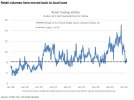
Retail trading activity has fallen to 8.1% of total stock volume, the lowest since Q3 2024, nearly half the 15% peak in November 2025.
For comparison, the height of the meme stock surge in 2021 reached 11.5%. Participation now mirrors levels seen during the 2020 pandemic and the 2022 bear market.
0DTE options volume has declined to 57% of total, the lowest since Q1 2025.
Markets are reacting less to hard data and more to narratives and political signals. Recent moves in oil and equities show how quickly sentiment can shift. Even a small change in tone, like delaying action or hinting at talks, can trigger sharp reversals.
The so-called “TACO trade” is back in focus. Strong rhetoric is usually followed by softer steps. Oil dropped after initial escalation fears, then stabilized as hopes for resolution appeared. At the same time, equities moved higher as risk appetite returned.
Still, the situation remains fragile. Mixed messages between the US and Iran are adding confusion. Iran denies any negotiations, while the US talks about progress. This gap shows markets are reacting more to headlines than confirmed facts.
On a broader level, perception is starting to matter as much as action. Strategic messaging is shaping outcomes. For policymakers, this creates a balance between credibility and avoiding escalation. For markets, it means volatility driven by news flow.
In the end, short-term optimism can appear during de-escalation phases. But the core risks are still there. As long as energy uncertainty and geopolitical tension continue, markets will stay sensitive and prone to sharp moves.
Japan’s 10-year yield rose to 2.30%, close to its highest level since 1999, surpassing the 2008 peak by 30 basis points. The 5-year yield climbed to 1.72%, just below its record high.
Rising oil prices and Middle East tension have increased inflation concerns, following three consecutive weeks of losses in US Treasuries.
Meanwhile, USD/JPY is approaching 160, the level that triggered multiple interventions in 2024.
Global markets reflected a mix of economic slowdown signals and tentative geopolitical optimism.
The dollar index hovered near 99.1, weighed by easing energy prices and mixed signals on diplomacy, even as Federal Reserve officials indicated rates may remain high to address persistent inflation.
The euro fell below $1.16 as weak Eurozone PMI data and rising energy costs fueled concerns over growth and inflation, while sterling also slipped on similar pressures in the UK. In contrast, the Japanese yen stabilized as falling oil prices and potential intervention discussions offered some relief.
Precious metals rebounded, with gold climbing toward $4,600 and silver gaining strongly, supported by growing hopes of a ceasefire in the Middle East. Despite the rebound in metals, markets remain highly sensitive to both economic data and geopolitical developments.
US stock futures moved higher, with Dow and S&P 500 futures up about 0.7% and Nasdaq 100 futures rising 0.8%, supported by reports of possible US-Iran talks. Attention now turns to upcoming US trade data and corporate earnings.
In energy markets, US natural gas fell to $2.88 per MMBtu, a three-week low, as expectations for resumed Persian Gulf exports and warmer weather reduced demand pressure.
Brent crude dropped roughly 6% toward $98 per barrel, reversing earlier gains as diplomatic signals around the Iran conflict improved sentiment. Reports of a proposed ceasefire and structured negotiations outweighed concerns about continued military deployments.
Bitcoin hovered near $70,480, edging lower by 0.08% from the previous session.
The US economy kept growing in March, but at a much slower pace, marking its weakest expansion in nearly 11 months.
The decline in the business activity index (PMI) was mainly driven by softer demand in the services sector, even as manufacturing activity showed signs of improvement.
Meanwhile, inflationary pressures resurfaced, fueled by higher energy prices that pushed up business costs and were ultimately passed on to consumers. This mix of slowing growth and rising inflation has increased concerns about the economic outlook and complicated decision-making for the Federal Reserve.