Daily Global Market Overview By zForex

Inflation Data Keeps Markets on Edge (02.27.2026)

Markets traded cautiously ahead of key inflation data and amid ongoing trade and geopolitical uncertainty.

Brent crude climbed above $71 per barrel, reversing a three-day slide. Gold extended its advance toward a fourth weekly gain, supported by tariff concerns and stalled U.S.-Iran talks, while silver climbed toward $90 on renewed safe-haven demand.

Nasdaq dropped 1.16% on Thursday, February 26, to finish at 25,034. While the index has surrendered 3.49% over the past month, it maintains a strong 21.82% annual gain.

The euro held below $1.18 as investors awaited fresh inflation signals to assess the ECB’s policy outlook, while the yen rebounded modestly but remained pressured by policy uncertainty in Japan. Sterling softened near $1.35 as political developments added another layer of uncertainty for the pound. The offshore yuan appreciated to 6.83 per dollar, marking its fourth consecutive gain and strongest level since April 2023.

Technical Outlook on Charts
Euro Stays Under $1.18
Yen Rebounds Toward 155.9
Gold Eyes Fourth Weekly Gain
Sterling Softens Near $1.35
Silver Eyes Second Weekly Gain

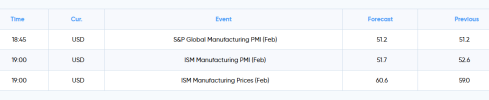
Economic Calendar​


1772179611125.png
 

BoE Signals Persistent Inflation Focus

bank-of-england-huw-pill.jpg

Bank of England official Huw Pill mentioned that while the downward inflation trend is "advanced and untouched," headline drops caused by temporary factors should not spark false confidence. The disinflation process remains incomplete, with underlying pressures now the primary concern.

Furthermore, although UK economic growth is currently positive, it has not yet translated into improved living standards for the public.
 

Geopolitical Shock Triggers Risk-Off Move (03.02.2026)

President Trump stated that operations against Iran could last up to four weeks, though he added that developments are proceeding as planned and could wrap up sooner.

The dollar index gained about 0.5% to near 98 before giving back part of the move, as investors shifted toward safer assets

Global markets turned sharply risk-averse as escalating conflict in the Middle East reshaped sentiment across asset classes. Precious metals led the reaction, with gold jumping to a one-month high and silver spiking sharply as investors rushed for protection amid severe geopolitical disruptions.

The UK Maritime Trade Operations (UKMTO) raised the security risk level for the Strait of Hormuz to “critical,” confirming several attacks on commercial ships in the Gulf of Oman, near Musandam, and in UAE waters. Brent crude spiked sharply at the open, briefly jumping 12% before settling more than 8% higher at $78 per barrel, its highest level in eight months

The dollar strengthened on safe-haven demand, keeping EUR/USD capped near 1.1800 and pushing the yen toward multi-week lows despite lingering Bank of Japan tightening signals. Sterling attempted a modest rebound but remained technically fragile, reflecting persistent downside risks. Overall, heightened geopolitical stress has overtaken macro data as the dominant driver, leaving markets highly sensitive to further developments.

Technical Outlook on Charts

EUR/USD Hovers Near 1.1800
Yen Slides Amid Middle East Conflict
Gold Hits One-Month High Near $5,370
GBP/USD Rebounds Toward 1.3450
Silver Spikes Amid Regional Turmoil

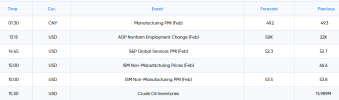
Economic Calendar​


1772435687400.png
 

Risk-Off Mode Dominates Global Trade (03.03.2026)

A US court rejected Trump's tariff refund delay as the Dollar (98.5) and 10 year yield (4.04%) held gains amid Middle East escalation and inflation fears.

Global markets shifted firmly into risk-off mode as escalating Middle East tensions drove investors toward safe-haven assets. The US dollar strengthened on heightened geopolitical risk and surging energy prices, weighing on major currencies including the euro, yen, and pound. EUR/USD slipped below 1.1700 as evacuation orders and oil supply threats lifted inflation concerns, while the yen weakened despite renewed intervention rhetoric and mixed signals from Japanese policymakers.

Precious metals remained volatile, with gold extending its rally on conflict-driven demand, even as silver lagged under the pressure of a stronger dollar and delayed Fed rate-cut expectations.

Brent crude climbed nearly 2% above $79 per barrel after surging more than 6% in the previous session. Escalating tensions and threats around the Strait of Hormuz intensified concerns over supply routes.

Overall, geopolitical risk has overtaken macro fundamentals as the primary market driver.

Technical Outlook on Charts

Euro Dips as Middle East Tensions Rise
Yen Pressured by Energy and Policy
Gold Hits $5,360 During Conflicts
Sterling Slumps to $1.33
Silver Lags Behind Despite Tensions

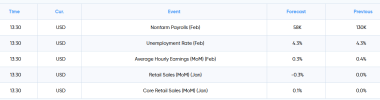
Economic Calendar​


1772527150673.png
 

Energy Risks and War Lift Dollar (03.04.2026)

Global markets remain dominated by geopolitical risk as escalating conflict between the United States, Israel, and Iran fuels a strong shift toward safe-haven assets. The dollar index hit 99.3 Wednesday, rising for a third day as conflict concerns fueled inflation and shifted Fed rate cut expectations from July to September.

The U.S. dollar strengthened, pushing the euro to year-to-date lows near $1.16 and keeping the yen weak as rising energy costs lifted inflation expectations. Disruptions in the Strait of Hormuz and halted Qatari LNG exports have intensified concerns about global energy supply, complicating central bank outlooks across Europe and the UK.

Precious metals reflected the heightened uncertainty, with gold recovering above $5,100 and silver rebounding strongly as investors sought protection amid the possibility of a prolonged conflict and delayed Federal Reserve rate cuts.

Brent crude rose toward $82 per barrel, extending gains for a fourth session as markets assessed Washington’s plan to secure oil shipments through the Strait of Hormuz. Trump stated the US International Development Finance Corporation would provide insurance support for tankers, with naval escorts available if required, in an effort to keep energy and trade flows moving through the region.

Technical Outlook on Charts

Euro Hits Year-to-Date Lows
Yen Stalls Near 157.6
Gold Climbs Amid Iran Conflict
Pound Slumps to Multi-Month Low
Silver Jumps Above $84

Economic Calendar​

1772611293523.png
 

Dollar Steadies Amid Diplomacy Hopes (03.05.2026)

The dollar index stabilized near 98.8 Thursday as a reported U.S. submarine sinking of an Iranian warship near Sri Lanka and the sixth day of the U.S.–Israeli campaign fueled fears of a prolonged, inflationary conflict.

Markets stabilized as tentative signs of diplomatic outreach in the Middle East softened the U.S. dollar and supported global assets.

The euro rebounded toward $1.165 after reports that Iran may be open to peace discussions, while the Japanese yen strengthened as inflation fears eased alongside the weaker dollar. Sterling also regained ground from recent lows as investors reassessed the potential economic impact of prolonged energy disruptions and central bank policy responses.

In Japan, the 10-year government bond yield rose nearly 5 basis points to around 2.15% following a strong auction of 30-year bonds. The 30-year yield also climbed to about 3.4%, rebounding from last month’s three-month low of 3.25%.

Precious metals continued to attract demand, with gold extending its recovery above $5,170 and silver approaching $85 amid ongoing geopolitical uncertainty and naval clashes in the region.

Brent crude climbed more than 2% to above $83 per barrel. Military operations between the US, Israel, and Iran have now entered their sixth day, while warnings from the IRGC have effectively halted commercial shipping through the Strait of Hormuz, raising concerns about energy supply routes.

Technical Outlook on Charts

Euro Recovers Toward $1.165
Yen Strengthens Past 157
Gold Hits $5,170 as Tensions Grow
Pound Recovers Toward $1.338
Silver Nears $85 Amid Naval Conflict

Economic Calendar​


1772696819805.png
 
1f6e2-fe0f.png
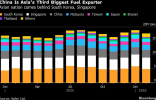
China Halts Fuel Exports
China has ordered major refiners to stop gasoline and diesel exports and halt new contracts. This move aims to protect domestic fuel reserves as Middle East tensions and supply disruptions rattle global energy markets. Beijing is prioritizing national energy security to guard against further volatility.

china-halt-fuel-exports.png

1f6e2-fe0f.png
Indian Refinery Cuts Operations on Oil Shortage
India’s Mangalore Refinery and Petrochemicals Ltd. (MRPL) has shut part of its refining operations after running short of crude oil, according to sources. The shortage is linked to supply disruptions in the Middle East and rising risks to oil shipments through the Strait of Hormuz.

The company has halted a 100,000-barrel-per-day refining unit along with several related processing units. MRPL had previously suspended fuel exports as regional tensions increased.
 
Despite global market volatility, rising oil prices are supporting energy stocks. Here are 15 oil and energy companies benefiting from the current environment.

Company nameShare symbolTraded stock exchange
Exxon MobilXOMNYSE
ChevronCVXNYSE
ConocoPhillipsCOPNYSE
Occidental PetroleumOXYNYSE
Devon EnergyDVNNYSE
Coterra EnergyCTRANYSE
SM EnergySMNYSE
Baker HughesBKRNASDAQ
HalliburtonHALNYSE
SLBSLBNYSE
Valero EnergyVLONYSE
BPBP.London Stock Exchange
ShellSHELLondon Stock Exchange
EquinorEQNR.OLEuronext Oslo Børs
TotalEnergiesTTEEuronext Paris
RepsolREPBolsa de Madrid (BME)
 

Dollar Leads Risk-Off (03.06.2026)

Global markets remained under pressure as escalating Middle East tensions and rising energy prices strengthened the US dollar and unsettled major currencies. The Trump administration is weighing oil price controls, including SPR releases, eased fuel-blending rules, and Strait of Hormuz tanker security to stabilize energy markets.

Meanwhile, Zelenskyy offered the US and Middle East allies Ukrainian expertise in countering Iranian drones in exchange for more Patriot missile systems to replenish Kyiv's stockpiles.

The dollar index held near 99 Friday, eyeing a 1% weekly gain as Iran-Israel tensions and rising oil prices spurred safe-haven demand and expectations for delayed Fed rate cuts.

The euro hovered near 1.1620 with bearish momentum building, while the yen weakened further as Japan’s heavy energy dependence amplified the impact of higher oil prices. Sterling also remained weak near multi-month lows as geopolitical risks and downgraded UK growth prospects complicated the Bank of England’s policy outlook.

The offshore yuan climbed to approximately 6.9 per dollar, reclaiming ground after recent losses as China continues to expand the currency's international footprint

Precious metals showed mixed performance, with gold slipping toward $5,080 under the weight of stronger yields and a firm dollar, while silver rebounded modestly despite a steep weekly decline.

Brent crude futures fell 2% toward $84.0 per barrel on Friday, retreating after the Trump administration signaled plans to cool energy costs.

The Nasdaq 100 displayed resilience on Friday, trading above 25,000 despite ongoing Middle East tensions.

Technical Outlook on Charts

Euro Under Pressure Near 1.1620
Yen Weakens Near 157.5
Gold Slips Near $5,080
Pound Slumps Toward $1.335
Silver Gains as Metals Rebound

Economic Calendar​


1772784988642.png
 

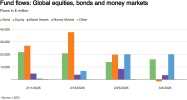
Equity Funds Exit After 8 Weeks

equity-funds.png
Global equity funds saw their first outflows in eight weeks as Middle East tensions and surging energy costs fueled inflation fears. While investors retreated from stocks, capital shifted into bonds and money market funds.

Yet, energy-specific funds attracted fresh inflows as oil prices climbed, reflecting a tactical hedge against rising crude costs and a broader move toward safe-haven stability.
 

Natural Gas Markets Face Turbulence

EU-natural-gas-futures.png
European natural gas markets turned volatile after tensions in the Middle East escalated and a major LNG facility in Qatar temporarily halted production following a reported drone attack linked to the Iran–Israel conflict. The incident quickly pushed gas prices higher as traders reacted to the possibility of supply disruptions. Qatar is one of the world’s key LNG exporters, supplying large volumes to both Europe and Asia, so even a short disruption can move markets.

The broader concern is the Strait of Hormuz, a critical route for global energy shipments. Any threat to shipping through this corridor immediately raises supply risks and adds a premium to energy prices. For now, markets are in wait-and-see mode. If production resumes and shipping remains uninterrupted, prices may stabilize, but continued tensions could keep natural gas markets volatile, especially as Europe remains sensitive to supply shocks.
 

Could Oil Reach $100 Again?

oil-prices-100.png

Oil markets have turned volatile again as tensions in the Middle East escalate. Recent military actions involving the U.S., Israel, and Iran have pushed energy security back into focus, and traders quickly added a risk premium to crude prices. Brent recently posted one of its strongest short-term rallies in years.

Much of the concern centers on the Strait of Hormuz, one of the world’s most critical energy chokepoints. Any disruption here could tighten supply quickly. Even without a full shutdown, risks such as tanker delays, higher insurance costs, or reduced shipping activity can push prices higher.

That said, markets have remained relatively cautious after the initial spike. Oil often jumps on headlines but stabilizes if production and export flows continue. Whether crude can move toward $100 per barrel will largely depend on how the conflict develops. A direct disruption to exports or infrastructure could push prices into triple digits.
 

Oil Shock Drives Dollar Higher (03.09.2026)

Global markets opened the week under pressure as escalating Middle East tensions and disruptions in the Strait of Hormuz pushed oil prices above $100 per barrel.

Significant supply tightening drove the move: Iraqi output fell 70% to 1.3 million barrels per day, Kuwait declared force majeure, and Qatar cut LNG production. Analysts warn Saudi Arabia and the UAE may also reduce output as storage reaches capacity.

This spike fueled inflation fears, driving the US dollar to safe-haven highs while the Euro ($1.15), Pound ($1.33), and Yen (158.5) hit multi week lows. Equities tumbled, with the US 100 Tech Index falling 1.5% and major Asian indices dropping over 6% at the open.

The situation strengthened the U.S. dollar and weighed heavily on major currencies, sending the euro to a three-month low and pushing the yen to its weakest level in six weeks. Rising oil prices have also intensified global inflation concerns, complicating the outlook for central banks in Europe, Japan, and the United States.

Precious metals showed mixed performance, with gold slipping under the weight of a stronger dollar while silver declined sharply as energy-driven inflation fears reduced expectations for near-term Federal Reserve rate cuts.

Technical Outlook on Charts

Energy Costs Weigh on Euro
Yen Hits Six-Week Low
Gold Falls Below $5,100
War Risks Push Pound Lower
Oil Rally Weighs on Silver

Economic Calendar​


1773042966654.png
 

Energy Costs Still Affect Markets (03.10.2026)

Currency markets remained volatile as ongoing Middle East tensions continued to shape global sentiment.

The euro slipped to a three-month low near $1.156 as investors favored the safety of the U.S. dollar and rising energy prices fueled inflation concerns in the eurozone. Meanwhile, the Japanese yen recovered modestly on improved domestic data and easing oil pressure. Sterling remained under pressure near multi-month lows amid geopolitical tensions and shifting expectations for Bank of England policy.

Precious metals moved higher as the dollar softened, with gold rebounding toward $5,180 and silver recovering strongly after a brief drop.

Brent crude fell below $95 per barrel on Tuesday, reversing a surge toward $120. The decline followed President Trump’s claims that the Iran conflict is ending and US military operations are ahead of schedule.

Nasdaq 100 rose 1.32% to 24,851, climbing 324 points from the prior session. The index has advanced 1.39% over the past four weeks and maintains a strong 12-month gain of 28.25%.

The offshore yuan held near 6.89 per USD, struggling to recover after hitting a onemonth low. Investors are currently weighing President Trump’s Middle East commentary against China’s record $213 billion trade surplus for January–February.

Technical Outlook on Charts

EUR/USD Falls to $1.156
Yen Rebounds on Strong Data
Gold Recovers on Dollar Retreat
GBP/USD Drops to $1.33
Silver Rebounds Above $80

Economic Calendar​

1773130317857.png
 

Energy Uncertainty Keeps the Pressure (03.11.2026)

Global markets remained cautious as investors weighed the economic impact of the ongoing Middle East conflict and volatile energy prices.

The euro stayed near two-month lows around $1.16 as rising energy costs threatened to reignite inflation across the eurozone and complicate the European Central Bank’s policy outlook. Meanwhile, the Japanese yen weakened further amid conflicting signals about the duration of the conflict and Japan’s vulnerability to energy shocks. Precious metals moved higher as gold climbed above $5,200 on continued geopolitical risk, while sterling recovered modestly as optimism over easing energy pressures helped investors step away from the U.S. dollar.

Brent crude traded below $90 per barrel after a sharp drop in the previous session. Prices eased following reports that the International Energy Agency may release emergency oil reserves on a scale. On the other hand, major producers in the Middle East have reduced supply by more than 6 million barrels per day while the strait remains largely closed.

Technical Outlook on Charts

Euro Pressured by Energy Risks
Yen Weakens Amid Mixed Signals
Gold Rises Amid War Signals
Sterling Recovers on Optimism
Silver Rebounds to $89

Economic Calendar​


1773214663317.png
 
change-in-NFP.jpg

US employment data continues to face persistent downward revisions, raising questions about the real strength of the labor market. Over the past 13 months, payroll figures have been revised lower every month, with a total reduction of around 710,000 jobs compared to the initial estimates. This suggests that employment was overestimated by roughly 55,000 jobs per month on average.

Recent revisions also pushed January payrolls down by 4,000 and December by 65,000, bringing December’s final reading to -17,000 jobs, marking the fifth contraction in the past nine months. Since January 2024, employment data has been revised downward in 24 of the past 25 months, reinforcing concerns that US labor market data may be less reliable than previously assumed.
 
Fed-balance-sheet.jpg

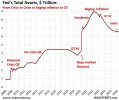
The Federal Reserve balance sheet expanded again in February, rising by $42 billion to $6.63 trillion, the second highest level since August. Since the launch of the Reserve Management Purchases (RMPs) program in December, total assets have increased by $93 billion. Under this program, the Fed is purchasing roughly $40 billion in Treasury securities each month, a process expected to continue until mid-April.

Treasury holdings saw a notable rise, increasing by $55 billion last month to reach a record $344 billion. In contrast, mortgage-backed securities (MBS) declined by $13 billion in February, falling to $2.01 trillion. Despite this reduction, MBS holdings remain 27% below their peak, equivalent to a decline of about $730 billion.

Overall, the Fed’s balance sheet continues to expand, reflecting ongoing liquidity support in financial markets.
 

Cooling Inflation Meets Rising Geopolitical Risks


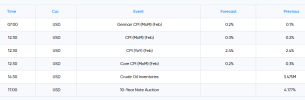
US CPI (MoM )(Feb)
Actual: 0.3%
Expected: 0.3%
Previous 0.2%

US Core CPI YoY
Actual 2.5%
Expected 2.5%
Previous 2.5%

The latest US CPI report shows inflation continuing to cool. Core CPI increased about 0.2% month-over-month, with annual core inflation near 2.5%, largely in line with expectations. Headline inflation also remained moderate at roughly 2.4% year-over-year, suggesting price pressures had been stabilizing.

However, market attention has shifted toward geopolitical tensions and rising energy prices. The conflict in the Middle East has pushed oil and gas prices higher, raising concerns that energy costs could revive inflation pressures in the coming months.

As a result, investors are now watching commodity markets and geopolitical developments more closely than backward-looking inflation data.
 

Dollar Leads as Markets Reprice Risk (03.12.2026)

Currency markets remained under pressure as energy-driven inflation concerns and ongoing geopolitical tensions continued to support the U.S. dollar.

Nasdaq 100 traded near 24,718, showing only a slight daily gain. Yearly performance remains strong with gains exceeding 28%.

The euro dropped to multi-month lows below $1.16 as traders adjusted expectations toward tighter European Central Bank policy. Meanwhile, the Japanese yen weakened toward an 18-month low near 159 as rising oil prices highlighted Japan’s vulnerability to energy disruptions.

In contrast, sterling showed modest resilience above $1.34 as easing oil prices helped stabilize sentiment and reduced expectations for aggressive Bank of England rate cuts. The offshore yuan strengthened beyond 6.86 per dollar, extending gains for a fourth consecutive session after strong trade data improved sentiment.

Precious metals struggled under the weight of a stronger dollar and rising yields, with gold slipping below $5,150 and silver pulling back toward $84.

Brent crude surged toward $100 per barrel as tanker attacks forced Iraq to halt key oil terminals and the Strait of Hormuz remained largely closed. Although the IEA approved a record 400-million-barrel reserve release, markets doubt it will fully offset tightening supply.

Technical Outlook on Charts

Euro Hits Multi-Month Lows
Yen Nears 18 Month Lows
Gold Dips Amid Inflation Fears
Sterling Holds Above $1.34
Silver Pulls Back to $84

Economic Calendar​


1773299512865.png
 

Market Round-Up: Middle East Tensions Keep Markets on Edge

Global markets remain focused on the US–Israel–Iran conflict, as rising tensions continue to influence energy prices, inflation expectations, and central bank outlooks. ECB policymaker Peter Kazimir warned that higher energy costs could push inflation higher, meaning discussions about rate cuts are now largely off the table.

Recent developments shaping the markets include:
  • US forces reportedly sank several Iranian vessels near the Strait of Hormuz.
  • G7 countries and the IEA agreed to release large amounts of oil from strategic reserves to stabilize supply.
  • The US EIA now expects Brent around $78 and WTI near $73 this year.
  • Japan may also release oil from its own strategic reserves.
The conflict is still evolving, and the UN estimates the economic damage at nearly $1 billion per day.

Markets remain highly sensitive to headlines, especially those related to oil supply risks, inflation, and central bank policy.