Elliott Wave Analysis by EWF

Hello fellow traders. In this technical article we’re going to look at the Elliott Wave charts of Dollar index DXY published in members area of the website. US Dollar has recently given us Double Three pull back and found sellers again precisely at the equal legs area as we expected. In this discussion, we’ll break down the Elliott Wave pattern and forecast.

Elliott Wave Double Three Pattern

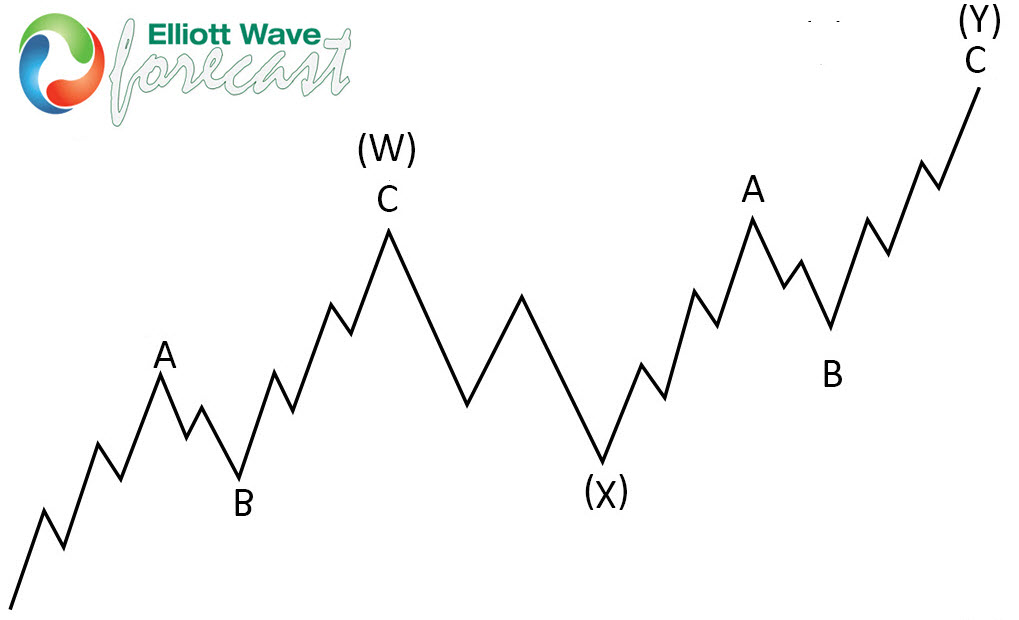
Double three is the common pattern in the market , also known as 7 swing structure. It’s a reliable pattern which is giving us good trading entries with clearly defined invalidation levels.
The picture below presents what Elliott Wave Double Three pattern looks like. It has (W),(X),(Y) labeling and 3,3,3 inner structure, which means all of these 3 legs are corrective sequences. Each (W) and (Y) are made of 3 swings , they’re having A,B,C structure in lower degree, or alternatively they can have W,X,Y labeling.

DXY

DXY Elliott Wave 4 Hour Chart 01.12.2026​

DXY is forming a Double Three pattern. As our members know, we identify potential reversal zones using the Equal Legs technique — in this case, the sellers’ area lies at 99.286–99.984. The correction looks incomplete at the moment. We expect the Dollar to make another wave up to complete a 7-swing pattern. As long as the price stays within this region, we expect sellers to take control and push it down toward new lows. We recommend that members avoid buying the Dollar at this stage, while favoring the short side.

You can learn more about Elliott Wave Patterns at our​

90% of traders fail because they don’t understand market patterns. Are you in the top 10%? Test yourself with this advanced Elliott Wave Test

DXY

DXY Elliott Wave 4 Hour Chart 01.12.2026​

The Dollar found sellers at the marked Equal Legs zone, as expected. DXY made a sharp drop from the sellers’ zone. The recovery peaked at 99.492. As long as it remains below that high, the next leg down should be in progress toward new lows. We expect to see break of December 23rd low in upcoming days.

Remember, the market is dynamic, and the presented view may have changed in the meantime. For the most recent charts and target levels, please refer to the membership area of the site. The best instruments to trade are those with incomplete bullish or bearish swing sequences. We put them in Sequence Report and best among them are presented in the Live Trading Room

Reminder for members: Our chat rooms in the membership area are available 24 hours a day, providing expert insights on market trends and Elliott Wave analysis. Don’t hesitate to reach out with any questions about the market, Elliott Wave patterns, or technical analysis. We’re here to help.

DXY

Source: https://elliottwave-forecast.com/forex/dollar-index-dxy-elliott-wave-forecasting-decline/

 
Hello fellow traders. In this technical article we’re going to look at the Elliott Wave charts of EURUSD forex pair published in members area of the website. The pair has recently given us Double Three pull back and found buyers again precisely at the equal legs area as we expected. In the following text, we’ll explain the Elliott Wave count.

EURUSD Elliott Wave 4 Hour Chart 01.12.2026​

EURUSD is currently forming an intraday three-wave pullback from recent highs. We identified a buying zone by measuring the Equal Legs area using the Fibonacci extension tool, with ((w)) projected relative to ((x)). The ideal support area comes in at 1.16048–1.15112. The correction is not complete yet, and the pair could see more downside in the near term toward the marked buying zone. As long as price holds within this region, we expect buyers to step in and the rally to resume toward new highs.

You can learn more about Elliott Wave Patterns at our​

90% of traders fail because they don’t understand market patterns. Are you in the top 10%? Test yourself with this advanced Elliott Wave Test

EURUSD

EURUSD Elliott Wave 4 Hour Chart 01.12.2026​

The pair has found buyers at the Equal Legs zone , just as expected. The correction ended at the 1.15709 low, and since then, EURUSD is giving us a rally. As a result, any long positions from the equal legs zone are now risk-free.

Reminder for members: Our chat rooms in the membership area are available 24 hours a day, providing expert insights on market trends and Elliott Wave analysis. Don’t hesitate to reach out with any questions about the market, Elliott Wave patterns, or technical analysis. We’re here to help.

EURUSD

Source: https://elliottwave-forecast.com/forex/eurusd-elliott-wave-rally-double-three/
 
Hello everyone! In today’s article, we’ll review the recent performance of Alibaba Group. ($BABA) through the lens of Elliott Wave Theory. We’ll review how the rally from the Jan 8th 2026 low unfolded as a 5-wave impulse followed by a 3-swing correction (ABC) and discuss what could come next. Let’s explore the structure and the expectations for this stock.

5 Wave Impulse Structure + ABC correction​

$GOOGL

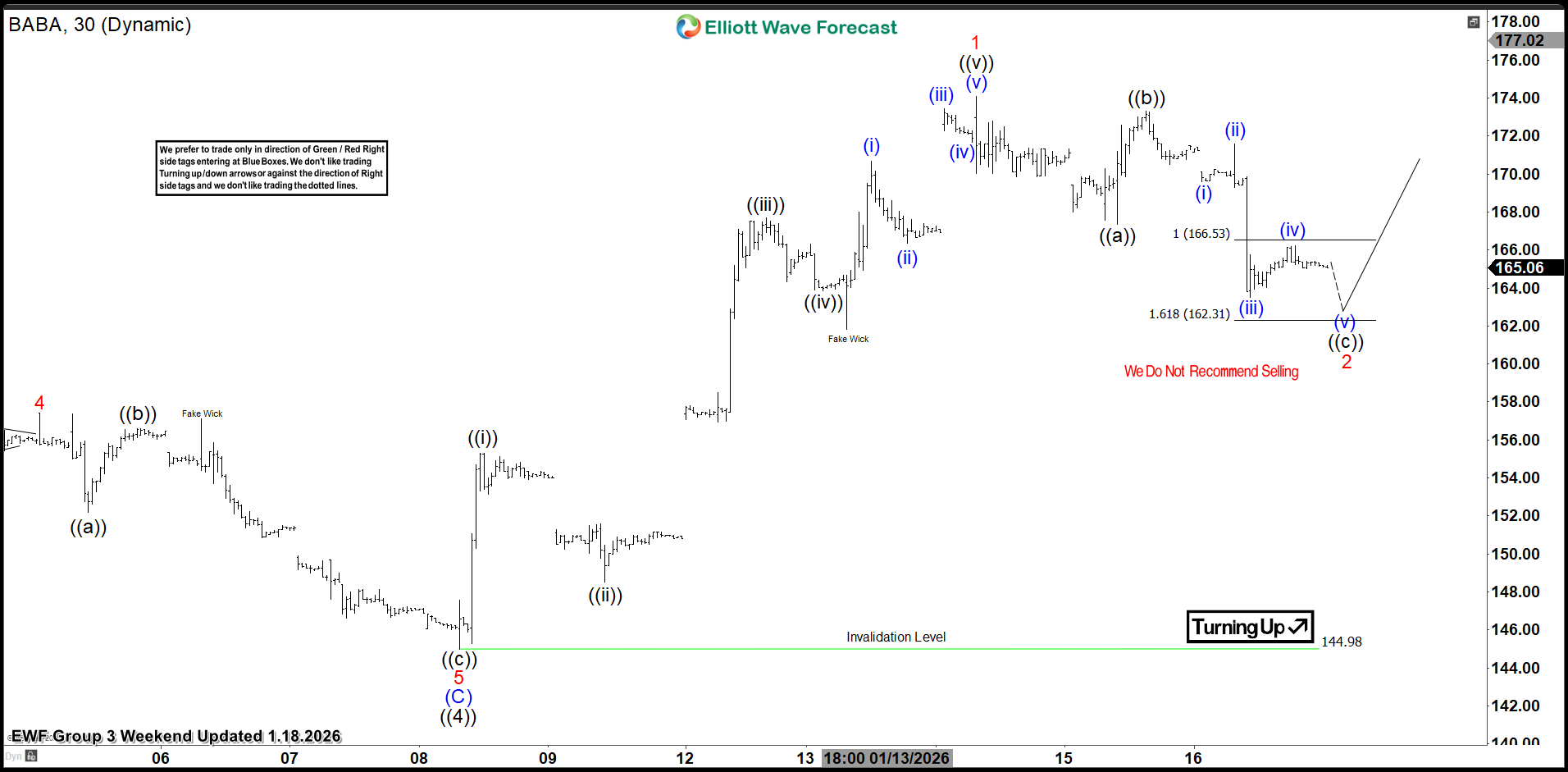
$BABA 1H Elliott Wave Chart 1.18.2026:​

$BABA
In the 1H chart from Jan 18, 2026, $BABA completed a clear 5-wave impulsive cycle labeled red 1. After such a move, a corrective pullback is typical. As expected, the stock began to retrace in three swings, forming what we identify as an ABC correction.

The price action suggested that buyers would likely appear near the extreme area between $166.53 and $162.31. This zone represents the ideal region where a correction usually ends and a new bullish cycle begins.

In other words, the market took a brief pause before potentially resuming its primary uptrend. Therefore, this structure aligns well with a standard Elliott Wave correction, offering traders a technical roadmap.

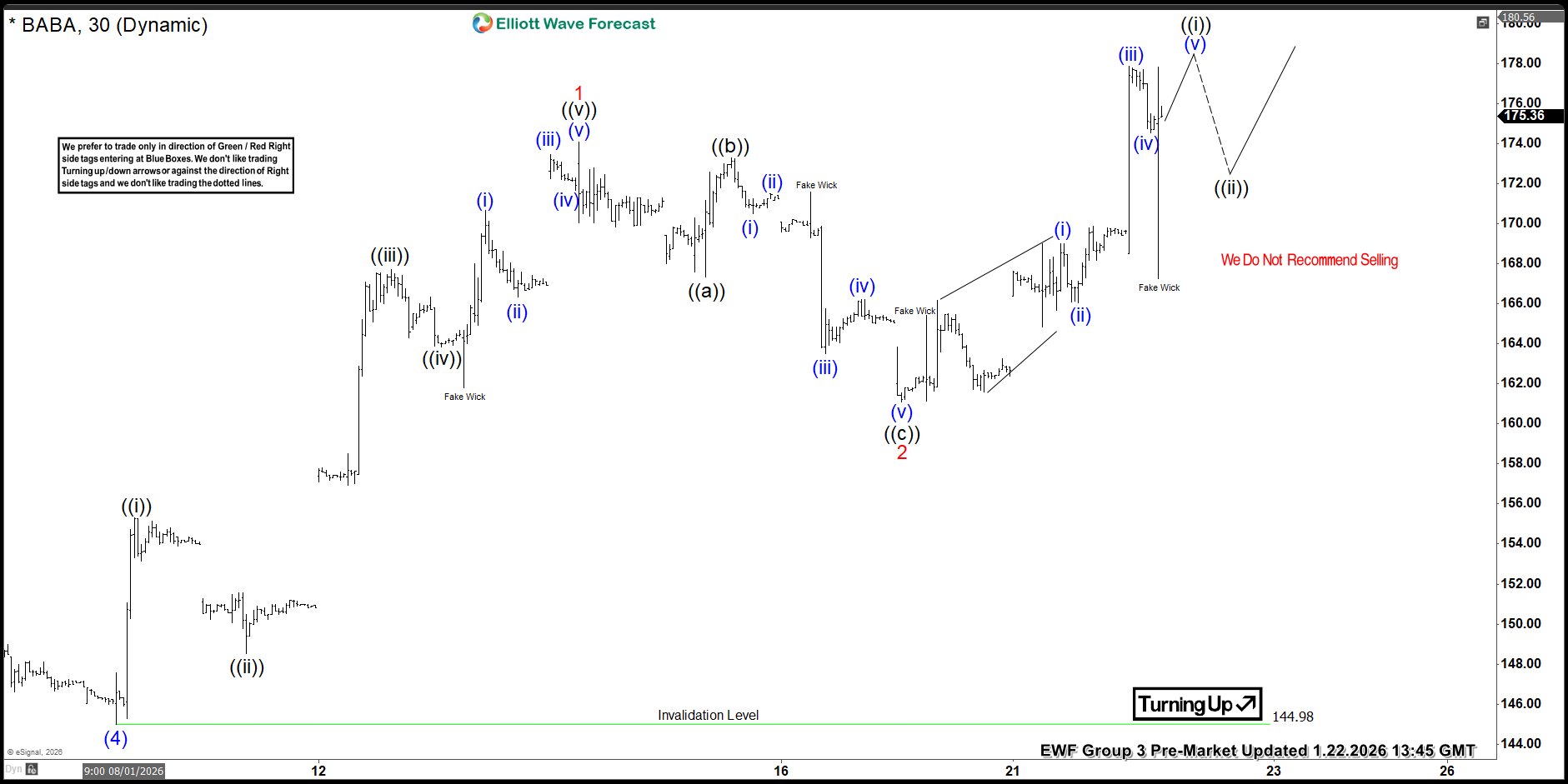
$BABA 1H Elliott Wave Chart 1.22.2026:​

$BABA

Few days later, the stock bounced and made new highs confirming the bullish trend. Currently, it is looking to remain supported against 1/20 low and higher in wave 3 of (3). Longs should be risk free and looking for $190-207 area as the next possible target.

Conclusion

In conclusion, our Elliott Wave analysis of $BABA suggests the stock continues to trade within a bullish framework. By using Elliott Wave Theory, traders can better anticipate market structure, identify continuation zones, and plan trades with greater confidence.

In addition, understanding how impulse and correction phases interact helps improve risk control, especially in volatile markets like this one. Therefore, maintaining flexibility and discipline remains key as this structure evolves.

Source: https://elliottwave-forecast.com/st...aba-extreme-area-offering-buying-opportunity/
 
Natural Gas has once again reminded traders of its explosive potential. After finding buyers at a key Fibonacci extension area, prices catapulted 146% in just 12 trading days—an extraordinary rally that left skeptics behind and rewarded those who trusted the technical confluence. This surge wasn’t just about numbers on a chart; it was a vivid demonstration of how market psychology, technical precision, and momentum can align to produce breathtaking moves. For traders and analysts alike, the rally offers a textbook case study in how Fibonacci levels can act as springboards for powerful trends. Charts often speak louder than words, so let’s turn to the charts to see how this remarkable move unfolded…

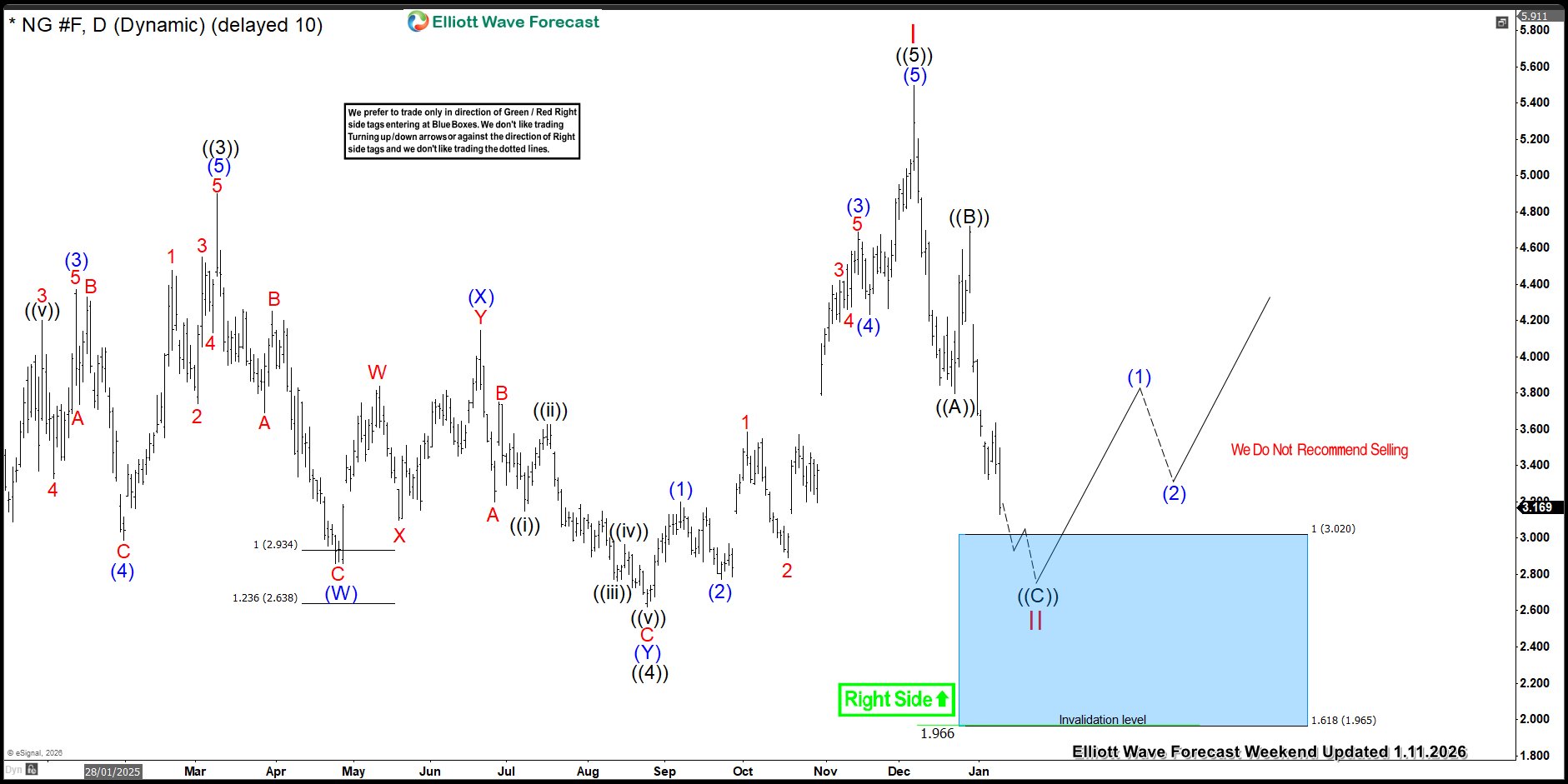
Natural Gas Daily Chart (Jan 14): Price approaches the 3.022 – 1.965 Fibonacci extension zone​


Natural Gas 11 Jan Daily Elliott Wave Chart

On the daily chart from January 11, Natural Gas was approaching the 3.022 – 1.965 blue box zone—a critical Fibonacci extension area we had been watching closely. This region carried the potential to attract buyers and set the stage for the next leg of the rally. Going to a smaller time frame, within wave (( C )), we saw wave (3) unfolded shorter than wave (1). This gave us a precise invalidation level for wave (5) of ((C)) at 3.008. A break below that level would have opened the door for a deeper pullback toward the 2.620 - 1.965 area. However, buyers stepped in just before this threshold was tested, defending the structure and reigniting the rally.

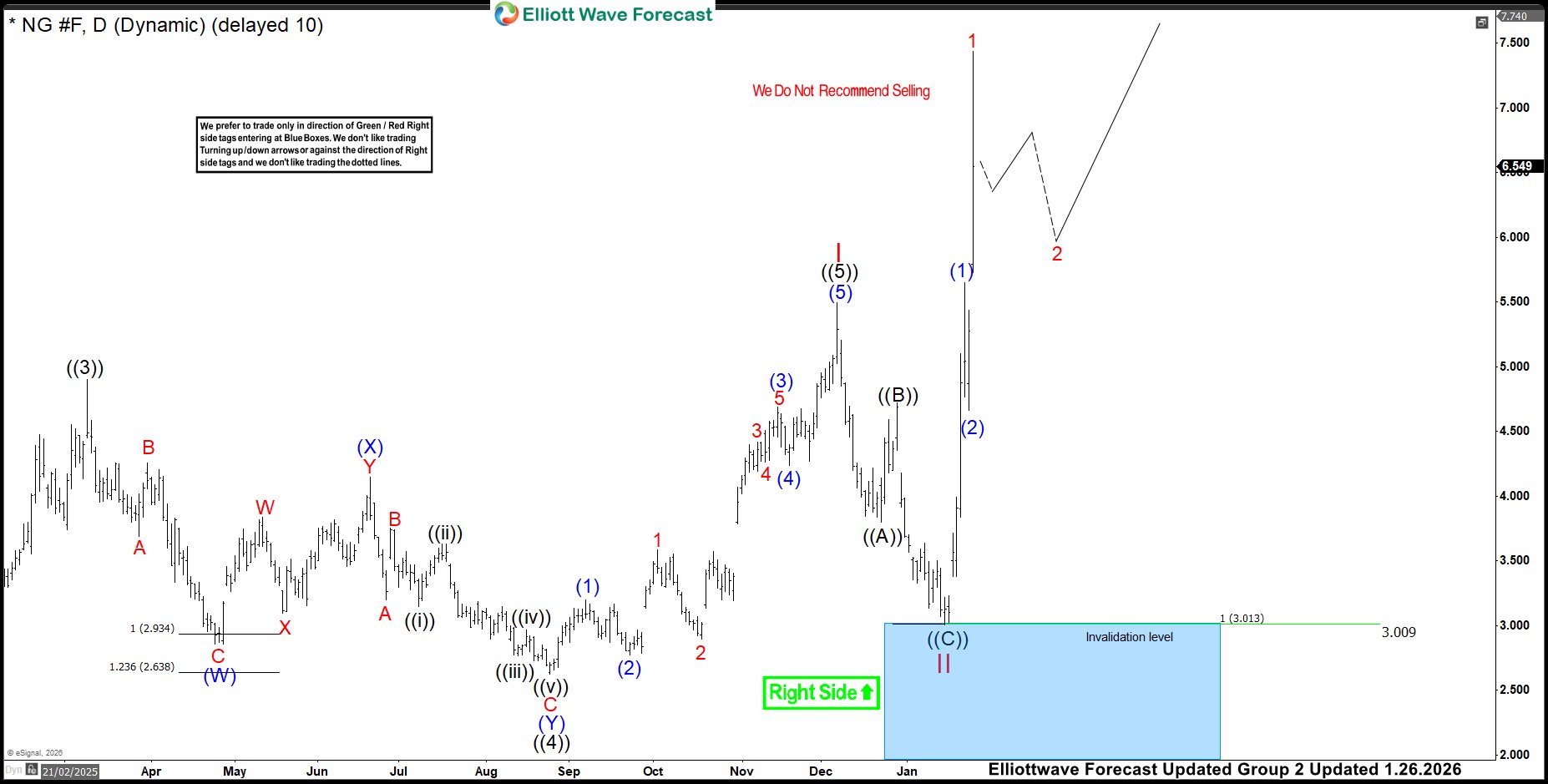
Natural Gas Daily Chart (Jan 26): Fibonacci extension zone drives a powerful 146% rally in 12 days​

Natural Gas 26 Jan Daily Elliott Wave Chart


“Daily chart from January 26 above captures the explosive rally that followed. After price respected the Blue box zone, buyers stepped in with conviction, driving Natural Gas sharply higher reaching a high of $7.439. The move unfolded with textbook momentum, surging 146% in less than two weeks and confirming the strength of the technical setup. The Natural Gas rally underscores a simple truth: Blue box zones mark decisive turning points. Recognizing these areas early can sharpen your edge, helping you anticipate momentum shifts and position yourselves in the market with confidence.

Source: https://elliottwave-forecast.com/commodities/fib-levels-fireworks-natural-gas-146-percent-rally/
 
USDCHF has provided traders with a textbook example of how Fibonacci extension zones can act as powerful resistance. After an extended move higher, price reached the 0.8020–0.8092 extension area, where sellers decisively stepped in. The rejection at this zone not only halted the advance but triggered a fresh wave of decline, reinforcing the importance of monitoring these levels for potential reversals. For traders, this setup highlights how extension zones can sharpen risk management, offer clear invalidation points, and reveal where market sentiment shifts from bullish exhaustion to renewed bearish momentum. The following charts illustrate how price action unfolded around the Fibonacci extension zone, highlighting the rejection and subsequent decline.

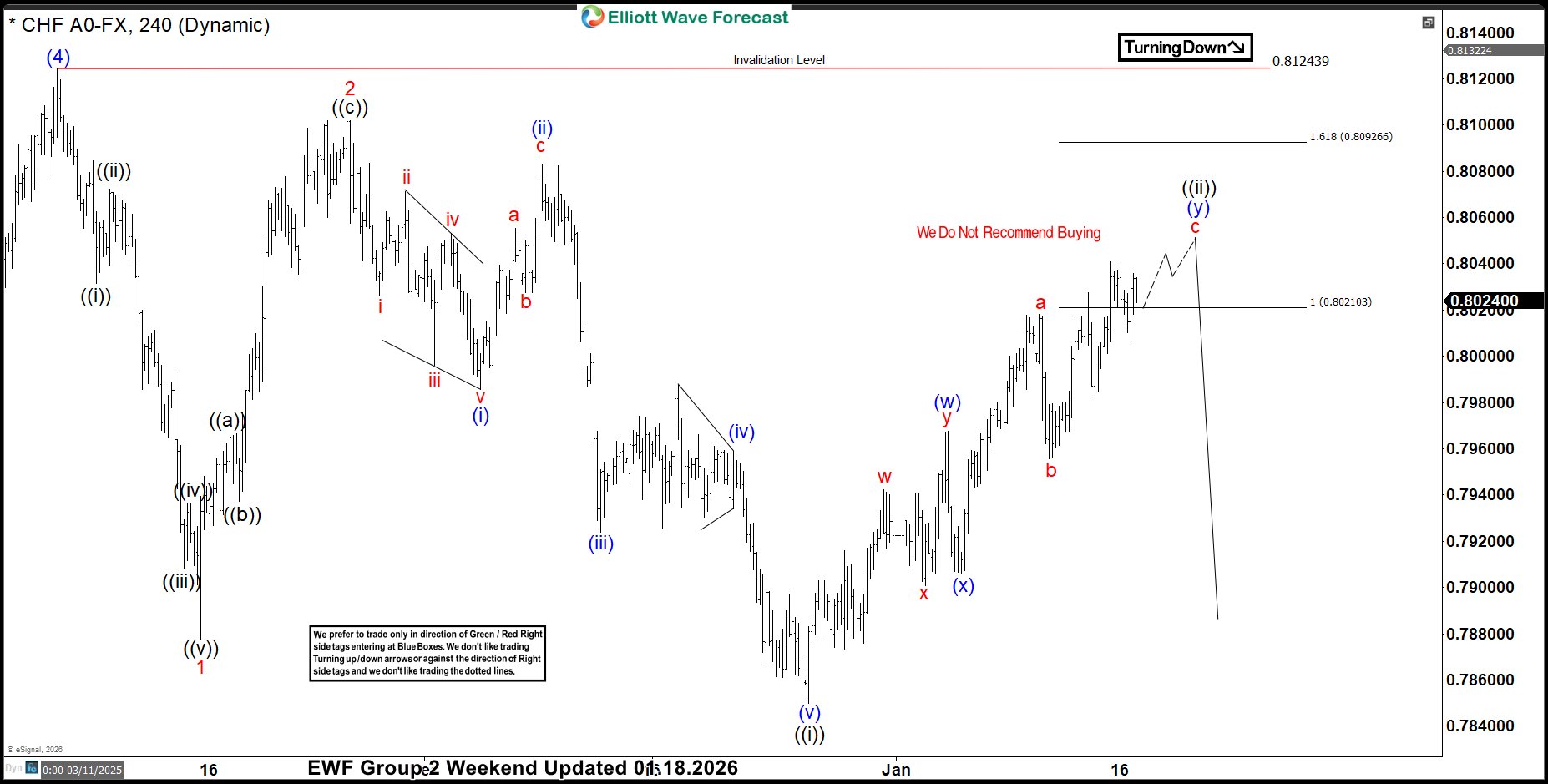
USDCHF 4‑Hour Chart (Jan 18): Sellers Emerged at 0.8020–0.8092, Rejecting Resistance and Driving Price Lower​

USDCHF 4 Hour Elliott Wave Chart Jan 18

The decline in USDCHF from the November 5 peak unfolded in three waves, suggesting that subsequent bounces were likely to fail in either 3, 7, or 11 swings for an extension lower as far as November 25 high remained intacct. The 4‑hour chart from January 18 captures the advance from the December 25 low, which developed in seven swings and was expected to terminate between 0.8020–0.8092 before the downtrend resumed. The 0.81018 level serves as the key invalidation point—holding below this resistance keeps the bearish view intact and reinforces the expectation of further decline.

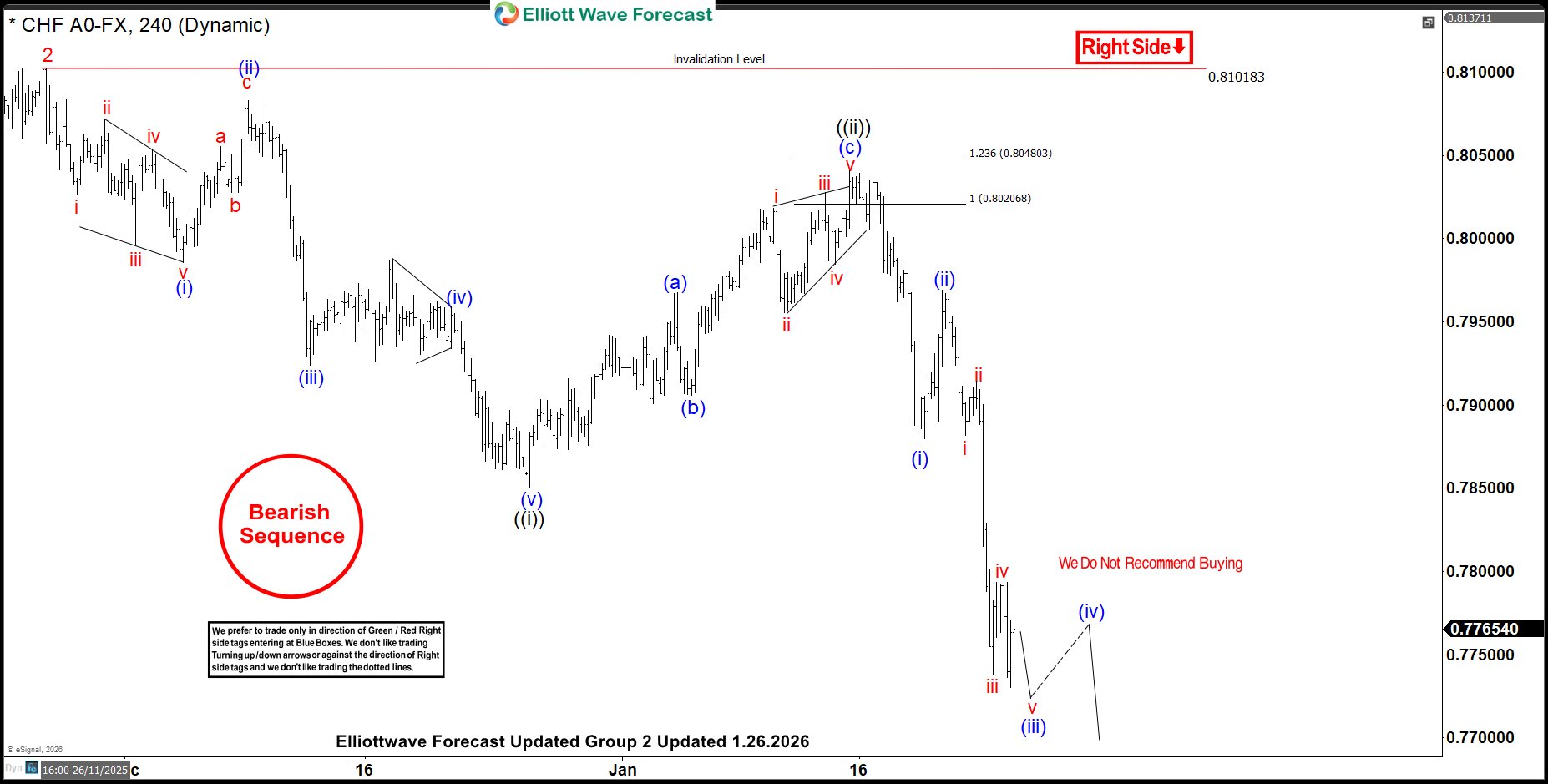
USDCHF 4‑Hour Chart (Jan 26): Sellers defended 0.8020–0.8092, breaking September 17 low and driving wave ((iii)) lower.​

USDCHF Jan 26 4 Hour Elliott Wave Chart

USDCHF found sellers in the 0.8020–0.8092 Fibonacci extension area and resumed its decline. Price has already broken below the September 17 low and is currently unfolding wave ((iii)) of 3 down from the November 5 peak. The pair has reached the 100% Fibonacci extension of wave ((i)) relative to wave ((ii)), but ideally should extend toward 0.7625, which represents the 161.8% extension—a typical level for wave ((iii)) to complete. In the near term, any corrective bounces are expected to fail in 3, 7, or 11 swings, offering traders short‑term selling opportunities for further downside.

The rejection at the 0.8020–0.8092 zone and the unfolding wave ((iii)) decline highlight how Fibonacci extensions and Elliott Wave structures can provide traders with a clear technical roadmap. Staying ahead of these setups requires timely analysis and disciplined execution. By joining our services, traders gain access to real‑time charts, actionable forecasts, and educational insights designed to sharpen decision‑making and keep them ahead of the crowd. If you want to consistently spot opportunities like this USDCHF setup and Blue Box Trade Setups before the market reacts, our community and resources are built to guide you every step of the way!

Source: https://elliottwave-forecast.com/fo...ect-fibonacci-extension-zone-decline-resumes/
 
Elliott Wave Theory states that market trends unfold in five impulsive waves and correct in three waves. Building on this foundation, EWF has developed an enhanced and more systematic approach to Elliott Wave analysis by integrating wave sequences and high-frequency trading concepts,. We discussed this topic in our article The Elliott Wave Theory and High-Frequency Trading. This evolution of the theory allows us to identify higher-probability entry zones with greater precision and consistency for our members. We will utilize this concept in evaluating Delta Airlines (DAL).

Financial markets do not operate in isolation. Rather, they move as a unified system. As a result, our methodology begins by identifying dominant market cycles and correlating them across multiple instruments. This process enables us to isolate a “middle group” of instruments that align with the prevailing cycle and position ourselves on the right side of the market. The underlying principle remains that trends develop in five waves, and within each five-wave structure, there exists a smaller-degree five-wave formation. This fractal repetition is central to Elliott Wave Theory and forms the basis of our analytical framework.

A key enhancement in our approach is the use of wave sequences. When markets are trending or unfolding within an impulsive phase, sequences typically complete in 5, 9, or 13 swings. During corrective phases, sequences tend to complete in 3, 7, or 11 swings. When a sequence remains incomplete, the probability increases significantly that price will extend further in the same direction to complete that sequence. We therefore monitor every swing closely, focusing on identifying incomplete sequences as high-probability trading opportunities.

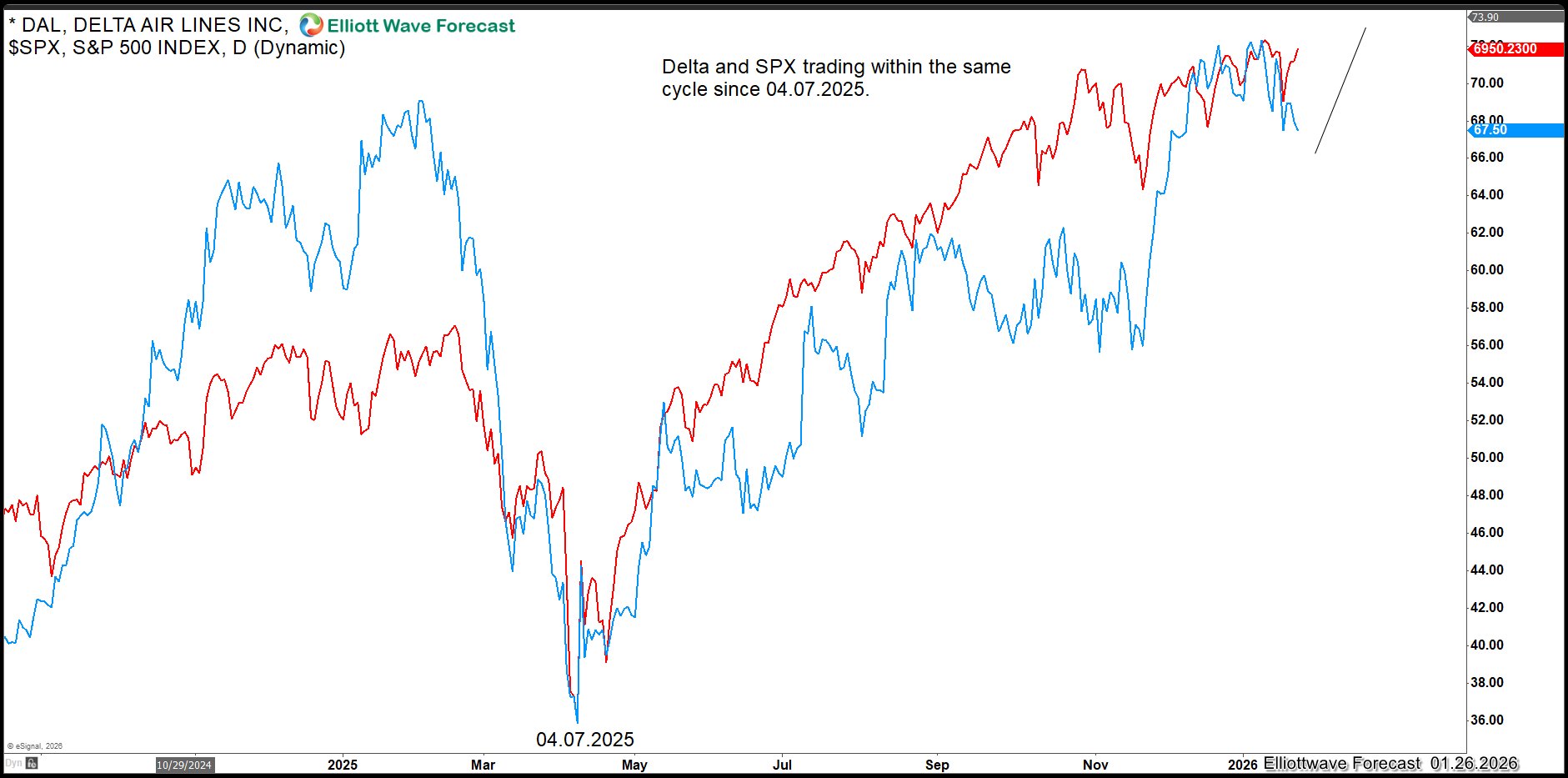
The broader market context supports this approach. The chart of $DAL and $SPX from the lows of April 7, 2025, illustrates a synchronized daily cycle across most risk assets. By analyzing these charts collectively, we are able to define the prevailing cycle and then scan individual instruments for incomplete sequences. When such conditions are present, we consistently anticipate extensions in the direction of the dominant trend. Here is a Daily chart showing $SPX and $DAL since the lows at 04.07.2025.

$DAL and $SPX Show Synchronized Daily Cycle​


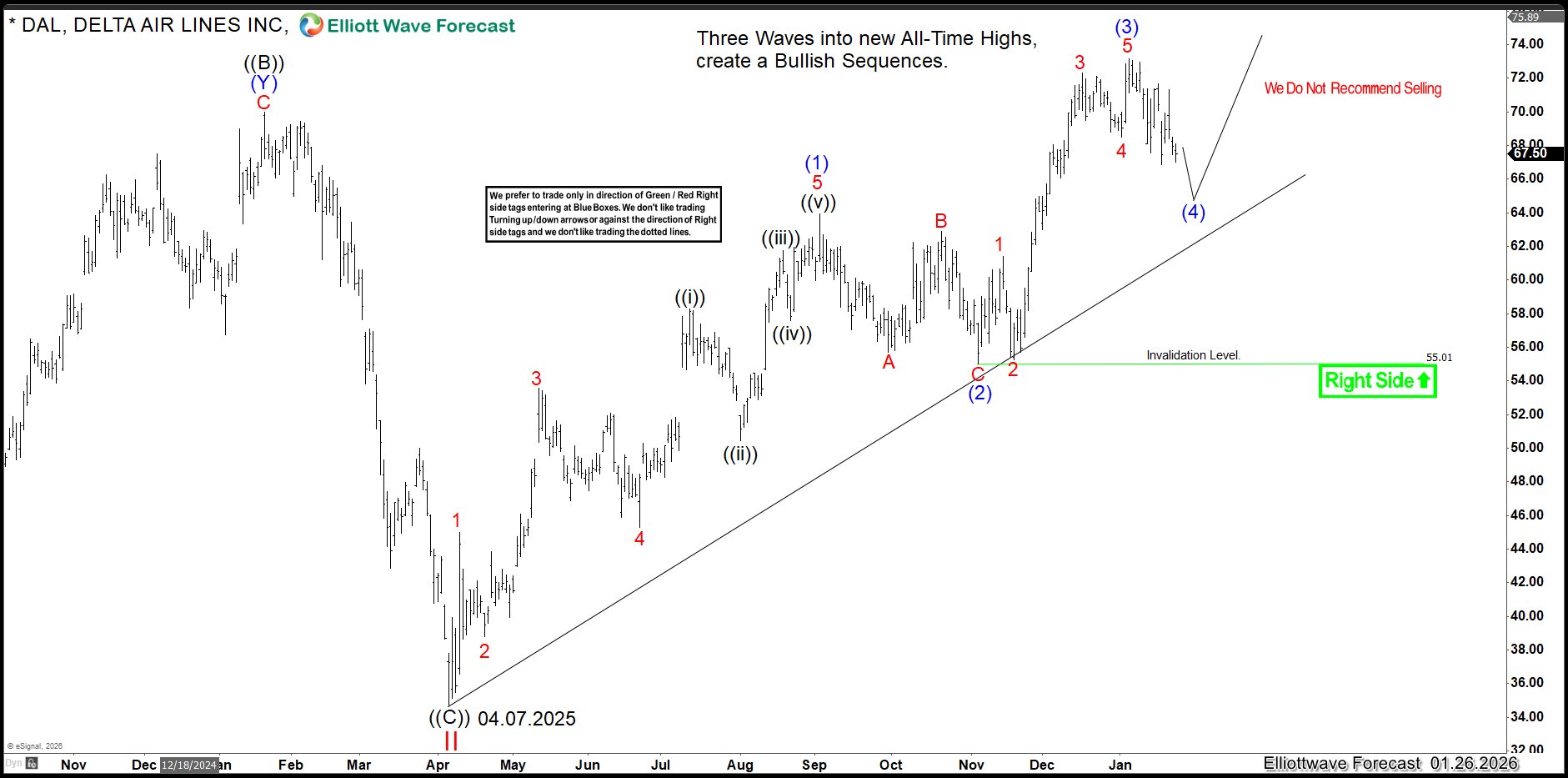
Focusing specifically on Delta Air Lines ($DAL), the price action since the April 4, 2025 low has unfolded in three waves into new highs. According to Elliott Wave Theory, a sustained trend cannot terminate in three waves; trends must complete in five waves. Therefore, we are comfortable looking for buying opportunities during corrective phases consisting of three, seven, or eleven swings, measured against the wave ((2)) lows. Here is the latest Daily chart showing the idea.

$DAL Monthly Elliott Wave Chart​


To further refine risk management, we have developed a pivot-based system that identifies potential market traps, such as flat corrections. A flat is the only Elliott Wave structure that allows three waves into new all-time highs; however, even in such cases, the broader directional bias remains intact. This system helps us distinguish between corrective noise and genuine trend changes.

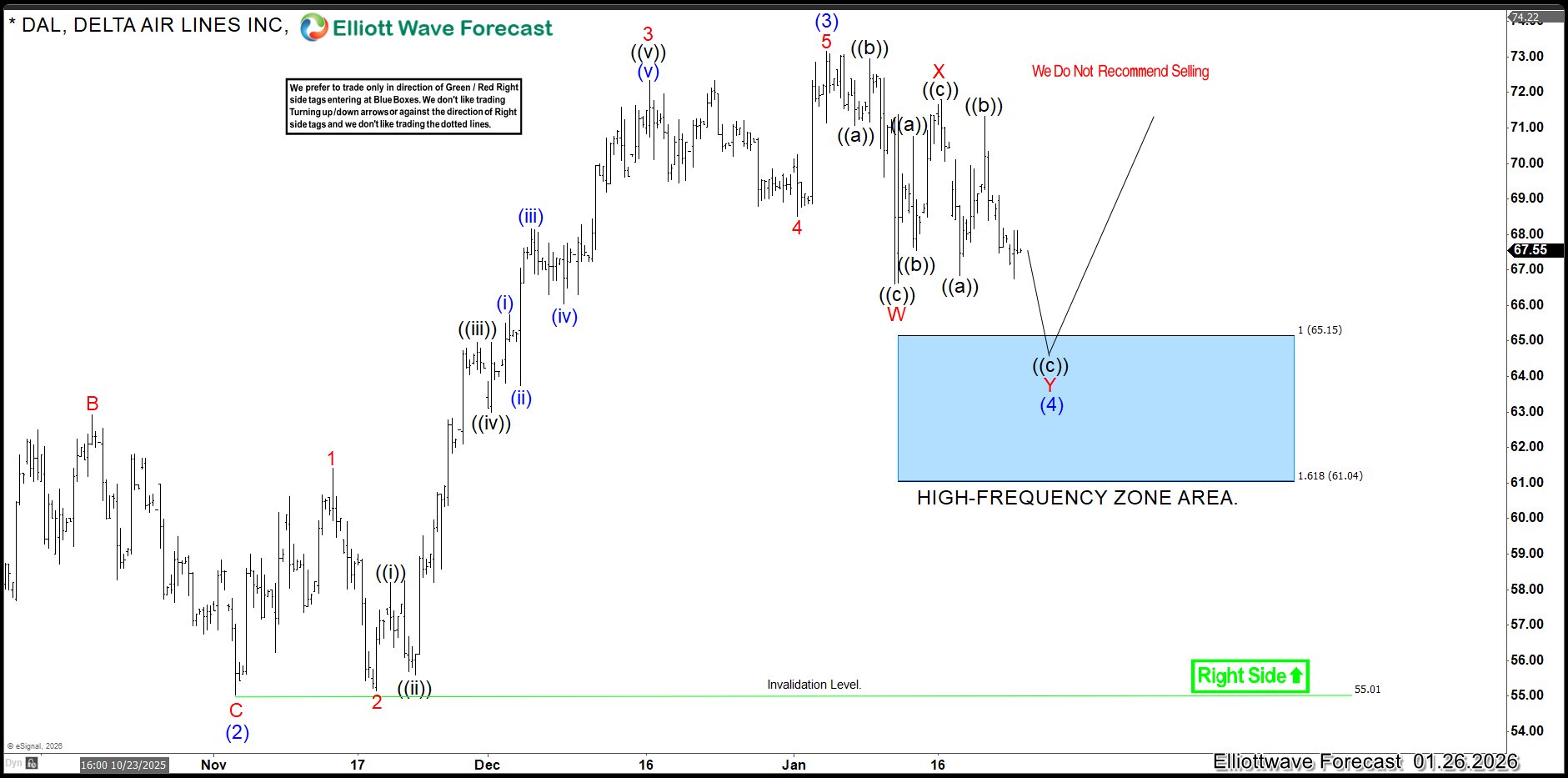
Currently, Delta Air Lines presents an incomplete sequence, making it an ideal candidate for applying high-frequency precision to trend entries. The structure from the recent peak is unfolding as a WXY corrective pattern, which consists of seven swings. Based on this structure, our proprietary methodology identifies a high-probability buying zone—the Blue Box area between $65.37 and $61.37. From this region, Delta Air Lines has a statistically higher likelihood of resuming the primary uptrend. Here is the 4H chart showing the High-Frequency (Blue Box) area.


In conclusion, while Elliott Wave Theory is often criticized for its subjectivity, we have advanced it to a new level by incorporating sequence analysis, swing counts, pivot systems, and high-frequency trading principles. This modernized framework not only aligns Elliott Wave Theory with contemporary market dynamics heading into 2026, but also leverages technological precision to identify entry points with institutional-level accuracy. Through this integration, we are able to apply the theory in a more objective, repeatable, and actionable manner.

Source: https://elliottwave-forecast.com/st...e-next-buying-opportunity-in-delta-air-lines/
 
Costco Wholesale Corporation., (COST) engages in the operation of membership warehouse in the United States & globally together with its subsidiaries. It offers branded & private-label products in the range of merchandise categories. It also operates e-commerce websites in the US, Canada, UK & many other countries. It comes under Consumer Defensive sector & trades as “COST” ticker at Nasdaq.

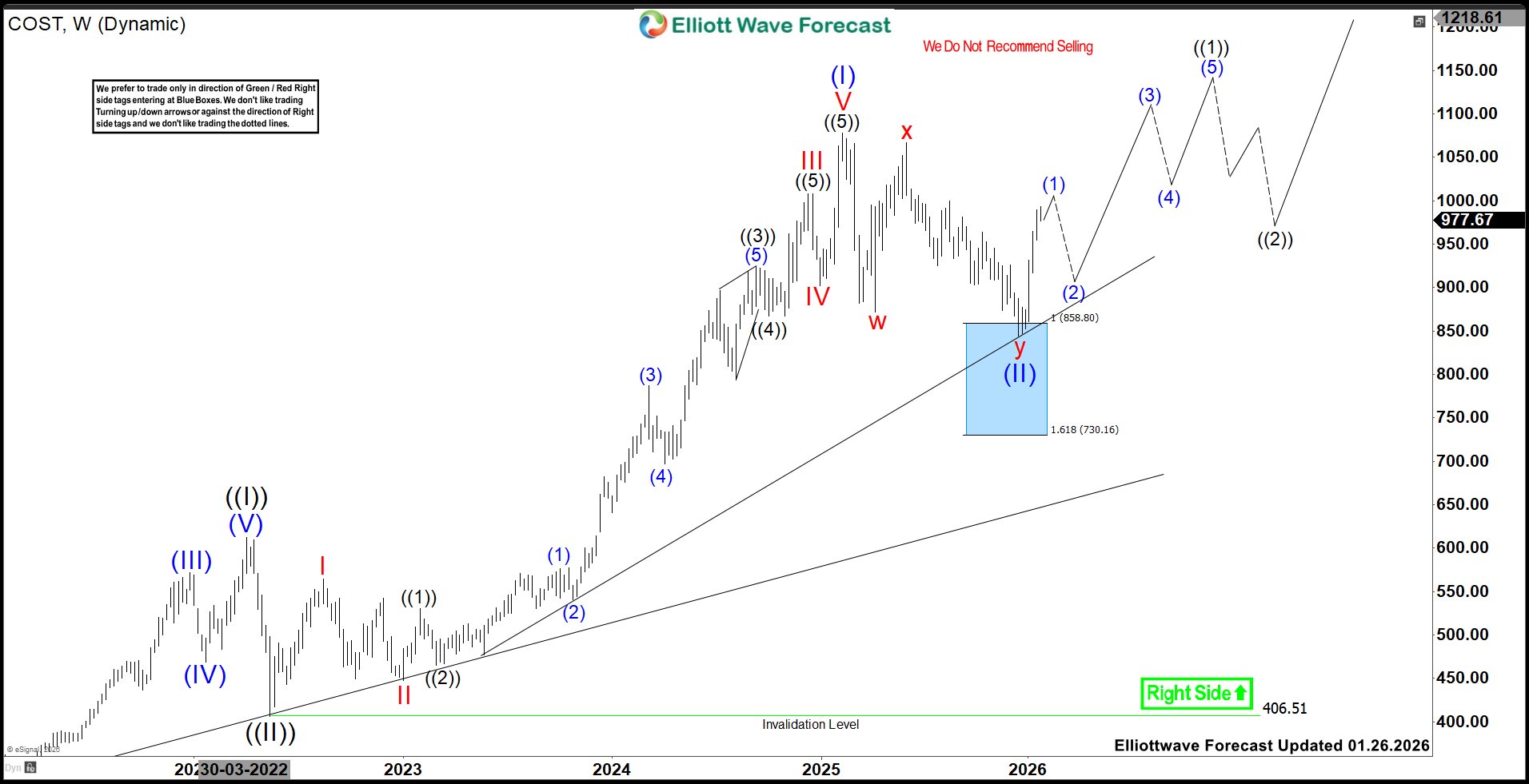
In weekly, COST is bullish nested impulse Elliott Wave sequence against May-2022 low. It found support in blue box area in December-2025 low & expect further upside in ((1)) of I, which will confirm above February-2025 high.

It ended ((I)) in weekly at $612.27 high in April-2022 & ((II)) at $406.51 in May-2022. Above there, it ended (I) of ((III)) at $1078.23 high in February-2025 high & (II) at $844.06 low. Within (I), it placed I at $564.75 high, II at $447.90 low, III at $1008.25 high, IV at $902 low & V at $1078.23 high as (I). Within III, it ended ((1)) at 530.05 high, ((2)) at $465.33 low, ((3)) at $923.83 high, ((4)) at $867.16 low & ((5)) at $1008.25 high. The (I) was having extended III wave, which indicates the strength of the trend. In (II) pullback, it ended w at $871.71 low, x at $1067.08 high & y at $844.06 low in blue box area.

COST - Elliott Wave Latest Weekly View:​

Above (II) low, it favors rally in (1) of ((1)) of I of (III). It expects small upside to end the (1) in five swings in 4-hour sequence before pullback in (2). It already rallied more than 50% of y leg, which allows buyers to be risk free longs. Further upside will confirm above February-2025 high. We like to remain long from blue box area. Buyers can look for target above $1515 or higher, once break above February-2025 peak. Alternatively, it may fail below February-2025 peak in 3 swings before doing larger double correction in (II), if breaks below $844.06 low.

Source: https://elliottwave-forecast.com/st...llish-setup-rally-towards-1515-blue-box-area/
 
In this technical blog, we will look at the past performance of the 1-hour Elliott Wave Charts of DXY. We presented to members at the elliottwave-forecast. In which, the decline from 21 November 2025 high unfolded as an impulse structure. And showed a lower low favored more downside extension to take place. Therefore, we advised members not to buy the US dollar & sell the bounces in 3, 7, or 11 swings. Based on Elliott wave hedging area looking to get 3 wave reaction lower at least. We will explain the structure & forecast below:

DXY 1-Hour Elliott Wave Chart From 1.22.2026​

DXY Faces Persistent Selling at Extreme Equal Legs Zone

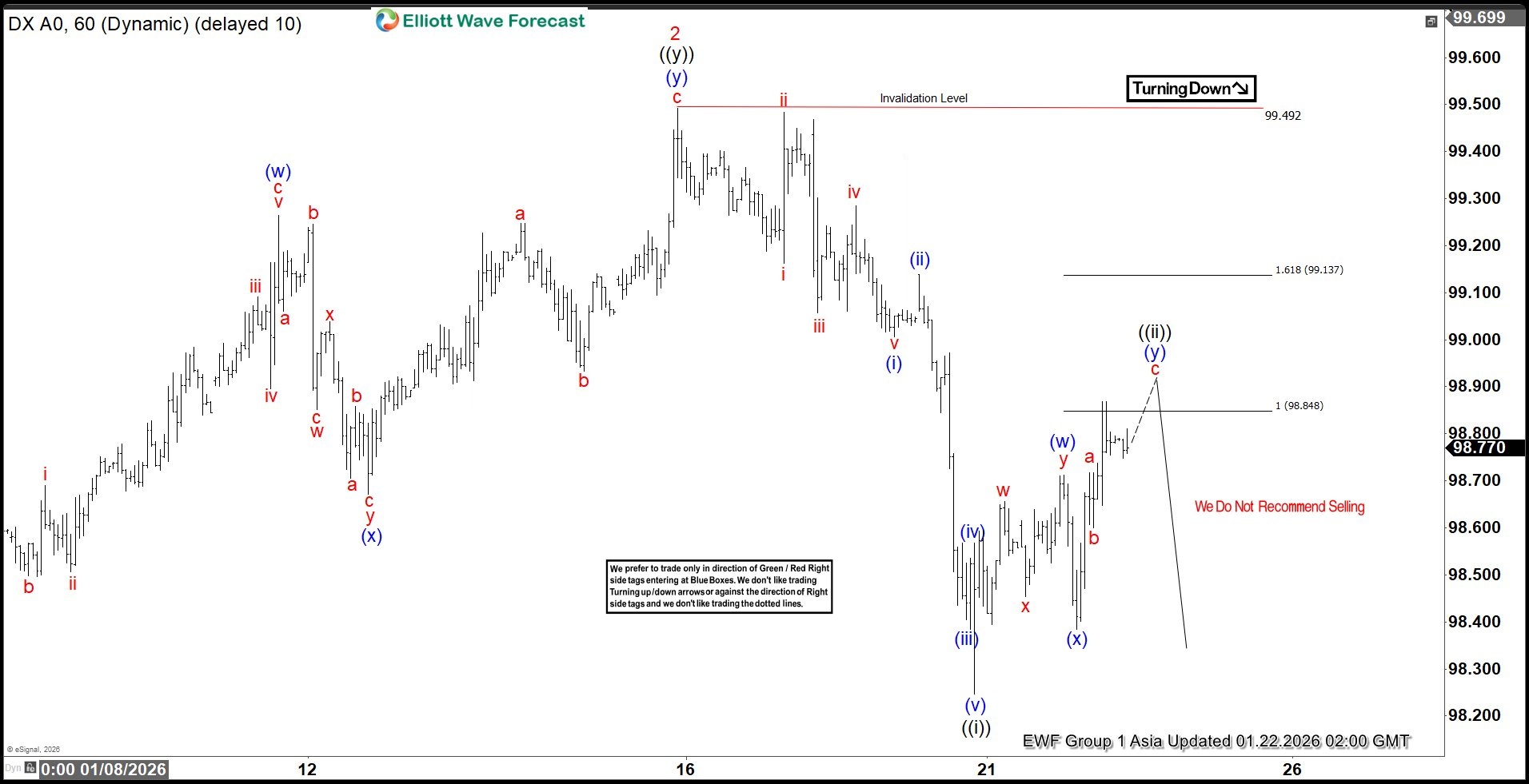
Here’s the 1-hour Elliott wave chart from the 1.22.2026 Asia update. In which, the decline to $98.24 low ended in wave ((i)) as an impulse structure. Up from there, the US dollar made a bounce higher in wave ((ii)) to correct that cycle. The internals of that pullback unfolded as Elliott wave double three structure & managed to reach the extreme equal legs area at $98.84- $99.13. From there, market makers agrees for the minimum reaction lower to take place.

DXY 1-Hour Elliott Wave Chart From 1.26.2026​

DXY Faces Persistent Selling at Extreme Equal Legs Zone

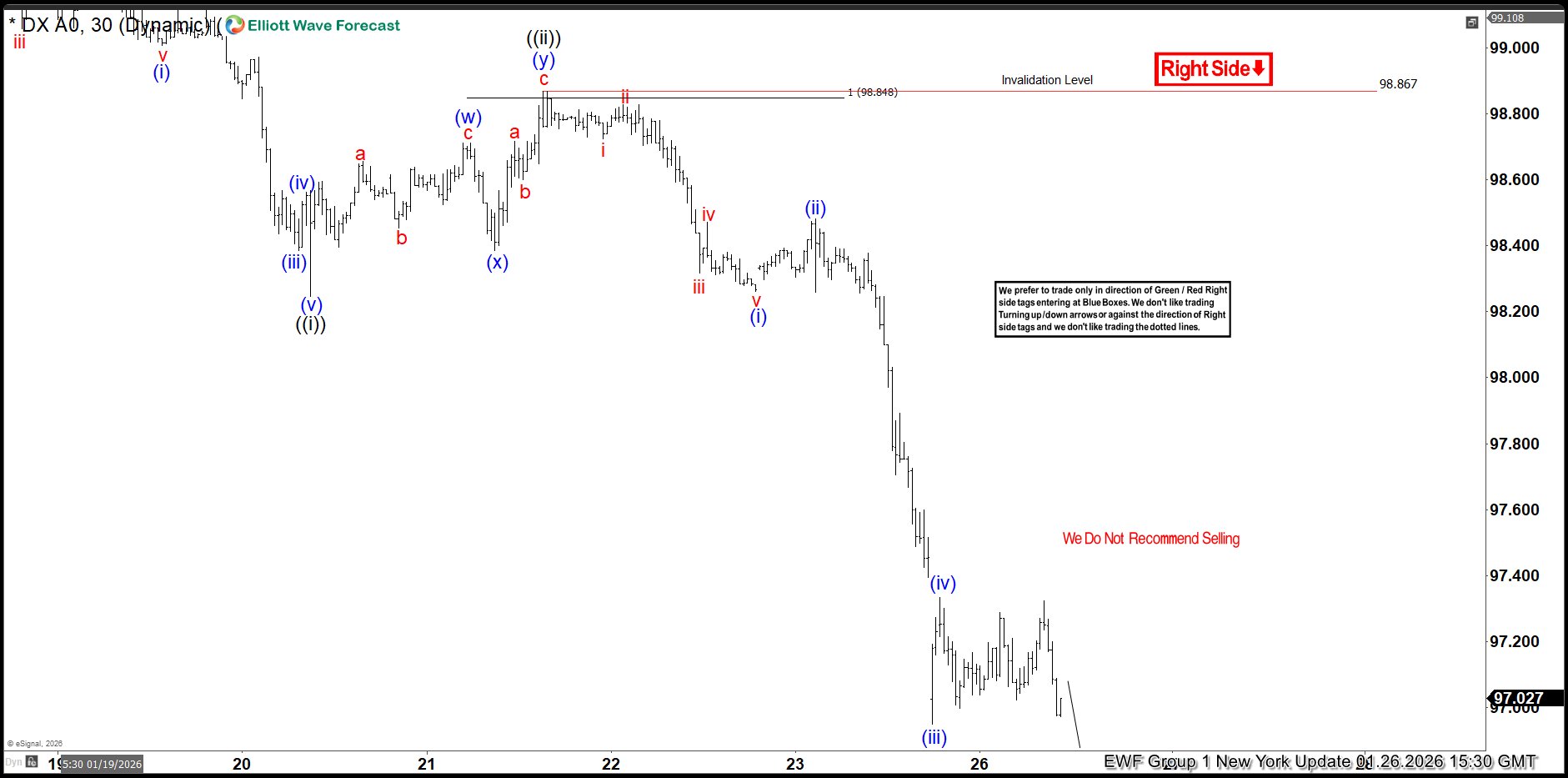
This is the 1-hour Elliott wave Chart from 1.26.2026 NY update. In which the DXY is showing a strong reaction lower taking place, right after ending the correction within the equal legs area. Allowed members to create a risk-free position shortly after taking the short position. Since then, the index has already made a new low below September 2025 low confirming the next leg lower.

Source: https://elliottwave-forecast.com/forex/dxy-faces-persistent-selling/
 
Cameco is a leading Canadian uranium producer based in Saskatoon. The company operates some of the world’s highest‑grade and lowest‑cost uranium mines. It also maintains a significant presence across the nuclear fuel cycle through refining, conversion, and fuel‑manufacturing assets. In this article, we will look at the long term Elliott Wave path.

Cameco ($CCJ) Monthly Elliott Wave Chart​


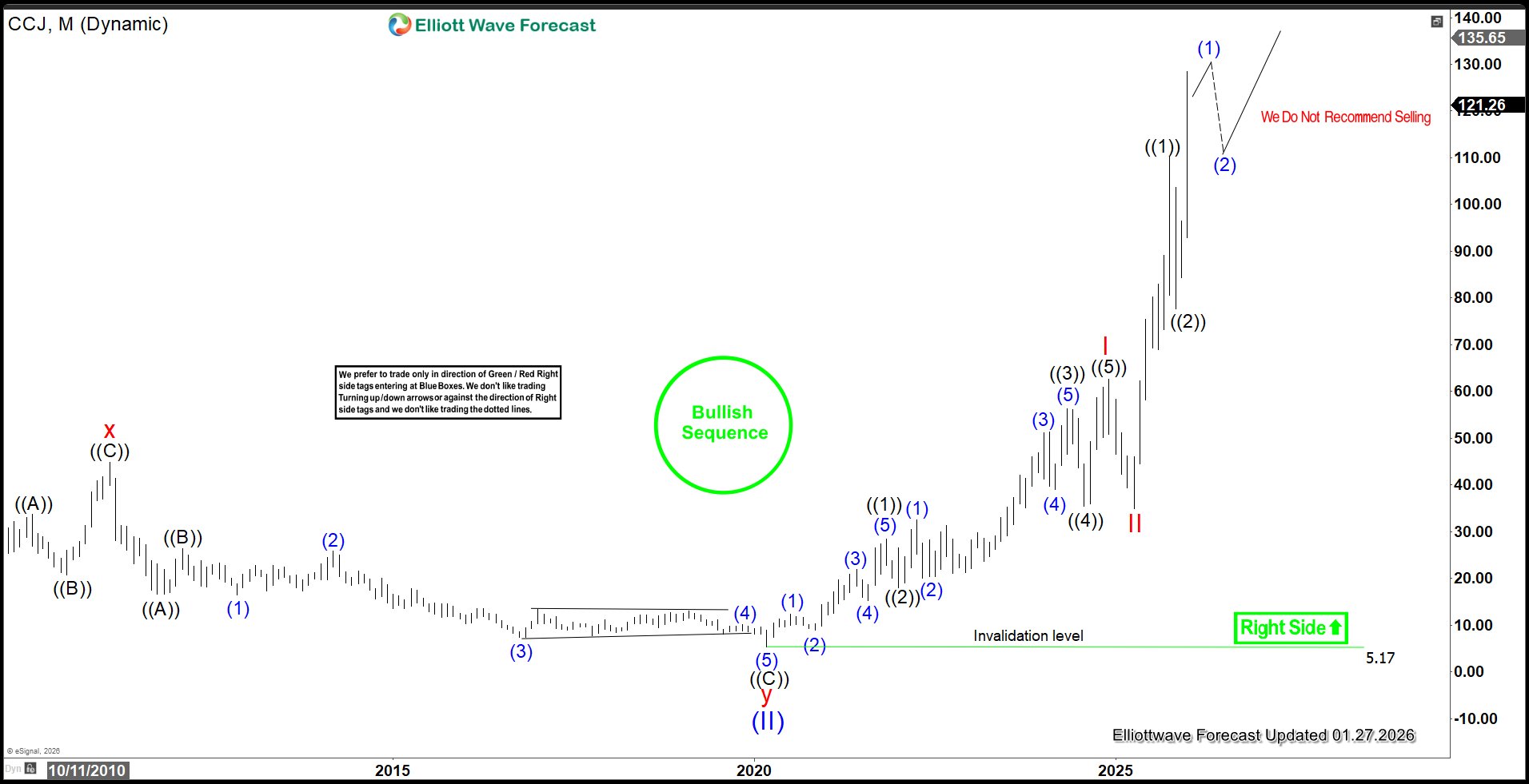
The monthly Elliott Wave chart for Cameco (CCJ) indicates that wave (II) of the Super Cycle ended at $5.17. From there, a powerful impulsive advance in wave (III) followed. From the wave (II) low, wave I completed at $62.55, and the subsequent pullback in wave II finished at $35. The stock then resumed higher in a nesting sequence, with wave ((1)) ending at $110.16 and wave ((2)) pulling back to $77.7. As long as price holds above $5.17, any pullback should find support in a 3‑, 7‑, or 11‑swing structure, with the broader trend favoring further upside.

$CCJ Daily Elliott Wave Chart​


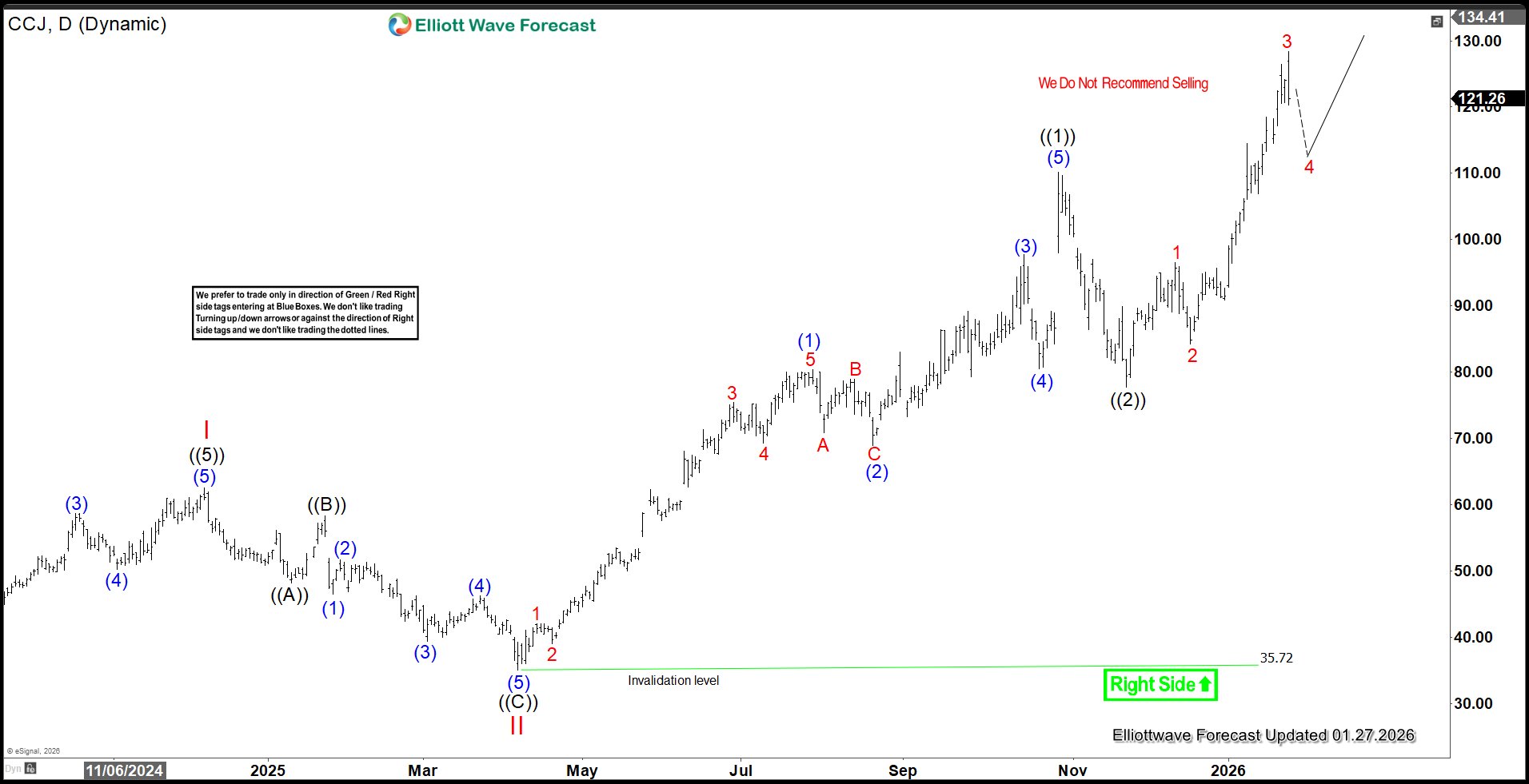
The daily Elliott Wave analysis of Cameco (CCJ) shows that wave II completed at $35.72. From that low, the stock resumed higher in wave III, which is unfolding as a five‑wave impulse. Within this advance, wave ((1)) peaked at $110.16, followed by a pullback in wave ((2)) that ended at $77.7. In the near term, as long as the pivot at $35.72 remains intact, any pullback is expected to find support in a 3‑, 7‑, or 11‑swing structure, setting the stage for further upside.

Source: https://elliottwave-forecast.com/stock-market/cameco-ccj-breaks-impulsive-strength-returns/
 
Our earlier review highlighted Robinhood‘s (NASDAQ: HOOD) bullish five-swing structure. Currently, we are analyzing the daily Elliott Wave pattern. This study clarifies the ongoing correction and prepares us for the next strategic phase ahead of a new bullish cycle.

Elliott Wave Analysis

HOOD
completed its five-wave advance in Wave I at $153.86 in October 2025. Since then, a larger Wave II correction has begun. This initial pullback should unfold as a three-wave zigzag pattern (a-b-c). The projected decline targets the Blue Box area $87 - $55 .

Our Blue Boxes mark high-frequency reversal zones. From this area, HOOD will either rally to new highs or produce a three-wave bounce. However, if the rally fails, a double three (w-x-y) correction could form later this year. This would create another buying opportunity.

Consequently, this Wave II pullback presents a strategic entry point. Afterwards, the stock will resume its weekly bullish trend. Finally, this will ignite a new rally toward higher highs in Wave III.

HOOD Daily Chart 2.2.2026

Robinhood Hood Daily Chart 2.2.2026

Conclusion​

HOOD's core weekly uptrend remains firmly bullish. Therefore, traders should target strategic entries during daily pullbacks. Apply our Elliott Wave methodology for precise timing. More precisely, enter the market after a 3, 7, or 11-swing correction finishes.

Additionally, our proprietary Blue Box system identifies high-probability reversal zones. This disciplined approach provides clarity and confidence. Ultimately, it positions you to capture the next major advance.

Source: https://elliottwave-forecast.com/stock-market/hood-next-high-probability-zone/
 

Post Wave II Base Near ₹194.80 Signals Fresh Bullish Cycle With Strong Upside Potential​

Eternal Ltd has completed a meaningful corrective phase and is now showing early signs of a fresh bullish cycle. After ending a larger degree wave II correction near 194.80, price action has started to turn higher. This level acted as a strong base, and buyers stepped in with strength, suggesting that the larger uptrend remains intact. From an Elliott Wave perspective, the stock now appears to be progressing through the early stages of wave III, which is usually the most powerful phase in any bullish cycle.

The initial move higher from the 194.80 low unfolded in a clean five-wave impulsive structure, labeled as wave ((1)). This kind of price action reflects strong demand and often marks the start of a new trend. After completing wave ((1)), the stock pulled back in a three-wave ABC pattern, forming wave ((2)). This correction retraced close to 61.8% of wave ((1)), which is a common Fibonacci level for wave two pullbacks. The reaction near this zone suggests that selling pressure is weakening and that the correction is either complete around the 250 area or very close to ending.

ETERNAL_2026-02-02_22-00-10-scaled.png


What Comes Next for Eternal?​

With wave ((2)) near completion, Eternal Ltd is well positioned to resume higher in wave ((3)). This phase is typically strong, fast, and broad-based, as more participants join the trend. As long as price remains above the invalidation level near the prior wave II low, the bullish structure stays valid. The overall pattern favors further upside rather than a deeper decline.

Looking ahead, the Elliott Wave projections point toward new potential highs in the coming months. The initial upside target for wave ((3)) comes near the 470 region, which aligns with key Fibonacci relationships from the prior impulse. Beyond that, if momentum remains strong and the broader market supports the move, price can extend further toward the 690 area before any major corrective phase takes shape. These levels reflect typical extensions seen in third waves within a larger impulsive sequence.

Summary​

In summary, Eternal Ltd has respected key Elliott Wave and Fibonacci levels well. The stock completed a larger wave II correction near 194.80, delivered a clear five-wave advance in wave ((1)), and corrected in a controlled manner into wave ((2)). With the structure now pointing higher, the path of least resistance remains to the upside. As long as price holds above key support, the bullish outlook remains intact, and the stock is expected to work higher toward the 470 and potentially 690 targets over time.

Source: https://elliottwave-forecast.com/st...t-wave-iii-setup-points-to-₹470-₹690-targets/
 

Wave IV consolidation since late 2021 appears to be maturing near key support. Elliott Wave structure favors a Wave V breakout toward the 6,600–6,800 zone​

Avenue Supermarts Ltd. (DMart) is showing a strong bullish structure on the weekly chart based on Elliott Wave theory. The long-term trend turned positive after the stock formed a major bottom at blue wave (II). From this low, DMart started a new bullish cycle and completed a clear five-wave impulsive move in wave I. This was followed by a healthy correction in wave II, which set the base for the next rally.

After the wave II low, DMart delivered another strong five-wave advance in wave III. This confirmed the continuation of the long-term uptrend. Since late 2021, the stock has been moving sideways and forming a broad consolidation. This phase is marked as wave IV. The correction has been ongoing for a long time, which makes the overall setup stronger. Long consolidations often prepare the ground for the next trending move.

DMART_2026-02-02_22-26-10-scaled.png


Within wave IV, the price action has shaped into a five-legged contracting triangle pattern. This is a common Elliott Wave structure that appears before the final wave of an impulsive cycle. The triangle reflects tight price movement and declining volatility. Such patterns usually resolve with a strong breakout.

The key support and invalidation level remains near 3,186. As long as DMart share price stays above this level, the bullish Elliott Wave count remains valid. A sustained move higher from the current range would confirm that wave V has started. If this scenario plays out, the next upside target for DMart lies near the 6,600–6,800 zone over the medium to long term.

Summary​

In summary, DMart remains in a long-term bullish Elliott Wave cycle. The completion of a five-legged contracting triangle in wave IV suggests that the stock is preparing for the next impulsive leg higher. A confirmed break and hold above 3186 would strengthen the case for wave V targeting the 6631 area in the coming phase. For trend-aligned investors, the current structure favors positioning in the direction of the broader bullish trend rather than selling into consolidation.

Source: https://elliottwave-forecast.com/st...mart-elliott-wave-analysis-long-term-outlook/
 
Bloom Energy Corporation., (BE) designs, manufactures, sells & install solid-oxide fuel cell systems for on-site power generation in the United States & globally. It offers Bloom Energy Server, a power generation platform to convert different fuels like Natural gas, Biogas, Hydrogen or blended fuel into electricity through electrochemical process. It comes under Industrials sector & trades at “BE” ticker at NYSE.

The BE favors impulse rally in ((1)) of III as broke above November-2025 high. It favors rally in (5) towards $165.10 - $192.81 area to end ((1)) started from 12.17.2025 low, while above 1.27.2026 low. The chasing at this level can be risky, so better to wait for pullback in ((2)) as next opportunity.

BE - Elliott Wave Latest Daily View:​

BE-D3-1024x525.jpg

In weekly, it made all time low of $2.44 in October-2019. It placed (I) at $44.95 high of February-2021 & (II) at $8.41 low of February-2024. Above there, it ended I of (III) at $147.86 high on 11.10.2025 high & II at $75.70 low on 12.17.2025. It placed ((1)) of I at $29.82 high, ((2)) at $15.15 low, ((3)) at $125.75 high, ((4)) at $88.23 low & ((5)) at $147.86 high. Within extended ((3)), it ended (1) at $29.44 high, (2) at $24.04 low, (3) at $86.89 high, (4) at $61.37 low & (5) at $125.75 high. Below I high, it placed ((W)) at $76 low, ((X)) at $119.90 high & ((Y)) at $75.70 low as truncated move to end II correction.

BE - Elliott Wave Daily View From 12.01.2025:​

BE-D02-1024x525.jpg

Above II low, it favors (5) of ((1)) of III, while dips remain above 1.27.2026 low. It ended (1) at $96.49 high, (2) at $84.14 low, (3) at $155.87 high, (4) at $136.25 low & favors upside in (5). It expects (5) to extend into $165.10 - $192.81 area to end ((1)) before correcting in ((2)). The buyers should not chase longs at current level. Rather than, we like to buy the next pullback in ((2)) in 3, 7 or 11 swings against December-2025 low.

Source: https://elliottwave-forecast.com/stock-market/bloom-be-should-buy-breakout-wait-pullback/
 
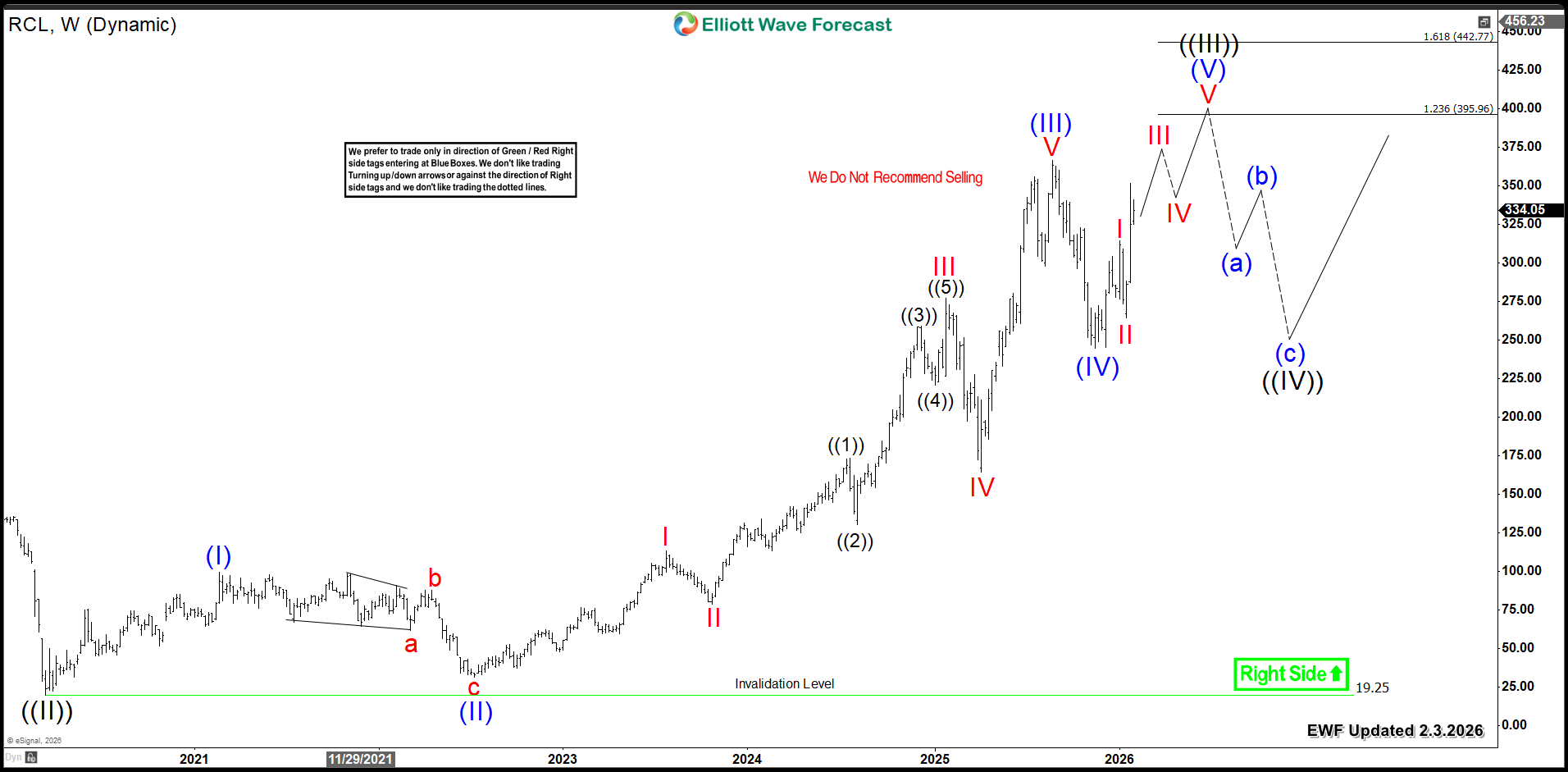
Royal Caribbean Cruises Ltd (NYSE: RCL) is a global cruise industry leader. This article analyzes its weekly Elliott Wave structure. Our examination uncovers the current bullish path and key targets ahead of the next correction.

Elliott Wave Analysis

From its 2020 low, RCL created a three-wave advance into new highs. Wave (I) ended at $99.24. Then, Wave ((2)) corrected to $31.09. Next, Wave (III) reached $336.50, and Wave (IV) finished at $244.45. Currently, the stock resumes its rally in Wave (V) of ((III)), targeting new highs.

The projected path shows an upside target of $395 - $442. Therefore, price must stay above the January 2026 low of $264. This level is essential for continuing the impulsive advance.

Wave (V) could extend beyond the regular target this year. However, once Wave ((III)) completes, a larger Wave ((IV)) correction will begin. This pullback will then present the next strategic investment opportunity.

RCL Weekly Chart 2.3.2026

Royal Caribbean RCL Weekly Chart 2.3.2026

Conclusion​

RCL's bullish cycle indicates further upside ahead. Consequently, traders should target strategic entries during corrective pullbacks. Implement our Elliott Wave methodology for precise timing. Specifically, enter the market after a 3, 7, or 11-swing correction completes. Additionally, our proprietary Blue Box system identifies high-probability reversal zones. This disciplined approach provides clarity and confidence. Ultimately, it positions you to capture the next major advance.

Source: https://elliottwave-forecast.com/stock-market/royal-caribbean-cruises-rcl-technical-push-to-400/
 
Silver has entered a significant corrective phase after reaching an all‑time high of $121.6 on January 29. The decline from this peak reveals an incomplete bearish sequence, unfolding with internal subdivisions that align with a double three Elliott Wave structure. From the January 29 high, wave ((A)) concluded at $106.76, followed by a rally in wave ((B)) that terminated at $118.46. The metal then resumed its downward trajectory in wave ((C)), which developed into a clear five‑wave structure.

Within this decline, wave (1) ended at $107.94, while wave (2) retraced to $112.48. The subsequent drop in wave (3) reached $95.06, and a corrective rally in wave (4) lifted prices to $104.05. Finally, wave (5) extended lower to $74.32, completing wave w at a higher degree. The subsequent recovery unfolded as wave x, which took the form of an expanded flat correction.

From wave w, wave ((A)) advanced to $87.92, before a pullback in wave ((B)) drove prices down to $71.31. A final push higher in wave ((C)) ended at $92.19, completing wave x. The market has since turned lower in wave y, which is subdividing into a zigzag pattern. Wave ((A)) of y is projected to extend toward the $53.7–$61.1 region. This target corresponds to the 61.8–76.4 Fibonacci extension of wave w, reinforcing its technical significance.
In the near term, traders should anticipate that any short‑lived rallies will fail within either three or seven swings, paving the way for further downside pressure. The structure suggests that silver remains vulnerable, and the corrective cycle is not yet complete.

Silver (XAGUSD) 60 minute chart

XAGUSD (Silver) Elliott Wave Chart


Source: https://elliottwave-forecast.com/news/silver-elliott-wave-view-correction-phase-or-final-high/
 
Hello traders and welcome to a new blog post where we discuss trade setups. Today, the spotlight will be on PepsiCo with the ticker $PEP. The stock broke upside last week after spending the Q4 2025 in a corrective pullback following a bullish rection to the blue box in the previous months.

PepsiCo is a global food and beverage company with the headquarters in New York. It was founded in 1965 through the merger of Pepsi-Cola and Frito-Lay. The company operates in over 200 countries and has a diverse portfolio of brands, including Pepsi, Mountain Dew, Lay’s, Doritos, Gatorade, Tropicana, and Quaker.

The stock reached an all-time high in May 2023, nearly hitting $197. This peak, based on long-term Elliott wave analysis, marked the completion of supercycle degree (III). A pullback followed for wave (IV) of the same degree, starting in May 2023 and lasting until May 2025 – a period of two years. Considering the long-term bullish trend, the pullback from May 2023 presented another opportunity to buy at lower prices. Fortunately, we covered this pullback in one of our free blog posts, which was published on February 16, 2025, using the weekly chart below.

Pepsico Weekly Chart - 16th February, 2025

Pepsico


In the chart above, we believed the corrective had a high probability of concluding within the zone marked by the blue box. Following the completion of a 7-swing structure, the post advised readers to buy at the blue box, where we anticipated wave (IV) to finish. From this point, we expected a strong bullish cycle for wave (V) to commence. Following that, we closely monitored the stock's price action, particularly its reactions to the blue box. On November 16, 2025, we delivered an update featuring the weekly chart below.

Pepsico Weekly Chart - 16th November, 2025

PEP-Weekly20251114090829-1024x521.webp


The chart above shows that after an initial impulse breakaway from the blue box, the price corrected as wave ((2)). Following the end of wave ((2)), wave ((3)) rallies should follow. In the post shared on November 16, 2025, we stated:

The new weekly chart above shows a sharp rebound. This could signify the end of wave (IV) or the start of a 3/7 swing bounce leading to a deeper wave (IV). If wave (IV) has ended, wave (V) should advance to $215 and potentially higher. However, if the bounce is corrective, buyers should anticipate a price reach of $168-$175. Traders who went long from the blue box have already reached the first target at 156.33. Therefore, while booking some profits, buyers can continue to hold the rest of their position with a stop adjusted to $127. This appears to be a solid plan.
As predicted, wave ((2)) made a new low, retesting the box. These multiple retests over a few weeks enabled more traders to participate. The anticipated surge occurred in the past two weeks, as demonstrated in the latest weekly chart below.

PepsiCo Weekly Chart - 7th February 2026

pepsico


The chart above shows a significant breakout. The price has already reached the $168-$175 target, as indicated in the previous update, and is on track for the next target of $215, at least for wave (V). Therefore, buyers should continue to hold their positions but ensure a risk-free outcome. Book some profit and adjust the remaining position to break even. This allows you to relax and free up capital for new opportunities.

Source: https://elliottwave-forecast.com/bluebox-wins/pepsico-bounces-from-blue-box-aiming-200-next/
 
JPMorgan enters Q1 with strong capital, rising earnings, and steady loan growth. The bank beat expectations with net income of $14.6B, EPS above $5, and revenue near $46B, showing resilient consumer activity and solid trading performance. Credit costs increased, but capital ratios stayed strong, keeping risk well‑contained.

For this quarter, expect stable revenue, firm profitability, and cautious credit management. Markets may stay volatile, but JPMorgan usually benefits from active trading conditions. Deposits and loans continue to grow modestly, supporting liquidity and earnings. Overall, JPMorgan should deliver steady performance with mild upside despite macro uncertainty.

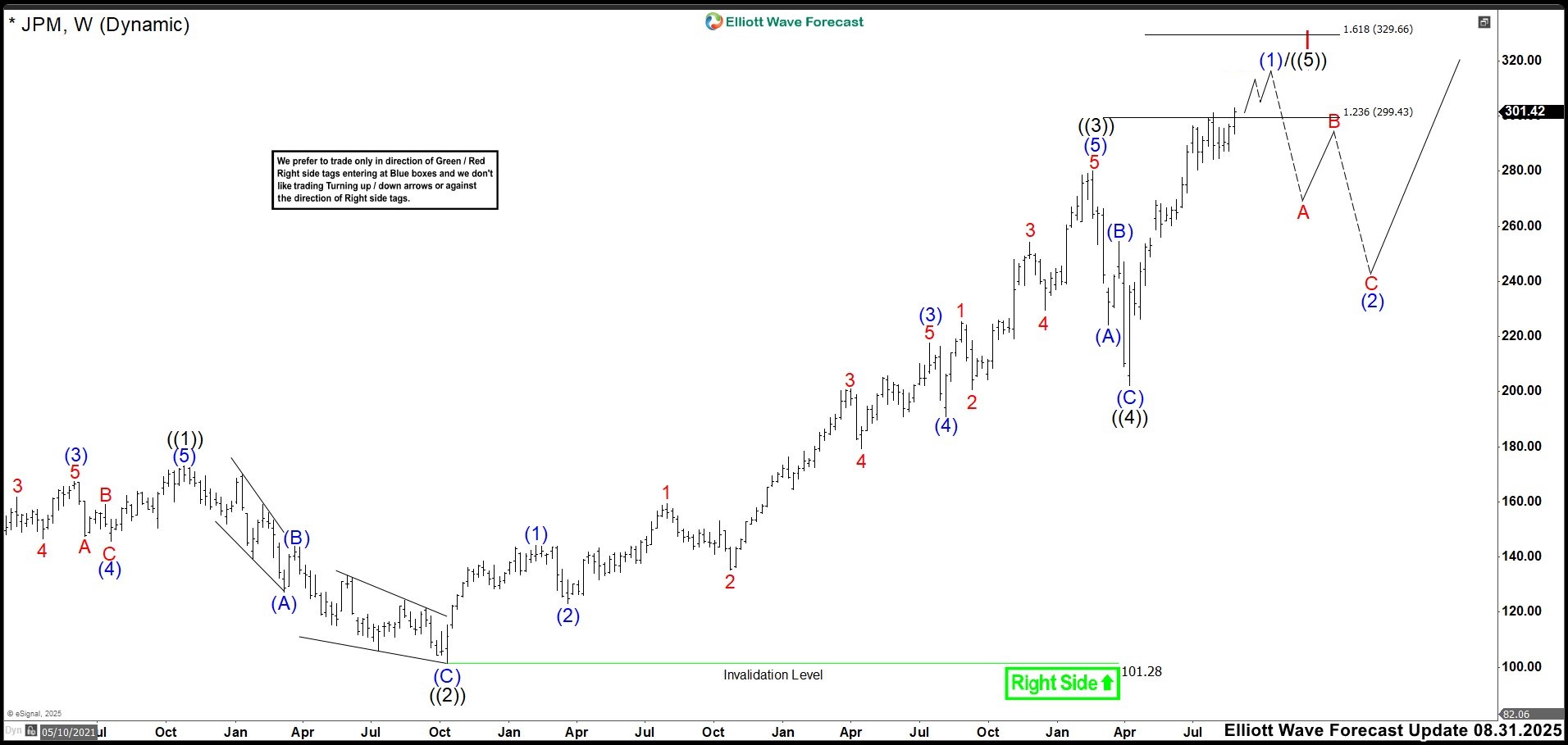
Elliott Wave Outlook: JPM Weekly Charts August 2025

Elliott Wave Outlook: JPM Weekly Charts August 2025

In this latest update, we observed that wave (5) of ((3)) extended to 280.25 high, completing wave ((3)). This was followed by a zigzag correction as wave ((4)), which found its bottom in April. From here, we asw two possible scenarios: First, JPM could build a full impulsive structure to complete wave ((5)), finalizing the entire cycle as wave I. This would imply a deeper correction toward the 160–200 zone as wave II before resuming the bullish trend. The second scenario, which we were currently favoring, suggests the market is forming an extended wave ((5)). In this case, the rally from April would mark wave (1) of ((5)), and once the impulse ends, a corrective wave (2) could bring prices down to the 260–240 area before continuing higher.

If you're eager to dive deeper into Elliott Wave Theory and learn how its principles apply to market forecasting, you might find these resources helpful: Elliott Wave Education and Elliott Wave Theory.

Elliott Wave Outlook: JPM Weekly Charts January 2026

Elliott Wave Outlook: JPM Weekly Charts January 2026


JPM’s bullish momentum has held through the new year, yet price action remains choppy and uncertain. This behavior suggests the market is entering a consolidation range that could resolve through a correction or a strong bullish breakout. However, each new high shows weaker follow‑through, which strengthens the case for a corrective move and supports the idea of an emerging ending diagonal.

The current range will likely persist because buyers lack the strength to break it decisively. Only a powerful upside impulse could invalidate this expectation; otherwise, JPM may drift sideways for one or two months while completing its wave‑(2) correction. Patience remains essential here, since staying out of the action protects capital until a cleaner opportunity appears.

Source: https://elliottwave-forecast.com/st...nding-its-april-cycle-signaling-a-correction/
 
Silver has historically been viewed as both a monetary metal and an industrial commodity. In recent years, structural changes in global debt, currency debasement, and industrial demand have led some analysts to project an extreme upside scenario for silver, with long-term targets as high as $250 per ounce. This article examines the macroeconomic, supply-demand, and historical factors behind this thesis. Monetary Inflation and Currency Debasement support higher prices due to the dramatic expansion since 2008, and even worse since 2020. Structural Supply Deficits are becoming more favorable to higher Silver prices. The Silver mining output has stagnated due to declining ore grades, rising production costs, and limited new discoveries. Also, the Industrial Demand explosion is a factor; Solar Panels and Electric vehicles are increasing the demand for the metal.

From a technical perspective, Silver (XAGUSD) is currently displaying a three-wave structure within the Super Cycle degree, according to Elliott Wave Theory. Such a structure is inherently bullish, as it implies either a Wave IV correction within an ongoing impulse or a nested impulsive structure (nest) preparing for a powerful Wave V advance. As always, Elliott Wave Theory allows for more than one valid path; however, we apply a probability-based system that assigns weight to each scenario.

At this stage, we believe Silver completed its prior cycle in March 2020, leaving two primary scenarios in play:

1. A Wave IV correction within the Grand Super Cycle

2. A nested impulsive structure within the Grand Super Cycle

This article explains both scenarios and outlines the technical reasons for supporting or rejecting each.
Scenario 1: Wave IV within the Grand Super Cycle

Under the traditional Elliott Wave framework, Silver can be interpreted as trading within Wave IV of the Grand Super Cycle impulse, as shown in the following chart.

XAGUSD (Silver) Monthly Elliott Wave Chart​

2XAG-WEEKLY20260209164524-1024x508.jpg


Technical Support for Wave IV

The presence of three completed waves within the Grand Super Cycle aligns well with classical Elliott Wave requirements.

There is a clear extension between proposed Wave I and Wave II, which strongly supports the impulsive nature of the advance.

As the first leg of the Grand Super Cycle, the structure has the potential to evolve into a leading diagonal, which would permit price overlap with the 2011 highs, a feature allowed in diagonal formations.

From a pure Elliott Wave standpoint, this interpretation is valid and technically sound.

Why We Reject the Wave IV Scenario

Despite its theoretical validity, the Wave IV count loses credibility when intermarket correlation is applied—specifically the relationship between Silver and Hecla Mining Corporation (HL).
Here is a chart showing the correclation between $XAGUSD (Silver) and HL (Hecla Mining Corporation).

Overlay of Hecla and Silver (XAGUSD) Chart​

HL20260209160609-1024x508.jpg


HL has completed a structure that cannot be counted as a Wave IV correction.

The historical correlation between Silver and HL is exceptionally strong.

If Silver were truly in a Wave IV, HL would need to exhibit a comparable corrective structure, which it does not.

Because Elliott Wave analysis must remain consistent across correlated markets, it becomes very difficult to justify a Wave IV count in Silver while HL structurally denies it.

Conclusion on Wave IV:
While technically possible, Wave IV is not the most likely scenario.

Scenario 2: Nested Impulse within the Grand Super Cycle (Preferred View)

The second and preferred interpretation is that Silver is forming a nest within the Grand Super Cycle—a bullish configuration where multiple impulsive waves build upon one another before an explosive advance, as shown in the following chart.

XAGUSD (Silver) Weekly Elliott Wave Chart​

2XAG-WEEKLY20260209161154-1024x508.jpg


Technical Support for the Nest

Silver has completed three waves and has since traded in a corrective manner, consistent with nest development.

The nest interpretation aligns Silver and HL structurally, maintaining intermarket consistency.

Because Silver cannot complete a Wave V without confirmation from its mining equities, the nest scenario becomes the higher-probability path.

Price Implications and Targets

Under our analysis, Silver is positioned for a major bullish phase, with two potential outcomes:

Wave V scenario: Target near $150.00

Nested impulse scenario: Target extending to $250.00

While these targets may sound extreme, history provides context. We have remained bullish on Silver since 2014, when sentiment was overwhelmingly negative. At that time, members at
https://elliottwave-forecast.com/

were advised to accumulate Silver ahead of a major advance—well before the broader market recognized the opportunity.

Today, sentiment once again reflects fear and hesitation. Although lower prices remain possible in the short term, depending on strategy and risk tolerance, the broader technical path is clear.

Conclusion

Silver is not a market suited for long-term selling. Whether it completes a Wave V or launches from a nested structure, the dominant trend remains higher prices. The Elliott Wave structure, supported by intermarket correlation with HL, points toward a historic advance that could carry Silver well beyond $250.00.

Buying Silver is a long-term investment decision.

Source: https://elliottwave-forecast.com/co...se-for-buying-into-a-250-silver-price-target/
 
TeraWulf (NASDAQ: WULF) operates as a key Bitcoin mining and technology firm. In this article, we analyze its weekly Elliott Wave structure, revealing the current bullish breakout path and key targets ahead of a potential pullback.

Elliott Wave Analysis

From its 2023 low, WULF created a three-wave impulsive advance. Wave I ended at $9.30. Subsequently, Wave II corrected to $2.06. Next, Wave III reached $17.05. Then, Wave IV finished at $10.47. Currently, the stock resumes its rally in Wave V of (I), targeting new highs.

The projected path shows an upside target of $18.6 – $21.1. Consequently, the stock must hold above the December 2025 low of $11.13. This key level is essential for continuing the extended cycle higher.

After Wave (I) ends, a larger Wave II correction will begin. This pullback will create a strategic entry point later this year. Afterwards, the stock will resume its weekly bullish trend in Wave (III).

WULF Weekly Chart 2.10.2026

WULF Weekly

Conclusion​

WULF's weekly uptrend remains strongly bullish. Consequently, traders should target strategic entries during corrective pullbacks. Apply our Elliott Wave strategy for precise timing. Specifically, enter the market after a 3, 7, or 11-swing correction completes. Additionally, our proprietary Blue Box system identifies high-probability reversal zones. This disciplined approach provides clarity and confidence. Ultimately, it positions you to capture the next major advance.

Source: https://elliottwave-forecast.com/stock-market/terawulf-wulf-bullish-surge-toward-20/
 
Vertiv Holdings Co., is an American multinational provider of critical infrastructure & services for data centers, communication networks & commercial & industrial environments. It comes under Industrials sector & trades as “VRT” ticket for NYSE.

VRT favors bullish sequence in weekly & favors rally within April-2025 sequence. It favors rally in ((5)) to end the diagonal Elliott Wave in I, while above 12.17.2026 low. It favors rally into $215.5 - $232.1 area to end I before correcting next.

VRT - Elliott Wave Latest Daily View:​

VRT-D51-1024x525.jpg

In weekly, it ended (I) impulse sequence at $155.84 high in January-2025 & (II) at $53.60 low in April-2025. Above there, it favors rally in I of (III) & expect final push higher against 12.17.2025 low. Within I, it placed ((1)) at $153.50 high, ((2)) at $118.70 low, ((3)) at $202.45 high, ((4)) at $147.82 low & favors upside in ((5)). The structure is overlapping diagonal & expect final push higher to end the structure as I. The high in ((5)) should come with momentum divergence against ((3)) to end the I before correcting next. Within ((1)), it placed (1) at $70.35 high, (2) at $60.67 low, (3) at $133.52 high, (4) at $119.10 low & (5) at $153.50 high.

VRT - Elliott Wave Latest Weekly View:​

VRT-W51-1024x525.jpg

Within ((3)), it ended (1) at $152.45 high, (2) at $133.85 low, (3) at $184.44 high, (4) at $162.68 low & (5) at $202.45 high as ((3)). It ended ((4)) at $147.82 low, where (A) at $158 low, (B) at $189.66 high & (C) at $147.82 low. Above ((4)) low, it favors rally in 5 of (1), while placed 4 at $172.35 low. It expects (1) to end soon before correcting in (2), while high comes with momentum divergence. But if it erases the momentum divergence, it can be 3 of (3), while placed (2) of ((5)) at $158.77 low. It favors ((5)) to extend into $215.5 - $232.1 area to end I of (III). We like to buy the pullback in 3, 7 or 11 swings at extreme area in II later.

Source: https://elliottwave-forecast.com/stock-market/vertiv-vrt-diagonal-extends-into-215-5-232-1/