Daily Market Analysis By zForex

EUR/USD Holds Near Support as Dollar Stays Firm

EUR/USD is still trading in a mixed but defensive setup. The euro is holding near the 1.1400 area, but dollar demand remains active as DXY stays around the 101 zone.

Kevin Warsh’s inflation-focused tone is also supporting the dollar. Markets are watching whether the Fed may keep policy tight for longer, especially with CPI, PPI, and Warsh’s testimony in focus this week.

Eurozone data has shown some improvement, but the recovery is not strong enough to drive a clear EUR rebound. Softer growth signals from Germany and France still limit upside momentum.

Technically, EUR/USD remains below the 50-day SMA, and RSI near 41 shows weak momentum. The rising MACD suggests selling pressure is slowing, but the pair still needs a break above resistance to improve the outlook.

For now, 1.1400 is the main support, followed by 1.1360 and 1.1325. Resistance is seen at 1.1450. A move above 1.1450 could help recovery, while a break below 1.1400 may bring the low-1.13s back into focus.

eurusd-update.jpg
 

CPI is in Focus as Geopolitical Risks Persist (07.14.2026)

Iranian Foreign Minister Abbas Araghchi mocked President Trump's proposed 20% transit fee for cargo passing through the Strait of Hormuz, arguing that Iran, not the US, is responsible for securing the waterway and calling the proposed charge excessive.

Tensions in the Middle East pushed oil prices higher and US futures lower after President Trump reinstated the Hormuz blockade on Iranian vessels. Rising energy costs revived inflation concerns ahead of US CPI data and Fed Chair Kevin Warsh's testimony. Bank earnings are also in focus, while chipmakers, including Sandisk and Intel, extended losses on concerns that AI spending could slow.

The Fed will maintain Treasury bill purchases at $10 billion per month, alongside $17.6 billion in reinvestments through August 13, to help offset declining reserves. Since late 2025, the Fed has gradually reduced purchases from $40 billion to $10 billion while keeping the option to pause quantitative tightening if liquidity conditions deteriorate.

President Trump warned that the US would "hit Iran very hard" and identified the fortified Pickaxe Mountain site near Natanz as a potential target. CENTCOM confirmed that US airstrikes entered a third consecutive night, with operations focused on reducing threats to shipping through the Strait of Hormuz.

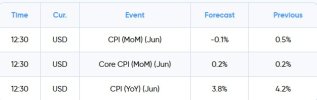
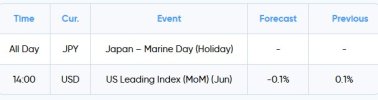
Economic Calendar​

eco-calendar-14-july.jpg

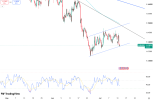
EUR/USD Slips Near 1.1385​

eurusd-slips-near-1-1385-6674.png

The EUR/USD pair hovered near 1.1385, pressured by Strait of Hormuz disruptions following fresh U.S. strikes on Iran and safe-haven dollar demand from climbing oil prices.

Markets await the upcoming U.S. CPI report, with core inflation projected at 2.9%, while evaluating hawkish ECB rhetoric following Yannis Stournaras's cautious warnings. Technical indicators remain bearish, keeping the 1.1324 support level vulnerable while capping upside near 1.1450.

The first resistance is positioned at 1.1420 while the support starts from 1.1360.

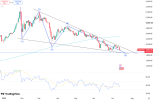
Gold Holds Steady​

gold-holds-steady-6678.png

Gold consolidated near $4,000 on Tuesday, stabilizing after a 3% drop. Pressures mounted after President Trump reinstated a naval blockade on Iranian vessels and proposed a 20% transit fee in the Strait of Hormuz, sparking inflation fears.

Ongoing geopolitical frictions and Fed Chair Kevin Warsh’s upcoming testimony keep markets tense, with a September rate hike probability hovering at 51%.

First resistance is seen at $4080, with initial support near $3950.

USD/JPY Near Highs​

usdjpy-near-highs-6677.png

The USD/JPY pair consolidated near 162.43, sitting just below its recent multi-decade peaks. Geopolitical oil supply shocks in the Strait of Hormuz heavily pressure the import-dependent yen while lifting the dollar via safe-haven demand and tight Federal Reserve policy expectations.

Meanwhile, Japan's interest rate hike to 1.00% has done little to counter deeply negative real yields.

Initial resistance stands at 162.80, while the first support is at 161.50.

Sterling Slips Below $1.34​

sterling-slips-below-1-34-usd-6676.png

The pound slipped under $1.34 as Middle East hostilities pushed crude prices higher, elevating inflation concerns and strengthening Bank of England rate-hike expectations. Domestic political shifts also loom, with Andy Burnham positioned to become Labour leader on Friday and prime minister by Monday.

Despite the geopolitical and political transitions, sterling's relative resilience suggests the market has factored in the disruption.

From a technical view, resistance stands near 1.3400, with support around 1.3320.

Silver Struggles Below $58​

silver-struggles-below-58-usd-6675.png

Silver stayed depressed below $58 on Tuesday following a steep 4% drop. Pressures intensified after Donald Trump reinstated a shipping blockade on Iranian ships and proposed transit fees, driving oil higher and sparking fresh inflation concerns.

This escalating U.S.–Iran conflict, paired with Fed Chairman Kevin Warsh’s impending testimony, keeps markets anxious as a September rate hike gains traction.

From a technical view, resistance stands near $58.50, while support is located around $56.00.

Brent Crude Oil​

brent.jpg

Brent crude climbed above $84 per barrel, bringing weekly gains to more than 10%. Prices surged after President Trump reinstated the Hormuz blockade on Iranian vessels and proposed a 20% cargo fee for Gulf countries benefiting from US naval protection.

Trump backed Senator Lindsey Graham's proposal to restore sanctions on buyers of Russian oil and gas, supporting prices.

Resistance is seen at 87.20, while the nearest support stands at 83.20.

Nasdaq 100​

nasdaq.jpg

The Nasdaq 100 fell 1.44% to 29,237.80 as higher oil prices and recent expectations for Fed tightening weighed on technology shares.

Semiconductor stocks led the decline following weaker earnings from Asia and intensifying competition, while higher Treasury yields continued to pressure valuations across AI, software, and cloud companies. Momentum also weakened technically, with the RSI slipping below 50.

Resistance stands at 29,450, while the nearest support is located at 29,000.

Chinese Yuan (USD/CNH)​

CNH.jpg

USD/CNY traded near 6.7802 after the PBOC set a strong daily fixing at 6.7972, helping stabilize the yuan despite broad dollar strength. Solid Chinese export data and continued liquidity support offset expectations of further Fed tightening, with markets pricing around a 62% chance of a September rate hike.

The pair remains in a broader downtrend, well below January's 6.9780 high, while Westpac continues to forecast 6.70 by year-end.

Resistance stands at 6.8000 while the nearest support is located at 6.7700.

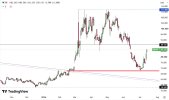
Bitcoin (BTC/USD)​

btc.jpg

Bitcoin traded near $62,030, extending its pullback after falling below $64,000.

Slower ETF inflows and MicroStrategy's planned $1.25 billion share sale added further pressure. Technical momentum remains weak, with the RSI hovering near 30.

First resistance is seen at 64,000, with initial support near 61,500.
 

EUR/USD Tests 1.1450 as Dollar Momentum Slows


EURUSD-update.jpg

EUR/USD is trading in a mixed setup. Softer US CPI and flat core inflation reduced some Fed tightening pressure, which helped limit dollar strength. Still, Waller’s hawkish tone and Iran-related risk aversion are keeping defensive USD demand alive.

The euro also has some support from higher ECB rate expectations and energy-linked inflation concerns. But weak growth signals and energy-shock risks are still limiting confidence in a stronger euro rally.

The next key drivers are US PPI and Fed Chair Kevin Warsh’s testimony. These could decide whether the dollar weakens further or regains momentum.

Technically, EUR/USD remains below the 50-day SMA, so the broader trend is not fully bullish yet. RSI near 41 shows weak momentum, but the rising MACD suggests selling pressure is slowing.

For now, 1.1450 is the key resistance to watch. A sustained move above this area could support a recovery attempt. On the downside, 1.1400, 1.1360, and 1.1325 remain the main support levels.
 

Softer U.S. Inflation Supports Metals (07.15.2026)

The US launched fresh airstrikes on Iran and confirmed a naval blockade on Iranian ports and coastal areas, effective 11:00 PM local time (4:00 PM ET), as part of efforts to reduce threats to shipping through the Strait of Hormuz.

President Trump abandoned his proposed 20% transit fee for Hormuz cargo, choosing to pursue trade and investment agreements with Gulf states instead. He reiterated that the strait remains open to all shipping except Iran-linked vessels, which remain under a full US blockade.

US futures moved higher after June inflation slowed to 3.5%, below expectations, with consumer prices posting their first monthly decline since 2020. The softer data reduced near-term Fed hike expectations, following Tuesday's gains in the S&P 500 and Nasdaq driven by tech, energy, and strong bank earnings. Results from Johnson & Johnson, Morgan Stanley, and BlackRock are next now.

Fed Chair Kevin Warsh reiterated the Fed's commitment to restoring price stability, describing the US economy as resilient, with steady consumer spending, solid business investment led by AI infrastructure, and a healthy labor market supported by low unemployment and steady wage growth.

Economic Calendar​

eco-calendar-15-july.jpg

EUR/USD Stays Under Pressure​

eurusd-stays-under-pressure-6687.png

EUR/USD is trading near 1.1420, pinned by Middle East geopolitical risks and diverging central bank policies. Safe-haven demand and persistent inflation worries keep the Fed's "higher-for-longer" narrative intact, while cooling Eurozone inflation caps Euro recoveries.

Technically, the pair remains below its 50-day EMA, with an RSI near 45 signaling weak upward momentum within a consolidating range.

The first resistance is positioned at 1.1465 while the support starts from 1.1400.

Gold Firm Near $4,050​

gold-firm-near-4050-6683.png

Gold held near $4,050, rising over 1% after June inflation cooled to a below-forecast 3.5%, marking the first monthly consumer price drop since 2020. This eased Fed rate hike expectations, with Chair Warsh reaffirming a commitment to price stability without signaling further tightening.

Markets now price in a 50% chance of a September hike as U.S.–Iran friction keeps energy costs elevated.

First resistance is seen at $4100, with initial support near $4000.

USD/JPY Holds Multi-Decade Highs​

usdjpy-holds-multi-decade-highs-6684.png

USD/JPY is consolidating near 162.15, holding multi-decade highs. Structural Yen selling persists, driven by wide interest rate differentials between the Fed and the Bank of Japan, alongside energy shocks from the Strait of Hormuz that are widening Japan's trade deficit.

Technically, moving averages remain bullish, but an RSI near 52 suggests flattening momentum. Meanwhile, the threat of Bank of Japan intervention looms large above the 162.00 threshold.

Initial resistance stands at 162.80, while the first support is at 161.50.

GBP Holds Firm as Oil Prices Rise​

gbp-holds-firm-as-oil-prices-rise-6685.png

The British Pound traded steadily near $1.34 as Hormuz-related U.S. airstrikes on Iran pushed crude oil higher, renewing inflation fears and cementing Bank of England rate-hike expectations.

Meanwhile, rapid political changes unfold at home: Andy Burnham is poised to secure the Labour leadership on Friday and become Prime Minister by Monday. Sterling's resilience suggests markets have largely priced in the turbulence.

From a technical view, resistance stands near 1.3440, with support around 1.3370.

Silver Climbs Toward $59​

silver-climbs-toward-59-usd-6686.png

Silver climbed nearly 2% to trade just below $59 after June inflation slowed to a below-forecast 3.5%, marking the first monthly CPI drop since 2020. This eased aggressive Fed rate-hike expectations.

Although Fed Chair Warsh pledged price stability without adding further tightening, persistent U.S.-Iran frictions keep energy prices elevated, leaving September hike odds at 50%.

From a technical view, resistance stands near $59.70, while support is located around $57.40.

Brent Crude Oil​

BRENT (2).png

Brent crude climbed above $86 for a third consecutive session after President Trump warned of further strikes on Iran unless negotiations resume. He also withdrew the proposed 20% transit fee for Hormuz cargo, citing future Gulf investment instead.

The tensions revived supply concerns, interrupting the recent improvement in exports following the interim US-Iran agreement.

Resistance is seen at 87.20, while the nearest support stands at 83.20.

Nasdaq 100​

nas100.png

The Nasdaq 100 rose 1.31% to 29,648 after softer US inflation eased pressure on technology stocks. Strong demand for AI memory chips, supported by Micron and SK Hynix, also lifted sentiment. However, higher oil prices and Treasury yields continued to limit the advance.

Technical momentum improved, with the RSI near 56 recovering after briefly entering oversold territory.

Resistance stands at 29,800, while the nearest support is located at 29,500.

Chinese Yuan (USD/CNH)​

CNH-week.png

USD/CNY traded near 6.77 as the yuan remained supported by China's 3.69% current account surplus, driven by strong AI hardware exports. Diversified energy imports also helped cushion the economy from disruptions around the Strait of Hormuz.

The PBOC's stronger daily fixing near 6.7695 continued to support the currency. The RSI near 30 suggests consolidation may continue before the broader downtrend resumes.

Resistance stands at 6.7850 while the nearest support is located at 6.7540.

Bitcoin (BTC/USD)​

btc-week.png

Bitcoin traded near $64,800, extending its recovery after softer US inflation reduced expectations for further Fed tightening. Spot Bitcoin ETFs recorded $197.4 million in inflows, ending an eight-week streak of outflows, led by BlackRock's IBIT.

The RSI near 58 points to improving momentum, although a potential Head and Shoulders pattern remains visible on longer-term charts.

First resistance is seen at 65,500, with initial support near 63,800.
 

Metals Find Support After Losses (07.16.2026)

Fed Chair Kevin Warsh rejected criticism over his ties to President Trump and defended the Fed's new internal task forces, describing himself as "an independent guy for an independent job." He maintained a firm focus on inflation while addressing questions on forward guidance, asset sales, and the Fed's AI initiatives.

The Fed's Beige Book showed economic activity expanded at a slight to moderate pace in 11 of 12 districts. Consumer spending remained restrained by higher fuel costs, employment increased modestly, and businesses continued to report moderate to strong price pressures, partly linked to Middle East tensions and tariffs.

CENTCOM confirmed a second wave of US airstrikes on Iran after an earlier round the same day, saying the operations target military capabilities threatening shipping through the Strait of Hormuz under President Trump's orders.

Russia's Maria Zakharova urged the US and Iran to return to talks brokered by Islamabad, warning that a wider regional conflict could have serious global consequences. She also criticized NATO's support for Ukraine and reiterated Russia's opposition to Western military involvement.

Economic Calendar​


eco-calendar-16-july.jpg

EUR/USD Still Under Pressure​

eurusd-still-under-pressure-6696.png

The EUR/USD pair fluctuated near 1.1415–1.1440 within an established bearish trend. While softer U.S. CPI data of 3.5% briefly tempered Federal Reserve rate-hike expectations, Middle East geopolitical risks maintain a steady bid under the safe-haven dollar.

Meanwhile, the significant interest rate gap between the Fed and the ECB continues to burden the euro, with technicals confirming sellers remain in control.

The first resistance is positioned at 1.1500 while the support starts from 1.1400.

Gold Consolidates Near Support​

gold-consolidates-near-support-6693.png

Gold fluctuated within a corrective $4,035–$4,065 range, down 28% from its January peak of $5,597, finding stability after cooler U.S. inflation data eased aggressive selling pressure.

While the Federal Reserve's hawkish yield environment limits substantial upside, ongoing safe-haven demand from Middle East friction and steady central bank accumulation by the PBoC help defend the critical $4,000 support zone from deeper liquidations.

First resistance is seen at $4100, with initial support near $4000.

USD/JPY Near Multi-Decade Peaks​

usdjpy-near-multi-decade-peaks-6697.png

The USD/JPY pair consolidated near 162.00–162.20, retaining its 40-year highs due to a wide interest rate gap, despite softer U.S. inflation figures tempering near-term rate-hike expectations. Geopolitical oil shocks in the Strait of Hormuz uniquely pressure the import-dependent yen.

Furthermore, the absence of currency intervention from Tokyo and steady pension fund allocations leave the Japanese currency without vital structural support.

Initial resistance stands at 162.40, while the first support is at 161.50.

Sterling Hits New Highs​

sterling-hits-new-highs-6695.png

The pound climbed to a multi-month high of $1.3540 on anticipation that incoming Prime Minister Andy Burnham will favor fiscal conservative Shabana Mahmood as chancellor over the expansionary Ed Miliband.

Also, rising Middle East tensions drove oil prices higher, supporting Bank of England rate-hike expectations with markets pricing in increases for November and March 2027.

From a technical view, resistance stands near 1.3600, with support around 1.3500.

Silver Finds Support​

silver-finds-support-6694.png

Silver stabilized within a $57.50 to $58.80 range, down 52% from January's historic peak of $121.64 as softer U.S. inflation metrics cushioned further liquidation.

Geopolitical oil shocks add inflation pressure, while a stretched 69:1 gold-to-silver ratio and a sixth consecutive global supply deficit, fueled by strong tech demand, establish a firm structural floor under the metal.

From a technical view, resistance stands near $59.70, while support is located around $57.00.

Brent Crude Oil​

BRENT.jpg

Brent crude traded around $84.70-$85.70, up nearly 8% this month after rebounding from the low $70s.

Naval blockades and renewed strikes around the Strait of Hormuz kept supply risks high, while a weaker US dollar, tighter OPEC+ supply, and falling inventories supported prices. The broader trend remains positive above key moving averages.

Resistance is seen at 87.20, while the nearest support stands at 83.20.

Nasdaq 100​

NASDAQ.jpg

The Nasdaq 100 traded between 29,400 and 29,600 after a volatile stretch, with 20 of the past 26 sessions recording moves of more than 1%.

Softer US inflation supported technology stocks, although chip-sector weakness and higher oil prices continued to limit gains. The RSI near 61 suggests momentum is stabilizing below the record high of 30,660.

Resistance stands at 29,800, while the nearest support is located at 29,300.

Chinese Yuan (USD/CNH)​

CNH.jpg

USD/CNH traded between 6.7650 and 6.7780, extending its broader downtrend after softer US inflation weakened the dollar. China's strong current account surplus continued to support the yuan, while Fitch expects the currency to strengthen toward 6.72 by year-end.

With the PBOC easing its supportive daily fixings, the pair has become increasingly driven by global yield expectations and is down 5.71% over the past year.

Resistance stands at 6.7850 while the nearest support is located at 6.7540.

Bitcoin (BTC/USD)​

BTC.jpg

Bitcoin traded around $64,500-$65,100, recovering nearly 4% this week after falling to a 21-month low of $58,076 in June.

Softer US inflation supported demand, while spot Bitcoin ETFs recorded $510 million in inflows after ending their recent outflow streak. Expectations for the July 29 FOMC meeting and higher oil prices continued to limit broader upside.

First resistance is seen at 65,500, with initial support near 63,800.
 
++ Brent update ++

Supply Risk Keeps Oil Supported


BRENT-update.jpg

Brent is trading with a strong geopolitical risk premium as Middle East tensions continue to dominate the market. Repeated U.S.-Iran strikes, threats around the Strait of Hormuz, and reports of possible Bab el-Mandeb disruption are keeping traders focused on supply security.

This matters because both routes are major energy chokepoints. Hormuz is key for Gulf crude and LNG flows, while Bab el-Mandeb connects the Red Sea with the wider global shipping network. Any serious disruption in either area could raise freight costs, delay shipments, and tighten near-term supply expectations.

The move also looks partly driven by defensive buying and short-covering after the recent rally. As long as headlines point to escalation, buyers may stay active. But if shipping flows stabilize or tensions cool, part of the risk premium could fade quickly.

Technically, the setup is improving but not fully confirmed yet. RSI near 55 shows positive momentum without being overbought, and MACD is rising. Still, Brent remains below the 50-day SMA, so the broader trend has not fully turned bullish.

The recent 7-day gain shows strong momentum, but ATR is still normal. This means the move is active, but not yet in an extreme volatility phase.

For now, the bias remains cautiously bullish while geopolitical risk stays high. A clear move above the 50-day SMA would strengthen the recovery, while failure near this zone could turn the move into another headline-driven spike.
 

Week Ends Under Geopolitical Pressure (07.17.2026)

Global markets closed the week under pressure as escalating Middle East tensions kept energy prices elevated and reinforced inflation concerns. Softer US inflation weakened the dollar and reduced expectations of near-term Fed tightening, supporting the euro, yen and offshore yuan.

Recent US-Iran tensions pushed oil prices higher, raising concerns over inflation, interest rates and energy supply disruptions. Gold, Bitcoin and the US 100 Tech Index remained under pressure, while weak Japanese machinery orders and slower Chinese growth pointed to softer economic momentum in Asia.

Check more on zForex.com


Euro Rises Past $1.145​

euro-rises-past-dollar1-145-6706.png

The euro climbed above $1.145, remaining near multi-week highs as softer U.S. inflation figures weighed on the dollar and fueled expectations for sustained ECB policy tightening. Following June's landmark rate hike, investors fully price in a September increase, with another move anticipated by spring 2027.

However, recent cautious remarks from ECB policymakers Piero Cipollone and Martin Kocher have tempered expectations for an immediate July rate hike.

The first resistance is positioned at 1.1500 while the support starts from 1.1420.

Gold Trades Below $4,000​

gold-trades-below-dollar4000-6702.png

Gold traded below $4,000 on Friday, on track for a weekly decline exceeding 3% as escalating Middle East conflicts drove oil prices higher and intensified inflation and interest rate worries.

Following recent U.S. airstrikes on Iran, President Donald Trump warned of potential infrastructure attacks if diplomacy fails. In response, Iran targeted U.S. military bases in neighboring nations, raising fears of a wider war and prolonged energy supply disruptions.

First resistance is seen at $4000, with initial support near $3950.

Yen Holds Near 162​

yen-holds-near-162-6705.png

The Japanese yen stabilized near the 162 level on Thursday, supported as cooling U.S. inflation data tempered expectations for aggressive Federal Reserve rate hikes and pressured the dollar.

However, escalating Middle East geopolitical tensions capped currency gains, with crude prices climbing following fresh U.S. strikes on Iran and a renewed Strait of Hormuz blockade.

Domestically, Japan's machinery orders fell sharper than expected in May, signaling persistent weakness in capital expenditure.

Initial resistance stands at 162.40, while the first support is at 161.50.

Sterling Holds Above $1.35​

sterling-holds-above-1-35-6704.png

The British pound maintained its position above $1.35, hovering near its highest point since mid-May. Sterling found support after reports surfaced that Home Secretary Shabana Mahmood is expected to be named chancellor under incoming Prime Minister Andy Burnham.

This potential appointment reassured markets, easing worries of more expansionary spending under Ed Miliband. Positive momentum was further reinforced by May's UK GDP data, which showed a return to 0.1% growth.

From a technical view, resistance stands near 1.3600, with support around 1.3440.

Silver Extends Weekly Losses​

silver-extends-weekly-losses-6703.png

Silver remained suppressed below $56 on Friday, headed for a steep weekly loss exceeding 7%. Escalating Middle East tensions drove crude prices higher, intensifying inflation and interest rate concerns.

Sentiment weakened further following targeted U.S. strikes on Iran and President Donald Trump's warning of potential infrastructure attacks if diplomatic efforts fail.

From a technical view, resistance stands near $56.00, while support is located around $54.50.

Brent Crude Oil​

brent.jpg

Brent crude climbed above $85 per barrel and was heading for a weekly gain of around 12% as growing tensions between the US and Iran fueled concerns over supply disruptions in the Middle East.

The US carried out several strikes on Iran this week, reportedly hitting an oil tanker near a key export terminal. President Donald Trump also warned that Iranian infrastructure could be targeted if diplomatic efforts fail.

Resistance is seen at 87.20, while the nearest support stands at 83.20.

Nasdaq 100​

nasdaq.jpg

The US 100 Tech Index traded at 28,734, down 477 points (1.62%) from the previous session. Over the past four weeks, the index has fallen 5.50%, though it remains 24.57% higher than a year ago.

Trading Economics forecasts and analyst estimates suggest the index could reach 29,202 by the end of the current quarter before easing to 27,409 over the next year.

Resistance stands at 29,800, while the nearest support is located at 29,300.

Chinese Yuan (USD/CNH)​

CNH.jpg

The offshore yuan traded near 6.76 per dollar, close to its strongest level in a month, supported by a weaker US dollar despite mixed economic signals from China. Softer US inflation data reduced expectations of a near-term Federal Reserve rate hike, with traders increasingly expecting the Fed to leave rates unchanged in July.

In China, the economy expanded 4.3% year-on-year in the second quarter, marking its slowest growth since late 2022 and remaining below the government's 2026 growth target.

Resistance stands at 6.7850 while the nearest support is located at 6.7540.

Bitcoin (BTC/USD)​

btc.jpg

Bitcoin traded at $63,752, down 39 points (0.06%) from the previous session. Over the past four weeks, the cryptocurrency has declined 1.35%, while its yearly loss stands at 45.97%.

According to Trading Economics forecasts and analyst estimates, Bitcoin is projected to reach $65,907 by the end of the current quarter and $72,228 within the next year.

First resistance is seen at 65,500, with initial support near 62,100.
 
+ GOLD Update

XAUUSD Breaks Below $4,000 as Sellers Stay in Control

xauusd-update.jpg

Gold has slipped below the key $4,000 level, showing that safe-haven demand is not strong enough to fully offset bearish pressure for now. US-Iran tensions, Hormuz shipping risks, and higher oil prices should normally support gold, but the market is still reacting more to inflation worries, firm yields, and dollar strength.

The main issue is that geopolitical risk is creating a mixed impact. It supports gold through safe-haven flows, but it also pushes oil higher and raises inflation concerns. That can keep the Fed cautious and support higher rates, which is negative for non-yielding assets like gold.

Technically, the setup remains weak. XAUUSD is still below the 50-day SMA, MACD is falling, and the 7-day move remains negative. RSI near 37 shows weak momentum and is close to oversold, but not enough yet to confirm a strong reversal.

For now, the $4,000 level has turned into the first resistance. A recovery above this area could bring $4,100 and $4,150 back into focus. If gold stays below $4,000, sellers may continue to target $3,950, then $3,900 and $3,885.

Overall, the market is still headline-driven, but the chart is bearish. Gold needs a clear reclaim of $4,000 to ease downside pressure. Until then, rebounds may remain limited.
 

Markets Eye Rate Outlook Amid Tensions (07.20.2026)

US stock futures were little changed after last week's losses, when a semiconductor selloff pushed the Nasdaq down 2.9%, while the S&P 500 and Dow lost 1.55% and 0.93%. The VanEck Semiconductor ETF fell nearly 9%, with investors awaiting earnings from Alphabet, Tesla, and Intel.

CENTCOM reported that remains were recovered from Iran's July 17 attack on a US base in Jordan, where two US soldiers were killed and one remains missing. Separately, one US soldier was killed and another injured in northern Iraq on July 18 while destroying an unexploded Iranian drone.

The US Dollar Index held near 101, extending its gains as higher oil prices strengthened expectations that interest rates could stay higher for longer. Fresh US airstrikes followed the deaths of three US service members, while Iran declared its ceasefire over and reported intercepting vessels in the Strait of Hormuz. Markets now price a 53% chance of a September Fed rate hike, up from 47%, although a July hold remains the base case.

Bond markets continue to reflect Fed Chair Kevin Warsh's view that the inflation fight is not over. Despite June's softer CPI, higher oil prices and continued AI-related investment are keeping inflation risks in focus, supporting expectations for another rate hike later this year.

Economic Calendar​

eco-calendar-20-july.jpg

Euro Holds Ground Near $1.1435​

euro-holds-ground-near-dollar1-1435-6712.png

The Euro traded steadily near $1.1435, remaining close to its highest level since June 19 and tracking toward a weekly gain. European Central Bank rate-hike expectations continue to support the currency alongside Middle East geopolitical monitoring following new U.S. strikes on Iran.

While markets fully price in a September ECB hike, cautious remarks from officials Piero Cipollone and Martin Kocher make a July move unlikely. Meanwhile, softer U.S. inflation data weighs on the Dollar.

The first resistance is positioned at 1.1460 while the support starts from 1.1400.

Gold Falls Below $4,000 Again​

gold-falls-below-dollar4000-again-6715.png

Gold dropped below $4,000, edging toward nine-month lows as intensifying U.S.-Iran strikes pushed crude prices higher, re-igniting global inflation and interest rate concerns. Direct military actions and Strait of Hormuz vessel interceptions have driven oil up roughly 30% from July lows.

Federal Reserve officials like Beth Hammack have highlighted sticky price pressures, prompting markets to raise September rate-hike probabilities to 53%.

First resistance is seen at $4040, with initial support near $3970.

USD/JPY Pauses Near 162.35​

usdjpy-pauses-near-162-35-6716.png

USD/JPY is consolidating near 162.35, lingering just beneath its 40-year high. Softer U.S. inflation data briefly checked dollar strength, but Japan's heavy energy import reliance and escalating U.S.-Iran tensions continue to pressure the Yen.

Traders are closely monitoring key support and resistance levels, acutely aware that sudden Bank of Japan intervention could trigger rapid reversals.

Initial resistance stands at 162.60, while the first support is at 162.00.

Sterling Consolidates Near 1.3457​

sterling-consolidates-near-1-3457-6714.png

The British Pound is consolidating near 1.3457 after mid-week gains toward 1.3560 faded, caught between conflicting central bank policy stances and safe-haven Dollar demand.

UK political shifts following Keir Starmer's exit and Andy Burnham's succession focus attention on Shabana Mahmood as potential Chancellor. U.S.-Iran risks lifting crude oil toward $80 reinforce underlying Dollar support.

From a technical view, resistance stands near 1.3500, with support around 1.3420.

Silver Subdued Below $56​

silver-subdued-below-dollar56-6713.png

Silver remained pinned below $56, trading near eight-month lows as intensifying U.S.–Iran strikes pushed crude prices higher, re-igniting inflation and interest rate concerns. Direct military actions and Strait of Hormuz vessel interceptions have driven oil up roughly 30% from July lows.

Federal Reserve officials have warned of persistent price pressures, prompting markets to price a 53% probability of a September rate hike.

From a technical view, resistance stands near $57.50, while support is located around $55.50.

Brent Crude Oil​

brent.jpg

Brent rose above $90 per barrel after US-Iran hostilities increased concerns over Middle East oil supplies.

Iran declared the ceasefire over, intercepted vessels in the Strait of Hormuz, and attacks reached regional energy infrastructure, including a strike reported by Kuwait Petroleum. Brent has gained roughly 30% since its July lows.

Resistance is seen at 92.00, while the nearest support stands at 89.20.

Nasdaq 100​

nasdaq.jpg

The Nasdaq 100 traded near 28,611, extending its correction after a 4% weekly decline. Technology shares remained under pressure as investors reassessed AI spending, China's lower-cost Kimi K3 model gained traction, and higher oil prices added to uncertainty.

The index is approaching a key support area that may shape its next move.

Resistance stands at 29,000, while the nearest support is located at 28,300.

Chinese Yuan (USD/CNH)​

CNH.jpg

USD/CNH traded around 6.7761 as demand for the US dollar offset the PBOC's efforts to support the yuan. China's Q2 GDP slowed to 4.3%, below the 4.5%-5.0% target, reflecting weaker fixed-asset investment.

Resistance stands at 6.7850 while the nearest support is located at 6.7540.

Bitcoin (BTC/USD)​

btc.jpg

Bitcoin traded near $64,849, continuing its recovery from June's 21-month low of $58,076. Softer US inflation improved expectations for easier Fed policy, but ETF outflows and capital shifting toward AI-related stocks continued to limit gains. Bitcoin also remained closely correlated with USD/JPY.

First resistance is seen at 65,500, with initial support near 63,800.
 

Commodities Lead the Permanent Portfolio in 2026

Diversified investors are having a strong year so far. The Permanent Portfolio is currently on track for a return of around 16% in 2026, which would be its best annual performance in 30 years.

The strategy divides capital equally between four areas: US stocks, 10-year Treasury bonds, commodities, and cash. The goal is to stay balanced across different market conditions rather than depend on one asset class.

Commodities are doing most of the heavy lifting this year, with a gain of around 26%. The S&P 500 is also supporting returns after rising about 10%.

Bonds are the weak point. Prices of US 10-year Treasury bonds have fallen around 4%, as higher yields continue to pressure fixed-income assets.

Diversification is working, but the source of return has changed. Commodities are currently offsetting losses in bonds and helping the overall portfolio remain strong.

portfolio.jpg
 

Brent Oil Holds Firm as Supply Risks Dominate


brent-update.jpg

Brent is trading around $86.10 to $88.50, with geopolitical risk driving the market more than interest rates or demand expectations.

The main focus is the escalating US-Iran conflict, reported attacks on vessels and energy infrastructure, and fresh concerns around the Strait of Hormuz. Disruption to tanker activity and CPC oil loadings is also adding pressure to near-term supply expectations.

Technically, the picture remains moderately bullish. MACD is rising and RSI stands at 61.1, showing positive momentum without reaching overbought territory. Brent has also recovered sharply from the $70 area, but the price is now facing resistance around $88.50 to $89.23.

However, Brent is still trading below its 50-day moving average. This means the wider uptrend has not been fully confirmed. A break above $89.23 could bring $89.93 and $91.08 into focus. On the downside, $86.23 and $85.53 are the main support levels.

For now, the bias remains bullish while supply-risk headlines continue. Still, chasing the price near resistance carries more risk, especially if tensions ease or shipping conditions improve.
 

ECB in Focus Amid Tensions (07.21.2026)

Long-term unemployment continued to rise as workers struggled to match changing employer demands, particularly for AI-related skills. Labor force participation also remained near record lows, with 105.8 million Americans outside the workforce. Aging demographics and AI-driven hiring trends continued to weigh on recent graduates and younger workers.

The 10-year Treasury yield held near 4.6%, up 5 bps from the previous session, as higher oil prices renewed inflation concerns. US strikes on Iran entered a tenth day, while Houthi militants announced a Saudi maritime embargo. Markets now price a 55% chance of a September Fed rate hike, up from 51%.

The US Dollar Index remained near 101, extending gains for a third session as higher oil prices supported expectations that interest rates could stay higher for longer. Iran signaled openness to mediator proposals and a 10-day ceasefire.

US stock futures were little changed after Monday's losses. The Dow fell 0.59%, the S&P 500 lost 0.19%, and the Nasdaq slipped 0.05% as rising Treasury yields weighed on sentiment. Earnings from Schwab, Chubb, Danaher, GM, and 3M are due Tuesday, followed by Alphabet, Tesla, and Intel later this week.

Economic Calendar​

eco-calendar-21-july.jpg

Euro Pauses Near $1.14​

euro-pauses-near-dollar1-14-6729.png

The Euro traded near $1.14, holding below its mid-June high as markets digest escalating Middle East conflicts and surging oil prices. Brent crude reached a one-month peak following retaliatory U.S.–Iran strikes.

Focus now shifts to Thursday's ECB meeting, where rates are expected to hold steady after June's hike, though markets still price in two additional increases by early 2027.

The first resistance is positioned at 1.1440 while the support starts from 1.1390.

Gold Holds Near $4,040​

gold-holds-near-dollar4040-6726.png

Gold steadied above $4,040, remaining near nine-month lows as the U.S.–Iran conflict keeps energy-driven inflation risks elevated. U.S. strikes reached a tenth day, with President Trump vowing retribution for troop deaths, alongside a Houthi Saudi maritime embargo.

Amid potential 10-day ceasefire mediation signals, rising Treasury yields pushed September Fed rate-hike odds to 55%.

First resistance is seen at $4080, with initial support near $4000.

Yen Weakens Toward 1996 Lows​

yen-weakens-toward-1996-lows-6730.png

The Japanese Yen traded near 162.5 per dollar, hovering near its weakest levels since 1996. Escalating Middle East conflict, marked by U.S. strikes entering a tenth day and a Houthi Saudi maritime embargo, pushed crude oil higher, severely burdening resource-poor Japan.

With Japan's heavy oil import dependence exacerbating trade pressures, the Yen remains vulnerable amid limited signs of Tokyo market intervention.

Initial resistance stands at 162.80, while the first support is at 162.20.

Sterling Pulls Back Near 1.3435​

sterling-pulls-back-near-1-3435-6728.png

The British Pound faces intraday selling pressure, consolidating around 1.3435 after pulling back from multi-month highs. A surging Dollar, supported by safe-haven demand amid rising U.S.-Iran geopolitical tensions and elevated oil prices, weighs on Cable.

Meanwhile, traders await upcoming UK employment and CPI data ahead of late-July Fed and BoE rate decisions.

From a technical view, resistance stands near 1.3500, with support around 1.3410.

Silver Edges Up Near $57​

silver-edges-up-near-dollar57-6727.png

Silver rose toward $57 but hovered near eight-month lows as the U.S.-Iran conflict kept energy-driven inflation concerns intact. U.S. strikes entered a tenth day alongside a Houthi Saudi maritime embargo, even as Iran signaled potential mediator proposals for a 10-day ceasefire.

Meanwhile, rising Treasury yields pushed market-implied probabilities for a September Federal Reserve rate hike to 55%, up from 51%.

From a technical view, resistance stands near $59.00, while support is located around $56.20.

Brent Crude Oil​

brent.jpg

Brent held near $89, hovering at five-week highs as US strikes on Iran entered a tenth day with retaliatory attacks on neighboring countries.

Trump vowed accountability for three troop deaths, while Houthi militants announced a Saudi maritime embargo. Iran signaled possible mediator proposals and a 10-day ceasefire, as sharply reduced Hormuz vessel traffic tightened supply and supported prices.

Resistance is seen at 90.00, while the nearest support stands at 87.30.

Nasdaq 100​

nasdaq.jpg

The Nasdaq 100 consolidates with bearish pressure near 28,800, as a broader chip sell-off fuels doubts over AI capex valuations. Trading below its 50-day moving average, technicals lean toward "Strong Sell" with RSI reflecting mild bearish momentum.

This week's Big Tech earnings are pivotal, while rate expectations and geopolitical developments keep the broader trend corrective.

Resistance stands at 29,000, while the nearest support is located at 28,500.

Chinese Yuan (USD/CNH)​

CNH.jpg

USD/CNH trades sideways near 6.7690, reflecting the yuan's structural strength as the PBoC manages volatility while tolerating a gradual strong yuan trajectory.

The dollar shows persistent multi-quarter weakness against the yuan, even as easing US-Iran tensions cool safe-haven demand, adding stability to Asian currencies.

The pair trades below key moving averages, with RSI near 45.50 signaling room for further movement.

Resistance stands at 6.7750 while the nearest support is located at 6.7600

Bitcoin (BTC/USD)​

BTC.jpg

Bitcoin trades between $65,180–$65,470, showing mild bullish momentum on renewed spot ETF inflows, holding key support levels.

Net ETF inflows have eased earlier selling pressure, while shifting US-Iran geopolitical rhetoric continues to cause short-term risk-appetite swings, though crypto has shown resilience.

Institutional players continue viewing dips as accumulation opportunities, keeping the near-term outlook broadly stable.

First resistance is seen at 67,200, with initial support near 63,800.
 

The Yen Adds to BOJ Pressure (07.22.2026)

US stock futures slipped ahead of earnings from Alphabet, Tesla, GE Vernova, Philip Morris, and Texas Instruments. Super Micro Computer jumped nearly 20% after strong results, while Pegasystems fell more than 13%. On Tuesday, the Nasdaq gained 1.29%, supported by strong chip export data and solid earnings from 3M and GM.

Japan's 10-year yield rose to around 2.74%, a one-week high, following higher US Treasury yields and rising oil prices. A weaker yen at a fresh 40-year low added to expectations of further BOJ tightening. Traders also looked ahead to a JPY 300 billion 40-year bond auction after June's trade balance returned to deficit.

The U.S. 10-year Treasury yield held near 4.63% as higher oil prices kept inflation concerns in focus. Trump played down the prospect of near-term talks with Iran, while disruptions in the Red Sea and attacks on Russia's Caspian Pipeline added to supply concerns. ADP data showed hiring slowed for a fourth straight month.

The US Dollar Index remained above 101, rising for a fourth straight session as higher Treasury yields continued to support the currency. Ongoing conflict involving Iran, shipping disruptions in the Red Sea, and weaker ADP employment data kept expectations for a September Fed rate hike above 55%.

Economic Calendar​

eco-calendar-22-july.jpg

Euro Waits on Frankfurt​

euro-waits-on-frankfurt-6736.png

The euro held above $1.14 ahead of Thursday's ECB decision. Rates are expected to remain unchanged after June's hike, although markets still price two more increases by year-end, starting as early as September.

Hopes for renewed US-Iran talks also remained in focus as oil prices continued to influence the inflation outlook.

The first resistance is at 1.1430, while support begins at 1.1380.

Gold’s Climb Continues​

golds-climb-continues-6737.png

Gold approached $4,200 as higher oil prices kept inflation concerns in focus. Trump dismissed the prospect of near-term talks with Iran and warned of further strikes, while disruptions in the Red Sea and attacks on Russia's Caspian Pipeline added to supply concerns.

Slower ADP hiring also left markets pricing over a 55% chance of a September Fed rate hike.

First resistance is at $4,160, with initial support near $4,100.
No Relief for the Yen​

no-relief-for-the-yen-6738.png

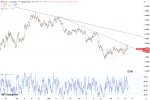
The yen weakened beyond 163 per dollar, its lowest level since October 1986, keeping markets on alert for possible intervention. Middle East tensions pushed oil prices higher, weighing on Japan's import-dependent economy, while a stronger dollar and rising Treasury yields widened rate gaps and encouraged carry trades.

Fiscal concerns over new spending plans and the BOJ's cautious policy approach added further pressure, as June's trade balance slipped back into deficit.

Initial resistance stands at 163.30, while the first support is at 162.80.

A New Cabinet, A New Direction​

a-new-cabinet-a-new-direction-6739.png

Sterling slipped below $1.34, touching a weekly low as traders digested Andy Burnham's first cabinet appointments. His decision to name John Healey as Chancellor lifted expectations for higher defence spending, although both emphasized fiscal discipline.
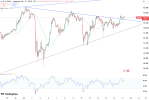
June public borrowing also came in below forecasts.

From a technical view, resistance stands near 1.3430, with support around 1.3340.

Silver Still Dependent on Macro Data​

silver-still-dependent-on-macro-data-6740.png

Silver climbed toward $60 as stronger oil prices kept inflation concerns in focus. Trump's comments on Iran, disruptions in the Red Sea, attacks on Russia's Caspian Pipeline, and softer ADP employment data all supported expectations of over a 55% chance of a September Fed rate hike.

From a technical view, resistance stands near $60.50, while support is located around $58.50.

Brent Crude Oil​

brent.jpg

Brent rose above $92, hitting nearly six-week highs as supply risks widened beyond the Middle East. Trump dismissed near-term Iran talks and warned of more strikes, while a Kuwaiti tanker was struck in Hormuz.

Traders also keep an eye on attacks on Russia's Caspian Pipeline terminal, a key export hub for Kazakh crude.

Resistance is seen at 93.40, while the nearest support stands at 90.00.

Nasdaq 100​

nasdaq.jpg

The Nasdaq-100 trades at 29,000, rebounding roughly 1.93% after defending major support, working to reverse its multi-week correction from June's peak.

Markets await crucial Q2 earnings from AI leaders and Tesla, while semiconductor pullbacks and Middle East tensions weigh on sentiment. Momentum stays neutral-to-bearish under a broader "double top" structure.

Resistance stands at 29,200, while the nearest support is located at 28,850.

Chinese Yuan (USD/CNH)​

cnh.jpg

USD/CNH trades stable at 6.7730, holding a tightly controlled downward trajectory as the yuan shows resilience on steady PBoC intervention.
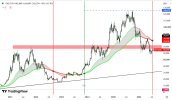
Cooling US inflation points toward an eventual Fed pause, though hawkish warnings cap dollar losses, while the DXY remains stuck in consolidation. Momentum stays neutral-to-bearish within a broader downtrend.

Resistance stands at 6.7750 while the nearest support is located at 6.7600.

Bitcoin (BTC/USD)​

BTC.jpg

Bitcoin trades near $66,300, posting modest intraday gains as it exits a descending channel, supported above its 50-day moving average.

Institutional spot ETF inflows continue offsetting geopolitical headwinds, while bullish momentum (RSI near 60 and positive MACD) keeps short-term technicals in "Strong Buy" territory, with resistance near $67,200 and upside targeting $70,000.

First resistance is seen at 67,200, with initial support near 65,300.
 

Momentum Stocks Face a Sharp Reality Check​


The strongest momentum stocks have taken the biggest hit in the latest market sell-off. Shares that had led the market for months are now seeing the heaviest selling as investors rush to reduce exposure.

gravity-returns.png

According to Societe Generale data, the top 50 momentum stocks have fallen by close to 30% since late June. The weakness has not been limited to one region. Similar selling has appeared across global equities, developed markets, and markets outside China.

The size of the decline makes more sense when looking at the rally that came before it. Some of the strongest names had gained between 80% and 140% in only three months. Many were linked to popular themes such as artificial intelligence, technology, defence, and high-growth sectors.

This is a common risk with crowded trades. When too many investors own the same stocks, even a small disappointment can trigger heavy selling. Profit-taking begins, stop-losses are activated, and the decline can quickly gain speed.

The main lesson is not that momentum investing has stopped working. It is that entry price and position size still matter. Stocks that rise too far and too fast can become vulnerable, even when the long-term story remains attractive.
 

Conflict Fuels Inflation Fears (07.23.2026)

Global markets weakened as the Middle East conflict kept Brent crude above $95, its highest level in six weeks, on concerns over oil supplies.

Trump warned of strikes on Iranian infrastructure if shipping through the Strait of Hormuz is targeted, after Iran-backed Houthis attacked two Saudi oil tankers in the Red Sea.

Higher energy prices strengthened expectations that inflation could remain persistent, with markets now pricing a 61% chance of a September Fed rate hike, while both the Fed and ECB are expected to leave rates unchanged at their upcoming meetings.

Risk assets also lost ground, with the US 100 Tech Index down 0.54% and Bitcoin falling 0.66%, as higher oil prices and interest rate expectations continued to weigh on sentiment.

Economic Calendar​

eco-calendar-23-july.jpg

Oil Clouds the Euro Outlook​

oil-clouds-the-euro-outlook-6748.png

The euro traded near $1.14, close to a one-year low, before Thursday's ECB decision as traders also tracked Middle East developments. After June's hike, the ECB is widely expected to keep rates unchanged while assessing incoming data and geopolitical risks. Even so, markets still price in around two more rate hikes this year, with September seen as the most likely timing.

Concerns that rising tensions could disrupt oil supplies have kept eurozone inflation risks high. Brent crude climbed to a recent high after Trump ruled out near-term talks with Iran, warned of further strikes, and pledged retaliation if Yemen's Iran-backed Houthis target Red Sea shipping.

The first resistance is positioned at 1.1450 while the support starts from 1.1380.

Fed Week Casts Shadow Over Gold​

fed-week-casts-shadow-over-gold-6745.png

Gold slipped from a two-week high to around $4,120 per ounce as rising Middle East tensions drove oil to a six-week high. Houthi militants claimed attacks on two Saudi tankers in the Red Sea, while Trump warned of strikes on Iranian infrastructure if shipping through the Strait of Hormuz is targeted.

The Fed is expected to hold rates next week, though markets still assign a 61% chance of a September hike. The ECB is also expected to leave rates unchanged while keeping September open.

First resistance is seen at $4160, with initial support near $4100.

Intervention Talk Falls Flat​

intervention-talk-falls-flat-6747.png

USDJPY traded around 163 per dollar after hitting a four-decade low of 163.24 earlier this week. Reports that the BOJ could tighten policy sooner lifted the probability of an October rate hike to 80%, from 70% a day earlier. Finance Minister Satsuki Katayama repeated that authorities are prepared to intervene if necessary.

The yen still remains under pressure from the strong dollar, Japan's low interest rates, and uncertainty over Prime Minister Sanae Takaichi's policy direction. Rising oil prices are also adding pressure to Japan's import-dependent economy.

Initial resistance stands at 163.30, while the first support is at 162.80.

Cooling CPI Weighs on the Pound​

cooling-cpi-weighs-on-the-pound-6746.png

Sterling remained below $1.34, its lowest level in more than a week, after UK inflation slowed more than expected, reducing the likelihood of a Bank of England rate hike this month. Annual inflation eased to 2.6% in June, below the 2.7% forecast, helped by lower transport and food prices.

Core inflation (2.6%) and services inflation (3.6%) both exceeded expectations. CBI economist Martin Sartorius warned inflation could pick up again, while Chancellor John Healey announced measures including lower VAT on electricity bills and a £2 cap on single bus fares across England from January. Middle East tensions also remained in focus after Trump warned of further strikes on Iran.

Resistance stands at 1.3430, while support is 1.3340.

Supply Issues Support Silver​

supply-issues-support-silver-6749.png

Silver traded around $59 per ounce, remaining below its nearly two-week high as rising Middle East tensions lifted oil prices. Houthi militants claimed attacks on two Saudi tankers in the Red Sea, while Trump warned of strikes on Iranian infrastructure if shipping through the Strait of Hormuz is targeted.

Meanwhile, India's silver imports have slowed sharply after a new licensing regime disrupted shipments, lifting local premiums to multi-month highs.

Resistance stands at $60.50, while support is $58.50.

Brent Crude Oil​

brent.jpg

Brent rose above $92 per barrel, reaching a six-week high and extending gains for a fifth straight session. Trump's warning of strikes on Iranian infrastructure, threats against shipping in the Strait of Hormuz, Houthi attacks on Saudi oil tankers in the Red Sea, and a 12th consecutive day of US strikes on Iran all kept supply concerns in focus.

Resistance is seen at 93.40, while the nearest support stands at 90.00.

Nasdaq 100​

nasdaq.jpg

The US 100 Tech Index traded near 28,749, down 0.54% on the day. The index has declined 1.61% over the past four weeks but remains 23.81% higher over the last year.

Trading Economics forecasts the index at 27,992 by quarter-end and 26,265 over the next year.

Resistance stands at 29,200, while the nearest support is located at 28,850.

Chinese Yuan (USD/CNH)​

cnh.jpg

The offshore yuan strengthened toward 6.77 per dollar as Hong Kong's offshore yuan deposits reached a record 1.13 trillion yuan and clearing volume rose to 53.2 trillion yuan in June.

Strong demand for yuan financing continued to support offshore lending and bond issuance, while attention shifted to this month's Politburo meeting for signals on China's second-half policy plans.

Resistance stands at 6.7750 while the nearest support is located at 6.7600.

Bitcoin (BTC/USD)​

btc.jpg

Bitcoin traded near 65,668, down 0.66% on the day. The cryptocurrency has lost 7.66% over the past four weeks and 44.52% over the last year.

Trading Economics forecasts Bitcoin at 65,848 by the end of the quarter and 72,281 over the next 12 months.

First resistance is seen at 67,200, with initial support near 65,300.