Daily Global Market Overview By zForex

Semiconductor Stocks Take the Lead in S&P 500 Earnings Growth

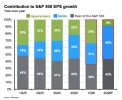
Technology remains the main engine behind S&P 500 profit growth, but the leadership is starting to shift.

SP500-Eps.jpg

In the first quarter of 2026, major hyperscalers such as Amazon, Alphabet, Meta, and Microsoft contributed around 34% of the index’s year-over-year EPS growth. Semiconductor companies added another 31%.

Together, these two groups generated roughly 65% of total S&P 500 earnings growth. That was well above their 52% contribution in the first quarter of 2025. The rest of the index accounted for only around 36%, based on rounded figures.

The balance may change further in the second quarter. JPMorgan expects semiconductor companies to contribute a record 48% of EPS growth. The hyperscalers’ share is projected to fall sharply to around 9%.
 

Conflict Fuels Inflation Fears (07.23.2026)

Global markets weakened as the Middle East conflict kept Brent crude above $95, its highest level in six weeks, on concerns over oil supplies. Trump warned of strikes on Iranian infrastructure if shipping through the Strait of Hormuz is targeted, after Iran-backed Houthis attacked two Saudi oil tankers in the Red Sea.

Higher energy prices strengthened expectations that inflation could remain persistent, with markets now pricing a 61% chance of a September Fed rate hike, while both the Fed and ECB are expected to leave rates unchanged at their upcoming meetings.

Risk assets also lost ground, with the US 100 Tech Index down 0.54% and Bitcoin falling 0.66%, as higher oil prices and interest rate expectations continued to weigh on sentiment.

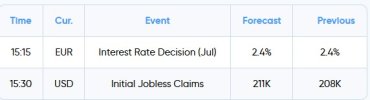
Economic Calendar​


eco-calendar-23-july.jpg
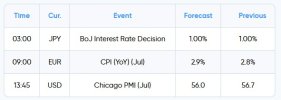
  • The euro traded around $1.14, remaining near a one-year low ahead of Thursday's ECB decision. Rates are expected to stay unchanged after June's hike.
  • The yen traded near 163 per dollar after falling to a 40-year low of 163.24 earlier this week. Reports that the BOJ could tighten policy faster lifted the probability of an October 25-bp hike to 80% from 70%,
  • Sterling remained below $1.34, its lowest level in more than a week, after UK inflation slowed more than expected, reducing the likelihood of a Bank of England rate hike this month.
  • The offshore yuan strengthened toward 6.77 per dollar as Hong Kong's offshore yuan deposits reached a record 1.13 trillion yuan and clearing volume rose to 53.2 trillion yuan in June.
  • Gold eased to around $4,120 after reaching a two-week high as higher oil prices strengthened expectations that interest rates could stay higher for longer.
  • Silver traded around $59 per ounce, remaining below its nearly two-week high as rising Middle East tensions lifted oil prices.
  • Bitcoin traded near 65,668, down 0.66% on the day. The cryptocurrency has lost 7.66% over the past four weeks and 44.52% over the last year.
  • Brent rose above $92 per barrel, reaching a six-week high and extending gains for a fifth straight session.
  • Nasdaq 100 traded near 28,749, down 0.54% on the day. The index has declined 1.61% over the past four weeks

Check more on zForex.com - Technical Outlook on Charts


ECB Keeps September Guessing (07.24.2026)


Brent crude traded above $100 per barrel, its highest since May, after Houthi attacks on two Saudi oil tankers, continued US strikes on Iran, and fresh supply disruptions from Kazakhstan.

Higher oil prices strengthened inflation concerns, lifting the probability of a September Fed rate hike to 78%. Gold fell below $4,100, silver slipped under $59, the US 100 Tech Index lost 1.87%, and Bitcoin declined 1.47% as higher rate expectations weighed on sentiment.

The euro fell after the ECB kept rates unchanged, sterling weakened as markets priced further BOE tightening, and the yen dropped to a four-decade low despite rising BOJ hike expectations. Meanwhile, the offshore yuan outperformed, supported by record Hong Kong yuan deposits and the PBOC's strongest daily fixing since February 2023.

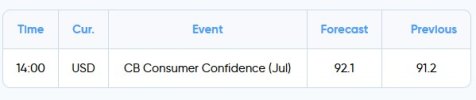
Economic Calendar​


eco-calendar-24-july.jpg
  • The euro slipped below $1.139 after the ECB left interest rates unchanged, in line with expectations. Policymakers maintained a data-dependent stance following June's first rate hike in three years.
  • The yen weakened to around 163.3 per dollar, its lowest level in four decades, despite stronger expectations for BOJ tightening and repeated intervention warnings.
  • Sterling slipped to $1.336, its lowest level in ten days, as investors weighed new UK fiscal measures against persistent inflation risks
  • The offshore yuan strengthened to around 6.77 per dollar as Hong Kong's growing yuan liquidity highlighted continued progress in China's currency internationalization
  • Gold fell below $4,100 an ounce, pulling back from two-week highs as rising oil prices strengthened expectations that the Fed could keep rates higher for longer.
  • Silver eased below $59 an ounce after reaching a two-week high as rising oil prices reinforced inflation concerns and expectations for tighter Fed policy.
  • Bitcoin traded near $65,132, down 1.47% from the previous session. The cryptocurrency has fallen 6.78% over the past four weeks and is down 44.98% over the last 12 months.
  • Brent crude surged more than 6% above $96 per barrel, extending gains for a fifth session to its highest level since May.
  • Nasdaq 100 traded at 28,472, down 1.87% on the session. The index has declined 2.56% over the past four weeks but remains 22.62% higher than a year ago.

Check more on zForex.com - Technical Outlook on Charts


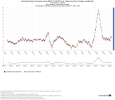
Stocks Have Beaten Housing Over the Long Run

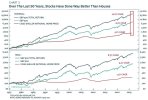
Over the past 50 years, US stocks have delivered much stronger returns than home prices.

stocks-VS -houses.jpg

Since 1975, the S&P 500 has produced an average annual total return of 12.2%, including dividends. US home prices increased by around 5.1% per year over the same period.

Even without dividends, the S&P 500 returned about 9.3% annually. That still leaves stocks well ahead of the housing market.

The gap becomes wider after inflation. Real stock returns averaged 8.3% per year, compared with only 1.4% for home prices.

The takeaway is simple. Housing can provide stability, rental income, and leverage, but stocks have been the stronger long-term wealth-building asset based on historical returns.
 

Fed in Focus Amid Easing Tensions (07.27.2026)

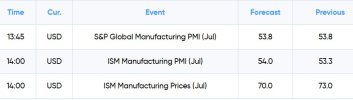
US stock futures rose as a weekend pause in US-Iran hostilities sent oil prices lower, easing inflation concerns. Despite the truce, Houthi attacks on Saudi Red Sea facilities kept supply risks in focus. Attention now turns to earnings from Apple, Microsoft, Meta, Visa, Exxon, Starbucks, Ford, and PayPal, along with Wednesday's Fed decision, where rates are expected to stay unchanged.

More S&P 500 companies are raising guidance than lowering it, with 93% beating earnings estimates versus a 78% historical average. Stocks have still struggled to build momentum as concerns over AI spending, geopolitical risks, and rich valuations persist. Gains have also broadened beyond Big Tech into sectors such as energy and semiconductors.

The US Dollar Index slipped to around 101.2 as lower oil prices reduced inflation concerns following the US-Iran truce.

The 10-year Treasury yield fell to around 4.64%, retreating from six-month highs as easing geopolitical tensions pushed oil prices lower. Markets now wait for the Fed meeting, Q2 GDP, PCE data, and a busy week of earnings for further direction.

Economic Calendar​


eco-calendar-27-july.jpg
  • The euro traded at $1.1411, up 0.14%, holding above the key $1.1400 level after a bullish gap. The ECB left rates unchanged while signaling a likely September hike, as higher oil and gas prices kept inflation concerns alive.
  • The yen strengthened to around 163.5 per dollar as the dollar and oil prices retreated following the pause in US-Iran hostilities. Despite the rebound, the currency remained near a 40-year low.
  • The British pound fluctuated around $1.33, remaining close to multi-week lows as safe-haven demand from Middle East friction and new U.S. tariffs sustained the dollar.
  • Offshore Chinese Yuan traded around 6.7700 as traders assessed the PBOC's liquidity measures and China's growth outlook. The central bank set a slightly stronger daily fixing at 6.7911 and injected CNY 500 billion through its MLF facility.
  • Gold rose 1% toward $4,100, rebounding from a nine-month low as oil prices fell after the US and Iran paused hostilities over the weekend.
  • Silver rose over 2% toward $60, rebounding from eight-month lows as crude prices tumbled following a weekend pause in U.S.–Iran conflict. The U.S. suspended its two-week strike campaign while Iran ended retaliatory strikes to initiate talks with Oman regarding the Strait of Hormuz.
  • Bitcoin traded near 65,160, edging higher as $274 million in weekly ETF inflows improved institutional sentiment. Lower oil prices also eased inflation concerns after the weekend pause in the US-Iran conflict.
  • Brent fell as much as 7% below $90 before recovering part of its losses after the US suspended strikes on Iran for a second straight night.
  • The Nasdaq-100 rose 1.22% to 28,474 as easing geopolitical tensions and lower oil prices improved sentiment.

Check more on zForex.com | Technical Analysis on Charts


Dollar Holds Firm Ahead of CB Decisions (07.28.2026)

Global markets traded cautiously ahead of key central bank meetings, with investors focused on the Federal Reserve and the Bank of Japan for fresh policy signals.

The Dollar Index held near 101.5 before the Fed decision. Markets still price over a one-third chance of a rate hike this week and 56% odds for September, while easing US-Iran tensions had little impact on the greenback.

The 10-year Treasury yield remained around 4.64% as traders looked to the Fed for policy signals. Lower oil prices eased inflation concerns but did not change rate expectations.

US stock futures edged lower as chipmakers extended their decline. Focus now shifts to earnings from Microsoft, Meta, Amazon, and Apple, along with the Fed announcement.

Japan's 10-year yield hovered near 2.77% ahead of the BOJ meeting. Rates are expected to stay unchanged, while the prospect of future tightening and fiscal concerns kept yields supported.

Economic Calendar​

eco-calendar-28july.jpg
  • EUR/USD trades near 1.1374, staying close to multi-month lows as the dollar remains supported by firm US data and expectations of a hawkish Fed.
  • The yen hovered around 163.7 per dollar, remaining close to a four-decade low as expectations of a possible Fed rate hike continued to support the dollar.
  • GBP/USD fluctuated near 1.3295 as cautious risk sentiment supported the dollar ahead of upcoming Federal Reserve and Bank of England meetings. While both central banks are projected to hold rates steady.
  • USD/CNY trades around 6.7661, recovering modestly after touching a 52-week low. A slightly weaker daily fixing from the PBOC helped limit yuan strength.
  • Gold slipped toward $4,050, giving back recent gains as traders assessed the possibility of a Federal Reserve rate hike this week.
  • Silver fell toward $57 per ounce, remaining under pressure as traders weighed a roughly 35% probability of a Federal Reserve rate hike this week. Citadel Securities noted a rate increase would reinforce Chair Warsh's inflation-fighting credentials.
  • Bitcoin trades around $63,279, easing about 0.65% after failing to sustain its breakout above $65,000. Attention has shifted to tomorrow's Fed decision, while $465 million in ETF outflows weighed on spot demand.
  • Brent extended its decline toward $87, marking a third consecutive session of losses as hopes for easing tensions between the US and Iran improved the supply outlook.
  • The Nasdaq-100 slipped 0.32% to 28,039.21 as traders trimmed exposure to semiconductor stocks before a busy week of earnings and central bank decisions. Focus now turns to results from Microsoft, Meta, and Apple, together with Wednesday's Fed meeting.

Check more on zForex.com | Technical Outlook on Charts


Gold Holds Near $4,028 Ahead of the Fed

gold-update.jpg

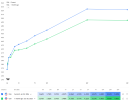
Gold is trading near $4,028 after falling toward $4,040 earlier in the session. Traders are reducing risk ahead of the Fed decision, while easing US-Iran tensions have also weakened the immediate safe-haven demand.

Markets still see some chance of a 25-basis-point rate hike. Even without a hike, a hawkish Fed message could lift Treasury yields and the dollar, adding more pressure on gold.

The downside has remained limited around the $4,000 psychological level. Dip buying and continued ETF inflows suggest investors are not fully abandoning gold, especially while geopolitical risks around the Middle East remain unresolved.

Technically, the picture is neutral to slightly bearish. Gold remains below its key moving averages near $4,209 and $4,345, while RSI around 49 shows little directional strength. MACD is improving, which suggests the recent selling pressure may be losing momentum.

For now, $4,000 is the main support to watch. A clear break below it could extend the decline, while a recovery above $4,209 would improve the short-term outlook. Until the Fed decision, gold may remain volatile and headline-driven.