Daily Market Analysis and Overview by Unitedpips

EURUSD Daily Technical Chart Points to Bullish Channel

Daily_1D_EURUSD_Daily_Technical_Chart_Points_to_Bullish_Channel-1.webp


Introduction to EUR/USD

The EUR/USD currency pair, also known as the “Fiber,” is one of the most actively traded forex pairs globally. It represents the exchange rate between the Euro, the official currency of the Eurozone, and the US Dollar, the world’s primary reserve currency. As a benchmark pair in the forex market, it often reflects macroeconomic differences and central bank policy shifts between Europe and the United States. Traders rely on EUR/USD movements to gauge overall sentiment in global financial markets.


EUR-USD Market Overview
The EUR-USD pair remains in focus as central bank dynamics and economic data weigh heavily on both sides. On the US Dollar front, attention is shifting to Federal Reserve Governor Michelle Bowman's testimony before the House Financial Services Committee, with traders looking for hawkish clues regarding future rate hikes. Consumer confidence remains a key point, with recent indicators from RealClearMarkets showing signs of caution, while domestic vehicle sales are stable, signaling ongoing consumer demand. In Europe, the Euro finds support amid several critical economic reports. The Eurostat CPI Flash estimate shows inflation remains sticky, with core inflation maintaining pressure on the European Central Bank. Unemployment data from France and the broader Eurozone indicates resilience in labor markets, which may support the ECB’s cautious stance. As the year draws to a close, traders are watching inflation prints and budget outcomes from France to assess the likelihood of any policy shifts going into Q1 2026.

Daily_1D_EURUSD_Daily_Technical_Chart_Points_to_Bullish_Channel.png

EURUSD Technical Analysis
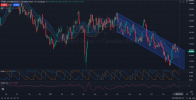
The EURUSD daily chart shows a strong upward price channel that began forming in early 2025, with price currently trading near the mid-to-upper bounds of the channel. After recording its highest level since 2021 at 1.19176 in September 2025, the pair has corrected slightly but remains above key support levels. The center price line at 1.15615 and the psychological 1.15000 zone serve as near-term support, while the 1.16550 level, which aligns with the price channel’s high, acts as immediate resistance. Momentum indicators show mixed signals: the TRIX (18) indicator reads -2.53, indicating a slight bearish divergence, but the CCI (20) at 86.58 suggests bullish momentum still holds. The price action shows consolidation near the centerline of the channel, hinting at a possible bullish continuation if resistance is cleared or a retracement to the lower channel line if sentiment weakens. Overall, the pair remains technically bullish in the medium term.


Final Words About Euro vs US Dollar
As we approach year-end 2025, EUR/USD is holding firmly above key psychological and technical support levels. Continued strength in Eurozone inflation and labor market stability supports the Euro, while USD traders remain cautious ahead of high-impact Fed testimonies and economic confidence reports. If bullish momentum continues and the pair breaks above 1.16550, we could see a retest of the 1.18–1.19 resistance zone. However, failure to maintain this level may lead to a move back toward 1.15600 or lower, particularly if USD strength returns with more hawkish Fed rhetoric. Traders should closely monitor macroeconomic releases and remain cautious during high-volatility periods.


Disclaimer: This EURUSD analysis, provided by Unitedpips, is for informational purposes only and does not constitute trading advice. Always conduct your own Forex analysis before making any trading decisions.


12.02.2025
 
GOLD/USD Daily Analysis: Bullish Pennant Signals Upward Potential

Gold-Price-Action-Analysis-12.03.2025.featured-image.webp


Introduction to Gold USD
The GOLD/USD currency pair, commonly referred to as "XAU/USD," tracks the price of gold against the US dollar. Known as a traditional safe-haven asset, gold typically attracts investors during economic uncertainty or high inflation periods. Traders closely monitor XAU/USD movements for insights into global economic health, inflation expectations, and risk sentiment. Understanding gold price trends against the USD is crucial for both short-term and long-term investment strategies.


GoldUSD Market Overview
Currently, XAU-USD is showing signs of bullish consolidation, driven by cautious market optimism amid mixed economic indicators from the United States. The upcoming ADP employment data release, scheduled for January 7, 2026, will significantly impact market sentiment as it provides early insights into US employment conditions. Additional economic indicators, such as the upcoming Import Price Index and Industrial Production figures scheduled for release on December 16, 2025, will be closely monitored by traders for inflationary trends and economic activity levels. With the recent PMI figures indicating a cautious economic expansion in the US services sector, traders may see continued volatility in XAU/USD prices. Additionally, crude oil inventory reports from the API and EIA set for release on December 9 and 10, 2025, respectively, may indirectly influence gold prices through their impact on inflation expectations and USD strength.

Gold-Price-Action-Analysis-12.03.2025.webp


Gold/USD Technical Analysis
From a technical perspective, the daily chart indicates a strong bullish trend with a short-term consolidation forming a classic bullish pennant pattern. A successful breakout above the pennant’s upper trendline could lead prices toward the Fibonacci extension level of 0.382 (4351.27). The Aroon indicator currently shows values of 14.29% and 28.57%, signaling weak momentum but a potential reversal towards bullishness. The Accelerator Oscillator at 16.04 further supports the bullish outlook, suggesting increasing upward momentum. Key resistance lies around the Fibonacci 0.236 level at approximately 4194.50, while major support is noted near the lower pennant boundary, around 4100. Traders should monitor price action around these critical levels for confirmation signals.


Final Words about Gold vs USD
Given the current technical setup and imminent economic releases, XAU/USD appears poised for potential bullish continuation, contingent upon breaking the identified resistance levels. Traders should maintain vigilance around key economic indicators from the US, as these could rapidly shift market sentiment. It's advisable to employ a cautious approach with well-defined stop-loss strategies due to possible volatility from economic data releases. Overall, gold continues to serve as a valuable gauge of market confidence, inflation concerns, and economic stability, making it crucial for investors to stay informed about macroeconomic developments.


Disclaimer: This GOLDUSD analysis, provided by Unitedpips, is for informational purposes only and does not constitute trading advice. Always conduct your own Forex analysis before making any trading decisions.


12.03.2025
 
GBP/USD Forecast: Testing Long-term Bullish Trend Strength

GBPUSD-Price-Action-Analysis-12.04.2025.featured-image.webp


Introduction to GBP/USD

The GBP USD pair, known among traders as "Cable," represents the exchange rate between the British Pound Sterling (GBP) and the United States Dollar (USD). This currency pair is highly traded in the forex market, making it an important indicator of global economic conditions. Understanding the movements in Cable is crucial for traders and investors due to the significant influence of these two economies on global finance and trade.


GBP-USD Market Overview
The GBPUSD pair is currently experiencing a bearish correction channel amid mixed economic signals from both economies. Recently, the US Department of Labor released data showing a stable job market, with unemployment claims influencing the USD positively. Additionally, comments from Federal Reserve Governor Michelle Bowman, expected to reflect a more hawkish stance, could bolster the USD. In the UK, the Purchasing Managers' Index (PMI) from S&P Global and remarks from Bank of England MPC member Catherine Mann on geopolitical tensions regarding Ukraine may affect Sterling's strength. Traders should monitor these economic releases and speeches closely, as they can significantly impact short-term volatility and directional bias.

GBPUSD Price Action Analysis 12.04.2025.png

GBP USD Technical Analysis
Analyzing the daily chart, GBP-USD remains bullish in the long term but currently trades within a downward-sloping corrective channel approaching a significant trend line. Price action is gravitating towards this trend line, indicating potential testing shortly. The Keltner Channel levels at 1.33069 (upper), 1.32338 (middle), and 1.31606 (lower) suggest that the current price level is slightly above the middle band, indicating moderate bullish sentiment. The Fisher indicator shows positive values of 2.37 and 2.01, signaling upward momentum, while the Chaikin Oscillator at 44.457K indicates buying pressure remains robust. Nevertheless, immediate resistance near the channel boundary could cap further upside moves temporarily.


Conclusion on GBP vs USD
The GBP/USD pair appears likely to remain in its corrective channel, cautiously testing resistance levels as traders await further economic signals from both the UK and the US. Upcoming releases and central bank statements will be pivotal, potentially influencing the direction significantly. Traders should prepare for volatility around these announcements, adopting strategies that leverage price movements towards support and resistance lines within the established channel. Given the current technical indicators, gradual bullish sentiment remains probable, though traders should remain vigilant about potential reversals.


Disclaimer: This GBPUSD analysis, provided by Unitedpips, is for informational purposes only and does not constitute trading advice. Always conduct your own Forex analysis before making any trading decisions.


12.04.2025
 
AUDUSD Technical Breakout: Bullish Trend Builds

AUDUSD-Technical-Breakout-Bullish-Trend-Builds-.webp


Introduction to AUDUSD

The AUDUSD currency pair-commonly known as the “Aussie-tracks the exchange rate between the Australian Dollar and the US Dollar. It is one of the most actively traded pairs in the forex market, driven by interest rate differentials, commodity prices, and overall risk sentiment. The Aussie is seen as a proxy for global growth due to Australia’s export-reliant economy, especially in mining. This pair is favored by both institutional and retail traders for its volatility and liquidity.


AUD-USD Market Overview
As of the latest daily analysis, AUD-USD is exhibiting signs of bullish recovery amidst a globally uncertain economic environment. The US Dollar is facing mixed data: while the NFIB small business index remains cautiously optimistic, the labor market continues to show strain with delayed and volatile JOLTS and ADP employment data, compounded by recent delays due to the government shutdown. On the Australian front, recent NAB Business Conditions data indicated improving sentiment, and the Reserve Bank of Australia (RBA) is maintaining a steady tone, with the next policy meeting set for February 2026. Traders are also watching US Treasury yield auctions and leading indicators, as they influence USD valuation indirectly through interest rate expectations. The macroeconomic landscape appears balanced, with both currencies facing competing pressures from internal economic data and central bank policy directions.

AUDUSD-Technical-Breakout-Bullish-Trend-Builds- 12.09.2025  .png

AUD/USD Technical Analysis
On the daily chart (D1), AUD/USD is moving within a long-term bearish regression channel, but since early 2025, the pair has shown clear bullish momentum. From the March 2025 lows, the price has ascended from the lower boundary of the regression channel toward its upper edge. Most recently, AUD USD has touched the PC (Price Channel) High Price Line at 0.66474, suggesting a potential resistance area. The Aroon indicator shows bullish bias: Aroon Up is at 85.71%, while Aroon Down is at 28.57%, both trending downward, signaling a possible consolidation or slight pullback. Meanwhile, the Coppock Curve sits at 2.78360, reinforcing medium-term bullish sentiment. If the pair sustains above the PC Centerline (0.65337), upside continuation toward 0.67 is likely; otherwise, a correction toward 0.64199 could unfold.


Final Words about AUD vs USD
AUD/USD is currently riding a wave of medium-term bullish momentum, although the broader trend remains bearish. The pair’s ability to stay above the regression centerline could be critical in determining the next direction. Traders should monitor upcoming US labor data and Australian economic releases, particularly the RBA’s tone in early February. If the Aussie continues to benefit from rising commodity sentiment and improved domestic business conditions, it may challenge higher resistance levels. However, any strong recovery in US employment or hawkish Fed outlook could reverse recent gains. Active risk management is advised as the pair nears critical technical levels.


Disclaimer: This AUDUSD analysis, provided by Unitedpips, is for informational purposes only and does not constitute trading advice. Always conduct your own Forex analysis before making any trading decisions.


12.09.2025
 
USD/CAD Daily Analysis: Key Levels and Bearish Outlook

USDCAD-Daily-Analysis-Key-Levels-and-Bearish-Outlook-.webp


Introduction to USD/CAD
The USD CAD currency pair, also known as the "Loonie," represents the exchange rate between the United States Dollar (USD) and the Canadian Dollar (CAD). The pair is widely traded globally due to significant economic connections between the United States and Canada, particularly in energy trade. Traders and investors frequently monitor USD/CAD as it reflects the economic health and market dynamics of both countries.


USD-CAD Market Overview
USDCAD is currently experiencing volatility, influenced by recent economic reports and central bank activities from both nations. The latest API and EIA crude oil inventories data significantly impact the Canadian dollar due to Canada's extensive energy sector, often leading to sharp price movements in the pair. On the USD side, market sentiment remains cautious ahead of upcoming FOMC statements and interest rate decisions, which will likely shape future monetary policy expectations. Additionally, statements from the US President and economic data such as civilian labor costs and the monthly Treasury Statement contribute to the dollar's near-term fluctuations. Given the recent bearish momentum, traders should closely monitor economic releases from both the US and Canada over the next few days for directional clues.

USDCAD-Daily-Analysis-Key-Levels-and-Bearish-Outlook-12.10.2025-.webp


USD CAD Technical Analysis
On the daily chart, USD/CAD has recently reversed from a steep bullish trend into a pronounced bearish move, forming a notable lower high. This pattern could signal the beginning of a sustained bearish trend or potential range-bound market conditions. The price action suggests increased likelihood of further bearish continuation toward the key Fibonacci retracement level at 0.382 (1.37443). Currently, the Moving Average Channel, with levels at 1.40211 and 1.39654, indicates ongoing bearish pressure. Additionally, the Chaikin Oscillator, showing a negative reading of -53.784K, supports bearish momentum, while the Aroon indicator (21.43% bullish, 78.57% bearish) strongly emphasizes the bearish sentiment dominating USD/CAD.


Final Words about USD vs CAD
Given the current technical and fundamental landscape, the USD/CAD pair seems poised for further bearish movement in the short term. Traders should closely watch upcoming US and Canadian economic announcements, especially oil inventories and monetary policy statements, which could catalyze significant volatility. Monitoring technical indicators like the Fibonacci levels, Chaikin Oscillator, and Aroon Indicator will help identify potential price reversals or continuation signals. As always, risk management and a strategic trading plan remain critical when navigating volatile forex markets such as USD/CAD.


Disclaimer: This USDCAD analysis, provided by Unitedpips, is for informational purposes only and does not constitute trading advice. Always conduct your own Forex analysis before making any trading decisions.


12.10.2025
 
NZD/CAD Forecast: Economic Releases Could Deepen Bearish Momentum

NZDCAD-Price-Action-Analysis-12.15.2025.featured-image.webp


Introduction to NZDCAD

The NZD/CAD currency pair, commonly referred to as the "Kiwi-Loonie," represents the exchange rate between the New Zealand dollar (Kiwi) and the Canadian dollar (Loonie). Traders and investors frequently follow NZD/CAD to assess economic health comparisons between New Zealand and Canada, two commodity-driven economies. The pair often moves with global commodity trends, particularly in agriculture and energy markets, influencing its volatility.


NZD CAD Market Overview
The NZD-CAD pair currently exhibits a bearish sentiment amid recent Canadian economic releases. Canadian housing starts and multiple CPI measurements, which significantly affect currency valuation, are expected soon. Strong housing starts and higher-than-expected CPI figures generally strengthen the Canadian dollar. The upcoming release of Canada’s CPI data on January 19, 2026, will be critical, as inflation indicators strongly influence central bank rate decisions. Conversely, the next BusinessNZ Performance of Services Index for New Zealand, due on January 26, 2026, will also impact the pair, with numbers above 50.0 indicating economic expansion and potentially providing some support for NZD.

NZDCAD Price Action Analysis 12.15.2025.png

NZD/CAD Technical Analysis
The daily chart for NZD CAD demonstrates long-term bearish sentiment, clearly reflected in a bearish price channel formation. Candlesticks currently gravitate towards the channel's mid-band, suggesting persistent selling pressure aiming for the lower channel boundary. The Moving Average Channel currently resides above the candles, reinforcing the bearish trend. The Aroon indicator at 57.14% bullish and 0.00% bearish indicates recent upward moves have limited strength, further supported by the Chaikin oscillator at -23.369K, confirming underlying selling momentum.


Final words about NZD vs CAD
Given the prevailing bearish technical structure and anticipated positive Canadian economic indicators, the NZD/CAD pair appears likely to maintain its downward trajectory. Traders should closely monitor Canadian CPI and housing data releases, along with New Zealand's upcoming services sector performance index, for clearer trading signals. The bearish channel's lower boundary could serve as the immediate downside target. Effective risk management is crucial, given the pair's susceptibility to rapid changes in commodity markets and economic data-driven volatility.


Disclaimer: This NZDCAD analysis, provided by Unitedpips, is for informational purposes only and does not constitute trading advice. Always conduct your own Forex analysis before making any trading decisions.


12.15.2025
 
USD vs JPY Daily Forecast: Economic Data in Focus

USDJPY-Price-Action-Analysis-12.24.2025.featured-image.webp


Introduction to USD/JPY
The USD-JPY pair, commonly known as the "Gopher," represents the exchange rate between the United States Dollar and the Japanese Yen. It is among the most traded currency pairs globally, influenced significantly by US economic data and Japan’s monetary policies. Traders closely monitor this pair to understand risk appetite, market sentiment, and shifts in economic strength between the US and Japan.


USD JPY Market Overview
The USD/JPY pair has recently faced resistance near the significant historical level at 157.491, indicating a strong psychological barrier for traders. Market sentiment is currently mixed due to recent economic indicators from both the US and Japan. On the US front, traders await key data releases including Jobless Claims scheduled for December 31, 2025, which will shed more light on labor market strength and economic health. Meanwhile, Japan’s Services Producer Price Index (CSPI), due January 27, 2026, and the detailed minutes from the Bank of Japan's latest policy meeting expected on January 28, 2026, are likely to offer crucial insights into Japan's inflation outlook and monetary policy stance. Traders are cautious, expecting volatility around these data points which could shape short-term trends.

USDJPY-Price-Action-Analysis-12.24.2025.webp


USD-JPY Technical Analysis
From a technical viewpoint, the daily chart of USD JPY shows that price action has reached the key resistance at 157.491 and has moved downward, affirming this level's historical significance. The recent bearish Harami pattern formation confirms a high probability of continued downward momentum. Indicators such as the Chaikin Oscillator currently standing at 60.826K suggest strong buying momentum, yet caution is advised as this might also signal potential exhaustion near resistance. The Fisher indicator values of 0.70 and 0.56 reflect diminishing bullish strength. Additionally, the Price Channel indicates the latest candle hovering around the mid-line, suggesting indecision and potential consolidation before the next significant move.


Final Words about USD vs JPY
Given the technical signals and the imminent economic releases, traders should anticipate potential volatility in USD/JPY movements. The resistance at 157.491 remains a critical point for confirming further direction. Should the US data reflect positive labor market conditions, USD may find additional strength. Conversely, more hawkish statements or inflationary signals from the Bank of Japan could reinforce Yen strength. Traders must closely observe these fundamental triggers and technical cues, ensuring effective risk management strategies are employed given the potential for sudden shifts in market sentiment.


Disclaimer:This USDJPY analysis, provided by Unitedpips, is for informational purposes only and does not constitute trading advice. Always conduct your own Forex analysis before making any trading decisions.


12.24.2025
 
USD-CHF Market Update: Range-Bound Trading Persists

USDCHF-Price-Action-Analysis-12.31.2025.featured-image.webp


Introduction to USDCHF
The USD/CHF currency pair, often referred to as the "Swissie," represents the value of the US dollar against the Swiss franc. Known for its stability and safe-haven characteristics, USD/CHF tends to be a popular choice among traders seeking lower volatility during uncertain market conditions. This pair is influenced significantly by both US economic data and Swiss economic indicators, making it essential for traders to monitor developments in both economies.


USD CHF Market Overview
Currently, USDCHF is experiencing range-bound movement, influenced by the latest economic data from both the United States and Switzerland. Recently, the US Dollar received positive momentum from favorable housing data with improvements indicated by the FHFA House Price Index and the S&P Case-Shiller Home Price Index, suggesting strength in the US housing market and providing support for the USD. Additionally, the upcoming release of the Chicago Purchasing Managers' Index (PMI) is anticipated to influence short-term USD dynamics. On the Swiss side, traders await the KOF Economic Barometer data due soon, which will forecast economic conditions for the next six months. Given the mixed economic signals, USD/CHF has remained range-bound, reflecting traders' caution and uncertainty about future trends.

USDCHF-Price-Action-Analysis-12.31.2025-1.webp


USD/CHF Technical Analysis
The daily chart of USD-CHF currently shows the pair trapped in a sideways market pattern, consolidating between strong support at 0.78818 and resistance at 0.80974. Following previous bearish movements, the price has stabilized within this clearly defined range, suggesting market indecision. The Williams Alligator indicator reveals intertwined moving averages, indicating consolidation with no clear momentum. The Chaikin Oscillator, although slightly positive, shows limited momentum in buying pressure. Meanwhile, the Fisher indicator remains neutral, suggesting balanced market sentiment without significant direction. Traders should watch closely for any breakout beyond the current support or resistance levels as this will signal the next major move for USD/CHF.


Final Words about USD vs CHF
Considering the prevailing market dynamics and economic conditions, USD/CHF will likely maintain its sideways movement until a significant economic trigger emerges. Investors and traders should keep an eye on upcoming data releases from the US and Switzerland, particularly housing indices and economic barometers, to anticipate potential market shifts. Risk management remains crucial due to the inherent uncertainty during these consolidation phases. Traders are advised to adopt a cautious approach, closely monitoring technical indicators and maintaining flexibility for quick adjustments to their positions based on emerging market signals.


Disclaimer: This USDCHF analysis, provided by Unitedpips, is for informational purposes only and does not constitute trading advice. Always conduct your own Forex analysis before making any trading decisions.


12.31.2025
 
Analyzing EUR/USD: Resistance Holds Firm at 1.18076

EURUSD-Price-Action-Analysis-01.07.2026.featured-image.webp


Introduction to EUR/USD
The EUR USD pair, popularly known as the "Fiber," is one of the most actively traded currency pairs in the forex market. Representing the value of the Euro against the US dollar, it combines two of the world's largest and most influential economies. Traders closely watch EUR/USD to gauge economic health, monetary policy changes, and market sentiment. Understanding its dynamics helps investors make informed trading decisions.


EUR-USD Market Overview
Currently, EURUSD is experiencing fluctuations driven by recent economic reports from both the Eurozone and the United States. Recent Eurostat reports indicated moderate changes in consumer prices, suggesting stable inflation that could influence ECB monetary policy decisions in the short term. On the US side, employment data from Automatic Data Processing (ADP) and the Job Openings and Labor Turnover Survey (JOLTS) signaled a stable job market, which supports the strength of the US dollar. Additionally, recent remarks from Federal Reserve Governor Michelle Bowman suggest a potentially hawkish stance on interest rates. Traders will be closely monitoring these economic releases and central bank statements over the next few days, anticipating their influence on EUR/USD volatility.

EURUSD-Price-Action-Analysis-01.07.2026.webp


EUR/USD Technical Analysis
Analyzing the daily chart for EUR/USD reveals recent signs of indecision near the resistance level of 1.18076. Following a bullish phase, price action faced significant resistance and subsequently reversed, hinting at potential bearish momentum. Given the current difficulty for candles to break above resistance, a move towards the support level at 1.14891 appears likely. The Moving Average Channel is currently positioned above the price candles, highlighting prevailing bearish sentiment. Moreover, the Accelerator Oscillator is registering -0.00413, indicating bearish momentum, and the Chaikin Oscillator at -48.193K confirms a lack of buying pressure. Technical indicators thus support a potential downward trend in the near term.


Final words about EUR vs USD
Considering recent market developments and technical indicators, EUR/USD is likely to continue its bearish trajectory in the immediate future. Traders should pay close attention to key support and resistance levels, particularly the strong resistance at 1.18076. Additionally, upcoming economic reports, particularly regarding employment and consumer price data from both the Eurozone and the US, should be monitored closely as they could significantly impact market sentiment. It is crucial to remain cautious and employ strong risk management practices, as sudden shifts in economic indicators can rapidly affect the pair's movement.


Disclaimer: This EURUSD analysis, provided by Unitedpips, is for informational purposes only and does not constitute trading advice. Always conduct your own Forex analysis before making any trading decisions.


01.07.2026
 
Daily NZD/USD Technical Outlook: Short-term Gains, Long-term Risks

NZDUSD-Price-Action-Analysis-02.04.2026.featured-image.webp


Introduction to NZDUSD
The NZD USD, commonly referred to as the Kiwi, represents the exchange rate between the New Zealand dollar and the US dollar. Traders and investors closely watch this currency pair as it reflects the economic health of New Zealand relative to the United States. The Kiwi is sensitive to global risk sentiment, commodity price movements, particularly dairy, and interest rate differentials.


NZD USD Market Overview
The NZD/USD pair recently experienced a notable bullish move, breaking above a medium-term bearish channel. Economic data from New Zealand has been mixed, with employment statistics closely anticipated for market impact, due to their strong correlation with consumer spending and inflation. Upcoming data on commodity prices, specifically dairy product auctions (GDT), will provide further clues on the pair's near-term direction. Meanwhile, in the US, employment figures and service sector PMIs remain critical indicators. Overall, market sentiment currently favors short-term bullishness but could be susceptible to volatility from pending economic releases.

NZDUSD.webp


NZD-USD Technical Analysis
Despite the most recent sharp bullish move, NZDUSD has primarily maintained a long-term bearish trend. The currency pair recently broke out of its bearish channel; however, historical price action suggests caution, as previous breakouts have often failed. Candlesticks have begun showing downward momentum, hinting at a possible return inside the bearish channel. Presently, candles are positioned above the Moving Average Channel, suggesting short-term bullishness yet highlighting the risk of a bearish retracement. The Fisher indicator at 2.58 and 2.68 signals potential bullish exhaustion, while the Aroon indicator (71.43% bullish, 14.29% bearish) suggests the bulls might still have some short-term momentum left before a reversal.


Final Words about NZD vs USD
Considering current technical signals and impending economic releases, traders should remain cautious despite recent bullish sentiment. It’s prudent to watch key resistance and support levels closely for any indications of reversals or continued trends. Pay particular attention to upcoming employment and commodity price data from New Zealand, and PMI and employment data from the United States, as these will heavily influence market dynamics. Risk management remains essential due to the Kiwi’s volatility, especially around significant economic announcements.


Disclaimer: This NZDUSD analysis, provided by Unitedpips, is for informational purposes only and does not constitute trading advice. Always conduct your own Forex analysis before making any trading decisions.


02.04.2026
 
Daily USD/CAD Outlook: Bearish Momentum Builds

USDCAD-Price-Action-Analysis-02.11.2026.featured-image.webp


Introduction to USD/CAD
The USD CAD currency pair—commonly known as the Loonie—is one of the most actively traded major FX pairs. It reflects the economic interplay between the world’s largest economy and one of the most resource-rich nations. Traders closely monitor USD/CAD because of its strong correlation with oil prices, given Canada’s position as a major crude exporter. Understanding USD/CAD movement provides deeper insights into market sentiment, commodity influence, and North American economic conditions.


USD CAD Market Overview
USD/CAD continues to trade under bearish pressure, influenced by shifting expectations around upcoming US economic data and ongoing volatility in crude oil inventories that impact the Canadian Dollar. Key US labor releases—NFP, Unemployment Rate, and labor cost data—have been delayed to March 6, 2026, adding uncertainty to the Federal Reserve’s policy outlook. Recent speeches from FOMC members Jeffrey Schmid and Michelle Bowman have also kept the US Dollar sensitive to hawkish signals. On the Canadian side, Building Permits and the upcoming BOC Minutes on April 1, 2026, may offer clearer insight into domestic economic strength. With EIA Crude Stock data due on February 19, 2026, traders should expect additional volatility in USD/CAD as energy markets react.

USDCAD-Price-Action-Analysis-02.11.2026.webp


USDCAD Technical Analysis
On the daily timeframe, USD/CAD has clearly respected a well-defined bearish channel after rejecting a major resistance zone, reinforcing the broader downward trend. The price is currently hovering around the mid-line of the descending channel, suggesting indecision but with a bearish bias intact. The Accelerator Oscillator shows weakening bullish momentum, supporting the probability of renewed downside continuation. Meanwhile, the Aroon indicator signals a prevailing downtrend, with Aroon Down maintaining dominance over Aroon Up—indicating persistent selling pressure. Considering the chart structure and the presence of hidden bearish divergence, USD/CAD may extend its decline toward the lower boundary of the channel, especially if fundamental data continues to favor the Canadian Dollar or weaken the US Dollar.


Final Words About USD vs CAD
Overall, USD/CAD remains in a technically and fundamentally bearish environment, with strong confluence between price action, momentum indicators, and macro-economic drivers. Traders should pay close attention to upcoming US labor data, FOMC member speeches, and crude oil inventory releases, as these factors have historically created sizable volatility in the pair. As long as the price stays below the mid-channel line and continues forming lower highs, the bearish trajectory remains the more likely scenario. Nonetheless, risk management is essential, as any unexpected hawkish remarks from the Federal Reserve or sudden drops in oil prices could temporarily strengthen the US Dollar. For now, the leaning bias continues to favor further downside movement in USD/CAD.


Disclaimer: This USDCAD analysis, provided by Unitedpips, is for informational purposes only and does not constitute trading advice. Always conduct your own Forex analysis before making any trading decisions.


02.11.2026
 
EUR/USD Daily Forecast: Technical Levels and Market Drivers

EURUSD-Price-Action-Analysis-02.25.2026.featured-image.webp


Introduction to EURUSD
EUR USD, often referred to as "Fiber," represents the exchange rate between the Euro and the US Dollar. It's the most traded currency pair globally, reflecting the economic relationship between the Eurozone and the United States. Investors and traders pay close attention to EUR/USD, as it offers insights into global economic health and monetary policy expectations.


EUR/USD Market Overview
EURUSD is currently experiencing cautious bullish momentum influenced by recent economic data and speeches from key policymakers. US President Donald Trump's upcoming State of the Union address and remarks from multiple Federal Reserve officials like Thomas Barkin, Jeffrey Schmid, and Alberto Musalem are pivotal, potentially offering further clarity on future US monetary policy directions. Concurrently, Eurozone economic indicators, including GDP and CPI data, are being closely watched. Positive surprises in GDP and CPI numbers could support the Euro's strength, whereas hawkish comments from Fed officials could bolster the Dollar. Traders should anticipate increased volatility around these announcements, with market sentiment likely shaped significantly by these economic events.

EURUSD-Price-Action-Analysis-02.25.2026.webp


EUR USD Technical Analysis
The daily chart for EUR/USD reveals a complex picture. The pair has generally been forming higher lows, suggesting an underlying bullish trend in the short term. However, recent price action encountered significant resistance around the 1.20408 level, prompting a bearish correction that could extend toward the 0.236 Fibonacci retracement level at 1.16146. The Williams Alligator indicator is consolidating, indicating a potential breakout scenario approaching. The Accelerator Oscillator shows minor bearish momentum, while the Chaikin Oscillator suggests declining buying pressure. These combined signals indicate that traders should exercise caution, watching for either a confirmation of the bearish correction or a reversal back into the bullish trend.


Final words about EUR vs USD
Given current technical signals and fundamental developments, EUR/USD is likely to see continued volatility. Traders must monitor upcoming economic releases and speeches closely, as they hold significant market-moving potential. Technical indicators suggest potential short-term bearish pressure; thus, risk management strategies and vigilance at key support and resistance levels will be crucial. Market participants should remain flexible, adapting their positions according to unfolding economic insights and technical confirmations.


Disclaimer: This EURUSD analysis, provided by Unitedpips, is for informational purposes only and does not constitute trading advice. Always conduct your own Forex analysis before making any trading decisions.


02.25.2026
 
Bitcoin Daily Chart: Keltner Confirms Downtrend

BTCUSD-Daily-Analysis-03.04.2026.featured-image.webp


Introduction to BTC/USD
The BTC USD pair tracks the value of Bitcoin priced in US dollars, making it one of the most watched benchmarks in crypto trading and risk sentiment. Bitcoin is often called “digital gold” due to its fixed supply narrative, while the US dollar is widely known as the “greenback,” the world’s primary reserve currency. Because BTC/USD blends crypto volatility with USD macro drivers, it frequently reacts to both technical levels and US economic releases. For traders and investors, BTC/USD daily analysis helps identify trend direction, key breakout zones, and high-probability support and resistance areas.


BTCUSD Market Overview
BTC/USD remains broadly bearish on the daily chart, reflecting cautious risk appetite and steady focus on US macro catalysts. Traders are watching the ADP employment report, which often shapes near-term USD expectations and can influence Bitcoin flows through the “strong dollar vs risk assets” channel. Next, S&P Global Services PMI and the ISM Services (Non-Manufacturing) PMI will provide fresh clues on business activity and demand—data that can move yields, the dollar, and crypto sentiment. EIA crude oil inventories can also affect inflation expectations and broader market mood, indirectly feeding into BTC/USD volatility. Looking ahead, the Federal Reserve Beige Book may shift rate expectations if its tone is more hawkish or more cautious than markets expect.

BTCUSD-Daily-Analysis-03.04.2026.webp


BTC USD Technical Analysis
After peaking near 125,437.40, BTCUSD fell sharply within a bearish channel, confirming a dominant downtrend. Price is now trading inside a major reaction zone between 54,167.95 and 73,832.46, where the market previously showed strong responses. A clean move below this zone would likely turn it into strong resistance, supporting continuation lower along the channel. The Keltner Channel (74,353.75 / 70,940.20 / 67,526.66) shows price leaning toward the lower band, consistent with ongoing downside pressure. Accelerator Oscillator: 2,103.60 hints at improving momentum versus prior lows, but structure remains bearish. Aroon (0.00% vs 57.14%) also signals weak upside trend strength, keeping sellers in control unless a breakout occurs.


Final words about BTC vs USD
BTC/USD is at a decisive area where daily closes matter more than intraday noise. As long as the pair holds within the downward channel, rebounds may remain corrective unless buyers reclaim the upper part of the 54,167.95–73,832.46 zone. Upcoming US data—especially ADP and services PMIs, plus the Beige Book—could be the catalyst for the next expansion in volatility. If the zone fails, downside continuation becomes more likely; if it holds, a technical bounce can develop. Keep risk tight, because Bitcoin’s reaction to USD shifts can be fast and sharp.


Disclaimer: This BTCUSD analysis, provided by Unitedpips, is for informational purposes only and does not constitute trading advice. Always conduct your own Forex analysis before making any trading decisions.


03.04.2026
 
Bearish Channel Pressures New Zealand Dollar

NZDUSD-Daily-Analysis-03.11.2026.featured-image.webp


Introduction to NZD/USD
The New Zealand dollar versus the US dollar pair is one of the most-watched major currency pairs in the forex market, and it is widely known by traders as the Kiwi against the greenback. This pair is especially sensitive to shifts in global risk sentiment, US inflation expectations, and central bank guidance from both the Federal Reserve and the Reserve Bank of New Zealand. Because New Zealand is closely tied to global growth and trade flows, the pair often reacts sharply when market sentiment changes. Right now, the New Zealand dollar vs US dollar outlook is being shaped by a mix of firm New Zealand inflation and near-term US macro event risk.


NZD USD Market Overview
NZD/USD remains cautious overall, with recent gains still looking fragile rather than strongly bullish. The Kiwi found some support from improved risk sentiment and firmer New Zealand inflation, while the US dollar remains sensitive to inflation data and Federal Reserve signals. US CPI remains the main short-term driver, and any stronger-than-expected reading could boost the dollar and weigh on the pair. Fed Governor Michelle Bowman’s upcoming remarks also add event risk for the greenback. On the New Zealand side, the local calendar is lighter, so NZDUSD may continue to take direction mainly from US fundamentals.

NZDUSD-Daily-Analysis-03.11.2026.webp


NZD-USD Technical Analysis
On the daily chart, NZDUSD is still moving inside a broad bearish channel, keeping the bigger trend tilted lower. After earlier breakouts, the price has returned inside the channel and is now drifting toward the middle band. The Keltner Channel levels at 0.59981, 0.59445, and 0.58908 show that the price is trading near the mid-zone but still below a stronger resistance area. Negative hidden divergence suggests the bearish trend may continue after this rebound phase. The Accelerator Oscillator at -0.00106 and the Aroon reading of 7.14% versus 57.14% both point to weaker bullish momentum and an ongoing seller advantage.


Final words about NZD vs USD
Overall, NZDUSD still leans mildly bearish while it remains inside the descending channel and below the 0.6000 area. The Kiwi has some support from domestic inflation, but US inflation data and Fed commentary are likely to drive the next move. A stronger US dollar could send the pair back toward lower support zones, while a softer dollar may allow another test of resistance. Traders should watch 0.5890 as near-term support and 0.5998 to 0.6012 as the key resistance range. Until price breaks higher convincingly, rebounds may still look corrective rather than a full trend reversal.


Disclaimer: This NZDUSD analysis, provided by Unitedpips, is for informational purposes only and does not constitute trading advice. Always conduct your own Forex analysis before making any trading decisions.


03.11.2026
 
Cable Daily Analysis: GBPUSD Trend and Outlook

Daily_1D_GBPUSD-Analysis_-GBPUSD-Daily-Analysis-British-Pound-vs-US-Dollar-Outlook.2026-.webp


Introduction to GBP-USD
The Great Britain Pound vs US Dollar (GBPUSD) pair, commonly known as “Cable,” is one of the most traded currency pairs in the global forex market. It reflects the exchange rate between the British Pound and the US Dollar, two of the world’s most influential currencies. Because both the UK and US economies are major financial centers, the pair reacts strongly to economic indicators, central bank policies, and global risk sentiment. Following GBP USD daily analysis helps traders understand market momentum, identify trends, and anticipate potential price movements.


GBP/USD Market Overview
The Great Britain Pound vs US Dollar pair is currently experiencing mixed momentum as traders react to delayed US economic data and upcoming UK indicators. Several key United States reports, including the Personal Consumption Expenditures (PCE) price index, GDP second estimate, and Durable Goods Orders, have been postponed due to the US government shutdown, creating uncertainty around the Federal Reserve’s monetary policy outlook. Since PCE is the Fed’s preferred inflation measure, traders will closely watch its next release for signals about potential interest rate decisions. Meanwhile, upcoming UK economic data, including GDP, Manufacturing Production, Industrial Production, and Trade Balance, scheduled for April 16, will offer insight into the strength of the British economy. Strong economic figures could support the British Pound, while weaker data may pressure the currency against the US Dollar. As a result, the GBPUSD forex pair is likely to remain sensitive to both US macroeconomic updates and UK growth indicators in the near term.

Daily_1D_GBPUSD-Analysis_-GBPUSD-Daily-Analysis-British-Pound-vs-US-Dollar-Outlook_03.13.2026-.webp


GBPUSD Technical Analysis
Looking at the GBPUSD daily chart (D1 timeframe), the price recently touched a key ascending trendline support, after which two bullish candles formed, indicating that buyers are attempting to defend this level. Despite the rebound, the broader structure still reflects a bullish trend with a short-term bearish correction, as the price currently trades in the lower half of the price channel. The Parabolic SAR dots are positioned above the candles, suggesting that bearish pressure still exists in the short term. The chart also reveals a triangle pattern with a flat resistance top, indicating consolidation before a possible breakout. The CHOP indicator reading near 49.68 suggests a balanced market environment where neither bulls nor bears dominate. Additionally, the Aroon indicator values around 28.57 and 42.86 show weakening bullish momentum but not a confirmed trend reversal. If the pair breaks above the triangle resistance and moves toward higher levels, the bullish trend could resume. However, a break below the ascending support line may lead to further bearish correction.


Final Words about GBP vs USD
The Great Britain Pound vs US Dollar daily outlook suggests that GBP-USD is currently trading at a crucial technical area where the next move could define the short-term trend. The formation of bullish candles near support indicates potential buying interest, but technical indicators still show signs of cautious market sentiment. Upcoming US economic data related to inflation, employment, and consumer confidence may drive volatility in the US Dollar. At the same time, UK GDP and production data could influence the strength of the British Pound. Traders should closely monitor the key support trendline and triangle resistance zone for breakout signals. Maintaining proper risk management and staying updated with economic news will be essential when trading the GBP/USD forex pair.


Disclaimer: This GBPUSD analysis, provided by Unitedpips, is for informational purposes only and does not constitute trading advice. Always conduct your own Forex analysis before making any trading decisions.


03.13.2026
 
New Zealand Dollar vs US Dollar Trading Forecast

New-Zealand-Dollar-vs-US-Dollar-Trading-Forecast-05.05.2026-Featured-Image-on-UnitedPips-.webp


Introduction to NZD/USD
The NZD/USD pair shows the exchange rate between the New Zealand dollar and the US dollar, and it is one of the most watched commodity-linked forex pairs in the global currency market. NZD USD is commonly known as the “Kiwi,” a nickname linked to New Zealand’s national bird and widely used by forex traders. This pair is strongly influenced by New Zealand commodity exports, dairy prices, Reserve Bank of New Zealand policy expectations, US economic data, Federal Reserve signals, and overall risk sentiment. For traders following New Zealand dollar vs US dollar daily analysis, NZDUSD price action remains important because it reflects both domestic New Zealand fundamentals and broader US dollar strength.


NZD-USD Market Overview
NZD-USD is currently trading in a cautious recovery phase as the New Zealand dollar attempts to stabilize against the US dollar after rebounding from lower daily support levels. On the New Zealand side, traders are watching ANZ commodity prices and GlobalDairyTrade auction results, as stronger export commodity prices and higher dairy prices are generally supportive for the Kiwi dollar. The Reserve Bank of New Zealand remains another key driver, with market participants monitoring future inflation, growth, employment, unemployment, and labor cost signals for clues about the interest rate outlook. On the US dollar side, attention remains on the trade balance, S&P Global Services PMI, ISM Services PMI, JOLTS job openings, new home sales, consumer confidence, and Federal Reserve speeches, all of which can influence USD demand. Stronger-than-expected US services activity, labor data, or hawkish Federal Reserve commentary could support the US dollar and limit NZD/USD upside. At the same time, geopolitical headlines around Iran, the Strait of Hormuz, and reported missile activity may increase demand for safe-haven assets, which could also strengthen the US dollar if risk sentiment deteriorates. Overall, the New Zealand dollar vs US dollar outlook remains mixed, with NZDUSD traders balancing commodity-linked Kiwi support against US dollar strength and global risk-off pressure.

New-Zealand-Dollar-vs-US-Dollar-Trading-Forecast-05.05.2026-.webp


NZD/USD Technical Analysis
On the daily chart, NZD/USD is consolidating near 0.5860 after rebounding from the lower price-channel support around 0.5681 and moving back above the centerline near 0.5804. This recovery shows that buyers have returned at lower levels, but the recent small-bodied candles below the 0.5900–0.5927 resistance zone suggest hesitation and limited bullish follow-through. The price channel gives the pair a mildly constructive short-term bias while NZDUSD holds above the 0.5804 centerline, but the 0.5927 high-price line remains the key resistance to watch. A daily close above 0.5927 would improve the bullish NZD-USD technical outlook and could open the way for a stronger recovery toward higher resistance levels. However, the Aroon indicator remains mixed, with the Lower line at 71.43% above the Upper line at 28.57%, showing that downside pressure has not fully disappeared. The KST indicator is improving and trading above its signal line, which supports the recovery attempt, but the signal is not yet strong enough without a confirmed breakout. If NZD/USD fails to break above 0.5927, the pair may remain range-bound between 0.5804 support and 0.5927 resistance, with 0.5681 acting as the deeper downside support level.


Final words about NZD vs USD
The New Zealand dollar vs US dollar daily outlook remains balanced, with NZD/USD showing signs of recovery but still lacking a clear bullish breakout. Buyers have defended the lower price-channel area, and the move back above 0.5804 suggests that short-term sentiment has improved. However, resistance near 0.5927 is still a major barrier, and failure to close above this zone could keep NZDUSD trapped in a sideways trading range. Fundamentally, stronger New Zealand commodity prices, dairy auction results, and supportive RBNZ expectations could help the Kiwi, while stronger US services data, labor-market strength, or hawkish Federal Reserve comments could favor the US dollar. Traders should watch the 0.5804 support, 0.5927 resistance, Aroon momentum, KST confirmation, and upcoming US dollar news before taking stronger directional positions. In the near term, NZD/USD remains a recovery trade with upside potential, but confirmation is needed before the bullish case becomes dominant.


Disclaimer: This NZDUSD analysis, provided by Unitedpips, is for informational purposes only and does not constitute trading advice. Always conduct your own Forex analysis before making any trading decisions.


05.05.2026
 
EUR/USD Daily Forecast: Traders Watch Resistance Zone

EURUSD-Price-Action-Analysis-05.13.2026.featuredimage.webp


Introduction to EUR USD
The EURUSD pair, commonly known as the Fiber, is the most traded currency pair in the global forex market. It represents the exchange rate between the euro and the US dollar, two of the world’s most influential reserve currencies. EUR/USD is highly sensitive to inflation data, central bank policy decisions, bond yields, and economic growth expectations. Because of its liquidity and volatility, EUR/USD remains one of the most important instruments for traders focusing on daily forex analysis and macroeconomic trading strategies.


EURUSD Market Overview
EUR/USD continues to trade within a broader bullish structure, although recent price action reflects increasing hesitation near key resistance levels. On the euro side, traders are closely monitoring German Wholesale Price Index data, French CPI figures, Eurozone GDP revisions, Industrial Production, and comments from ECB President Christine Lagarde. Any hawkish signals from Lagarde or stronger-than-expected inflation and growth data could support the euro by reinforcing expectations for tighter European Central Bank policy. On the US dollar side, investors are focused on Core PPI, PPI inflation data, Treasury bond auction results, and speeches from Federal Reserve officials Susan Collins and Neel Kashkari. Markets are also paying attention to the US Senate vote regarding Kevin Warsh’s nomination as Federal Reserve Chair, as any shift in expectations around future Fed leadership could influence the US dollar and broader market sentiment.

EURUSD-Price-Action-Analysis-05.13.2026.webp


EUR/USD Technical Analysis
On the daily timeframe, EUR USD continues to move within a broader bullish trend, despite experiencing several corrective phases along the way. After reaching the major resistance level at 1.20380, the pair pulled back and is now struggling near the Fibonacci extension level 0.236 around 1.18349, which appears to be acting as an important resistance barrier. Current price action shows consolidation near the middle of the recent range, suggesting that traders remain cautious while waiting for stronger momentum confirmation. The Keltner Channel levels at 1.17722, 1.17149, and 1.16576 indicate that EUR/USD is trading near the upper-middle region of the volatility range, maintaining a mildly bullish structure. Meanwhile, the Fisher indicator at 1.13 and 1.17 continues to support bullish momentum, although the Chaikin Oscillator at -20.244K signals weaker buying pressure in the short term. If EUR/USD successfully breaks above the Fibonacci resistance and historical barrier near 1.18349, the broader bullish trend could continue toward higher levels.


Final words about EUR vs USD
EUR/USD still maintains a bullish outlook on the daily chart, but recent price action suggests that buyers are facing stronger resistance pressure near key technical levels. The pair remains supported by the broader uptrend, although momentum indicators show signs of slowing. Fundamentally, upcoming Eurozone inflation and growth data, along with Federal Reserve commentary and US inflation releases, could become major catalysts for volatility. A confirmed breakout above resistance would strengthen bullish sentiment and potentially open the path toward retesting higher levels, while failure to break higher may trigger a consolidation phase or temporary pullback. For now, EUR/USD daily analysis supports a cautiously bullish outlook as traders monitor both technical resistance and macroeconomic developments.


Disclaimer: This EURUSD analysis, provided by Unitedpips, is for informational purposes only and does not constitute trading advice. Always conduct your own Forex analysis before making any trading decisions.


05.13.2026