
Have you ever thought that you can profit from the rise in stock prices of Tesla and other well-known companies without owning them? In a similar way, you can profit, for example, from a fall in oil prices without getting involved with futures. The instrument that allows this is called a CFD (contract for difference).
With this derivative, which is gaining increasing popularity among retail traders, you can obtain a financial result from changes in the prices of most popular underlying assets, including stocks, indices, currencies, commodities, and cryptocurrencies, without actually owning any of them.
But don't rush to treat CFDs as a simple bet on a rise or fall in price. In fact, this instrument has its own margin and leverage system, pricing and position financing rules, as well as a special model of relationship with the broker. When trading CFDs, not only the direction of price movement is important, but also spreads, commissions, swaps, slippage, and margin call rules. Therefore, CFDs are considered a complex financial instrument whose risks novice traders often underestimate.
In this guide, we will analyze how CFDs actually work: how trades are executed and prices are formed, how brokers make money, how this market is regulated, and what factors determine the risks for a trader. Let's start with how this instrument works in practice.

What is a CFD?
A CFD is an over-the-counter bilateral derivative under which the broker and its client settle the difference between the opening and closing prices of an asset. A rise in its value results in a gain credited to the client's account, while a decline results in a corresponding loss. There is no physical delivery of the asset; settlement is made exclusively in cash.
The main thing to grasp from the outset: a trader who buys a CFD does not acquire the underlying asset itself, whether stocks, oil, or currency. He can only count on the financial result from changes in its price.
However, despite its apparent simplicity, the legal nature of this instrument is far more complex. In the European Union and Australia, the regulation of retail leveraged rolling spot FX products has its own specifics. In the EU, some such products, depending on their contractual structure, may qualify as CFDs for the purposes of MiFID II/MiFIR and the relevant ESMA measures. In Australia, ASIC separately regulates retail CFDs, including products referencing currency pairs. For them, maximum leverage levels are set depending on the underlying asset: 1:30 for major currency pairs, 1:20 for minor currency pairs, gold, and major stock indices, 1:10 for other commodities and minor stock indices, 1:2 for shares and other assets, and 1:2 for cryptoassets. In addition, the rules provide for standardized margin close-out requirements, negative balance protection, and restrictions on certain incentives for retail clients.
At the same time, the qualification of a leveraged rolling spot FX product depends on its specific contractual and legal structure. Therefore, the term itself does not mean that any such product is automatically a CFD.
In the US, the logic is different: certain retail over-the-counter currency transactions, including relevant leveraged Forex transactions, are regulated under a special CFTC and NFA regime as retail Forex transactions, and companies acting as counterparties to such transactions may be registered as Retail Foreign Exchange Dealers (RFEDs) or Futures Commission Merchants (FCMs). Externally, such an instrument may resemble a CFD, but in American legislation a separate category, retail Forex transaction, is applied to the relevant operations, rather than the CFD classification used in European regulation.
In the UK, there is a separate type of financial bet known as financial spread betting. In terms of economic result, such a transaction may be comparable to a CFD, since it allows profit or loss from changes in the price or value of an underlying indicator, but legally it is a separate type of contract. For an individual, profits from ordinary spread betting, as a rule, do not constitute a chargeable gain for capital gains tax (CGT) purposes, since no acquisition or disposal of an asset occurs in such a transaction. CFD results, by contrast, are usually considered by HMRC under the capital gains regime, unless the activity qualifies as trading and is subject to income tax. Therefore, the tax regime may be one of the factors influencing the choice between spread betting and CFDs in the UK, despite the similarity of their economic result.
In Ireland, the tax regime also has its own specifics. Revenue classifies betting as transactions whose profits are exempt from CGT, but this does not mean that the Irish regime fully corresponds to UK financial spread betting.
The most important consequence of CFD mechanics is that the trader has no rights to the underlying asset. For example, a CFD on Apple shares does not make you a shareholder of the company: you have no voting rights at the shareholders' meeting and no share in the equity capital. You also do not receive dividends directly from the company, although the broker may provide for a corresponding cash adjustment for dividend payments. All you have is a position whose result depends on changes in the price of the underlying asset. Moreover, your direct counterparty to the transaction is the CFD broker, not the share issuer or the exchange. If the broker with whom you entered into the transaction goes bankrupt or fails to fulfill its obligations, you may suffer losses regardless of which direction the price moved after the position was opened. That is why, when trading CFDs, it is important to take into account not only market risk but also counterparty risk.
The settlement mechanics also have their own specifics. CFDs are always cash-settled, meaning that no physical delivery of the underlying asset takes place. Bid and ask prices are continuously streamed in the broker's terminal, and the difference between them, i.e., the spread, may be one of the broker's sources of income. Clients are also provided with leverage, allowing them to open positions whose volume exceeds the size of the deposited margin. At the same time, the use of leverage increases both potential profit and potential losses.
There is initial margin required to open a position and maintenance margin determining the minimum level of funds required to keep it. If the margin level becomes insufficient, the broker may first issue a margin call, and if funds decline further, forcibly close out one or more positions in accordance with its rules. Add to this daily financing: when a position is rolled over to the next day, the broker may credit or debit a swap depending on the terms of the transaction.
All this turns a CFD from a simple bet on a price rise or fall into a complex contract with many interrelated elements: margin, leverage, spreads, financing, and automatic liquidation of positions. Failure to understand at least one of them is usually corrected by the market quickly and, as a rule, at the trader's expense.
How CFD trades work?
So, you clicked "Buy" in your trading terminal. What happens next? Quite a lot, actually. The opening price of a position is not pulled out of thin air, the spread does not arise by itself, and the margin blocked on your trading account is only the first link in the settlement chain. Let's break this process down step by step.
Where does the price come from?
A CFD is an over-the-counter instrument, so there is no single price for it. The broker forms quotes based on prices and liquidity received from one or more external sources. Depending on the instrument, these may be the spot equity market, the futures market, the interbank FX market, and quotes from wholesale liquidity providers (LPs). Based on this data, a quote is formed, to which the broker may add its own markup.
This is why quotes and spreads for the same instrument may differ slightly between brokers. The spread may be fixed or floating. In the latter case, its size usually increases during periods of reduced liquidity, for example at the opening and closing of trading sessions, during the publication of important economic data, and during night hours when the main global trading centers are closed.
Forex trading hours and price gaps
CFDs on shares usually do not trade on weekends or during periods when the relevant stock market is closed. At the same time, CFDs on indices and currencies may be available almost around the clock, but usually with short breaks for rollover. During periods of low liquidity, quotes may become less stable and spreads may widen.
When the underlying market opens after a trading pause or weekend, the new quote may differ noticeably from the previous session's closing price, creating a price gap. If your stop order falls inside such a gap, it may be executed not at the price specified in it, but at the first available quote after trading resumes. As a result, the actual execution price may be significantly worse than the level at which you planned to lock in a loss. This is one manifestation of the risk associated with trading OTC derivatives, which is important to take into account in advance.
CFD margin and how it differs from futures
Futures trades go through a central counterparty (CCP): the clearing house becomes a party to each trade, acting as an intermediary between buyer and seller, clearing transactions, collecting initial and variation margin, and ensuring that obligations are fulfilled. In the case of CFDs, there is no such centralized clearing infrastructure: the contract is entered into directly between the client and the broker. Therefore, the margin and risk management mechanisms also differ. To open a position, the client deposits initial margin, after which unrealized profit and loss are regularly revalued at the current price (mark-to-market), and the available funds in the account determine the position's ability to withstand further adverse market movement. When the margin level falls to a set threshold, the broker sends a margin call demanding that the account be topped up or the position reduced. If the margin level reaches the stop-out threshold, the broker has the right to automatically close one or more open positions in accordance with the trading terms. This is exactly how synthetic leverage manifests itself: it allows a larger position volume to be controlled with less initial capital, but at the same time increases the position's sensitivity to a decline in available margin and brings it closer to the stop-out level.
Swap and corporate events
If your position remains open overnight, the broker may credit or debit a swap. Its calculation depends on the terms of the transaction, but in simplified form it takes into account the notional value of the position, the difference in interest rates, and the broker's markup, after which the result is reduced to a daily value. On long positions, the trader more often incurs costs, while on short positions, in certain cases, he may receive a positive adjustment.
Corporate actions require separate attention. Since CFDs do not give ownership rights to the underlying asset, you do not receive dividends directly from the company. Instead, the broker usually applies a cash adjustment equivalent to the dividend payment: on a long position, the amount is credited to the account, and on a short position, it is debited. The broker similarly adjusts positions for stock splits, additional issues, and other corporate events. For CFDs on futures, adjustments related to the rollover of the underlying contract are also possible.
A practical example of CFD trading
Suppose you have $10,000 in your account. You buy 100 CFDs on a stock at an ask price of $180.00. The notional value of the position is $18,000. With an initial margin requirement of 20%, $3,600 is required to open it, and the remaining $6,400 remains free funds.
Assume that the difference between ask and bid at the moment of opening is $0.05 per share. This means that immediately after opening the position, its market result will be approximately $5 below zero, since at that moment it can only be sold at the bid.
The next day you close the position at a bid of $185.00. Gross profit is:
(185.00 − 180.00) × 100 = $500
For one night of holding the position, the broker debits a swap. For simplicity, assume that it is calculated based on the notional value of the position and an annual rate of 6.5%:
$18,000 × 6.5% / 365 ≈ $3.21
Let us also assume that during the holding period the dividend record date passed, and the broker credited a cash adjustment on the long position of $0.25 per CFD. With 100 CFDs, this amounts to $25.
The broker's commission is $0.02 per CFD on opening and the same on closing. The total commission is $4:
100 × $0.02 × 2 = $4
Thus, the final result of the trade will be:
$500 − $3.21 + $25 − $4 = $517.79
After the position is closed, the used margin is unblocked, and the final amount in the account, in the absence of other transactions, will be $10,517.79.
Now imagine the opposite situation. The price falls to $171.00, and you close the position at that price. The loss will be:
(171.00 − 180.00) × 100 = −$900
Applying the same associated costs and payments:
−$900 − $3.21 + $25 − $4 = −$882.21
At the same time, the decline to $171.00 itself does not necessarily mean automatic closure of the position. A stop-out is triggered only when the margin threshold set by the broker is reached, and the specific level depends on its rules and the current state of the account. If the price continues to move against you, the amount of equity and available margin will decrease until, upon reaching the corresponding threshold, the broker begins to forcibly close the position.
This example shows why the result of a CFD trade depends not only on the direction of price movement. It is affected by the spread, commission, cost of holding the position, dividend adjustments, and margin requirements. At the same time, margin is not an expense in itself: it is the amount required to maintain the position, which is usually unblocked after it is closed.
The key differences between CFDs and traditional financial instruments
| Parameter | CFD | Cash equities | Futures | Listed options | Financial spread bet (UK/IE) | Rolling spot FX |
| Ownership | Synthetic (none) | Direct / legal | Contractual exposure (no ownership prior to delivery) | Contractual right / obligation | Synthetic (none) | Synthetic (no delivery) |
| Trading venue | OTC (bilateral) | Regulated exchange | Regulated exchange | Regulated exchange | OTC (bilateral) | OTC (bilateral) / ECN |
| Central clearing | Typically no | Market-dependent | Yes (CCP) | Yes (CCP) | Typically no | Typically no |
| Counterparty | The CFD provider | Market participant / clearing broker | Clearing house | Clearing house | Spread bet provider | Broker / dealer / LP |
| Tax treatment | Standard CGT | CGT + SDRT / stamp duty | CGT / Section 1256 (US) | CGT / Section 1256 (US) | CGT exempt (UK/IE) | Standard CGT / Section 988 |
| Settlement mode | Cash only | Book-entry securities transfer | Cash or physical delivery | Cash or physical delivery | Cash only | Cash / rollover (no delivery) |
The evolution of CFD: From institutional markets to retail
CFDs were not always an instrument for retail traders. Their history began in London in the early 1990s, in the institutional segment of the financial market, where transactions were concluded mainly by telephone and the circle of participants was relatively narrow.
The early use of CFDs in the institutional sphere is associated with investment banks and large corporate transactions. CFDs made it possible to gain exposure to changes in a share price without actually buying it. HMRC describes a CFD as a contract whose result depends on the movement of the price of the underlying asset, while the asset itself is not necessarily bought or sold.
This approach offered several advantages: margin exposure, the ability to open long and short positions without acquiring the underlying shares, and the absence of stamp duty on the CFD itself. HMRC notes that when a CFD is entered into or closed, no transfer of shares or other securities takes place, so such a transaction does not create a liability for Stamp Duty or SDRT.
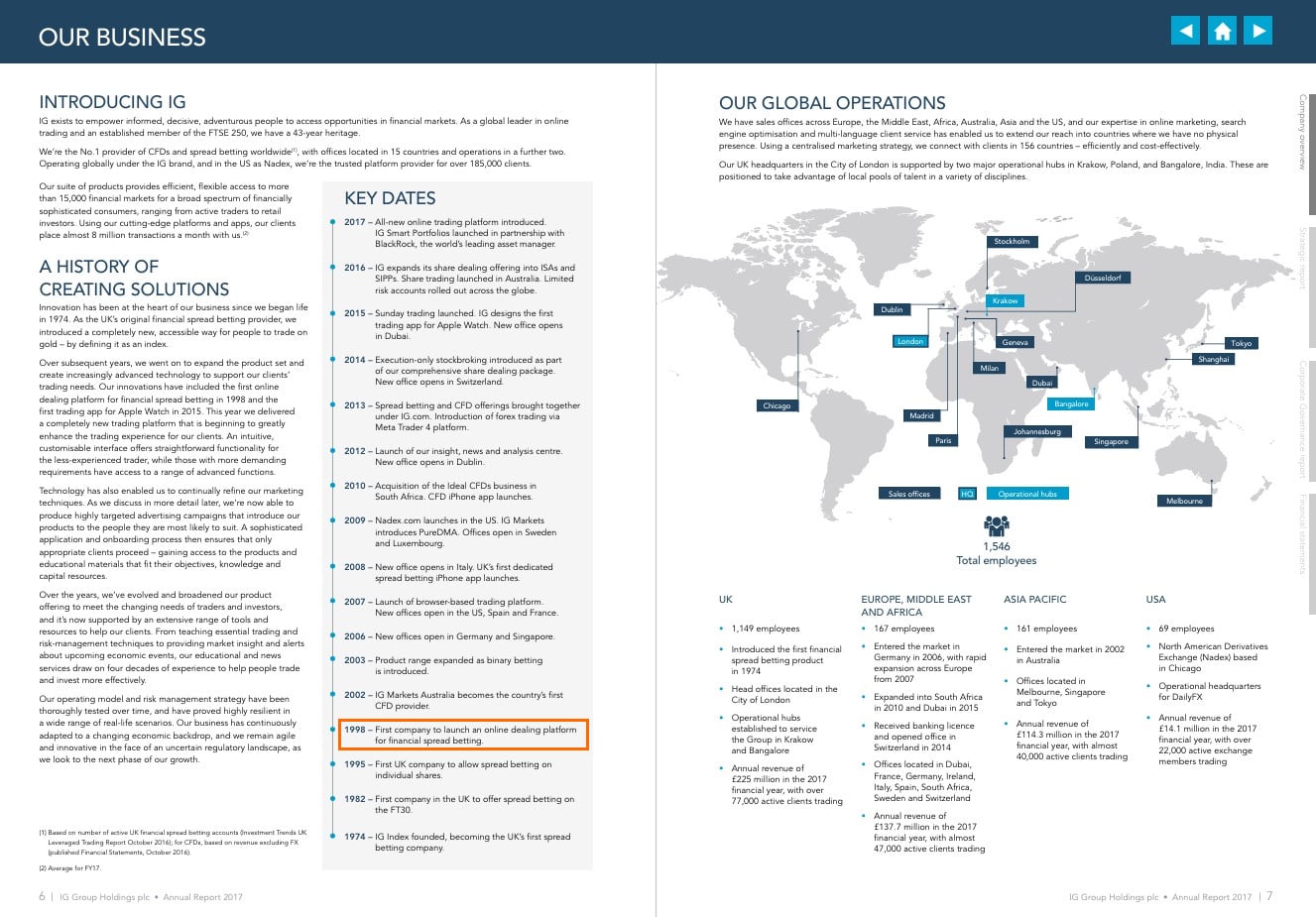
In the late 1990s and early 2000s, CFDs and other margin products gradually became more accessible to retail clients thanks to the development of online trading. IG broker states that in 1998 it launched an online platform for financial spread betting.
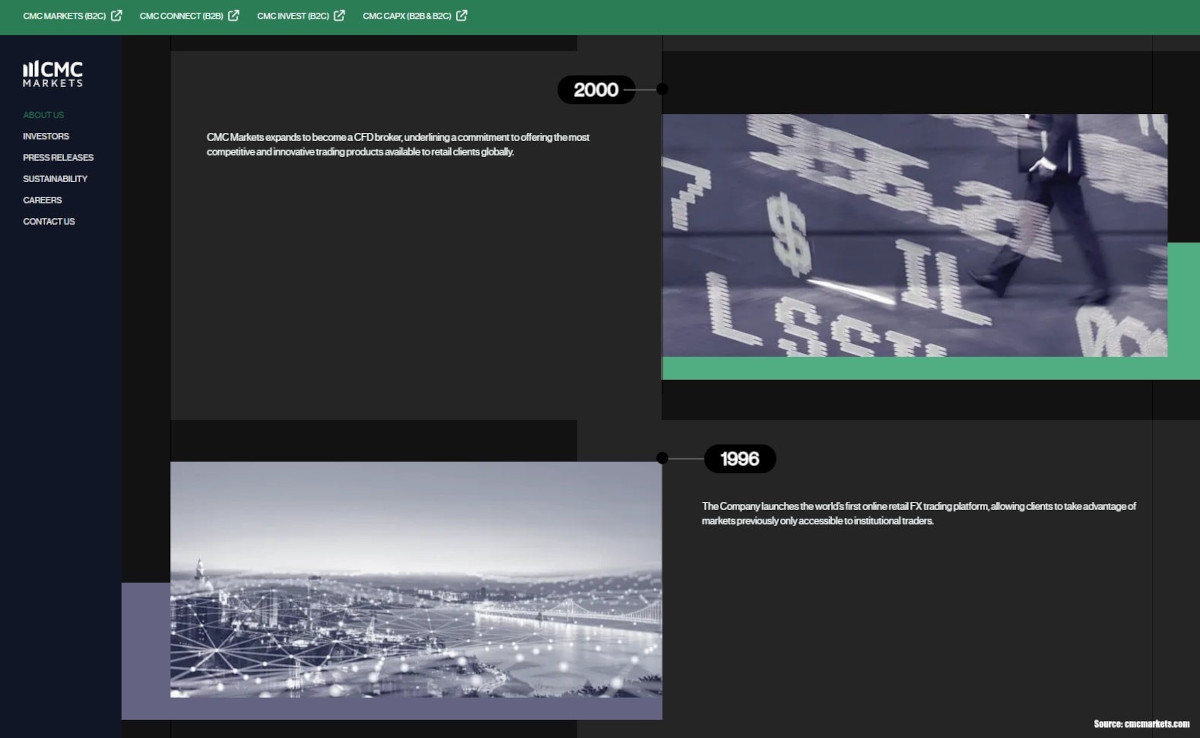
CMC Markets, in turn, introduced an online platform for retail currency trading in 1996, and in 2000 entered the CFD market. Over time, such platforms combined trading in stocks, indices, currencies, commodities, and digital assets in a single trading interface.
Today CFDs are again used by institutional participants, but for different tasks. They are used in synthetic prime brokerage and equity swap transactions, helping to work with restricted, emerging, and foreign markets without their own local custody infrastructure. At the same time, their role has become broader. In addition to hedging and speculation, CFDs help simplify trading operations and improve their efficiency. In this sense, the history of CFDs resembles a spiral: they went from the institutional market to the retail market, and then returned to institutions, but with new tasks and technologies.
CFD trading economics
A CFD is not only an instrument that allows you to profit from the difference between the opening and closing prices of a position, but also a separate business for the broker. At the same time, the CFD broker earns not only when the client loses money. It has several sources of income. Let's examine each of them so you can better assess trading conditions and real costs.
Transaction revenue
The first and most obvious source of income is the spread. The broker receives quotes from liquidity providers and may add its own markup to them. The client sees bid and ask prices, and the difference between them reflects not only market conditions but may also include a commercial component. The wider the set spread, the higher the income from each trade, all else being equal.
The second source is direct execution commissions. They are especially common when trading CFDs on individual shares, where the spread may be relatively narrow, but a commission per trade is charged additionally. Together, spreads and commissions form the main part of transaction revenue.
Swap revenue
If a position remains open overnight, a swap is charged, which also generates income. The basis is taken, for example, from the SOFR, SONIA, or EURIBOR rate, to which the broker's own margin is added. As a result, on long positions the client pays more than the base rate, while on short positions the client receives less. The difference constitutes the broker's income. This is a standard part of the business model that directly affects the final profitability of strategies when positions are held for a long time.
Additional trading fees
In addition to spreads and swaps, there are other commissions. A markup may be charged for currency conversion if the asset is denominated in a currency other than the account's base currency. For a guaranteed stop-loss (GSLO), a separate fee is usually charged for protection against slippage. An inactivity fee may also be charged if there are no transactions for a long period. Individually, these fees are small, but together they increase trading costs.
Risk management economics
The broker may act as counterparty to client trades and earn from their aggregate result, or hedge the resulting risk in the wholesale market. If clients on the whole lose money, this brings it profit; if they win, a loss arises that can be offset by external hedging. This is not manipulation, but a feature of the over-the-counter execution model. Therefore, it is important for a trader to understand that in some business models, their financial result directly affects the broker's result.
Ultimately, the broker's income consists of several components: spreads, commissions, swaps, additional fees, and the result of risk management. For the trader, this means that costs do not come down to a single figure. They arise at different stages of the trade — from opening to holding and closing the position. Understanding this economics helps you realistically assess the true cost of trading.
CFD execution, internalization, and risk management
When you send an order in a trading terminal, it does not necessarily go to the real market. Your broker has several execution scenarios, and which one is chosen determines who ends up on the other side of the trade. Let's examine each of them in more detail.
B-book internalization
Under this scheme, the broker becomes the client's direct economic counterparty. It offsets opposing orders within the company without sending them to the external market. If one client buys and another simultaneously sells, the opposing positions can be mutually netted, and only the net exposure is sent outside, and even then only if established risk limits are exceeded. As long as the order flow is balanced, the broker earns on spreads and commissions while taking on virtually no market risk.
A-book external hedging
Here the logic is the opposite: the broker does not keep directional risk on itself but passes it on to liquidity providers or prime brokers. Client trades are sent to the wholesale market, and the broker earns on its markup. This approach is convenient when client order flow is one-sided or when positions are large and it is not advisable to hold them internally. In this case, the broker acts as an intermediary, and its income depends less on the direction of clients' trading.
Commonly confused terms
A-book is not an account type or a technology, but a risk management strategy. Under this approach, the broker sends client risk outside. Direct market access (DMA) means something different. The client's order is sent directly to the order book of the underlying exchange, without dealer intermediation. Straight-through processing (STP) describes the execution process. The order passes through automatically, without manual intervention by the dealer. These are three different concepts, which are often conflated in broker advertising, although each describes its own operating mechanism.
Hybrid execution and dynamic routing
In practice, most large brokers do not use a single model permanently. Specialized software distributes the order flow in real time, taking into account market volatility, trade size, liquidity of the underlying asset, and the client's risk profile. A small order in a calm market may remain inside the company, while a large order or a trade during a news spike may be sent for external hedging. Therefore, the same broker can act both as counterparty and as intermediary, sometimes even within a single minute. For the trader, this means that the execution method may change from trade to trade.
US retail CFD regulation and the rules governing access
Imagine that you are an American trader and want to make a trade with a CFD on Apple shares. Sounds quite harmless, doesn't it? Except that in the US you can't do this due to the specifics of local derivatives regulation. The American approach differs substantially from the European and British ones, and understanding this difference explains why international brokers either do not offer CFDs to American clients or provide them with other derivative instruments.
SEC and CFTC oversight
In the United States, there is no single agency that oversees contracts for difference (CFDs). Regulatory jurisdiction depends on the type of underlying asset and, for equity indexes, on whether the index is narrow-based or broad-based. CFDs based on a single security or on a narrow-based security index are generally treated as security-based swaps (SBS) and fall under the SEC's jurisdiction. CFDs based on broad-based security indexes, commodities, currencies, or other non-security economic interests are generally treated as swaps under the Commodity Exchange Act and fall under the CFTC's jurisdiction.
This distinction determines the applicable regulatory requirements. SBS participants may be subject to SEC rules, including security-based swap dealer registration and SBS-specific reporting and disclosure requirements, while other swaps are subject to the corresponding CFTC rules, including dealer registration, reporting, and execution and clearing obligations where applicable. Neither framework provides a way for offering CFDs to US retail clients through a conventional over-the-counter (OTC) CFD platform, making the standard OTC CFD model used in many other jurisdictions unavailable to US retail clients.
Why the ban is hard to bypass
The key barrier to CFD trading is laid down in Section 742 of the Dodd-Frank Act, which added Article 2(c)(2)(D) to the Commodity Exchange Act. Its wording is quite strict: any transaction in a commodity entered into with a person who is not an eligible contract participant (ECP) is considered a retail commodity transaction if it involves leverage, margin, or financing from the counterparty. Such transactions fall under CEA regulation in the same way as futures contracts.
An exception exists, but it is very narrow. The transaction must provide for actual delivery of the commodity within 28 days. For CFDs, which are cash-settled instruments and do not provide for delivery of the underlying asset, this exception does not apply. Period.
Retail access to OTC swaps
The Dodd-Frank Act restricts the ability of persons who are not ECPs to enter into swap transactions outside regulated venues. Who qualifies as an ECP? For example, corporations with a certain volume of assets ($10 million), individuals with a substantial amount of investable funds, and regulated financial institutions. A retail trader with a deposit of a few thousand dollars, as a rule, does not fall under this definition. Therefore, an ordinary OTC CFD for such a client cannot be offered on the same terms as institutional swaps.
Active regulatory enforcement
Theory is theory, but how does this work in practice? In 2026, two American regulators at once, the SEC and the CFTC, brought claims against Netrios LP Ltd. and its affiliated entity Red Acre Ltd. Formally, the violations differed, but in both cases the issue concerned a single infrastructure through which American retail clients gained access to products unavailable to them under American rules.
The SEC charged Netrios and Red Acre with offering and selling security-based swaps in the form of CFDs on US and European stocks to American retail investors without the required registration and without conducting transactions on a registered national exchange. Netrios created the technological infrastructure for white-label brokerage platforms, which then operated under third-party brands. According to the SEC, at least 15 such platforms, predominantly managed from the US, offered CFDs on stocks, commodities, and other assets. The regulator determined that CFDs on individual stocks are security-based swaps and fall under the relevant requirements.
The CFTC examined the same case from a different angle. The Commission found that Netrios provided a specialized service for offering and selling leveraged or margin retail commodity transactions through offshore over-the-counter platforms targeting American clients. At the same time, the platforms did not verify whether clients met the eligible contract participant requirements. Red Acre, in turn, provided support to Netrios, including client servicing and marketing services. According to the CFTC's conclusions, such activity should have been carried out on a registered exchange, and Red Acre facilitated Netrios's violations.
The financial consequences proved substantial. Under the CFTC track, Netrios is obligated to pay a civil penalty of $1.75 million, and Red Acre $750 thousand, and to cease the relevant activity. The SEC imposed the same fines on the companies in its case. Thus, the total amount of sanctions across the two cases was $5 million.
This case shows that regulatory oversight extends not only to companies directly offering CFDs to retail clients. It may also cover infrastructure providers that support the operation of such platforms. It is also noteworthy that the SEC and CFTC acted in parallel, with both commissions noting assistance to each other and from foreign regulators, including the Central Bank of Ireland, the Seychelles Financial Services Authority, and the Malta Financial Services Authority.
For the American trader, the practical conclusion is fairly simple: if a platform offers CFDs on individual stocks to retail clients in the US, one must first of all check its legal status and compliance with SEC requirements. The mere fact that such a platform exists on the internet does not mean that its activity is permitted under American law.
What remains for US retail traders
The prohibition on OTC swaps and leveraged retail commodity transactions does not mean that Americans have no ways to trade indices or commodities with leverage. It is just that these ways work through regulated exchange-traded instruments. Micro-futures on the CME and ICE, contracts one-tenth the size of standard ones, are available on indices, gold, oil, and even grains. Options on futures, cleared through a central counterparty, provide another way to open a directional trade with limited risk. These instruments trade on registered exchanges, go through a central counterparty, and are subject to standardized margin rules. The American regulator does not prohibit retail leveraged speculation as such. It redirects it into the channel of exchange infrastructure, where counterparty and settlement risks are managed differently than in a bilateral OTC CFD contract.
For a trader from the US, this means a simple thing: if a platform offers CFDs on stocks, indices, or gold, it is almost certainly operating outside the US regulatory framework. And sooner or later the regulator will notice.
EU retail CFD regulation
In Europe, a retail trader trading CFDs is under significantly stricter protection than their American counterpart. Not because European regulators are kinder, but because in 2018 ESMA for the first time used its product intervention powers and established uniform restrictions for retail CFD trading in the EU. Initially these measures were temporary, but they were subsequently made permanent by national regulators. They determine how brokers may offer CFDs to retail clients and what level of risk is acceptable for such products.
CFDs: complex products by definition
From the perspective of MiFID II (Directive 2014/65/EU) and MiFIR, CFDs are classified as complex financial instruments. In practice, this means that a broker cannot simply provide a client with a CFD without assessing their knowledge and experience. Before doing so, it must conduct an appropriateness test and determine whether the client sufficiently understands the features and risks of such a product, including the use of leverage and margin. Selling CFDs on an execution-only basis, without such an assessment, is not permitted. This is not merely a bureaucratic formality, but a mechanism that should restrict access to complex instruments for clients who do not possess the necessary knowledge and experience.
Temporary measures become permanent
The temporary ESMA measures adopted in 2018 were initially time-limited and were reviewed every three months until July 31, 2019. They established uniform requirements for retail CFD trading, including leverage restrictions, the margin close-out rule, negative balance protection, and a ban on certain marketing incentives. However, by 2019, most national competent authorities had already adopted their own permanent measures within their jurisdictions. The FCA in the UK, BaFin in Germany, the AMF in France, CySEC in Cyprus, the Central Bank of Ireland, and other regulators enshrined these requirements at the national level.
ESMA was able to terminate its temporary measures after national regimes became permanent and ensured a comparable level of protection for retail clients across different EU countries.
Retail client protection rules
- Leverage restrictions. ESMA established a scale from 1:30 to 1:20 depending on the underlying asset: 1:30 for major currency pairs, 1:20 for non-major currency pairs, gold, and major stock indices, 1:10 for commodities other than gold and minor stock indices, 1:5 for individual shares and other underlying assets, 1:2 for cryptocurrencies. These are mandatory requirements for retail clients that the broker must take into account when opening a position.
- Negative balance protection (NBP). It limits the client's aggregate liability on CFDs to the funds in their CFD account. Even if the market moves sharply against the position and a large gap occurs, the client should not lose more than that amount.
- Margin close-out rule. If the funds in the CFD account fall to 50% of the minimum required margin, the provider must close one or more open positions. This is a uniform threshold established for retail CFD accounts under these requirements.
- Ban on monetary and non-monetary incentives. Bonuses for topping up an account, rewards for opening a position, and other similar offers may not be used to stimulate retail CFD trading.
- Standardized risk warning. In it, the provider must indicate the current percentage of retail CFD accounts that incurred a loss. This indicator is calculated every three months for the preceding 12 months. The calculation takes into account realized and unrealized results, as well as commissions, fees, and other trading costs.
When developing these measures, ESMA referred to an analysis by national regulators according to which, in different EU jurisdictions, 74–89% of retail CFD accounts incurred a loss, and average losses per client ranged from €1,600 to €29,000. This is historical data used by ESMA when introducing the restrictions in 2018, and not a single current statistic for the entire EU.
For the trader, these measures mean a fairly simple thing. Risk has become more strictly limited at the level of the product and the account, but CFDs themselves have not become less risky. Leverage is limited, incentive bonuses are prohibited, and negative balance is protected. At the same time, historical regulator data showed that the majority of retail accounts still lost money. The restrictions change the trading conditions, but do not eliminate the risk of losses.
UK retail CFD rules
The UK has left the European Union, but it has not abandoned the protection of retail traders. The FCA retained the key restrictions that ESMA introduced in 2018 and enshrined them in its own Handbook. They are now not temporary measures that must be renewed, but permanent requirements determining how a broker may offer CFDs to retail clients, what leverage it may provide, and in what cases it is obliged to close their positions.
PS19/18: UK-specific CFD rules
In July 2019, the FCA published Policy Statement PS19/18, enshrining the European regulator's restrictions in its own regulation and making them permanent. ESMA's temporary measures were due to expire on July 31, 2019, so the British financial regulator decided to incorporate equivalent requirements into its own Handbook before their expiry. The new CFD rules came into force on August 1, 2019.
First of all, the UK supervisory authority limited leverage to a range from 1:30 to 1:2 depending on the underlying asset, introduced automatic closure of positions when funds fall to 50% of the required margin, established negative balance protection, banned monetary and non-monetary incentives, and introduced a standardized warning indicating the percentage of loss-making retail accounts.
At the same time, the FCA rules differ from the EU regulator's requirements in some respects. The British supervisory authority extended the restrictions to CFD-like options. It also set a maximum leverage of 1:30 instead of the 1:5 provided for by ESMA's measures for CFDs linked to certain government bonds.
According to the UK regulator's estimate, the measures introduced were expected to allow retail clients of British companies to save between £267 million and £451 million per year by reducing trading losses. For the trader, this means that after Brexit the FCA rules for retail CFDs became independent and no longer depend on ESMA decisions. Brokers working with British retail clients are obliged to comply with FCA requirements regardless of the rules in force in the EU.
Crypto CFDs remain banned, ETNs allowed
With regard to cryptoassets, the FCA rules also distinguish between access to the assets themselves and trading in derivative instruments. On 8 October 2025, the regulator lifted the ban on retail access to crypto ETNs, that is, exchange-traded notes linked to cryptoassets. At the same time, this concerns only products admitted to trading on a UK Recognised Investment Exchange. This is a fundamental limitation: it is not about unrestricted trading in cryptoassets, but about an exchange-traded instrument that falls under established listing and disclosure requirements.
At the same time, the ban on retail crypto CFDs has remained. The FCA still prohibits the sale, marketing, and distribution of cryptoasset derivatives among retail clients, including CFDs, options, and futures. The regulator links these restrictions to the high volatility of cryptoassets, the difficulties of valuing them, and the risk of sudden and significant losses for retail investors.
In other words, this is not a complete ban on retail clients' access to cryptoassets, but a distinction between specific investment products. A crypto ETN that meets the requirements of a UK Recognised Investment Exchange is available to retail clients. Crypto CFDs remain prohibited for them.
Consumer Duty
Since July 2023, the FCA has been applying Consumer Duty. The essence of these rules is that a company must look not only at whether it complies with established rules, but also at how beneficial and clear its terms are to the client. For CFD providers, this means that leverage and margin restrictions alone are not enough. It must also be shown that the client receives reasonable terms for their money.
 In November 2025, the FCA published the results of a review of several brokers and found a number of problems. Some companies did not adequately take client complaints into account when assessing their products, did not review them after the introduction of Consumer Duty, and charged unreasonably high or opaque fees for overnight swaps.
Mark Francis, director of wholesale markets sell-side at the FCA, expressed the regulator's position quite clearly:
"The Consumer Duty raises the bar for consumer protection across financial services and CFD providers must meet those standards. CFDs are complex, risky products and it is vital that providers act to deliver good outcomes for customers, communicate clearly and provide fair value. It is also important that consumers shop around and ensure they fully understand the investment and its costs.
For the trader, this means that the FCA looks not only at leverage and margin restrictions. The regulator also checks how acceptable the trading terms actually are for the client. If they are not, the provider will have to change the product or stop offering it.
How APAC markets regulate retail CFD trading
The Asia-Pacific region does not have a single regulator that would establish common rules for CFDs, as ESMA does in Europe. Each country forms its own requirements: in some places leverage is strictly limited, in others exchange-traded and over-the-counter instruments are regulated differently, and in still others retail clients are not allowed to trade CFDs at all.
Australia
The effect of these restrictions is reflected in the Australian Securities & Investments Commission's data. ASIC's CFD Product Intervention Order took effect on March 29, 2021, and was extended until May 23, 2027, unless remade. During its first six months of operation, aggregate net losses in retail client accounts fell by 91%, the number of loss-making retail client accounts fell by 51%, and negative-balance occurrences fell by 88%.
The Order limits leverage for retail clients from 1:30 to 1:2 depending on the underlying asset class. It also requires margin close-out when the net equity in a retail client's CFD account falls below 50% of the total initial or required margin for open positions, requires negative balance protection, and prohibits specified inducements to open, fund or trade a CFD account.
ASIC's approach extends beyond supervising compliance with the CFD Product Intervention Order. The regulator has also pursued enforcement action where licensees failed to apply the appropriate retail-client protections. For example, in the Binance Australia Derivatives matter, the Federal Court ordered Oztures Trading Pty Ltd, which operated Binance Australia Derivatives, to pay a A$10 million penalty after it misclassified more than 85% of its Australian client base as wholesale clients over a nine-month period. As a result, 524 retail investors were able to trade high-risk crypto-derivatives without the consumer protections to which they were entitled.
ASIC has also taken action in relation to cross-border conduct. In the Union Standard case, the company actively marketed and issued CFDs to clients in China despite knowing, or being required to know, that those clients could be exposed to the risk of contravening Chinese law. The Federal Court imposed total penalties of A$300.2 million on Union Standard and two of its former authorized representatives. Of that amount, A$156.7 million was imposed on Union Standard itself. The case illustrates that an Australian financial-services licensee may face significant enforcement consequences where misconduct under its license involves cross-border operations.
Japan
The Japanese regulator JFSA regulates exchange-traded and over-the-counter trading differently. Exchange-traded margin currency trading through Click 365 and the Tokyo Financial Exchange platform is regulated separately from retail over-the-counter FX.
A very strict limit applies: maximum leverage is 1:25, which corresponds to a margin of 4%. This is lower than the limits in Europe and Australia. CFDs on individual shares and indices are subject to different margin requirements. For index CFDs, the typical margin is 10% of the position value, equivalent to leverage of 1:10, while CFDs on individual shares require a 20% margin, or 1:5 leverage.
Unlike European rules, the Japanese system does not provide for a retail client's transition to a professional category with a higher leverage limit. The established restrictions apply to all retail accounts.
South Korea
In 2023, South Korean financial authorities announced an overhaul of CFD rules after sharp falls in the prices of certain stocks exposed weaknesses in the CFD market. The measures were developed by the Financial Services Commission (FSC) together with the Financial Supervisory Service, the Korea Exchange and the Korea Financial Investment Association. They included greater transparency about the actual type of CFD investors and investment balances by instrument, as well as the inclusion of CFD exposures in securities firms' maximum credit-extension limits.
Investor-protection rules were also strengthened. CFD traders must deposit at least 40% of the transaction amount, implying maximum leverage of approximately 1:2.5. Individual investors seeking qualified professional investor status must undergo an in-person verification process, which may include a video call, and securities firms must re-check whether they continue to meet the qualification requirements every two years.
In addition, qualified professional investors seeking to trade OTC derivatives, including CFDs, must demonstrate sufficient experience with high-risk investment products. This additional requirement is intended to ensure that access to these products is limited to investors who meet the relevant experience criteria. Securities firms are responsible for verifying compliance with these requirements as part of the professional investor qualification process.
Malaysia: CFDs for qualified investors
The Securities Commission Malaysia (SC) revised its Guidelines on Contracts for Difference on June 14, 2024. The document, designated SC-GL/3-2018 (R3-2024), governs contracts for difference as over-the-counter derivative contracts settled in cash.
A CFD provider may offer CFDs only if it holds a Capital Markets Services Licence (CMSL) for dealing in derivatives, including a CMSL restricted to CFD dealing. CFDs may be offered only to sophisticated investors within the meaning of the Capital Markets and Services Act 2007.
The revised Guidelines expand the range of eligible underlying instruments. In addition to shares, permitted instruments include units of REITs, units of ETFs, commodity derivatives listed on Bursa Derivatives or a Specified Exchange, and indices, subject to the applicable eligibility criteria. The regulatory framework also requires a suitability assessment for investors seeking to trade CFDs.
Malaysia therefore limits CFD access through both provider licensing and investor-eligibility requirements. For traders assessing CFD conditions in APAC, leverage is only one factor: investor classification, the regulatory status of the provider, and the permitted underlying instruments may be equally important.
Offshore CFD brokers and the reality of investor protection
Have you ever wondered why the same broker offers a client in the UK leverage of 1:30, while allowing a trader in another jurisdiction to open trades with leverage of 1:500 on the same platform? Often, the reason is that the clients are serviced by different legal entities. A company licensed by the FCA must comply with the requirements of the UK regulator, while its offshore entity may operate under the rules of another jurisdiction where restrictions on retail clients are less stringent. That is why it is important to find out which legal entity will actually service your account before opening one. This determines the leverage available to you, trading conditions, and the level of regulatory protection.
Different levels of offshore regulation
You are unlikely to see a broker advertise the fact that its regulator is considered less stringent. In practice, regulators differ significantly in their powers and approaches. For example, the FSA of Seychelles licenses dealers and sets minimum capital requirements, but the depth of supervision and frequency of inspections differ from European practice. The SCB of the Bahamas also regulates brokers but has traditionally imposed less stringent restrictions on the products they can offer. The VFSC of Vanuatu is known for relatively low licensing requirements, which makes it attractive to platforms seeking formal regulatory status. The FSC of Mauritius imposes reporting requirements and provides for different categories of licenses, but the level of retail client protection is lower than that provided in the UK, Europe, and Australia.
When assessing a license, it is important to look at the regulator's actual powers: how it supervises the broker's activities, what measures it can take in the event of violations, and what protection mechanisms are available to clients.
The risks of high leverage
At first glance, leverage of 1:500 or higher may seem like an opportunity to make more money from the same price movement. However, it can increase losses just as quickly. With 1:500 leverage, a 0.2% price movement against the position corresponds to a loss equal to the entire margin used, excluding the impact of spreads, commissions, and forced liquidation rules. During major news releases or at the opening of the Asian session, the market can move that distance in a very short period of time.
The European leverage cap ranges from 1:30 to 1:2 depending on the volatility of the underlying, reducing the amount of leverage available relative to capital and providing more room before margin close-out. Australian data show that, after leverage restrictions were introduced, both the proportion of loss-making retail CFD accounts and aggregate net losses fell substantially. In the EU/UK, regulators report that a large majority of retail CFD accounts lose money, and the measures were designed to reduce losses, though comparable post-implementation statistics are less readily available than in Australia. Comparable data for offshore jurisdictions are generally unavailable, making it considerably more difficult to assess trading outcomes there.
Is NBP a legal requirement or promise?
In the EU and the UK, negative balance protection rules for retail clients limit their total losses to the funds available in their CFD account. If losses exceed that amount, the broker cannot require the client to pay the difference.
Offshore brokers sometimes include a similar promise in their client agreements as an internal company policy. Its legal force and the way it is applied depend on the terms of the agreement and the laws of the relevant jurisdiction. A client's ability to challenge the broker's refusal to honor such a promise may also be limited.
Therefore, when reviewing the agreement, it is important to determine whether the protection is required by law or is provided only under the company's internal rules, as well as which regulator supervises the broker and handles client complaints. The mere presence of such a provision in the agreement does not guarantee a level of protection comparable to the requirements imposed by the FCA or EU regulators.
How fund segregation protects your money
In the UK, client funds must be held separately from the broker's own funds in accordance with FCA rules. If a company becomes insolvent, special procedures apply to the return of segregated client assets. Additional protection may be available through the FSCS if the company and the specific type of claim fall within its rules.
In offshore jurisdictions, requirements for holding client funds depend on local legislation and the terms of the license. In some cases, client funds are also held in segregated accounts, so offshore registration alone does not mean that all clients' money is mixed with the broker's operational funds.
A significant difference may lie in the compensation mechanisms available. In the UK, the FSCS provides compensation, subject to certain conditions, to clients of failed authorized financial firms. In Cyprus, members of the ICF are covered by a separate compensation scheme with a set limit. In other jurisdictions, no equivalent scheme may exist, in which case a client's claims against an insolvent broker are handled under local insolvency law.
CFD provider due diligence checklist
Before opening an account, it is worth systematically checking several things:
- Find out which company will service your account. The same broker may operate through several companies in different jurisdictions. An EU client may enter into an agreement with a Cypriot entity, while a client from another country may contract with a company in the Seychelles. This determines which rules apply and what level of protection is available.
- Check the license. Look for information not only on the broker's website but also in the relevant regulator's public register. The FCA, ASIC, CySEC, and other supervisory authorities publish information on license numbers and permitted activities. Make sure the authorization covers retail clients and the financial products you intend to trade.
- Check for a "license umbrella." A broker may refer to the license of its parent company even though the contract is actually signed with a different entity. Make sure that the company named in the agreement itself holds the necessary authorizations.
- Review the terms for holding and protecting client funds. Check where client money is held, whether segregation is required, and whether the jurisdiction provides a compensation scheme in the event of broker insolvency.
- Check the payment details. Make sure the payment recipient matches the information in the agreement. If funds are transferred to a company in another jurisdiction or unusual payment routes are used, find out why.
- Look at where and how the broker solicits clients. If the company actively markets its services in countries where it does not hold the relevant authorization, check the legal basis for that activity. In regulated jurisdictions, offering financial services without the required license may constitute a violation.
Offshore brokers are not necessarily scams
Some companies may legitimately serve clients who consciously choose high leverage and are willing to accept the associated risks. Problems arise when something goes wrong and the client has limited options for protecting their interests. The regulator may have limited powers, a compensation scheme may be unavailable, and legal proceedings may have to take place in a foreign jurisdiction.
As a result, traders take on another risk that is rarely considered when choosing a broker: the risk of being left to deal with the company alone in a dispute. Therefore, attractive leverage of 1:500 or 1:1000 should be evaluated alongside the rights, guarantees, and enforcement mechanisms available to the client. A few additional percentage points of potential return may look attractive on a trading platform, but it is far more important to understand the cost of those conditions when the market or the broker itself creates a problem.
CFD trading risks: Lessons from history
Any risk management textbook recommends setting a stop-loss. However, it has an important limitation: it does not guarantee that a position will be closed at the specified price. A stop-loss simply sets a condition for sending an order to the broker. If the market moves too quickly or liquidity suddenly dries up, the position may be closed at the first available quote, which can differ significantly from the specified level. Such slippage can multiply the expected loss. In some cases, a sharp price gap can wipe out a significant portion of an account within seconds.
Leverage, margin, and gap risk
Leverage increases both profit and loss in proportion to the position size. However, the consequences of a price move up or down differ because of limited capital and margin requirements. With 1:100 leverage, a 1% move against the position corresponds to a loss equal to the entire initial margin, so the position may be forcibly closed before the market actually moves the full 1%. A 1% move in your favor produces a comparable gain relative to the margin used, but it does not create a symmetrical opportunity to keep increasing the position without additional capital.
Gaps create an additional risk. CFD markets may close over weekends, holidays, or overnight breaks, while major macroeconomic announcements, central bank decisions, and geopolitical events can trigger sharp price movements. If the market opens well beyond the stop-loss level, a regular order may be executed at the first available quote, resulting in substantial slippage.
Some brokers offer a guaranteed stop-loss order (GSLO) for such situations. For example, IG, CMC Markets, and FOREX.com offer it. With a GSLO, the broker guarantees execution at the specified price even in the event of a gap or sharp market move. This guarantee usually comes at an additional cost. Therefore, a GSLO may be useful for positions that remain open during periods when the risk of sharp price movements is elevated.
The 2015 Swiss franc liquidity shock
On January 15, 2015, the Swiss National Bank removed the franc's peg to the euro. The move sent shockwaves through the market. EUR/CHF plunged by more than 2,000 pips within minutes, liquidity disappeared, and quotes at some levels simply became unavailable. Traders holding positions against the franc found that their stop-loss orders were not executed at the specified prices because the market had jumped through those levels. Many accounts went deeply negative, with losses far exceeding the initial deposit. Alpari UK, one of the largest brokers at the time, became insolvent. Clients of other firms faced negative balances and demands for additional funds.
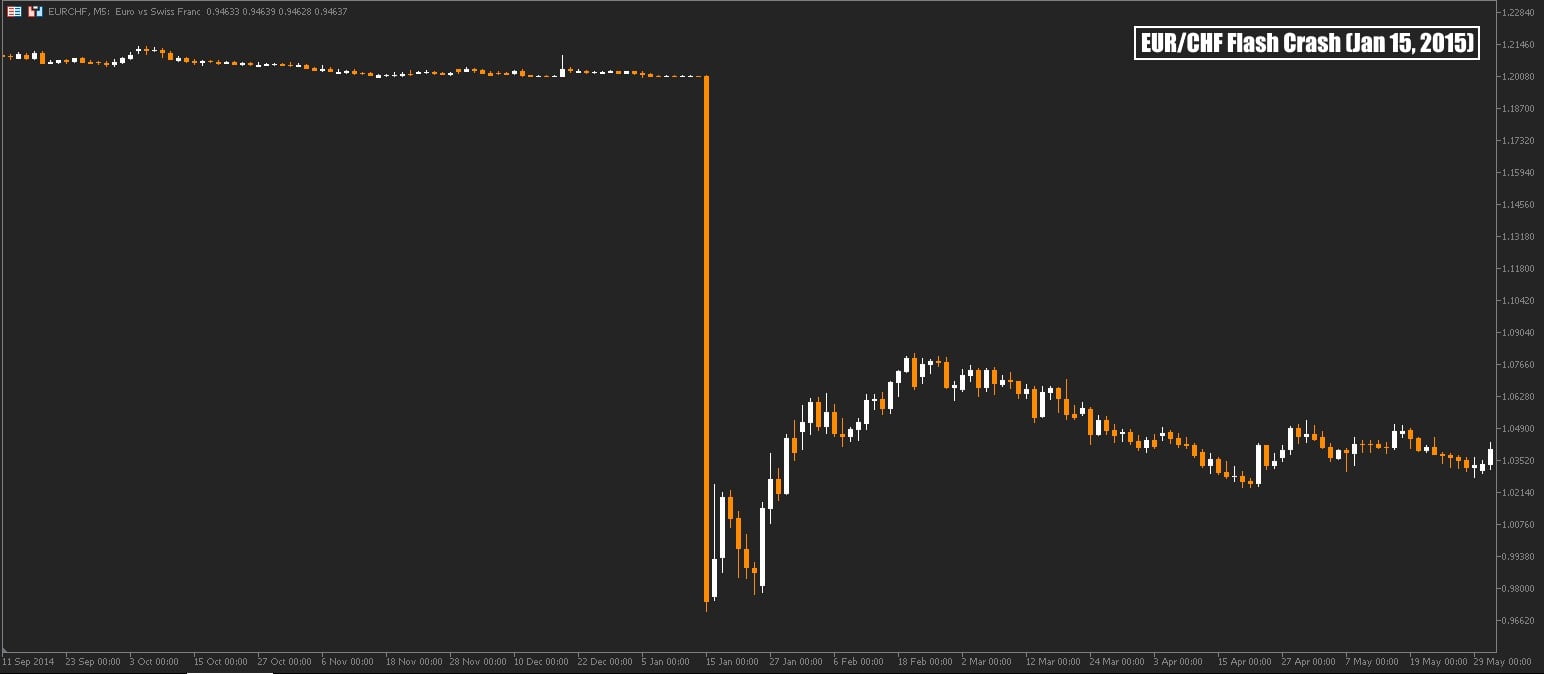
The episode demonstrated the potential cost of underestimating market risk. A trader might expect a small loss based on a stop-loss level, but a sudden market gap can result in losses many times greater than the originally acceptable risk. In some cases, this meant not only losing the deposit but also becoming indebted to the broker. Following the crisis, regulators in different countries strengthened negative balance protection, but the underlying principle remained unchanged: in leveraged trading, an error in assessing risk can cost significantly more than the amount a trader was initially prepared to lose.
FXCM and the NDD conflict of interest
In 2017, the CFTC fined FXCM $7 million and barred the company from operating in the United States. The reason was troubling. The broker marketed a no dealing desk (NDD) model, implying the absence of a conflict of interest, and claimed that it did not trade against its clients. In practice, order flow was routed to a specific market maker, Effex Capital, which was linked to FXCM's management, while the company received undisclosed rebates based on trading volume. Clients were unaware that their trades were being routed to an entity affiliated with the broker.
This case illustrates the cost of an opaque execution model. A trader may believe that an order is being routed to the external market with minimal conflict of interest, while the actual arrangement may be considerably more complex. As a result, a marketing promise can create a false sense of security, leading clients to make trading decisions without understanding who receives their orders or what economic incentives operate on the other side of the transaction. This is why it is important to examine a broker's actual execution model and sources of revenue when choosing a broker. A mistake here can cost a trader considerably more than the difference in spreads or commissions.
Negative oil prices and the limits of trading systems
In April 2020, the May WTI futures contract settled at -$37.63. The unprecedented move in oil prices created significant challenges for trading platforms and brokers offering instruments linked to WTI. CFD clients could be affected by trading suspensions, position closures, and other measures taken by brokers as the underlying market moved into uncharted territory.
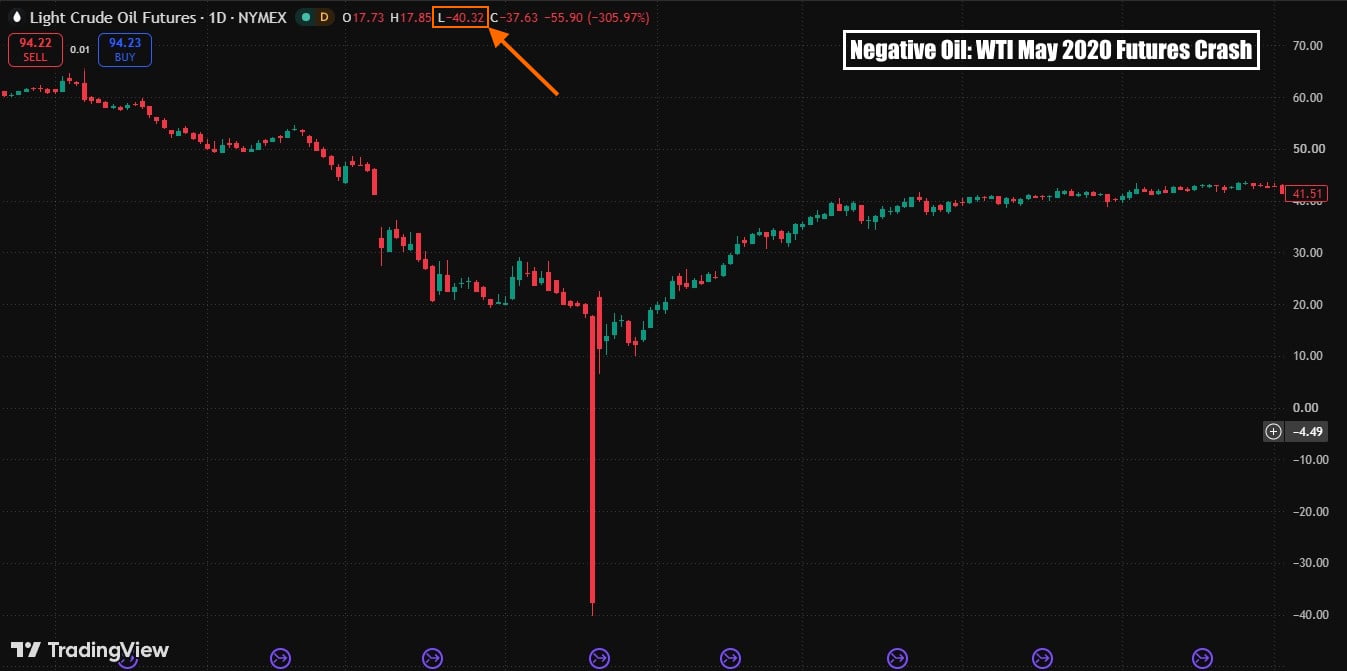
A notable example involved FXCM and its US Oil CFDs. On April 20, 2020, the price of the underlying WTI futures contract fell below zero, while FXCM suspended trading in US Oil and closed clients' positions at $0.001. One client held three long CFD positions on the May 2020 WTI futures contract, which were closed after FXCM froze its US Oil market at around 18:08 GMT. The Financial Ombudsman Service found that FXCM had been entitled to suspend trading and close the positions because of the extreme volatility and loss of liquidity and did not find sufficient evidence that the platform was unable to handle negative prices.
The episode illustrates the practical risks that can arise when a CFD platform suspends trading during an extreme move in the underlying market. During exceptional market conditions, trading restrictions, liquidity problems, and the broker's response to rapidly changing prices can affect a trader's ability to manage an open position. Financial risk can therefore depend not only on price movements but also on how the trading infrastructure responds to extreme conditions.
Counterparty risk in CFD trading
All of the scenarios above have one thing in common. Your counterparty in a CFD trade is not an exchange or clearing house but a specific company. If that company becomes insolvent, leaves the market, or is unable to meet its obligations, both your positions and funds may be at risk.
When assessing a broker's reliability, look at several practical indicators:
- Execution quality: compare the quoted and actual execution prices, the frequency and average size of slippage, and the proportion of orders executed at prices different from the quoted price.
- Requotes and rejections: frequent requests for a new price, order rejections, or execution delays require an explanation, especially under normal market conditions.
- Withdrawal speed: pay attention to actual processing times, unexplained delays, and any changes to withdrawal terms after making a deposit.
- Segregation of funds: check whether the broker is required to keep client money separate from its own funds and whether this requirement applies to the specific company and jurisdiction servicing your account.
- Financial stability: for a regulated broker, it is useful to review published financial statements, capital requirements, enforcement history, and any significant regulatory violations.
These indicators provide a much more concrete way to assess counterparty risk than simply checking whether a broker displays a license on its website. Historical cases show that this risk becomes particularly significant during periods of market stress. When prices move sharply, liquidity disappears, and technical systems operate under extreme pressure, problems at the broker can simultaneously affect order execution, margin calculations, and access to funds. Counterparty reliability is therefore a separate component of trading risk that a trader takes on with every CFD position.
The future of CFD trading, regulatory convergence, and competing derivatives
CFDs are no longer a niche product. Today, they exist within the same ecosystem as perpetual futures on crypto assets, exchange-traded micro futures, retail options, and decentralized protocols. Regulators are taking the development of this market into account, brokers are gradually adapting their offerings to new instruments, and traders have access to the broadest range of trading products in history.
Crypto perpetuals under ESMA scrutiny
In February 2026, ESMA issued a public statement on how to classify derivatives marketed under names such as perpetual futures, perpetual swaps, or rolling contracts, commonly known as perps. The regulator reminded firms that the commercial name of a product does not determine its legal status. Brokers must assess the instrument's actual characteristics and determine whether it falls within the definition of a CFD.
This is particularly important for leveraged derivatives on crypto assets. If such a product meets the definition of a contract for difference, the existing national measures for protecting retail clients apply, including leverage limits, standardized risk warnings, margin close-out requirements, negative balance protection, and a ban on monetary and non-monetary incentives. ESMA also reminded firms of their product governance and investor protection obligations, including defining an appropriate target market, conducting appropriateness assessments in accordance with the requirements applicable to complex financial instruments, and identifying and managing conflicts of interest.
The European regulator did not introduce any new bans. It reminded firms that existing requirements also apply to products with CFD characteristics, even if they are marketed under a different name. For platforms offering such instruments to European retail clients, this is a reason to review product classifications, trading conditions, and marketing materials. Traders should also bear in mind that calling a product a "perpetual future" does not by itself exempt it from European regulatory requirements.
From CFD brokers to multi-asset platforms
A few years ago, CFD brokers and investment platforms represented distinct segments of the market. Today, their offerings increasingly overlap. In recent times, brokers have launched single platforms where clients can buy real stocks and ETFs commission-free while also trading CFDs and options through the same account.
The logic behind this model is straightforward: brokers want to retain clients with different objectives, from long-term investing to active trading, within a single ecosystem. CFDs are gradually becoming one product in a broader lineup alongside stocks, ETFs, and options. This is changing the way the brokerage business competes: the focus is no longer only on attracting active traders but on capturing the client's entire investment portfolio.
CFDs and their rivals in retail trading
Competition for retail traders is becoming increasingly intense. On one side, exchange-traded instruments offer a regulated alternative: micro futures on CME and ICE, and options on futures through the OCC. Trades in these markets are cleared through a central counterparty and follow standardized rules, but they require access to exchange infrastructure.
On the other side, the decentralized perpetuals segment is growing rapidly. According to CoinGecko estimates, the top 10 perpetual DEXs (decentralized exchanges) processed $6.7 trillion in trading volume in 2025, up 346% from the previous year. Hyperliquid dominated the first half of the year, although competition between platforms intensified toward year-end. The main growth driver is retail speculative trading. Perpetuals compete with CFDs for this demand by offering 24/7 leveraged trading without rollovers or expirations.
Infrastructure upgrades such as HIP-3 make it possible to launch perpetual markets for traditional assets without fully tokenizing them. This creates additional opportunities to compete with CFDs in stocks, indices, and currencies. At the same time, DEX perpetuals do not yet provide the level of regulatory protection available to European retail clients when trading CFDs. Their growth shows that trading costs, instrument availability, and the convenience of trading infrastructure are becoming increasingly important to traders.
Overall, the future of the market is taking shape along several lines. Regulators are gradually aligning requirements for products with similar economic characteristics, regardless of what they are called. Brokers are expanding their product ranges, with CFDs becoming one of several instruments within a unified trading ecosystem. Competition for retail traders is increasingly taking place between different ways of accessing the market: regulated synthetic trading, standardized exchange-traded instruments, and decentralized protocols.
For traders, this means more opportunities and, at the same time, more questions. It is important to understand what level of protection a particular model provides, what restrictions it imposes, and how much it costs to access the market.
Conclusion: The CFD contract is only one part of trading risk
So, in this review we have examined how a contract for difference is structured, how its price is formed, where margin comes from, who earns on a trade, how regulatory regimes work in different jurisdictions, and which historical cases show the difference between theory and practice. Now all these elements come together into a single picture that allows us to understand what the results of CFD trading actually depend on and what the price of the risk taken by the trader is.
The main conclusion may seem unexpected. A CFD in itself is a fairly neutral and efficient instrument. This contract gives the trader exposure to an asset without the need to buy it, and the result depends on how it is used, through which broker the trade is executed, and under what conditions it is made.
The level of risk on a trade is determined by four factors:
- Leverage. A ratio of 1:5 and 1:500 create a completely different load on capital. A regulator may set a maximum level, but within that range the decision remains with the trader.
- Volatility of the underlying asset. A CFD on a broad index and a CFD on an individual stock or cryptocurrency may have a completely different risk profile. The stronger and faster the price changes, the less time remains for reaction and the higher the consequences of a mistake.
- Reliability of the broker and quality of execution. What matters here is the license, the execution model, slippage conditions, and the company's ability to fulfill its obligations to clients in a timely manner. The histories of FXCM and Alpari UK show that problems can arise from opaque execution or a broker's inability to survive an extreme market shock.
- Legal status and protection. The rules of a specific jurisdiction determine whether negative balance protection applies, how client funds are held, and whether a compensation mechanism exists in the event of a broker's bankruptcy. The same CFD may have completely different consequences for a client depending on which company the contract is concluded with.
All four factors operate simultaneously. You can choose a reliable broker and still lose your account due to excessive leverage. You can follow sound risk management and still encounter execution problems or weak legal protection. Therefore, evaluating a CFD only by spread, leverage, or the set of available assets is not enough.
This is the main lesson of the entire history of contracts for difference. Trading conditions by themselves say little about the real level of risk. It must be assessed in the context of the entire trade, from the moment the position is opened to its possible closure in a stress situation. The better the trader understands how the chosen product and broker work, the fewer surprises may arise at the most inopportune moment.
And remember: CFDs give access to the market with a relatively small amount of capital, but such efficiency is associated with additional risk. The higher the leverage, the more complex the product, and the weaker the protection in a specific jurisdiction, the more responsibility falls on the trader himself.
Ultimately, it is important to assess in advance what lies behind the conditions offered by the broker. Behind attractive leverage there may be a higher probability of forced closure of the position and larger losses, and behind low costs there may be execution specifics or limitations of client protection. Conscious trading begins even before the position is opened.
FAQ on CFDs
What are CFDs and how do they work?
A CFD is a contract for the difference between the opening and closing price of a position in an underlying asset. The trader does not own the asset itself, but receives a profit or loss depending on changes in its price. Opening a position usually requires depositing margin, and leverage allows you to gain exposure exceeding the amount of funds deposited. CFD settlements are made exclusively in cash.
How do CFD brokers make money?
CFD brokers earn income from spreads, commissions, swaps for rolling over positions, currency conversion, and inactivity fees. They may also internally execute client orders by taking the opposite side of trades. In this case, client losses can generate profit for the broker, while their gains can create a loss if the company does not offset the resulting risk through external hedging.
Can you lose more money than you deposit with CFDs?
In the EU, the UK, and Australia, retail clients are protected from a negative balance on CFDs: their aggregate losses are limited to the funds in the relevant trading account. With offshore brokers, such protection may be absent or depend on the terms of the contract. As a result, during a sharp market movement, the loss may exceed the deposited funds, and the trader may end up owing money to the broker.
Why do CFD brokers offer different leverage limits in different countries?
Brokers operate under the rules of the jurisdictions in which they are registered and licensed. In the EU, the UK, and Australia, regulators limit leverage for retail clients, reducing their risk. In some offshore jurisdictions, requirements are looser, so brokers can offer significantly higher leverage.
What is the difference between CFDs, futures, and crypto perpetuals?
CFDs are over-the-counter contracts without a fixed expiration date. Futures are traded on exchanges, have standardized terms and an expiration date. Crypto perps are perpetual swaps with a funding rate mechanism. They can be offered by both centralized and decentralized trading platforms.


