Technical Analysis Today

GOLD 12 2 2026 H1.png
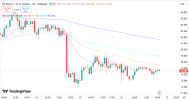
Gold prices remain above the $5,000 level.

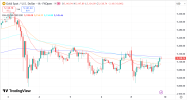
After dropping to around $4402 amid a massive sell-off following gold's historic peak in early 2026, gold prices have begun to move gradually higher, driven by a combination of weak US economic data and safe-haven sentiment. Yesterday, gold formed a small-bodied bullish candle. The price reached a high of $5118, a low of $5019, and a close of $5088.

US economic data on December retail sales, just released yesterday, showed stagnant growth. This has fueled concerns about slowing consumption and reinforced speculation that the Fed will adopt an accommodative stance. The market is starting to price in a 60-basis-point Fed rate cut by the end of 2026. Lower interest rates have historically benefited gold because they reduce the opportunity cost of holding non-yielding assets.

Geopolitical tensions, including the issue between the US and Iran and policy uncertainty in Washington, are driving investors to gold as a hedge. Furthermore, sustained buying by global central banks provides structural support for gold in the long-term.

Global central bank demand for gold is projected to remain a key pillar supporting high gold prices. International financial institutions and commodity analysts predict solid purchases, albeit with slight adjustments from previous years' records.

JP Morgan projects central bank gold purchases to reach 800 tons in 2026. The World Gold Council (WGC) and several other analysts estimate purchases in the 700-750 ton range. In comparison, total purchases in 2025 be approximately 863 tons.

Central banks, especially in emerging countries, continue to diversify their assets to reduce their dependence on the US dollar. Learning from the geopolitical conflicts of recent years, gold is considered a safe-haven that cannot be frozen by foreign authorities, making it a crucial sovereign instrument.

This sustained institutional buying creates a floor for gold prices, meaning that if a technical correction occurs, central bank buying tends to limit a significant price decline.

The 2025 WGC survey showed that 95% of central bank respondents expect global gold reserves to continue to increase, and 43% plan to increase their own holdings throughout 2026.

Gold is also viewed by most investors as a hedge against global economic uncertainty. China's move to urge domestic banks to limit exposure to US Treasuries reinforces the shift towards gold.

Today's gold price forecast: nearest support is around $5050, with the next support target around $5030. Nearest resistance is around $5115, with the next resistance target around $5145. This forecast could be wrong.
 
GBPJPY 13 2 2026 H1.png
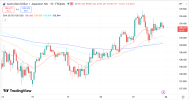
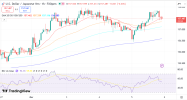
GBP/JPY shows the pound under considerable pressure from the yen.

For the fourth consecutive day of trading, the GBP/JPY cross pair has shown quite strong bearish sentiment. GBP/JPY is currently trading around 208.094, with a bearish candlestick crossing the lower band. Yesterday's price range was 209.546 to 207.563, with a close of 208.081.

Recent political and monetary dynamics drove the yen's strengthening. The landslide victory of Prime Minister Sanae Takaichi's Liberal Democratic Party (LDP) in the February 9th election provided political certainty. Although Takaichi favors stimulus, the market views this victory as a path to a more orderly normalization of monetary policy.

The Bank of Japan (BoJ) raised interest rates to 0.75% at its December 2025 meeting. The market is now pricing in an additional rate hike to 1.00% at its March 2026 meeting. The Japanese yen is also gaining strength from global trade uncertainty related to US tariff policies, which has triggered inflows into safe-haven assets.

UK GDP data shows very slow growth, at just 0.1% in the last quarter of 2025. Furthermore, the UK's goods trade deficit reportedly widened to a record high, further weighing on the pound sterling.

At its meeting in early February 2026, the Bank of England (BoE) decided to hold interest rates at 3.75%. However, the vote was very close, with four members favoring a cut. Governor Andrew Balley signaled dovishly that further rate cuts were highly likely, as inflation was expected to fall to 2% in the second quarter of 2026.

British political conditions are reportedly in serious turmoil. Prime Minister Keir Starmer of the Labour Party is facing significant pressure that threatens the stability of his leadership. The most heated topic this week is the link between Starmer's inner circle and the Jeffrey Epstein scandal. The appointment of Peter Mandelson as Ambassador to the United States drew intense criticism after new documents revealed his past close ties with Epstein. The impact is that Starmer is being pressured to resign not only by the opposition but also by figures within his own party.

This political risk makes the GBP extremely vulnerable. If news of a no-confidence motion or the resignation of another cabinet minister emerges today, the pound could fall further against the yen, which is currently strengthening thanks to the new political stability in Japan.

Today's GBP/JPY price forecast: nearest support is around 207.60, with the next support target around 206.85. Nearest resistance is around 209.35, with the next resistance target around 210.10. This forecast could be wrong.
 
WTI 16 2 2026 H1.png
Oil prices fluctuate amid geopolitical tensions and oversupply projections

The XTI/USD (WTI) oil price reflects market dynamics, which are currently in a tug-of-war between short-term geopolitical tensions and projections of structural oversupply in 2026. Last week, oil prices drew a bearish candle with a small body and relatively long wicks at the top and bottom of the candle. Price volatility last week tended to be between the middle and upper band lines.

The current WTI crude oil price is in the range of 60.70-62.80. The market is experiencing corrective pressure after attempting to break through the strong resistance level of 65.00 last week.

Rumors that several OPEC+ countries are considering increasing production next April are weighing on prices. Furthermore, the EIA projects a significant global surplus throughout 2026, related to increasing stock inventories due to stock builds in several countries, including China. This indicates bearish medium-term fundamentals if demand is weak.

US investment reports show a significant increase in inventories, which has recently put pressure on prices, indicating short-term oversupply.

Tensions in the Middle East, including the US-Iran issue, continue to impose a risk premium on oil prices. Threats to the Strait of Hormuz, a transit route for 20% of the world's oil, often drive prices higher due to concerns about supply disruptions. Uncertainty surrounding negotiations between the United States and Iran, as well as political dynamics in the region, have helped to contain price declines, even amid weak fundamental data.

Factors to consider for oil price catalysts, such as weekly API and EIA data, are important. Declining inventories typically boost prices, while rising inventories can put downward pressure on prices. Demand indicators, such as US gasoline consumption data and EIA projections, are also important. Large changes in demand can impact inventories.

OPEC+ production decisions remain a major factor influencing prices. Any sign of increased production could depress prices, while any announcement of a tightening could spike prices.

Any escalation in geopolitical conflict, such as the US-Iran conflict, could impose a significant risk premium on oil prices in the short to medium term.

The movement of the US Dollar Index (DXY) is also of concern because XTIUSD is priced in USD. A strengthening dollar tends to depress oil prices, while a weakening dollar can support them.

This week's oil price forecast: nearest support is around $60.50, with the next support target around $55.00. Nearest resistance is around $65.30, with the next resistance target around $66.60. This forecast could be wrong.
 
SILVER 17 2 2026 H1.png
Silver is trending bearish in the short term amidst strong long-term fundamentals.

After a sharp decline at the end of January, silver has been fluctuating in a consolidation phase. Yesterday, silver prices formed a small bearish candle with a short lower wick, indicating low volatility at the start of this week. The price formed a high of 77,901, a low of 74,514, and a close of 76,581.

Fundamentally, silver is being pulled by two opposing forces. US inflation data released yesterday for January showed a figure of 2.4%, down from 2.7%. Despite cooling inflation, the market reacted with a moderate strengthening of the US dollar index (DXY), as the Fed is expected to be in no hurry to cut interest rates anytime soon, holding rates in the 3.5%-3.75% range. A more stable dollar makes non-yielding assets, such as silver, temporarily less attractive.

2026 is expected to be the sixth consecutive year in which silver experiences a structural deficit. Demand from the industrial sector, including AI manufacturing, data centers, solar panels, and automotive, remains high, while mining production struggles to keep pace. This provides a strong price floor to keep silver from falling too far.

Today marks the post- Presidents' Day holiday in the US, so market volatility is expected to increase when the New York market reopens. However, China is celebrating the Lunar New Year holiday, which could significantly impact silver movements. China is one of the world's largest consumers of silver, both for jewelry and industrial purposes. With the closure of mainland Chinese markets, trading volumes in the Asian session have been drastically reduced. Consequently, silver is expected to move within a narrow range due to the loss of significant participation. However, this thin liquidity also poses the risk of sudden volatility if major news comes out of the US, as even small orders can move prices significantly beyond normal levels.

The market is currently entering a calm consolidation phase. Analysts believe the movement is dominated by profit-taking by speculators who have been trading since early February, taking advantage of the quiet Asian market.

With today's Lunar New Year holiday, silver is likely to remain depressed below of the $80.00 level throughout the day without any further boost from Chinese demand. Silver's movement is expected to follow the US dollar's trend completely without any disruption from Asian sentiment.

Silver's movement today is projected to have the nearest support at around $74.11, with the next support target at around $65.10. The nearest resistance is around $80.00, with the next resistance target at around $86.20. This forecast could be wrong.
 
NZDUSD 18 2 2026 H1.png
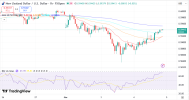
NZD/USD Ahead of RBNZ Interest Rate Decision

Over the past six days, the NZD/USD commodity currency pair has been stable within the range of 0.60042-0.60759. Yesterday, the pair drew a bullish candle with a relatively long low at the bottom of the candle. The price formed a high of 0.60504, a low of 0.60042, and a close of 0.60489.

Today is predicted to be crucial for the NZD/USD. Market focus will be on the New Zealand interest rate decision and important data releases from the United States.

Today, the RBNZ will announce its monetary policy statement and interest rate. The current RBNZ interest rate is at 2.25%. Market consensus expects the RBNZ to hold rates at that level. Although inflation in New Zealand rose to 4.6%, the unemployment rate soared to its highest level in a decade at 5.4%. The RBNZ faces a dilemma: it wants to control inflation while supporting the still-weak economic recovery.

If the RBNZ signals a hawkish stance or plans to raise interest rates this year, this could support the NZD's strength. Conversely, if the focus is on economic management to reduce unemployment, the NZD could weaken.

In the US, the US dollar is currently in a strong position due to geopolitical uncertainty related to US talks with Iran and the cautious stance of Fed officials. The market will await the release of the Fed's meeting minutes. Investors are also watching the release of US Industrial Production and Personal Consumption Expenditure (PCE) data to determine whether US inflation is truly under control or remains stuck above 2%.

Today's market is expected to be in wait-and-see mode, awaiting the RBNZ's announcement before taking large positions. The RBNZ Governor's statement will be in focus. If they are optimistic about the 2% inflation target, the NZD will receive support. On the other hand, the FOMC minutes could also impact the NZDUSD pair.

As a commodity currency, the NZD is influenced by the performance of raw material exports. According to the latest data as of February 2026, exports are in a recovery phase but are overshadowed by global price volatility. For the first time, New Zealand's total export value reached NZD 80 billion, representing an increase of approximately 14% compared to the previous year. Dairy products continue to contribute significantly more than other products.

New Zealand relies heavily on China as its trading partner. Any slowdown in the Chinese economy, particularly in the property sector, negatively impacts the NZD.

Technically, the forecast price range for the NZDUSD is 0.6010-0.5995, with resistance at 0.6065-0.6080. This forecast could be incorrect.
 
AUDUSD 19 2 2026 H1.png
AUD/USD under pressure after FOMC minutes

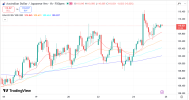
One of the commodity currency pairs, AUD/USD, is exhibiting interesting dynamics amid divergent monetary policy between the RBA and the Fed and today's Australian employment data release. Yesterday, AUD/USD drew a bearish candle with almost no shadow. The price formed a high of 0.70855, a low of 0.70350, and a close of 0.70386.

Investors appear to be more cautious ahead of the release of the FOMC minutes and Australian employment data today. The main sentiment focused on the AUD/USD pair today is driven by the RBA's hawkish stance, which contrasts with dovish expectations from the Fed.

The RBA recently raised interest rates to 3.85% in early February due to stubborn inflation. Employment change data is released today, with expectations for an increase of 20,000 jobs and an unemployment rate of around 4.2%. If the employment data is stronger than expected, the AUD will likely receive significant buying support.

The US released the FOMC meeting minutes, which showed that the Fed is considering one to three interest rate cuts in 2026 due to US inflation declining to 2.4%. This has put general selling pressure on the USD.

Tensions in the Strait of Hormuz triggered global market volatility, but market focus remains on the yield differential, which currently favors the AUD. Fundamentally, the AUD/USD pair is expected to be bullish today. The combination of the RBA's softening stance is creating a positive environment for the AUD.

The US dollar index is currently seen in a short-term recovery phase after experiencing a significant decline at the end of the year. The DXY is currently trading around 97.728, up from a low of 97.118. The FOMC minutes released early this morning confirmed that the Fed decided to temporarily pause its interest rate cutting cycle after three consecutive cuts. US interest rates are currently in the 3.50%-3.75% range.

The market is cautiously awaiting fourth-quarter GDP data, set to be released on Friday. US economic growth is expected to slow to 3%, which could put further pressure on the USD if the results are worse than expected.

Significantly, short positions against the US dollar are currently at their most pessimistic level in 14 years. Historically, such extreme conditions often trigger sudden price reversals if US economic data suddenly strengthens.
 
AUDJPY 20 2 2026 H1.png
AUD/JPY rose to 109.764 amid RBA's hawkish stance

The AUD/JPY cross pair has slowly recovered for four consecutive days after last week's correction. Yesterday, the AUD/JPY pair formed a bullish candle with a short upper shadow. The price formed a high of 109.764, a low of 108.854, and a close of 109.388.

The AUD/JPY pair exhibits an interesting dynamic between Australia's renewed monetary tightening and Japan's policy normalization. At its meeting in early February 2026, the RBA surprisingly raised the interest rate to 3.85%. This was triggered by inflation in the fourth quarter of 2025, which surged above expectations, reaching 3.4%-3.6%. The RBA is expected to raise the interest rate again to 4.1% in May 2026, as the economy continues to show strong demand pressures.

In Japan, the Bank of Japan (BoJ) raised interest rates to 0.75%, the highest since 1995, last December. Markets are currently monitoring the leadership transition in Japan under Prime Minister Sanae Takaichi. Her landslide election victory has boosted the yen, as markets anticipate more consistent policy normalization, despite concerns about fiscal expansion.

The recently released Australian jobs report remained solid, keeping the unemployment rate below the low of around 4.3%. This provides the green light for the RBA to remain aggressive.

In Japan, there is a bank holiday today in some regions due to Statehood Day, which may result in slightly lower trading volumes in the Asian session. Meanwhile, the 10-year Japanese Yen (JGP) bond yield is stable in the 2.2%-2.3% range, anchoring the JPY's strength.

AUD factors to pay attention to include the RBA minutes and statements from RBA officials. The release schedule for employment, inflation, CPI, and retail sales is also expected. Regarding global risk sentiment, AUD/JPY is a sensitive pair if geopolitical tensions escalate, as investors tend to flock to the safe-haven JPY.

As a commodity currency, the Australian Dollar (AUD) is influenced by the commodity market. This month, the commodity market has experienced significant bullish momentum, providing a strong structural boost for the AUD. High commodity export prices help increase purchasing power in the Australian economy, which naturally strengthens the AUD exchange rate. If the commodity price index continues to grow above 10% annually, the AUD's uptrend is likely to continue.

AUDJPY is forecast to be optimistic but cautious today. The nearest support is around 108.80, with the next support target around 108.45. The nearest resistance is around 109.80, with the next resistance target around 110.15. This forecast could be incorrect.
 
WTI 23 2 2026 H1.png
WTI oil prices hit a record high of $66.00 amid US-Iran tensions

WTI oil prices are showing strong bullish sentiment due to a combination of escalating geopolitical tensions and sudden supply tightening in the United States. WTI oil prices reached a high of $66.98 on Friday and then closed at $66.30.

The escalation of US-Iran geopolitical tensions is the main driver of the oil price increase. President Trump has given Iran a 10-15 day deadline to reach a new nuclear deal. The US military buildup in the Middle East is increasing supply disruptions in the Strait of Hormuz, a vital waterway for 20% of the world's oil supply.

The Russia-Ukraine conflict also remains in the spotlight. The recent failure of peace negotiations in Geneva has prolonged uncertainty over Russian energy supplies, adding another floor to global oil prices.

Tensions between the US and Iran have reached their highest point in years. Recent updates suggest the situation is on the verge of an open military confrontation. The US has deployed dozens of fighter jets and B-2 bombers to bases in the region. The aircraft carriers USS Abraham Lincoln and USS Gerald R. Ford are already on alert in the Arabian Sea.

Iran, through the IRGC, has asserted that any attack in the region will be retaliated with missile strikes on US military bases in Jordan, Kuwait, the UAE, and Bahrain. If war does break out, oil prices could spike due to the closure of the Strait of Hormuz.

The latest EIA report added a boost to oil prices. The latest EIA data showed an unexpected decline in US commercial crude oil inventories of 9.0 million barrels. This figure was well below market expectations, which had previously predicted a stock increase. This decline indicates strong domestic demand amid declining production.

OPEC+ remains committed to delaying production increases until the end of the first quarter of 2026. This prevents the global market supply surplus that EIA analysts had previously feared.
 
GOLD 24 2 2026 H1.png
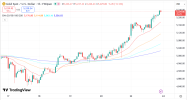
Gold prices have rebounded amid US-Iran tensions.

Gold prices have recently demonstrated strong bullish momentum. Gold has successfully broken through key psychological levels and set a new record. Yesterday, gold prices drew a bullish candle with virtually no shadows. The price formed a high of $5225, a low of $5097, and a close of $5224.

Gold market sentiment is dominated by economic policy uncertainty, physical scarcity factors, and geopolitical risks. The market is currently monitoring the Fed's policy transition. Although interest rates are in the 3.50%-3.75% range, inflation data has cooled to a four-year low of 2.4%, strengthening expectations of future rate cuts.

A report from S&P Global & Tavi Costa indicates that no major gold deposit discoveries will be made in 2024-2025, raising concerns about a supply crunch. Mining companies are focusing more on expanding existing mines than exploring new ones due to rising operating costs.

The World Gold Committee (WGC) reported in early February that total global gold demand for 2025 will reach a historic high of 5,002 tons. This surge is driven by massive accumulation by central banks and physical investment demand amid geopolitical uncertainty.

The market is currently focused on the US-Iran tensions. Trump's speech is expected to provide clues regarding tariffs and foreign relations, particularly the US-Iran nuclear talks. Relations between the two countries are currently at a crucial point, with diplomacy and military threats running parallel.

Iran and the US are scheduled to return to the negotiating table on Thursday, February 26, 2026, in Geneva, considered a last-ditch effort to de-escalate the conflict. Iran has expressed a willingness to compromise, but has rejected any interim agreement. They are demanding the full lifting of economic sanctions and guarantees of their sovereignty. Trump has threatened to take more severe military action if the US fails to agree to these terms.

This uncertainty is fueling gold, with the market currently pricing in the worst-case scenario. If the negotiations fail, gold prices could potentially surge due to market panic. On the other hand, if there is an agreement, it is predicted that there will be massive profit-taking.

Aside from geopolitical risks, today the market will await the PPI release, which could trigger volatility in the US dollar.

Gold is currently priced at around $5,227, with the RSI at overbought levels. The nearest support is estimated at $5,153, with the next support target at $5,052. The nearest resistance is estimated at $5,266, with the next resistance target at $5,320. This forecast could be incorrect.
 
AUDJPY 25 2 2026 H1.png
AUD/JPY hovers around 110,000 ahead of Australian CPI data

Market sentiment for the AUD/JPY, based on a monthly timeframe, tends to be bullish. The long-term uptrend in AUD/JPY began in early January 2025 after the price touched support at 86,045. Yesterday, the price drew a bullish candle with a small shadow at the top of the candle. The price formed a high of 110,435, a low of 108,971, and a close of 109,992.

The AUD/JPY currency pair is in a fairly dynamic phase, with pressure tending to be mixed to bullish, or tending to strengthen. Policy divergence between Australia and Japan remains the main driver of this pair. The RBA recently raised interest rates to 3.85% in early February 2026. CPI data released this morning showed inflation in January remained above target, reinforcing market expectations that the RBA may raise interest rates again in May.

On the other hand, the Japanese yen weakened following the Prime Minister's statement rejecting further interest rate hikes. Japan's interest rate is currently stuck at 0.75%, far below Australia's. This yield gap has triggered a carry trade, where investors borrow low-interest yen to buy high-interest Australian dollars.

Global market sentiment tends to be positive or risk-on, which has historically favored the AUD as a commodity currency over the safe-haven JPY.

Referring to existing data, today's fundamental analysis favors the AUD. As long as tonight's US economic data doesn't trigger sudden global concerns, the Yen is likely to remain under pressure. The next major focus will be tomorrow's release of Australian Capital Expenditure data, as it could provide further confirmation of the strength of the Australian domestic economy.

Technically, the AUDJPY price is moving above the 100-day EMA, indicating the long-term upward bias remains intact. Today's price range is expected to move volatilely in the 109.15-110.45 range. The nearest support is estimated at 109.15, with the next support target at 108.50. The nearest resistance is around 110.15, with the next resistance target at 110.45. This forecast could be incorrect.
 
GBPJPY 26 2 2026 H1.png
GBP/JPY extends recovery this week

The GBP/JPY cross pair was quite interesting yesterday. The pair drew a long-bodied bullish candle with almost no shadow, extending the previous day's gains. GBP/JPY is currently trading at a high of 212.112, a low of 209.902, and a close of 211.933.

The current fundamentals of the GBP/JPY cross pair indicate varying pressures on both currencies, with GBP tending to be more fragile than JPY.

GBP is under pressure from internal economic data. The latest report showed the UK unemployment rate hit a five-year high. This has fueled speculation that the Bank of England will soon cut interest rates.

The UK's economic growth is also slowing. Fourth-quarter GDP data for the UK fell to 1.2% year-on-year, reinforcing bearish sentiment on the GBP due to expectations of looser monetary policy.

Domestic issues in the UK concerning Prime Minister Sir Keir Starmer's leadership have added to market uncertainty regarding the stability of the GBP. Prime Minister Sir Keir Starmer is currently facing an internal vote of no confidence in his party. Many members of parliament feel his authority has been undermined and are considering who should replace him.

Starmer's relationship with US President Donald Trump is also feared to be strained, with reports that Starmer refused to allow the US to use bases like Diego Garcia to attack Iran. This sparked criticism from the opposition, worsening relations with Donald Trump, who is in his second term. Tensions over the Chagos Islands deal have also resurfaced amid the US's tough stance on the sovereignty of the strategic region.

Meanwhile, the Japanese yen rebounded due to risk-off sentiment. The weakening of risk assets and the correction in global stock markets in recent days have tended to shift interest back to the yen as a safe haven.

Although the JPY weakened earlier in the week, market focus shifted to the Bank of Japan's policy of restricting its purchases of government-issued bonds (JGBs), providing some support for the yen's strengthening against cross-currency pairs like the GBP.

Comments from Prime Minister Sanae Takaichi regarding concerns about the pace of interest rate hikes by the BoJ Governor, which reduced expectations of faster rate hikes, tended to weaken the JPY.
 
USDCAD 27 2 2026 H1.png
Canadian Dollar Strengthens Awaiting GDP Data Release

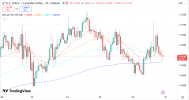
The Canadian dollar closed yesterday at 1.36802, strengthening slightly after reaching 1.37124. The USD/CAD candlestick shaped a bullish candle with a small body and long shadows at the top and bottom of the candlestick, reflecting high volatility due to today's crucial data releases from Canada and the United States.

Today is GDP day for Canada. Statistics Canada releases fourth-quarter GDP and December GDP data. The Canadian economy is projected to grow moderately at around 1.12%-1.3% for 2026. If GDP data is lower than expected, pressure on the Canadian dollar could increase as the market begins to consider the potential for future interest rate cuts by the BoC. Although the interest rate is currently held at 2.25%. Conversely, strong GDP data could strengthen the Canadian dollar, which could naturally cause the USD/CAD to decline.

In the US, focus will be on the release of the January PPI data. This is a leading indicator of consumer inflation (CPI). If the PPI remains high, it provides a reason for the Fed to maintain high interest rates. The Fed's current interest rate is at 3.5%-3.75%. High interest rates naturally support a strengthening USD. Other data, such as the Chicago PMI, which is a manufacturing indicator, will also provide insight into the health of the US economy at the start of the year.

As a major oil exporter, the Canadian dollar is also influenced by the movement of WTI oil prices. Currently, oil prices are fluctuating around $66 per barrel due to the Iran-US nuclear tensions. Rising oil prices due to Middle East supply tend to support the CAD, which puts downward pressure on USDCAD.

On the other hand, declining Canadian factory sales and concerns about the extension of the UMSCA could put downward pressure on the CAD, which could push USDCAD higher. Uncertainty about trade policy and domestic economic data is driving risk-off sentiment, which generally strengthens the USD relative to commodity-based currencies.

USDCAD is currently below the 200-day moving average (EMA), with the nearest support estimated at 1.3630, with the next support target at 1.3580. The nearest resistance is around 1.3710, with the next resistance target at 1.3750. This estimate could be wrong.
 
WTI 2 3 2026 H1.png
US and Israel attack Iran, what about oil prices?

WTI oil prices experienced high volatility last weekend as tensions in the Middle East grew increasingly concerning, as a military confrontation became more apparent. XTIUSD rose with a bullish candle with few shadows at the top and bottom. The price formed a high of 67.71, a low of 64.82, and a close of 67.21.

The oil market is currently experiencing extreme volatility due to the major escalation in the Middle East over the weekend. The market opened today with very strong buying pressure (a gap up) due to several key catalysts. The coordinated US and Israeli attack on Iran on Saturday, February 28, 2026, has sparked fears of a massive global supply disruption. Reports of the assassination of Iran's supreme leader, Ayatollah Khamenei, have increased the risk of an all-out regional war.

There are intense reports that the Strait of Hormuz, which carries 20% of the world's oil supply, is experiencing disruption or partial closure. This can historically trigger an instant price spike of $15-$20.

Meanwhile, OPEC+ responded at its meeting on Sunday, March 1, 2026. Eight OPEC+ members agreed to increase production by 206,000 barrels per day starting in April to stabilize the market. However, fear far outweighed the potential for a physical supply increase, which would only occur next month.

The US and Israeli attacks on Iran created a risk premium that fueled price spikes, heightening concerns about disruptions to global oil supplies, particularly in the Strait of Hormuz, a crucial global oil transportation route. Some analysts even warned that oil prices could surge to around $90-$100 per barrel if the Strait of Hormuz were closed.

The EIA estimates that global production will increase and offset demand, resulting in lower Brent and WTI prices in its 2026 projections compared to 2025. Before the escalation of the conflict, several fundamental indicators highlighted high US oil inventories and moderate demand pressures, which dampened the potential for a strong price rally. This means that, fundamentally, prices are likely to experience downward pressure in the medium term if geopolitical risks subside or if supply returns to normal.

The escalation of the conflict has the potential to impact Fed policy expectations. High energy prices could delay expectations of an interest rate cut, meaning the USD could remain strong, putting pressure on XTIUSD from a currency perspective.

Due to the dominant geopolitical factors, the Iran conflict, and disruptions to oil logistics, the intraday range of XTIUSD is expected to be highly volatile.
 
GOLD 3 3 2026 H1.png
Gold bullish amid escalating conflict in the Middle East

Gold prices experienced high volatility on Monday following the US and Israeli attacks on Iran. Gold prices spiked to $5,418, then swung to $5,260 and closed around $5,341.

Gold is currently in an aggressive bullish phase due to the escalating conflict in the Middle East. Market sentiment today is heavily influenced by escalating tensions between the US, Israel, and Iran, triggering massive capital flows into safe-haven assets.

Reports of military attacks and the failure of nuclear diplomacy pushed gold prices to new psychological levels. Investors anticipate energy supply disruptions, which have historically strengthened gold's appeal as a hedge against inflation.

While the market is monitoring the US employment data due this week, focus has shifted to the FOMC meeting on March 17-18. Expectations of a rate break or even a rate cut due to global uncertainty have kept the US dollar under pressure.

On the other hand, demand for gold remains persistent, with central banks, particularly China and emerging markets, continuing to aggressively accumulate gold reserves in early 2026 as a diversification strategy from USD-based assets.

Meanwhile, major banks such as JPMorgan and BoFA have a medium-term bullish outlook on gold, with prices well above current levels by the end of 2026. This is driven by the accumulation of portfolios in bonds or dollars.

However, volatility risks exist, with some analysts warning that the current gold rally is too story-driven without strong fundamentals, potentially triggering a short-term correction if the risk narrative declines. Recent sharp movements have created high volatility, often followed by technical corrections.

A strong support level for gold prices is estimated at around $5,000, which acts as a psychological zone and short-term baseline. If the USD suddenly strengthens, the price could correct to around $5270. However, if there is negative news from the Middle East, the price could test $5450-$5500.
 
EURJPY 4 3 2026 H1.png
EUR/JPY Amid Escalating Middle East Conflict

The escalating conflict in the Middle East has shaken nearly all financial markets. The EUR/JPY has experienced significant volatility as tensions in the Middle East have escalated since the US and Israeli attacks on Iran. Yesterday, the EUR/JPY drew a bearish candle with a long shadow at the bottom, indicating the strengthening of the JPY due to an influx of safe-haven demand. The price formed a high of 184.328, a low of 182.026, and a close of 183.128.

The escalating conflict in the Middle East has triggered a surge in energy prices. The surge in natural gas prices in Europe has risen almost 50% in the past two days, and Brent oil prices above $80 have put new inflationary pressure on the eurozone. This has led the market to reduce expectations of an interest rate cut by the ECB this year. Despite exposure to energy risks, the latest GDP data showed resilience with growth of 0.3%. However, if the energy crisis persists, the risk of a recession in Germany will again loom over the euro.

The ECB is currently adopting a wait-and-see stance on the deposit rate, which remains at 2.00%. The market views the ECB's policy as more hawkish than the Bank of Japan's. This creates an interest rate differential that favors carry traders, who naturally favor the euro.

Geopolitical tensions in the Middle East have increased demand for safe-haven assets, including the Japanese yen, temporarily putting downward pressure on the EUR/JPY. These geopolitical factors can strengthen the JPY when risk appetite increases.

Bank of Japan Deputy Governor Ryoto Himino recently signaled a hawkish stance that gradual interest rate hikes would continue toward the neutral level. Some analysts predict a rate hike of 1.00% from 0.75% at the earliest at the March and April meetings this year. Japanese capital spending reportedly jumped 6.5%, providing a strong case for the Bank of Japan to continue tightening monetary policy.

Softer-than-expected Japanese inflation data reduced the likelihood of a faster rate hike. However, hawkish comments from Fed officials provided technical support for the yen in the short term.

The Eurozone will release its Harmonized Index of Consumer Prices inflation figures today. This data is crucial because it can influence market participants' perceptions of the euro's strength.

Currently, EURJPY is under downside pressure amid the yen's stronger performance relative to the euro amid global uncertainty. The daily range is estimated to be between 181.80 and 183.80. The nearest support is around 182.20, with the next support target around 181.30. The nearest resistance is around 183.95, with the next resistance target around 184.50. This forecast could be wrong.
 
nzdusd 5 3 2026 h1.png
NZD/USD Recovers After Two Consecutive Days of US Dollar Pressure

The NZD/USD commodity currency pair attempted a strong recovery yesterday amid a broad dollar pullback. The price drew a long-bodied bullish candle with a lower high. The current price formed a high of 0.59554, a low of 0.58359, and a close of 0.58882.

The market is currently focused on the escalating conflict in the Middle East, which has resulted in increased market volatility. The market is currently in a safe-haven mode. The escalating conflict in the Middle East involving the US, Israel, and Iran has sparked global concerns about energy supply disruptions.

The USD, as a safe-haven currency, has received significant capital inflows. On the other hand, the NZD, as a commodity currency, is highly risk-sensitive. Uncertainty and rising oil prices, which have worsened New Zealand's import costs, have pressured the NZD. Since the war began with the US and Israel's attack on Iran, oil prices have gapped up significantly, and gold prices have also surged. However, as the conflict escalated, the US Dollar Index (DXY) strengthened, reaching its highest level for two consecutive days, bringing the DXY to 99.683. Currently, the DXY is correcting around 98.757, indicating widespread USD withdrawals.

The RBNZ recently released its monetary policy statement, which showed stable global inflation data but emphasized mixed global conditions. At its February 2026 meeting, the RBNZ maintained its cash rate at 2.25%, maintaining a dovish tone. Governor Anna Breman indicated that policy would remain accommodative to support the economic recovery, so the likelihood of an interest rate hike in the near future is very small, with the market expecting no hike until the end of 2026.

On the other hand, despite expectations of gradual interest rate cuts by the Fed, strong US economic data and inflationary risks from rising oil prices have led the market to re-price a scenario of prolonged high interest rates.

The surge in crude oil prices has been a drag on the NZD, as New Zealand is a net oil importer. Therefore, rising energy costs worsen the trade balance and put pressure on the domestic economy.

NZDUSD is currently trading at 0.59388, with the nearest support at 0.8840, and the next support target at 0.8700. The nearest resistance is at 0.8980, and the next resistance target at 0.60000. This forecast could be incorrect.
 
USDJPY 6 3 2026 H1.png
USD/JPY Amidst the Escalating Middle East Conflict

The safe-haven currency pair USD/JPY exhibits unique dynamics amid the Middle East conflict. Both currencies are considered safe havens, but for different reasons and with different impacts.

Amid military tensions in the Middle East, the Yen is typically a sought-after instrument by investors. Strong inflows into the Yen occur due to Japan's status as the world's largest creditor. When risk increases, Japanese investors tend to repatriate their capital from abroad.

During escalating conflicts, the USD/JPY currency pair tends to experience selling pressure, causing the Yen to strengthen against the US Dollar, as the market moves out of riskier assets and into the Yen.

The US Dollar functions as a safe haven and as an asset that benefits from monetary policy. The USD remains the world's most liquid currency. During ongoing conflicts, global institutions require the Dollar for cash reserves. Rising oil prices, which tend to rise, actually benefit the USD because oil is pegged to the USD, which naturally increases demand for the USD, sometimes hampering the Yen's strengthening against the US Dollar.

US interest rates are currently high, above 3.50%, prompting investors to prefer holding funds in USD over JPY, which still has a very low interest rate of 0.75%, even though both are considered safe-haven assets.

Yesterday, the USD/JPY pair formed a bullish candle with shadows at the top and bottom. The price formed a high of 157.850, a low of 156.451, and a close of 157.546. Although the JPY is a safe-haven currency, it remains vulnerable if energy prices continue to rise.

Since the beginning of the conflict in the Middle East, the USD/JPY pair has become more volatile. A large-scale escalation of war is expected to support the JPY, while a cooling of the situation is expected to re-dominate the US dollar due to its significantly higher yield advantage over the yen.

USD/JPY support is forecast to be around 156.00 if a larger escalation of the war occurs. Resistance is estimated at around 158.80. If US economic data suddenly strengthens, with the 160.00 level remaining a psychological area vulnerable to Japanese government intervention. This forecast could be wrong. Today, the US will release important economic data that could be a driver of both the Nonfarm Payrolls (NFP) and retail sales and jobless claims.
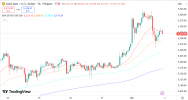
 
WTI 9 3 2026 H1.png
Oil prices surge amidst Middle East turmoil

The Middle East war has caused turmoil in financial markets. WTI oil prices have surged dramatically above $85 in response to military tensions between the US, Israel, and Iran. Chart data on Friday (XTIUSD) shows prices reaching a high of $89.59, a low of $77.05, and a close of $88.95.

Attacks targeting several oil facilities in the Gulf and disruptions in the Strait of Hormuz are the main drivers. Reports indicate that more than 200 tankers are stuck, sparking fears of a supply loss of up to 20 million barrels per day if the waterway is completely closed. However, Iran currently insists the Strait of Hormuz is open with special protocols.

The Middle East war, which began on February 28th between the US and Israel, is still ongoing, and the conflict has involved several countries, indirectly affected by Iran's attacks on US military facilities in neighboring countries. The risk of regional war is very high, with the most immediate impact being seen in oil prices and financial markets.

Some analysts predict that if the conflict escalates into a major regional war involving other countries or militia groups in Iraq, Syria, and Lebanon, the greatest risk is disruption to the Strait of Hormuz, which carries 20% of global oil trade. Oil prices are feared to soar to $100-$120 per barrel due to supply disruptions and heightened volatility.

However, if the conflict is limited, the war continues but does not escalate widely, only involving airstrikes, drone strikes, and proxy wars. There is no major disruption to oil routes, and the impact is expected to be a risk premium, with oil prices forecast at around $85-$100. If diplomatic pressure from countries like China or the UN leads to a ceasefire, the market is expected to adjust quickly as the risk premium disappears, and oil could fall back to $70-$80.

At an emergency OPEC+ meeting last week, eight member countries, including Saudi Arabia and Russia, agreed to gradually increase production starting in April by 206 million barrels per day. However, the market remains skeptical whether this increase will be enough to offset disruptions in the Middle East. Global oil demand in 2026 is expected to increase by around 1.2-1.4 million barrels per day, driven by emerging markets like India and Southeast Asian countries, which have a positive impact on fundamental demand.

The latest US inventory report shows an increase in crude oil stocks of 3.47 million barrels. Under normal circumstances, this would be bearish, but it is currently overshadowed by dominant geopolitical sentiment.

Despite the bullish outlook for oil, several factors could weigh on prices, including increased global production from the US, Brazil, and Guyana, and the potential for short-term oversupply if the conflict subsides, which could lead to a correction after a sharp rally.

The forecast for WTI oil support is in the $80-$83 range, with resistance in the $95-$100 range, with short-term upside targets and psychological levels if the escalation in the Strait of Hormuz worsens. This forecast could be wrong.
 
GOLD 10 3 2026 H1.png
XAU/USD remains stable above the $5,000 level amid the Middle East conflict

Gold prices tend sideways despite pressure from a strengthening US dollar. Yesterday, gold prices drew a bearish candle with a long wick at the bottom of the candle. Gold prices formed a high of $5,196, a low of $5,015, and a close of $5,138.

In recent days, the US dollar has strengthened, and US bond yields have risen, putting pressure on gold prices. When the US dollar is strong, gold becomes more expensive for holders of other currencies, reducing demand. Furthermore, market expectations that the Fed will not immediately cut interest rates also limited gold's gains.

The conflict between Iran and the US-Israel has triggered an oil price spike to $119 per barrel, increasing the risk of global inflation and economic uncertainty. Historically, such geopolitical conditions typically increase demand for safe-haven assets like gold, thus supporting gold and limiting further declines.

The market is currently awaiting the release of important US data, such as the February CPI, which will be released this week. Current market expectations suggest that the Fed's next interest rate cut will likely be pushed back to September 2026 due to the risk of resurgent inflation driven by energy prices. Remaining high interest rates tend to limit the appreciation of non-yielding gold.

The US dollar index is currently hovering around 98.734 and has reached a high of 99.69. A weakening US dollar index tends to be negatively correlated with gold, supporting gains when the DXY falls. Conversely, when the DXY rises, this tends to depress gold prices.

Issues in the Middle East remain a hot topic that can influence market volatility. The impact of US-Israeli attacks on targets in Iran and Iran's retaliation have been key drivers of increased demand for safe-haven assets. The surge in oil prices due to supply disruptions from the Strait of Hormuz has further fueled the demand for safe-haven assets.

Poland is currently reportedly considering selling gold as an option to increase military spending by around 4.8% of GDP due to security threats in Eastern Europe, particularly the Russia-Ukraine conflict. Poland has been one of the largest gold buyers in recent years and holds reserves of around 550 tons.

Despite widespread reports, several officials have emphasized that this plan is still under political and legal discussion, and that there is even the option of using gold profits rather than selling the gold outright.

Technically, gold is currently in a consolidation phase after experiencing a correction from its highs around $5,400-$5,500. The nearest support is estimated at around $5,000, with the next support target at around $4,937. This prediction could be wrong.
 
AUDJPY 11 3 2026 H1.png
AUD/JPY extends gains to 112.846, a multi-year high.

The AUD/JPY cross pair rose for two consecutive days after a week-long consolidation. Yesterday, the AUD/JPY drew a long-bodied bullish candle with virtually no shadow. The price formed a high of 112.846, a low of 111.289, and a close of 112.504.

The main factor driving the AUD/JPY's rise is the differential in Australian and Japanese interest rates. The Reserve Bank of Japan (RBA) recently raised interest rates to around 3.85% to control inflation in February 2026. Recent data shows stable wage growth at 3.1% year-on-year, giving the RBA room to monitor the impact of the increase without rushing into additional tightening.

Meanwhile, the Bank of Japan (BoJ) remains very cautious about raising interest rates and may delay the next increase until mid-2026. The BoJ interest rate is currently at 0.75%, its highest level in 30 years. Deputy Governor Ryozo Himino emphasized yesterday that the Japanese economy is beginning to show sustainable inflation dynamics.

This difference in yields between the RBA and the BoJ has prompted investors to engage in carry trades, borrowing cheap yen to buy the higher-yielding AUD, thus supporting the rise in AUD/JPY.

The Westpac Consumer Confidence Index rose slightly to 91.6 in March. However, short-term concerns remain due to geopolitical tensions in the Middle East and rising energy prices, which could depress purchasing power.

The Japanese yen remains under pressure due to the Bank of Japan's (BoJ) slow pace of interest rate hikes. Japan is also heavily dependent on energy imports, so rising oil prices put pressure on the economy. Even in times of global conflict, the yen is no longer its former safe-haven status. This situation has caused the JPY to weaken against many currencies, including the Australian Dollar (AUD).

Today, market focus is expected to be on the release of economic data from China, Australia's main trading partner, and developments in global energy prices.

AUD/JPY is currently trading around 112.500. The short-term trend indicates consolidation with a moderate bullish trend, but is being held back by global risk-off sentiment. The estimated nearest support is around 111.80, with the next support target around 111.40. The nearest resistance is around 113.10, with the next resistance target around 113.50. This forecast could be wrong.