Technical Analysis Today

usdjpy 19 12 2025 h1.png
USD/JPY Steady Ahead of BoJ Interest Rate Decision

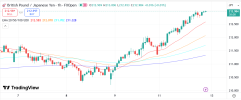
The USD/JPY pair formed a doji candle during the trading session on Thursday, December 19th. Despite forming a bearish candle, the open and close prices differed only by tens of pips. The price opened at 155.662, a high of 155.977, a low of 155.285, and closed at 155.584.

The key fundamental analysis focus today is the BoJ interest rate decision. The market is currently anticipating a 25 basis point rate hike from 0.50% to around 0.75%. If the BoJ does raise interest rates and makes a firm, hawkish statement regarding further hikes in 2026, the Japanese yen could potentially strengthen sharply, putting downward pressure on the USD/JPY.

Recent comments by BoJ officials ahead of the meeting indicate a marked shift towards a hawkish policy stance. In his final speech and comments, Governor Kazuo Ueda stated that the chances of sustainably achieving the inflation target have gradually increased. He emphasized that if economic and price data align with the Bank of Japan's forecasts, they will continue to raise interest rates.

Ueda also highlighted that Japan's strong wage growth trend provides a foundation for stable household consumption, despite rising prices.

The Tankan survey results showed strong optimism, with business sentiment among major Japanese manufacturers reaching its highest level in four years. Senior BoJ officials noted that despite concerns about global trade policy, Japanese companies are seeing resilient demand, particularly in the high-tech sector. This gives the BoJ the green light to raise interest rates without overly worrying about stifling economic growth.

Officials' comments implied that today's hike would not be the last, but they also noted that the pace of future rate hikes will depend heavily on the economy's response to the hike. The BoJ remains mindful of financial market volatility, particularly extreme fluctuations in the yen, as these affect import costs and inflation in Japan.

Meanwhile, the Fed recently cut its interest rate by 0.25% from 4.00% to around 3.75%. Although the yield differential still favors the USD, the downward trend in US interest rates and rising interest rates in Japan is narrowing the gap, which, in theory, weakens the USD/JPY. Current market sentiment is experiencing an unwinding of the carry trade, meaning the closing of Yen borrowing positions for risky assets, which is adding selling pressure on USDJPY, ahead of the BoJ announcement.

Currently, the DXY, which measures the USD's performance against six major currencies, is slightly up at 98.441. US Consumer Price Index (CPI) data, which was delayed due to the government shutdown, was released earlier with lower-than-expected results. Annual CPI fell to 2.7%, lower than the 3.1% forecast. Core CPI, which excludes food and energy, fell to 2.6%, its lowest level since 2021.

Unemployment claims, part of the labor market data, show stable but slowing conditions. There were 224,000 new applications, a decrease of 13,000 from the previous week's 237,000.

Today's USDJPY price forecast: strong support around 150.00, with immediate support around 152.50. Strong resistance around 157.48, and immediate resistance around 156.00.
 
silver 22 12 2025 h1.png
Silver prices hit new all-time highs again and again.

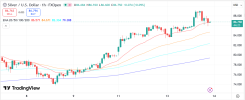
Silver prices surged again on Friday, December 19th, reaching new all-time highs for the umpteenth time in 2025. Silver formed a bullish candle with a short wick at the bottom. The price formed a high of 67,444, a low of 64,444, and a close of 67,166.

The XAGUSD instrument's movement showed interesting dynamics, with prices near all-time highs. The phenomenal gold price increase throughout 2025 was around 135%, driven by various crucial factors. This figure has surpassed gold, which recorded an increase of around 65%.

Investment demand, whether for ETFs, futures contracts, and investor speculation, is currently very strong and will be one of the main drivers of price increases throughout 2025. Market momentum remains high as investors seek safe-haven assets and diversification.

Expectations of a Fed interest rate cut, following the third consecutive cut in mid-December, have put downward pressure on the US dollar, which in turn has supported other assets, including silver.

Silver demand remains high in industry. Silver is widely used in technologies such as solar panels, electric vehicles (EVs), and artificial intelligence (AI) semiconductors, creating strong real demand, not just from the investment side. Massive use in solar panels and EVs could create a physical supply deficit, which in turn supports silver prices.

Silver is listed as a critical mineral in the US, highlighting concerns over tight supplies and increasing strategic interest in this metal. China's plans to restrict silver exports starting in 2026 and global inventories at a decade-low have fueled concerns about shortages.

As Christmas approaches, trading volumes are predicted to decrease (low liquidity). This could potentially lead to two scenarios: price consolidation or sharp volatility despite low volumes.

Several analysts warn that silver's rally has been too sharp and may experience a short-term correction, especially if investor momentum is stifled and technical indicators point to overbought conditions.

Today's economic calendar also lacks significant high-impact economic data, allowing market movements to be dominated by technical sentiment and trading volume.

The silver price forecast ranges: key support is around 61.33 - 65.45, with key resistance around 68.65 - 70.00. If a technical correction occurs, the price could fall to around 65.45. A breakout of this level would target strong support around 61.33. If the rally continues, the resistance target is around 68.65. If the price breaks through this level, the next resistance target is around 70.00, which would become the next psychological level if momentum continues.
 
WTI 23 12 2025 H1.png
Oil prices rebounded sharply amid a major bearish trend.

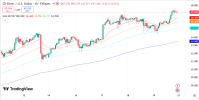
WTI crude oil prices rose sharply on Monday, December 22, 2025, drawing a long-bodied bullish candle with almost no shadow. Oil prices formed a high of 57.99, a low of 56.48, and a close of 57.86.

The surge in oil prices coincided with escalating tensions between the United States and Venezuela, adding a moderate geopolitical risk premium to the oil market. US action against a Venezuelan tanker triggered short-term risk, temporarily suppressing prices. However, the general market showed a weaker reaction than in the past due to a global supply surplus.

Global oil demand is expected to grow moderately in 2025-2026 due to ongoing, albeit somewhat sluggish, economic activity. The IEA estimates that global oil demand will continue to rise in 2026, although not drastically. There are also indications that Chinese demand is increasing, but not enough to absorb the strength of global supply.

Global oil supply remains abundant, US production remains high, and OPEC+ and non-OPEC producers continue to increase output, putting bearish pressure on prices.

WTI oil is priced in USD, and the performance of the US dollar can also influence oil prices. A weak USD supports oil because it lowers prices against other currencies. The DXY is currently down again at around 98.266 from a high of 98.749.

Market sentiment towards oil is quite mixed; bullish news such as tensions between the US and Venezuela could lift oil prices. However, medium-term sentiment remains bearish due to the surplus and forecasts of falling prices until 2026.

The run-up to the Christmas and New Year holidays typically thins trading volume, leading to low liquidity, which can lead to sharper price volatility even without major news. Market focus is on the release of weekly API and EIA inventory data, which may show a decline in stocks due to the surge in fuel consumption during the Christmas and New Year holiday season.

Current fundamental estimates suggest that XTIUSD oil is under short- to medium-term bearish pressure due to oversupply and subdued market demand. However, geopolitical risks could trigger a short-term rally, leaving the oversupply structure unchanged.

Today's oil price forecast: nearest support is around 56.40, with strong support around 55.00, the recent low. Nearest resistance is around 58.50-59.40, an upside target if momentum is strong. Strong resistance is around 60.00, the psychological level of the 50-day moving average.
 
usdcad 24 12 2025 h1.png
The Canadian Dollar Hits a Five-Month High Amid Broad USD Weakening

The USDCAD pair's movement in two consecutive bearish candlesticks indicates further strengthening of the Canadian Dollar against the US dollar. On Tuesday, the USDCAD pair drew a long-bodied bearish candlestick with almost no shadow. The price formed a high of 1.37512, a low of 1.36883, and a close of 1.36939.

The Canadian Dollar, also known as the Lonnie, has reached a five-month high against the USD, causing the USDCAD pair to fall to a 22-week low. The USD weakened across the board ahead of the holiday season, triggering a broad market recovery for other currencies like the CAD.

Canadian GDP data released on December 23 showed the economy contracted 0.3% in October 2025, the largest decline in three years. This contraction stemmed from weaker output in the goods and services sectors. Preliminary data indicated a small rebound of 0.1% in November, although the October contraction was larger than expected. A GDP contraction could technically put pressure on the CAD, but the market reacted positively to signs of recovery and the anticipated November rebound, especially if oil prices also rose.

At its December 10, 2025, meeting, the Bank of Canada (BoC) decided to maintain interest rates at 2.5%, stating that the current rate was approximately the appropriate level because inflation was near target and economic activity reflected resilience. The BoC's statement, which reflected confidence that the economy was relatively resilient and inflation near target, created expectations that they would not cut interest rates quickly, technically supporting the CAD relative to other currencies.

Canada relies on oil exports, which are a significant source of foreign exchange, and rising oil prices support the CAD's strength. Crude oil is currently trading around 58. The current oil price has risen from the previous low of 55. Although oil prices are considered weak, the negative impact of oil prices is limited because the USD is also weakening.

The Christmas and New Year holiday period could impact the market. Liquidity is expected to be very low, and some large entities have already closed their positions, so movement may be sideways or there could be a sudden spike if there is any unexpected news.

The CAD's strengthening was also influenced by the weakening USD. The US Dollar Index (DXY) shows the USD trending lower near the 98 level, down from higher levels a few weeks ago. This means the USD is weakening against six other major currencies. This decline occurred amid market expectations that the Fed would continue to loosen monetary policy going forward, which generally puts pressure on the USD. At its December 10, 2025, meeting, the Fed decided to cut interest rates by 25 basis points, targeting a range of 3.50% to 3.75%, marking a phase of monetary easing. The Fed's shift toward easing tends to weaken the USD compared to previous tighter policy.

The US economy grew 4.3% annualized in Q3, higher than expected and reflecting strong domestic demand. However, consumer confidence declined sharply, reaching its lowest level in months due to tariffs, inflation, and a weakening labor market.

Today's market will be anticipating the Department of Labor's jobless claims data, with expectations of 223,000, up from 224,000 previously. Although considered a lagging economic indicator, the unemployment number is an important indicator of the overall economy, as consumer spending is linked to labor market conditions.

USDCAD price range forecast: key support is around 1.3570 - 1.3430, and key resistance is around 1.3870. Today's range is estimated at 1.3680 - 1.3790.
 
gbpjpy 25 12 2025 h1.png
GBP/JPY Falls Slightly Ahead of Christmas, Near 2025 High

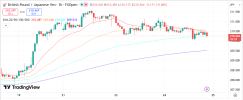
Throughout 2025, the GBP/JPY cross pair experienced significant price fluctuations. Market volatility was high for this pair, but the JPY weakened more against the GBP. Ahead of Christmas, the pair drew a small-bodied bearish candle with small shadows at the top and bottom of the candle. The price formed a high of 211.100, a low of 210.043, and a close of 210.396.

Today is Christmas Day, when most major financial markets, including London and New York, are closed. This condition creates the possibility of very low liquidity, which could trigger widening spreads or unexpected price movements if there is shocked news.

The main sentiment driving the GBP/JPY pair in 2025 is the contrasting monetary policies between the Bank of England and the Bank of Japan. The Bank of England recently cut interest rates by 25 basis points to 3.75% in mid-December. However, the BoE's stance was considered hawkish due to the tight vote, indicating caution regarding further cuts due to the UK inflation shock. This supported the strengthening of the GBP.

According to data from the Office for National Statistics (ONS), the UK's annual CPI slowed to 3.2% in November, a significant decrease from 3.6% in October. This result was also lower than market expectations, which projected a figure of 3.4%-3.5%. Core CPI was around 3.5%, down from 3.7% in the previous month. Despite the decline, this inflation figure is still considered somewhat sticky.

The decline in inflation was driven by slower price increases in the energy sector thanks to government cost cuts, as well as easing price pressures in the retail sector ahead of the new year. Despite the slowdown in inflation, average wage growth remained high at 3.5%-7.7% depending on the sector. This is a concern for the Bank of England (BoE), as high wages can fuel future inflation.

Inflation in the services sector remains a key focus for the BoE, as it remains above its 2% target, indicating that domestic pressures have not completely dissipated.

The Bank of Japan (BoJ) recently raised interest rates to 0.75% at its December meeting, the highest level in 30 years, marking a shift from its ultra-loose policy. Japanese Finance Minister Satsuki Katayama also warned of possible intervention if the yen weakens too sharply on speculative grounds. This tends to cause the JPY to strengthen in the last week of December as a corrective measure.

The Japanese government under Prime Minister Sanae Takaichi recently released its tax reform framework for fiscal year 2026 on December 18th. The government raised the tax-free income threshold from 1.03 million yen to 1.78 million yen. This aims to stimulate domestic consumption amid inflation, but will also reduce state tax revenues by around 7-8 trillion yen.

To fund increased defense capabilities, the government will raise the income tax surtax by 1%.

Japan remains one of the countries with the highest debt-to-GDP ratio in the world, at over 250%. With the 0.75% interest rate hike, government debt servicing costs are starting to balloon. It is estimated that interest costs could double if the 10-year bond yield reaches 2.5%.

The Japanese government is still providing massive stimulus to mitigate the impact of rising living costs, which makes it difficult to reduce the budget deficit in the short term.

Japan's current fiscal situation indicates a transition to a more normal economy with positive interest rates. For GBP/JPY, this means the potential for further yen appreciation remains open, especially if UK inflation continues to decline while Japan continues to tighten policy.

The relatively faster-than-expected decline in inflation in the UK is likely to put pressure on the GBP, as it reinforces speculation that the Bank of England will continue to cut interest rates in early 2026. When combined with the strengthening of the JPY due to the 0.75% interest rate hike, fundamentally there is bearish pressure on GBP/JPY at the end of this year.

Forecasted GBP/JPY price range: main support is–round 207.00 - 208.00. Main resistance is–round 211.30 - 212.00. The estimated range for the Christmas holiday period is likely to be limited to the 209.76 - 211.20 area.
 
gold 26 12 2025 h1.png
Why did silver rise more than gold throughout 2025?

Towards the end of 2025, the performance of precious metals like gold and silver was impressive. Gold and silver price charts showed a more bullish sentiment pattern. In fact, the upward performance of gold and silver appeared particularly strong towards the end of 2025. Within five weeks, gold and silver prices showed strong increases. Silver's price increase, in particular, appeared more aggressive.

Gold price

Gold prices were around $4,080 per troy ounce on December 24-25, 2025. Compared to the start of the year, gold prices have risen 70% year-to-date.

Silver price

Silver prices are currently around $71.81 per troy ounce on December 24-25, 2025. Silver prices have risen approximately 140% year-to-date since the beginning of 2025.

This analysis concludes that silver prices have risen more than gold, with gold recording a 70% increase and silver recording a 140% increase over the same period. Traders may wonder why the increase in silver prices is twice as aggressive as the increase in gold prices.

There are several possible explanations that could shed light on this situation, generally driven by a combination of industrial and financial market factors, while gold is more dominant as a safe-haven asset.

The surge in demand for silver stems from industrial factors, due to its use in solar panels, electric vehicles, chips, and electronics. Global energy transmission has driven a sharp increase in real demand for silver, while gold has virtually no industrial function.

The second factor is the silver supply deficit. Silver mine production tends to stagnate, while reserves are dwindling. Many silver mines are byproducts, meaning they are not the primary source of gold. This results in a supply deficit, driving price increases more aggressively.

Another factor is the price leverage effect. Silver is known as leveraged gold; during a bull market, silver typically rises 2-3 times faster than gold. Silver's high volatility provides the opportunity for greater upside.

Another factor is the potential for investor rotation from gold to silver. After gold rises first, investors seek alternative assets that are less expensive in nominal terms, which is why silver is cheaper. This causes the gold-to-silver ratio to fall, leading to an influx of funds into silver.

The speculative and liquidity factors of silver and gold also make sense. The silver market, smaller than gold, is easily swayed by speculative funds when hedge funds and traders enter, accelerating the upward momentum.

Conclusion

In summary, demand for safe-haven gold is stronger than silver, but moderate. Silver is supported by very high industrial demand, while industrial demand for gold is relatively low. Gold price volatility is lower than silver price volatility. However, gold's potential for growth is more stable and less aggressive than silver's.

Gold's rising performance is due to global uncertainty and interest rate policy, while silver's rise is higher due to bullish sentiment, coupled with industrial demand and a supply deficit.

What are the prospects for gold and silver's growth in 2026? Will their gains continue?

Many analysts still predict the upward trend in gold prices will continue into 2026, citing persistently high demand from central banks, expectations of a Fed interest rate cut, and persistent geopolitical uncertainty. Gold is expected to maintain positive momentum, although its gains are likely to be more moderate than in 2025.

Many analysts also predict silver will remain positive due to its dual demand for safe-haven assets and industrial needs. Many analysts predict silver will continue to rise in 2026, and some even see the potential for further outperformance.

Which is safer, gold or silver?

Many analysts believe that gold and silver still offer potential profits from market volatility. However, gold may still be a safer choice due to its lower volatility, its perceived safe-haven status and its widespread purchase by central banks, its greater stability during economic and geopolitical crises, making it suitable for preserving wealth or protecting capital.

Meanwhile, silver is considered riskier than gold because its high volatility can cause prices to fluctuate rapidly. Because silver is influenced by the industrial sector, investors need to monitor the demand cycle in this sector. A smaller and more volatile market, silver is often a speculative asset seeking faster growth.
 
silver 29 12 2025 h1.png
What is the reason for silver's record-breaking performance?

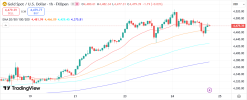
Silver's price performance towards the end of 2025 has been outperformed. The prices surged to an all-time high on Friday, December 26, 2025. Silver recently reached a new record at 79,318. On Friday, silver drew a long-bodied bullish candle, forming a high of 79,318, a low of 72,476, and a close of 79,156.

Fundamentally, this increase was supported by a combination of a supply deficit, rising industrial demand, geopolitical uncertainty, and global monetary policy.

Some main factors influencing silver prices today: The silver market is experiencing a supply deficit, estimated to reach 280-300 million ounces for the 2026 projection. China's policy of restricting silver exports is a major catalyst for global concerns.

The XAG/USD pair, representing silver and the US dollar, is closely linked to Fed sentiment and the performance of the US dollar. Although US GDP growth in the third quarter was stronger than expected at around 4.3%, market expectations remain tilted towards a more accommodative Fed policy in 2026. The US Dollar Index (DXY) was seen weakening around the 98 level, which automatically boosted the price of USD-denominated commodities.

Currently, demand for silver from the industrial sector is also increasing, along with the development of cleaner energy technologies. The surge in silver's use in solar panels, AI infrastructure, and electric vehicles continues to keep silver's underlying price high, surpassing its traditional role as a safe-haven asset.

Given today's date between Christmas and New Year's, trading volumes tend to be thinner, but volatility in precious metals often increases in conditions of thin liquidity if there is sudden, supportive news.

From a geopolitical perspective, the main news supporting silver is the trade war and China's rhetoric. At the end of 2025, China, the world's largest exporter, implemented a policy to restrict the export of silver and other critical minerals. This policy was a response to trade tariffs imposed by the US. Because the global technology industry is heavily dependent on supplies from China, this move raised concerns about a physical supply shortage in the international market, driving up silver prices.

Renewed geopolitical tensions in the Caribbean, particularly between the US and Venezuela, also fueled market concerns. Recent sanctions and the blockade of oil tankers involving the two countries prompted investors to shift to precious metals. Silver, with its smaller market value, often experiences higher volatility than gold, with a higher percentage of gains due to this conflict.

At the end of 2025, the US officially added silver to the list of critical minerals. Geopolitically, this move demonstrates that silver is now viewed as a national defense asset, due to its extensive use in military technology as an electronic component in missiles and radar. This elevated status has increased buying interest from institutions seeking to secure physical reserves.

Dedollarization is also a catalyst for silver prices. Although gold remains a favorite for central banks, the trend of dependence on the US dollar is beginning to spread to silver. Russia recently announced plans to begin incorporating silver into its strategic reserves. This move was followed by several other BRICS members, providing new validation for silver as a monetary asset, not just an industrial metal.

The ongoing conflict in the Middle East. The tensions in Ukraine are other geopolitical factors affecting safe-haven assets. Whenever an attack escalates or diplomatic failure occurs, silver prices tend to surge due to its nature as a safe-haven asset, protecting it from global financial systemic risks.

More specifically, the reasons XAGUSD set a new all-time high today are: Expectations of a Fed rate cut, making silver more attractive as a non-yielding asset. Skyrocketing industrial demand for AI technology, solar panels, and electric vehicles. Physical supply deficits and low inventories. Safe-haven sentiment amid geopolitical uncertainty. A relatively weak dollar supports the rise of USD-denominated commodities.

Silver price range forecast, based on the latest data. Key resistance is in the $80.00-$82.00 range, which serves as a psychological target after breaking through $79.70. Key support is in the $72.86-$72.19 range, which is predicted to be a retest area if a technical correction occurs, leading to profit-taking. Strong support is estimated at $65.55, which serves as a safe limit for the weekly bullish trend.
 
XAUUSD (Gold) – Market Index Outlook | 28/12/2025

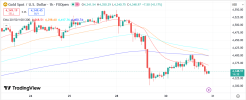
Gold index is currently showing weakness on the broader structure. The index remains below the 0 baseline, indicating bearish pressure still dominates despite recent pullbacks.

Price has failed to sustain above the SMA 20, and momentum continues to roll over, suggesting that buyers are struggling to regain control. The Z-Score is also sitting below neutral, showing that the market is trading under its mean, with no strong reversal signal yet.

From a market index perspective, this suggests:
• Sellers still control the overall flow
• Any bullish move at this stage looks corrective rather than impulsive
• Better probabilities remain aligned with sell rallies until the index reclaims key neutral levels

I’ll be watching for either:
• A deeper exhaustion (Z-Score approaching extreme levels), or
• A clean reclaim above the mean before considering any bullish bias

For now, trend-following shorts remain favored while volatility stays controlled.

1767004815922.png
 
WTI 30 12 2025 H1.png
Oil prices showed limited gains at the start of the week.

Oil market sentiment on Monday, December 29, 2025, showed a bullish candle with a smaller body than the previous bearish candle. WTI crude oil prices formed a high of 58.09, a low of 56.84, and a close of 57.77.

Oil prices are in a consolidation phase, tending to limited gains due to the influence of various factors, including geopolitical tensions, the US economic situation, its correlation with the USD, and supply projections for 2026.

Geopolitical tensions stemming from the Russia-Ukraine conflict remain a key topic in fundamental oil analysis. Continued attacks on Russian energy facilities by Ukrainian forces increase the risk of supply disruptions from the region, which remains significant for the flow of oil and energy products. This has triggered a supply premium risk on oil prices, despite not being a major global oil supply source.

Tensions between the US and Venezuela have also raised concerns about disruptions to Venezuelan oil exports, a major exporter to the West. The US has intensified maritime military operations and sanctions against Venezuelan vessels, including the seizure of several sanction-labeled tankers.

Iran has taken military action, such as seizing ships in the Strait of Hormuz, a strategic sea lane through which approximately 20% of the world's oil passes. Although this incident has not resulted in a complete shutdown, it still increases geopolitical risks in the crude oil market.

Disruptions and declines in Kazakhstan's oil exports due to the impact of Ukrainian drone attacks on key Russian export terminals have significantly reduced Kazakhstan's oil exports, impacting global distribution.

US annual GDP growth of 4.3%, fueling optimism for energy demand. However, the market remains wary of the Fed's interest rate policy, which may remain tight to control inflation. The DXY, which measures the performance of the US dollar, is stable around 98,000, tending to form Doji candle, indicating indecision market.

Several analysts have begun warning of a potential oil oversupply of up to 4 million barrels per day next year, which could hold back oil price increases due to profit-taking towards the end of 2025.

Global oil demand is projected to increase, but growth will be less spectacular than the increase in supply. China, as the largest oil importer, plays a strategic role in oil prices through its stocks. China plans to increase fiscal spending in 2026, which could boost growth and increase oil demand.

In the short term, fundamental analysis predicts a more sideways, somewhat bearish market due to continued strong supply. However, oil is highly sensitive to geopolitical news, which could trigger spikes in volatility.

Oil price forecast: Key support is in the 56.50-57.00 range, which will become important support if selling pressure remains strong. Key resistance is in the 58.20-58.70 range, which is expected to be an upper consolidation area. The next resistance target is 59.50 if a breakout of the psychological level of $58.00 occurs.
 
gold 31 12 2025 h1.png
A look back at the gold price throughout 2025 and its outlook for 2026

2025 was one of the most historic years for precious metals like gold and silver. The US dollar gold price (XAU/USD) recorded a remarkable rally, increasing by approximately 71% throughout 2025, driven by a combination of monetary policy, geopolitical tensions, and dedollarization.

In January-February, the gold price in USD fluctuated between $2,650 and $2,850, marking the initial accumulation phase as investors began to enter the market amid signs of a US economic slowdown and expectations of a Fed interest rate cut.

In March-May, the estimated spot gold price ranged from $2,900 to $3,200. This month, the price broke through the psychological $3,000 level for the first time. This coincided with the release of inflation data, which remained high, but US bond yields declined.

Gold prices in June-August ranged from $3,300 to $3,650. The gold rally accelerated sharply due to escalating global geopolitical conflicts and aggressive buying by central banks, particularly those in developing countries.

In September-November, gold prices hovered around $3,700 to $4,100. During this period, gold entered a super cycle, with demand for gold ETFs surging dramatically to its highest level since 2009.

In December, gold prices reached a record high, moving in the range of $4,300-$4,550. Driven by global uncertainty and the Fed's interest rate cut towards the end of 2025, gold broke its all-time high of $4,550 per troy ounce.

In summary, gold's trend throughout 2025 is expected to be very strong, with relatively rapid growth from the beginning of the year. Key driving factors include investor demand for safe-haven assets, declining US interest rate expectations, and increasing global geopolitical and economic risks.

Gold Outlook for 2026: The majority of global analysts, including Goldman Sachs and the World Gold Council, maintain a bullish or optimistic outlook on gold's performance in 2026, although the increase is expected to be more stable than the wild surge throughout 2025.

Goldman Sachs estimates that gold prices could reach $4,800 per troy ounce by December 2026, with an estimated increase of around 10%-15% from the end of 2025.

HSBC and several other analysts are even targeting gold prices of up to $5,000 per troy ounce by 2026, especially if geopolitical tensions remain and safe-haven demand is high. Some analysts' long-term strategies even suggest a further increase of between $5,000 and $6,000 if reserve diversification trends and investor demand continue to increase.

The main driving factors for gold optimism include the low interest rate cycle. The Fed is expected to continue monetary easing in 2026, which has historically benefited non-yielding assets like gold. Concerns about the ballooning US debt, which has reached 100% of GDP, have caused investors to lose confidence in fixed currencies and shift to gold. Global central banks are expected to continue reducing the portion of US dollar reserves, replacing them with gold as the primary reserve asset.

Although the gold outlook remains optimistic for 2026, risks remain a concern for investors. After a 70% increase in 2025, there is a possibility that large investors will sell gold to cash in profits, which could trigger a temporary correction. Gold's volatility, above the unprecedented $4,500 level, means daily movements could be highly volatile. An unexpected increase in interest rates by the Fed or a renewed strengthening of the US dollar could put downward pressure on gold prices. Tightening of trading margins by institutions like the CME could trigger short-term volatility or pressure.

Analysts generally project a bullish outlook for gold in 2026, but with a more moderate pace of growth compared to 2025. The general price target is estimated to be between $4,000 and $5,000 per troy ounce, depending on interest rate dynamics, inflation, geopolitics, and central bank demand.
 
View attachment 28884

Gold soared amid US economic data.

Yesterday gold prices extended their gains amid mixed US economic data. The price of gold rises drawing a body bull's candle with a slight shadow on the top and bottom of the candle. The bullish candlestick formed a low of 2403 and a high of 2450.

Data released yesterday, ADP Non-Farm Employment Change, showed that the actual data was 122k, smaller than the forecast of 147k with the previous revision being 155k. There is a difference between the actual data and the forecast of 25k, which shows an unfavorable value for the USD. ADP (Automatic Data Processing, Inc.) is economic data that measures the estimated change in the number of workers in the previous month, excluding the agricultural and government industries.

Meanwhile, the Employment Cost Index data shows that the actual data is 0.9% smaller than the expected 1.0% from the previous data revision of 1.2%. This economic data is considered important because It is a leading indicator of consumer inflation - when companies pay more for labor, the higher costs are usually passed on to consumers.

In other economic data, Chicago PMI showed actual data of 45.2, slightly greater than the expected 44.8 with the previous data revision of 47.4.

Pending Home Sales data shows actual data of 4.8% greater than expected 1.4% with previous data revision of -1.9%. This data measures changes in the number of contract homes that will be sold but are still waiting for the transaction to close.

Meanwhile, the Fed still left interest rates unchanged at 5.50%, even though Powell said he would cut interest rates once this year, predicted in September. According to the FedWatch tool from CME, the probability of the Fed cutting interest rates in September rose to 90.5%.

Today investors are still waiting for other inflation data, Unemployment Claims, and Manufacturing PMI.
When price is hovering around the middle Bollinger Band while the bands themselves start bending, it usually reflects a balance between buyers and sellers rather than a clear directional edge. Add flat 50 and 100 moving averages into the mix, and you’ve got a classic consolidation environment where overtrading becomes the real risk. In situations like this, focusing on confluence instead of a single indicator is crucial, which is why understanding the best technical analysis tools helps traders decide when to stay patient rather than force entries.
 
EURUSD 2 1 2026 H1.png
EUR/USD after entering the second day of the new year 2025

Time continues to pass, day after day, week after week, month after month, and year after year. We are now on the second day of 2026, leaving behind 2025 and all its history. At the end of 2025, EUR/USD drew an indecision candlestick, resembling a Doji, indicating a somewhat balanced demand and supply tension. EUR/USD formed a high of 1.17590, a low of 1.17200, and a close of 1.17448, opening at 1.77443.

The EUR/USD price movement over the last five days of 2025 has tended to draw lower lows, suggesting a slight strengthening of the USD against the euro. However, the trendline still shows an upward channel, reflecting the pair's uptrend since November.

Today, January 2, 2026, trading volume is expected to begin recovering after the New Year holiday. Some banks are still closed for the holiday, so trading volume is expected to have not fully recovered, potentially resulting in low liquidity.

Fundamentally, the EURUSD movement in early 2026 will be influenced by the divergence in monetary policy between the Fed and the ECB, as well as geopolitical dynamics.

As we enter 2026, the market is focused on the recently released minutes of the December FOMC meeting. The Fed has begun its interest rate cut cycle, but remains vigilant about inflation, which may rise again due to new US tariff policies. The USD's performance outlook is predicted to be a challenging transition phase. The USD now faces structural and policy pressures that could limit its appreciation.

The market projects 2026 as the year when the Fed funds rate will move to a neutral level. Some analysts predict the rate will end at around 2.9% by the end of 2026. Continued rate cuts from 2025 would typically reduce the USD's appeal to investors seeking high yields, potentially triggering a moderate weakening of the USD against other currencies.

The US fiscal situation will be a concern for investors. The projected deficit, which remains high at over 6% of GDP, is exerting long-term pressure on the exchange rate. Concerns about political pressure on the Fed's independence regarding its low interest rate policy to finance the country's debt could erode the US dollar's credibility among global investors.

Continued efforts by other economic blocs, such as the BRICS+, to use local currencies in international trade are beginning to show marginal impact, reducing the USD's absolute dominance in global transactions.

The European economy continues to show signs of slowing growth. Germany recently provided a large stimulus package to boost growth. This has provided positive sentiment for the euro in the medium term, but low inflationary pressures in Europe have kept the ECB in an accommodative mode.

Uncertainty regarding US trade or tariff policies and geopolitical tensions continue to drive safe-haven flows to the USD, which could limit significant euro gains.

The current price is around 1.1740, based on year-opening data. A moderate bullish bias is likely if the price can stay above 1.1720, with a short-term target of 1.1800.

Volatility is increase, to increase as the start of the year often sees large-scale position adjustments by large institutions. Market focus will shift to the release of manufacturing data (PMI) from both regions, typically released in the first week of January. Following the long holiday, there is the potential for explosive volatility as liquidity returns to the London and New York markets.

EURUSD price range forecast: nearest support at 1.1710, strong support at 1.1680. Nearest resistance at 1.1800, strong support at 1.1850. The forecast price range may deviate from reality given the often random nature of market dynamics.
 

Attachments

  • EURUSD 2 1 2026 H1.png
    EURUSD 2 1 2026 H1.png
    36.8 KB · Views: 0
GBPUSD 5 1 2026 H1.png
GBP/USD shows interesting market dynamics at the beginning of 2026.

In general, the pound sterling is trying to maintain its recovery momentum against the US dollar, which tends to move steadily but limitedly. Prices on January 2, 2026, showed the market forming a high of 1.35020, a low of 1.34339, and a close of 1.34460. GBPUSD drew a bearish candle with a longer wick at the top of the candle body.

The market has now entered 2026 with liquidity conditions beginning to normalize after the year-end holidays. The US Dollar Index (DXY), which measures the USD's performance against six major currencies, was observed in the range of 98.145-98.494, indicating moderate strength but overshadowed by expectations of a Fed interest rate cut this year.

Investors will focus on the resilience of the UK economy following last year's global turmoil. Consumer credit data from the Bank of England (BoE), released today, will be an early indicator of the strength of domestic consumption.

On the other hand, the USD remains supported by its safe-haven status, but there is pressure from the de-dollarization narrative and the upcoming leadership change at the Federal Reserve. Speculation regarding Jerome Powell's replacement is currently intense, as his term expires in May 2026.

President Donald Trump has indicated that he will announce his choice in January 2026. Two names frequently mentioned as top choices are Kevin Hasset, currently serving as Director of the National Economic Council (NEC) in the Trump administration. He is a close Trump ally and has openly supported a more aggressive interest rate cut policy.

Another name is Kevin Warsh, a former member of the Fed Board of Governors (2006-2011), who has a stellar reputation on Wall Street and is known to be critical of Powell's policies, which he considers too slow in adjusting the central bank's balance sheet.

Market pricing is expected to continue to incorporate the Fed's policy divergence with the Bank of England (BoE). The Fed is likely to gradually cut interest rates, while the BoE is also in easing mode due to the weakening UK economy. This divergence tends to exert two-way pressure, but could provide some technical support to the GBP amid a weakening US dollar.

UK economic data shows signs of weakness, with the potential for rising unemployment and stagnant economic growth this year. This could be a negative factor for the GBP in the short to medium term.

Based on existing fundamental data, the market is expected to have potential for range-sideways-bearish movement, with a bias dependent on this week's data. Key fundamental events that could potentially influence GBP/USD this week and attract trader attention include the ISM Manufacturing PMI, ADP jobs, ISM services PMI, JOLTS, and NFP.

The forecasted GBPUSD price range includes the nearest support area around 1.3400, which will be tested at the end of December 2025. Critical support is the lower limit around 1.3000. A break below this level has the potential to change the trend to bearish with a support target of 1.2780.
 
gold 6 1 2026 h1.png

Gold Rises Amid Significant Geopolitical Escalation

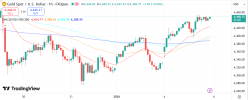
Gold prices began the week on Monday, January 5, 2026, by drawing a long-bodied bullish candle with almost no shadow. The price formed a high of $4455, a low of $4305, and a close of $4446. The main factors driving the market today were tensions in Latin America and US economic data.

The conflict between the US and Venezuela entered a new phase following reports of US military aggression in Venezuela and the arrest of President Nicolas Maduro. As a safe-haven asset, gold has become a primary investor destination amid concerns about disruptions to global oil supplies and regional stability.

The market has been digesting US economic data from the start of the year. Focus is on the Non-Farm Payrolls (NFP) data due this week, as well as speculation about the direction of the Federal Reserve interest rate in 2026. The decline in real bond yields has been a catalyst for gold.

The de-dollarization trend and massive gold purchases by global central banks, particularly the BRICS bloc, continue to provide structural support for high gold prices. The People's Bank of China (PBOC) remained the largest gold buyer until early January 2026. China has consistently been the largest gold buyer in recent years. This strategy is part of an effort to reduce dependence on the US dollar. China's gold reserves currently exceed 2,200 tons.

The Reserve Bank of India (RBI) ranks second as an active gold buyer. The RBI continues to add to its gold reserves monthly. In January 2026, India's gold reserves reportedly exceeded 800 tons, considered a vital instrument for the RBI in maintaining the stability of the rupee amid global market volatility.

The Central Bank of Turkey frequently alternates with China and India as the largest monthly gold buyer. Their primary focus is using gold as a hedge against high domestic inflation and the weakening of the Lira.

The Central Bank of Poland has become one of the most aggressive gold buyers in Europe. The Governor of the Central Bank of Poland has stated a strategic target of increasing the proportion of gold to 20% of its total foreign exchange reserves for reasons of national security and financial stability.

Gulf countries, led by the United Arab Emirates, are drastically increasing their gold reserves, reaching 26% by 2025. This marks a strategic shift for oil-rich countries to diversify assets from paper-based assets to physical assets.

The main motivations for central banks to buy gold are de-dollarization, protection against economic sanctions, such as those imposed on Russia, and anticipation of long-term inflation.

The current gold price is in the range of $4,350-4,450 per troy ounce, with an estimated daily range of $4,310-$4,510. The correction support area is around $4,313, with the next support around $4,254. The resistance currently being tested is around $4,509, with the next resistance at $4,576 if geopolitical tensions escalate.
 
AUDJPY 7 1 2026 H1.png
AUD/JPY tends to be bullish amid monetary policy divergence

The price movement of the cross pair AUD/JPY tended to be bullish throughout 2025. The upward trend continued into early January 2026. Yesterday, AUD/JPY still drew a moderate bullish candle, extending the previous day's gains. The price formed a high of 105.598, a low of 104.820, and a close of 105.633.

The bullish sentiment in AUD/JPY is driven by several factors: Monetary policy divergence between the RBA and the BoJ. The RBA tends to maintain a tighter stance than the BoJ. While the BoJ is starting to move away from its negative interest rate policy, Australian interest rates still offer much higher yields, making them attractive to carry traders.

The AUD is a commodity currency considered a pro-risk currency, or a currency that follows the flow of risk-on sentiment. With the rally in the global energy and financial sectors in early 2026, demand for the AUD increased. Conversely, the JPY, a safe-haven currency, tends to weaken when the market is optimistic. As a major commodity exporter, rising energy and mineral prices in early January provided additional support for the Australian dollar.

Governor Ueda's recent hawkish remarks signaled that the Bank of Japan (BoJ) is ready to raise interest rates further if economic and inflation trends align with projections. This tends to strengthen the yen and temporarily curb the AUD/JPY's rise to around 105.00. Despite the signal for a rate hike, the market is still closely monitoring Japan's fiscal conditions and economic outlook, which some analysts consider fragile, which could limit the yen's strength in the medium term.

The Australian dollar remains supported by expectations that interest rates in Australia will remain high or even rise to combat inflation. The RBA and BoJ interest rate spread remains a key attraction for market participants. As China's main proxy currency, the AUD is highly sensitive to Chinese economic data. Today's focus is also on the release of China's Foreign Exchange Reserves data, which could provide insight into the economic strength of Australia's main trading partner.

Several global data points indirectly impacting the AUDJPY today through risk sentiment: the US ISM Services PMI, ADP Non-Farm Employment Change, and the JOLTS Jon Opening, which can influence global risk sentiment. Today's Australian CPI data is also a key driver of the AUDJPY pair.

AUDJPY Price Range Forecast: First support is around 104.80, the first resistance level if a technical correction occurs. Second support is around 104.20, a strong lower boundary to maintain the uptrend. Immediate resistance is around 105.75, the closest resistance level, and second resistance is around 106.15, the maximum strengthening target if risk sentiment is very strong.
 
USDCHF 8 1 2026 H1.png
USD/CHF, a safe-haven currency pair amid US-Venezuela tensions

The US dollar and Swiss franc, both considered safe-haven currencies, tend to fluctuate with a bullish bias. Yesterday, USD/CHF drew a bullish candle, extending the previous day's gains. The price formed a high of 0.79776, a low of 0.79440, and closed at 0.79740.

Geopolitical risk between the US and Venezuela has generally boosted safe-haven values. The US conducted a military operation and arrested President Nicolas Maduro and his wife. The US and Venezuela agreed to an oil export deal to the US, potentially disrupting energy supplies. There were subsequent reactions from other countries, such as the freezing of Maduro's assets in Switzerland. This all triggered volatility in financial markets and increased demand for safe-haven assets.

Gold and precious metals rose sharply, reflecting safe-haven demand from investors concerned about geopolitical uncertainty. Safe-haven assets such as Treasurys and defensive currencies also received capital inflows. The US dollar strengthened slightly in initial reactions as a safe-haven relative to geopolitical risks. However, sentiment regarding Fed rate easing or expectations of rate cuts continued to weaken the USD in the short term.

The forex market saw intraday volatility, with the USD/CHF pair moving within a wider range due to global sentiment reactions. Geopolitical conflicts tend to trigger capital flows into defensive assets or risk-off. In these situations, the CHF often strengthens due to its reputation as a safe-haven outside the USD.

Today, the market will await the release of the Swiss CPI report for December and US jobless claims, which are expected to rise. Market focus will also be on this week's Non-farm Payrolls (NFP) data.

The SNB currently maintains its interest rate at 0.0%. If inflation falls more than expected, this could strengthen SNB's position to remain dovish or at 0% throughout 2026. Conflicts in Eastern Europe and South America are prompting investors to shift assets to the Swiss franc.

The Fed has cut interest rates to a range of 3.50%-3.75% by the end of 2025. The market anticipates at least two more cuts in 2026. The Fed has resumed balance sheet expansion to maintain liquidity, which theoretically weakens the US dollar's strength in the medium term.

The US dollar index (DXY) has been relatively stable following labor data showing a decline in job openings and mixed service sector growth. The DXY rose from a low of 98.497 to a high of 98.731 on Wednesday, January 7, indicating positive sentiment towards the US dollar.

If geopolitical escalation worsens or Venezuela's allies such as China and Russia become involved, investors are expected to shift funds to Switzerland due to its political neutrality and financial stability, far from the epicenter of the conflict. The CHF benefits from this conflict because, following Maduro's arrest, the focus will shift to longer-term risks, which are more favorable to the CHF.

Forecast price range for the USD/CHF exchange rate. The nearest support is around 7880, with the next support at 0.7850, predicted to be the critical lower limit. The nearest resistance is around 7950, with the next resistance at 7990, which is the target for an upward correction.
 
USDCAD 9 1 2026 H1.png
USD/CAD awaits dual news releases on Big Friday

The USD/CAD commodity currency pair on Thursday showed extended bullish sentiment. The price drew a bullish candle with a half-body shadow at the top of the candle. The price formed a high of 1.38882, a low of 1.38507, and a close of 1.38657 from an open of 0.138588. USD/CAD has trended bullish since late December 2025, extending into early January 2026.

The Canadian dollar weakened against the US dollar due to broad-based dollar strength. The US Dollar Index (DXY) has shown positive sentiment since the end of 2025, ranging from a low of 97.749 to a high of 98.984.

The US dollar extended its gains after data released yesterday showed Initial Jobless Claims rose moderately to 208k in the week ending January 3, slightly below market expectations of 210k and up from the previous week's revised reading of 200k.

Today is a crucial day for this pair due to the clash of major economic data from both countries simultaneously. This makes this pair interesting because it can drive high volatility.

Today, the market will focus on dual employment data, which could trigger movements of hundreds of pips. The United States will release Non-Farm Payrolls (NFP) data. If the employment figures are above expectations, the USD will theoretically strengthen, giving the Fed reason to be less aggressive in cutting interest rates in early 2026.

At the same time, Canada will also release employment change and employment rate data, which are also related to the Canadian workforce. If the labor market cools or the unemployment rate rises, pressure will put pressure on the Bank of Canada (BoC) to cut interest rates, which would theoretically weaken the CAD.

As a major oil exporter, Canada's CAD currency is often linked to oil prices. WTI oil is currently trading in the $55-$58 range. Rising oil prices could support the CAD in the medium term.

From a geopolitical risk perspective, Trump's controversial statement regarding the Greenland tariff issue has created new uncertainty, theoretically benefiting the USD as a safe-haven currency.

Donald Trump's statement in early January 2026 sparked a global diplomatic uproar, primarily due to his desire to combine territorial ambitions regarding Greenland with the economic threat of tariffs. Trump openly wants to make Greenland part of the US for national security reasons. He claims Greenland is crucial to countering Russian and Chinese influence in the Arctic. The White House, through spokesperson Karoline Leavitt, confirmed that this acquisition is under active discussion and that all options are open, including the use of economic and military force, although it continues to prioritize diplomacy as the first option.

Trump uses the threat of tariffs not only as a means of trade protection but also as a diplomatic bargaining chip. European countries deemed uncooperative will be threatened with high tariffs.

Greenland's Prime Minister, Jens Frederik Nielsen, called it a fantasy and asserted that Greenland would not be sold. Meanwhile, Danish Prime Minister Mette Frederiksen responded by calling Trump's plan absurd and warning that forced annexation would mean the end of the NATO alliance.

USDCAD price forecast: nearest support is around 1.37800 if a technical correction occurs. Next support is around 1.37000, which is a strong limit for the uptrend. Nearest resistance is around 1.38880-1.39000, which is a crucial technical level that must be broken to continue rising. Next resistance is around 1.39500 if the US NFP is very strong and the Canadian data is poor.
 
WTI 12 1 2026 H1.png
WTI oil prices were under some pressure after rising to $59.52.

The XTIUSD exchange rate last Friday drew a bullish candle with shadows at the top and bottom of the candle. The price formed a high of 59.52, a low of 57.51, and a close of 58.63.

The Nonfarm Payrolls (NFP) report on Friday, January 9, 2026, had a significant impact on the USD and global market sentiment. The data showed that December's payrolls reached 136K, significantly lower than market expectations of around 182K. This generally put selling pressure on the USD, indicating a cooling in the US labor market.

Although job growth slowed, the unemployment rate remained stable at 3.6%. Furthermore, average earnings rose 0.4% monthly, higher than expected. This wage increase signals that inflation remains present. This temporarily held back further USD weakness, as the market still saw the possibility that the Fed might be in no hurry to cut interest rates.

The DXY experienced high volatility immediately following the data release. The US dollar index weakened following the release due to disappointing employment figures. The DXY is currently at 99.137, down from 99.264.

Current oil market sentiment is tending to be wait-and-see, with a medium-term weakening trend but sensitive to news surprises. The market is still digesting the US military operation in Venezuela and the detention of Nicolas Maduro. Although Venezuela has the largest oil reserves, its production has long been under pressure. There is speculation that under US control, Venezuelan oil supplies could return to the global market in a large scale over the long term, which would fundamentally put downward pressure on prices.

The IEA predicts a global supply surplus of 3.85 million barrels per day by 2026. This poses a burden on prices for sustained high prices.

The market is monitoring OPEC+'s response to the situation in Venezuela. If OPEC+ decides not to cut production further to offset the potential influx of Venezuelan oil, the XTIUSD price could be under pressure.

Technically, XTIUSD is in a consolidation phase. The XTIUSD price forecast shows strong support at around $55.00, with the nearest support at $56.25 as a rebound level. Strong resistance is at around 59.50 as a psychological level, and the nearest resistance is at around $59.40.
 
GBPJPY 13 1 2026 H1.png
GBP/JPY Rises to Record High in Early 2026

The British Pound and Japanese Yen cross currency pair rose to record highs in early 2026. The price drew a bullish candle on January 12, 2026. It formed a high of 213.011, a low of 211.576, and a close of 212.987.

The Japanese Yen remains under pressure despite the Bank of Japan abandoning its negative interest rate policy. However, the BoJ's interest rate hike is still not strong enough to alter global capital flows. Japanese yields remain far below those of the US, UK, and Europe, so investors continue to favor high-yielding currencies.

The very low yield differential between the JPY and the much higher USD or GBP encourages investors to continue using carry trade strategies. Investors borrow cheap JPY and then buy high-yielding assets by selling JPY.

Despite the BoJ's interest rate hike, they continue to emphasize gradual tightening, with no signs of aggressive or rapid action. The market believes this is not the start of a strong hawkish cycle. From an economic perspective, Japanese inflation remains weak, driven in part by import and energy costs, rather than solid domestic demand. The market also does not appreciate the long-term strengthening of the Japanese yen.

Global market sentiment appears to remain risk-on, causing the Japanese yen to lose its safe-haven function. If market sentiment becomes more risk-off, due to geopolitical risks, a global crisis, or a market crash, the JPY will receive support. Demand for the JPY remains structurally weak, Japan still imports large amounts of energy, and many Japanese pension funds and institutions invest overseas.

Meanwhile, the British pound remains resilient, supported by improvements in the UK's fiscal credibility in early 2026. Although the BoE cut interest rates in late 2025, market sentiment is more focused on the UK's more stable economic recovery compared to its European counterparts. Recent speeches by BoE officials have provided psychological support for pound buyers.

The UK economy is expected to grow by around 1.3%-1.4% in 2026, according to several independent economic institutions and business surveys. This reflects positive but still weak growth. The economy is still growing, but not strong enough to significantly boost demand for the currency without the support of other factors.

Inflation has eased from its peak but remains slightly above the Bank of England's 2% target at the start of the year. Consumer surveys indicate near-term inflation expectations, indicating price pressures are easing. This implies the Bank of England feels more comfortable lowering interest rates as inflation begins to fall, but caution is needed.

In the labor market, reports show a decline in job openings, a rise in unemployment, and a decline in hiring. A softening labor market means consumption and wages may no longer be the main engines of growth.

The manufacturing and business sectors warn that production costs are continuing to rise and profits are under pressure, which could restrain investment and hiring. This is a real headwind for medium-term economic growth.

GBPJPY price range forecast: nearest support is around 210.30-210.50 if a technical correction occurs. Strong support is around 209.50. Nearest resistance is around 212.60-212.80. A breakout of this level could trigger the price to reach the next resistance level of 213.50. This forecast does not reflect actual events and is subject to prediction errors.
 
silver 14 1 2026 h1.png
Silver Prices Soar Amid a Combination of Uncertainty and Geopolitical Risk

Silver prices surged during Tuesday's trading session, extending the bullish trend in January 2026. XAG/USD rose, drawing a bullish candle with shadows at the top and bottom of the candle. The price formed a high of 89.105, a low of 83.425, and a close of 86.475.

The XAGUSD instrument is currently in a phase of very high volatility, with the bullish trend dominating at historical record levels. Current market sentiment is influenced by a combination of uncertainty, monetary policy, and geopolitical risk.

The market is currently awaiting clarity regarding the direction of US interest rate policy. Speculation about policy easing amid persistent inflation has caused the US dollar to fluctuate, which has historically benefited precious metals like silver.

Geographical risks, such as those in the Middle East, or the US with Greenland or Denmark, have triggered capital flows into safe-haven assets. Silver, which often follows gold but has higher volatility, has benefited significantly from these conditions.

January is the period when many large index funds conduct their annual rebalancing. Despite potential technical selling pressure from portfolio weighting adjustments, physical and speculative demand have so far been able to hold prices at elevated levels.

In 2026, despite concerns about slowing industrial demand for jewelry due to overpricing, the global silver supply deficit remains a long-term fundamental driver.

Today's main focus is the US CPI and other economic data. A higher or consistently strong CPI could support silver by boosting inflation expectations and safe-haven demand, but a strengthening USD due to surprising data could put pressure on silver.

Goldman Sachs warns of the risk of extreme volatility in silver due to the fragmented physical location of supplies, which could magnify price swings.

Regarding silver demand, the countries with the highest demand are dominated by countries with large industries, renewable energy, and high jewelry consumption. China, India, the US, Japan, and Germany dominate global silver demand.

The main trend for silver is currently predicted to remain bullish, but the RSI indicates overbought conditions, which could technically trigger a price correction. The forecast for today's XAGUSD price range is: nearest support is around 83.50 in the consolidation area, and key support is around 78.00 if a sharp correction occurs. Nearest resistance is around 88.60-89.10, near the high reached this month. Key resistance is around 90.00 as a key psychological level and the next bullish target.