Technical Analysis Today

AUDUSD 9 4 2026 H1.png
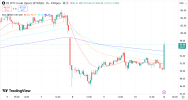
AUDUSD surges amid reports of a two-week ceasefire between the US and Iran

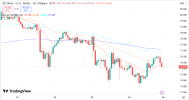
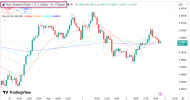
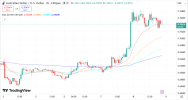
The Australian dollar rose for three consecutive days, reflecting a risk-on market sentiment amid reports of a two-week ceasefire between the US and Iran. The AUDUSD surged to a high of 0.70846 from a low of 0.69656 in response to the news.

The two-week ceasefire, initiated by Pakistan, sparked a return of optimism in global markets. When the threat of war subsides, investors tend to move out of safe-haven assets like the USD and back into currencies that offer high yields or are closely tied to economic growth, such as the AUD.

The ceasefire included an agreement to reopen the Strait of Hormuz, which is crucial for global oil flows. This reduced the risk premium on energy commodity prices and eased short-term global inflationary pressures. This weakened demand for the USD as a safe-haven asset, providing room for the AUDUSD to rise.

Although the ceasefire provided positive momentum, the market remained cautious as it was likely temporary. Traders' focus today will be divided between assessing the ceasefire optimism and US economic data, while awaiting inflation or employment data that will provide a reason for the Fed to remain hawkish, which could limit further AUD strength.

The Reserve Bank of Australia (RBA) is currently on a monetary tightening path. After raising interest rates to 4.1% in March, the market is now closely monitoring domestic inflation. The hawkish stance of RBA officials, who still leave open the possibility of further rate hikes, is a key support for AUD strength.

Economic stabilization in China, Australia's main trading partner, has positively impacted demand for Australian commodities, which in turn supports the AUD.

Stubborn US inflation leaves little room for the Fed to cut interest rates in 2026. This maintains the USD's appeal as a safe-haven asset, especially if global geopolitical tensions escalate.

Based on the current price movement of 0.70470, AUDUSD is expected to remain within the 0.70150-0.71100 price range. The nearest support is around 0.70300, with the next support target around 0.70150. The nearest resistance is around 0.70850, with the next resistance target around 0.71100. This forecast could be incorrect.
 
GOLD 10 4 2026 H1.png
Gold Prices Rise Amid Fragile Ceasefire

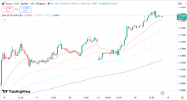
Gold prices are attempting to recover after a correction amidst the fragile US-Iran ceasefire. Gold prices are currently around $4,770, rising from a low of $4,698.

The situation in the Middle East, particularly tensions between the US and Iran and the closure of the Strait of Hormuz, remains a determining factor. News of the ceasefire has dampened demand for safe-haven gold in the past 24 hours, causing prices to correct from their highs.

However, the market remains cautious due to reports of ceasefire violations. Any sudden escalation could immediately impact and trigger aggressive gold buying.

XAUUSD is currently exhibiting highly volatile market conditions due to the pull between geopolitical tensions and crucial US economic data. Tonight, the US will release CPI data, which is a major market driver this week.

If US inflation remains high due to the surge in oil prices stemming from the Middle East conflict, the market will expect the Fed to maintain high interest rates for longer. This could technically strengthen the USD and put pressure on gold prices. If inflation subsides, gold has the potential to gain upward momentum as expectations of interest rate cuts strengthen.

The US dollar index is currently showing a weakening US dollar amid reports of a ceasefire. The DXY is currently at around 98.834, recovering from a low of around 98.525. DXY fluctuations in this zone indicate US dollar strength. As long as the US dollar remains firmly above its psychological level, gold's gains are expected to be limited.

Based on current market conditions, gold is moving in a consolidation phase, but is likely vulnerable to short-term selling pressure before the CPI release.

Gold prices are predicted to move in the range of $4,620-$4,840. The nearest support is around $4,680, with the next support target around $4,620. The nearest resistance is around $4,780, with the next resistance target around $4,840. This forecast could be wrong.
 
WTI 13 4 2026 H1.png
Oil prices are under the shadow of a risk premium due to geopolitical tensions.

WTI oil prices could exhibit extreme volatility driven by the escalation of military conflict in the Middle East. The market is currently operating under a very high risk premium due to the war involving the US, Israel, and Iran.

Geopolitical conditions are the sole driver of oil prices at this time. Iran's closure of the Strait of Hormuz since early March 2026 disrupted approximately 20% of supply, the largest disruption in the history of the global energy market.

A joint US and Israeli attack has targeted Iranian military infrastructure and nuclear sites. Iran's asymmetric retaliation using drones and missiles against US assets in neighboring countries remains a major threat.

Despite attempts at negotiations and a ceasefire between the US and Iran, the talks have failed completely. Reports of the US officially blocking the Strait of Hormuz, along with Iran's restrictions and threats of retaliation, have directly impacted global supply disruptions. This is the most bullish factor currently.

The conflict has escalated since the February 28 attacks by the US and Israel. Tensions are escalating in Lebanon and the Gulf, further contributing to the high risk premium. Since the start of the conflict, oil prices have risen by around 30%. WTI fell to $86-$89 due to the ceasefire, rebounding to around $98 when the conflict escalated. WTI even reached $110 during the initial escalation.

The market currently remains skeptical because Iran's demands for an easing of the economic blockade have not been fully met. Even the slightest news of de-escalation could trigger sharp profit-taking.

The halt in exports from the Persian Gulf has forced importing countries, especially in Asia, to seek alternatives from the US, Brazil, and others. US strategic oil reserves are at critical levels after being used to dampen price spikes.

Despite high prices, oil demand remains solid due to the lack of short-term energy substitutes, although some industries have begun to implement efficiencies or reduce production due to spiraling energy costs.

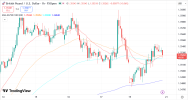
Oil prices are currently dependent on news, such as if the US actually launches an attack on Iranian energy sites as threatened. If the Strait of Hormuz is not opened, XTIUSD could easily surge in a short period of time. Conversely, the opening of the Strait of Hormuz could plunge the price back to a crucial level. Main support for XTIUSD is estimated at around $94-$95, with resistance around $105-$110. This forecast could be wrong.
 
GBPJPY 14 4 2026 H1.png
GBP/JPY Hits Four-Month High

The GBP/JPY cross currency pair has shown bullish sentiment over the past two weeks. The price has now reached a four-month high of 215,336.

The conflict in the Middle East is a significant factor because Japan is heavily dependent on energy imports. Tensions in the Middle East have reportedly depressed global energy prices, which could fundamentally contribute to persistently high inflation.

The Bank of Japan (BoJ) is gradually withdrawing its accommodative policy stance. There is a 65-to-5 chance that the BoJ will raise interest rates by 25 basis points at its April 27 meeting.

Japanese inflation is predicted to rise throughout 2026. Despite the prospect of a BoJ rate hike, the Yen remains under pressure due to its wide yield differential compared to other major currencies, including the GBP.

In the UK, the BoE's benchmark interest rate is currently at 3.75%. The Bank of England (BoE) last maintained interest rates in March 2026. Despite expectations of a rate cut this year, UK inflation remains at 3%, above its 2% target, prompting the BoE to remain cautious and not rush into further easing.

Tensions in the Middle East also threaten UK inflation. If energy prices remain high, this often provides support for the GBP through expectations of higher interest rates over the longer term.

GBP/JPY is currently in a strong bullish trend. In early April, GBP/JPY was around 211.04, but it surged sharply to reach 215,300. This increase represents an appreciation of approximately 2% in just the past two weeks.

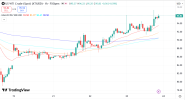
Given the strong bullish momentum, the current price is expected to enter an important psychological level. The nearest support is estimated at 214,200, and the next support is around 213,850. The nearest resistance is around 215,800, and the next resistance target is around 216,500. This forecast could be wrong.
 
EURUSD 15 4 2026 H1.png
EUR/USD has been bullish for 7 consecutive days.

The EUR/USD pair, amidst geopolitical dynamics still vulnerable to attacks in the Middle East, requires extra attention, as it is the main driver of market movements. The EUR/USD pair has risen to around 1.18110, its highest level in several weeks. This increase occurred as the USD weakened for seven consecutive days, and market sentiment returned to risk-on.

Despite the failure of the ceasefire agreement, there is hope for a renegotiation between the US and Iran in Islamabad. Tensions remain, with the US blockading the Strait of Hormuz, but the market is beginning to assess the possibility of de-escalation. This has resulted in a decline in demand for safe-haven assets, especially the USD, as the risk of war is perceived to be easing. Increased risk appetite has supported stock prices and strengthened currencies other than the USD, including the Euro.

Oil prices have fallen due to hopes of an easing of the conflict and expectations that supplies will return to normal. WTI oil prices are currently around 89.11, having previously surged above $100.

Meanwhile, the USD has lost its safe-haven function, which was a bullish factor for the EURUSD pair. The DXY (DXY) was seen falling to around 98,100 from a high of 100,543 in late March. US inflation data (PPI) was lower than expected, suggesting the market is not aggressively raising interest rates. Easing geopolitical risk optimism has allowed funds to flow into the euro due to declining demand for safe havens, particularly the USD.

Despite expectations of easing geopolitical tensions in the Middle East, the conflict remains unresolved, and conditions remain vulnerable to escalation. Meanwhile, the IMF has warned that war could trigger inflation and a global recession. If tensions escalate, oil prices could rise again, reinforcing the USD's strength. The market remains highly sensitive to news that could trigger volatility.

The ECB's main interest rate is currently at 2.15%. The ECB has kept interest rates unchanged because inflation is already close to target. However, the conflict in the Middle East poses a potential risk of rising inflation. If energy prices spike, it will burden the eurozone, as it is a net energy importer.

The Fed has also maintained its interest rate at around 3.50%-3.75%. Market expectations are that the Fed will cut interest rates, although the Fed is expected to maintain its stance at its April 29 meeting. According to the Fedwatch tool, the probability of the Fed maintaining the current interest rate is 99.8%.

The conflict in the Middle East can influence perceptions of interest rates. If the conflict escalates and oil prices rise, inflation will also rise, which will lead to a more hawkish stance by the ECB to control inflation. Meanwhile, the Fed will remain cautious due to the risk of a recession. Currently, the ECB has the potential to be hawkish, depending on energy inflation, while the Fed is likely dovish.

EURUSD is currently trading around 1.17837, with a possible range forecast: nearest support is around 1.1750, with the next support target around 1.1720. Nearest resistance is around 1.1820, with the next resistance target around 1.1880. This forecast could be wrong.
 
AUDUSD 16 4 2026 H1.png
AUD/USD surges in anticipation of Australian jobs data

The AUD/USD commodity currency pair surged for three consecutive days in anticipation of Australia's unemployment rate data, crucial for the RBA's monetary policy. The AUD/USD pair rose to a five-week high of 0.7176.

Australia's unemployment rate is expected to be between 4.2% and 4.3%. The increase from the previous month (4%) is putting mild pressure on the AUD, as the market begins to speculate about policy easing.

The RBA's cash rate is currently held at 4.10%. With the release of slightly weaker jobs data, expectations of a rate hike at 4.35% are likely to be corrected downwards.

Besides the market's anticipation of Australian jobs data, another focus is on US economic data due to be released today. Retail sales control group, a key indicator of US consumer spending, if this data is stronger than expected, the USD is likely to gain momentum, which could push the AUD/USD back below the psychological level. US jobless claims are expected to remain stable at 219k.

Geopolitical risks in the Middle East remain a significant catalyst in financial markets. The latest updates on the US-Iran war could trigger volatility and demand for safe-haven assets.

According to the latest data, the US has officially imposed a full maritime blockade on ships entering and leaving Iranian ports. The aircraft carrier Abraham Lincoln is reportedly on high alert. Meanwhile, Iran has threatened to disrupt global trade routes and will attack if provoked. This uncertainty continues to threaten energy prices and the risk of global inflation.

Shipping volumes through the Strait of Hormuz have reportedly declined 90% since the war broke out on February 28th. Iran has laid sea mines to secure this strategic global waterway in an effort to defend itself.

Russia and China have begun to support Iran diplomatically, and the world is divided into a Western bloc consisting of the US and its allies, and an Eastern bloc consisting of China, Russia, and Iran. This indicates that the conflict is reaching a global proxy scale. If the conflict escalates, the USD tends to rise; if it subsides, the AUD strengthens. The Middle East is currently in a state of semi-war; there is a ceasefire, but military tensions and the risk of escalation remain high.
 
WTI 17 4 2026 H1.png
XTI/USD faces a supply deficit threat amid logistical disruptions in the Strait of Hormuz

WTI oil prices are currently hovering around $90.10 on the FXOpen chart, up from a low of $84.82. Current oil prices indicate market conditions are showing signs of stabilization following a major escalation in the Middle East.

Fundamentally, the market is currently experiencing a significant supply deficit due to disruptions in the Strait of Hormuz. The IEA recorded this as the largest supply disruption in history. Oil flows through the Strait of Hormuz remain limited, despite talks of a ceasefire.

Recent data showed a larger-than-expected decline in US crude oil inventories, supporting prices at high levels. In Asia, there are indications of declining demand due to excessively high prices, but the need for diesel and jet fuel continues to keep prices high. The US-Iran conflict is currently in a fragile, conditional ceasefire.

Following the ceasefire on April 8, military tensions have eased. However, the Strait of Hormuz has not been fully reopened to normal commercial traffic due to security concerns and naval mines.

Recent reports suggest a potential major agreement between the US and Iran in the coming days, but the market remains skeptical due to fluctuating political rhetoric. Although tensions are not as high as at the peak of the conflict, the risk premium remains high on oil prices. However, if news emerges regarding the full reopening of the Strait of Hormuz, prices could fall rapidly.

Although the RSI is overbought, the trend remains potentially bullish due to structurally supportive fundamental issues. The nearest XTIUSD support is forecast at around 91.90, with the next support at around $89.00. The nearest resistance is around $94.10, with the next resistance target around $95.00. This forecast could be wrong.
 
SILVER 20 4 2026 H1.png
XAG/USD is in consolidation amid global economic weakness

Silver price movement in the short term tends to be weakly sideways or bearish, but in the medium term remains bullish, driven by a strong supply deficit. Silver prices closed at around $80,712 on the FXOpen chart at the end of the week, having previously risen to a high of $83,044.

The current silver market condition is influenced by several key factors. The global silver market is projected to experience a structural supply deficit of around 46.3 million ounces in 2026. This is the sixth consecutive year that demand has exceeded mine supply, supporting a strong price floor for silver despite short-term fluctuations.

The US Dollar Index shows a bearish continuation structure. A weakening US Dollar has traditionally been a positive catalyst for other assets, including Silver as USD-pegged Silver, as it makes the precious metal cheaper for holders of other currencies. However, short-term DXY fluctuations can impact silver in the short term. Expectations of a Fed rate cut are declining due to inflationary threats, and high bond yields are pressuring silver, driving short-term bearish sentiment.

Geopolitical factors remain a major market concern today. The previously heated diplomatic tensions are showing signs of de-escalation. This has reduced demand for safe-haven assets, causing prices to stabilize within the current range rather than surge sharply. However, the current situation on the ground is that Iran has re-closed the Strait of Hormuz and declared it will remain closed until the US blockade is lifted. Ships are unable to pass freely and are either stuck on either side of the strait or are forced to turn back. Although technically not completely closed, the operation is nearly paralyzed. This has raised concerns about a weakening global economy due to the inflationary impact of energy supply disruptions.

Iran has declared the Strait of Hormuz under full military control, requiring all ships to obtain special permission to pass. This is not just a threat; foreign tankers have been fired upon and ships attempting to pass through.

The US has declared a maritime blockade on Iran since April 13, targeting Iranian ports. Ships have been turned back, and some Iranian vessels have been seized. The impact is that Iran is restricted externally, and Iran has retaliated by blocking it internally. This is not merely a political issue, but has become a real disruption to global energy routes.

On the demand side, industrial demand for silver is currently declining due to the global economic slowdown, which is holding back silver price increases.

The silver price is predicted to be bearish today if the USD remains strong and there are no major geopolitical escalations. The nearest support is around $76, with the next support target around $74. If the USD weakens, the nearest resistance target is around $82, with the next resistance target around $84. This forecast could be wrong.
 
GBPUSD 21 4 2026 H1.png
GBP/USD Recovers Awaiting US Retail Sales Data

The GBP/USD currency pair is currently attempting a recovery after three days of bearish sentiment. The GBP/USD price is currently hovering around 1.35344 on the FXOpen chart, up from a low of 1.34742. The GBP/USD price movement shows an interesting dynamic between UK inflationary pressures and the Fed's interest rate policy.

The market is currently in a wait-and-see mood, awaiting the release of UK CPI data, scheduled for tomorrow, April 22, 2026. February data showed CPI at 3.0%, and tomorrow's release will determine the Bank of England's policy direction: whether to maintain high interest rates for longer or consider further easing. According to Forexfactory, UK inflation is expected to rise to 3.3%.

The IMF projects UK GDP growth at 0.8% for 2026, with an unemployment rate of around 5.6%. Despite slowing growth, inflation, which remains above target, continues to support the pound exchange rate, preventing it from falling further.

Today's UK market focus is the release of the Claimant Count Change employment data, which is expected to be down from the previous revision.

Regarding the US dollar, the Fed is currently maintaining interest rates in the 3.5%-3.75% range. With core inflation expected to return to its 2% target only in early 2027, the Fed's room for a near-term rate cut is very limited. This supports the USD's stability.

Global geopolitical tensions, particularly in the Middle East, and rising energy prices remain supportive factors for the USD as a safe-haven currency, limiting GBPUSD's gains.

Today's market focus will be on US Retail Sales data, the main market driver for the GBPUSD pair. This data measures consumer spending strength in the US, which accounts for approximately two-thirds of the US economy. Retail sales data is expected to grow 1.1% to 1.4% month-on-month (MoM). This increase was driven by a surge in gasoline prices and strong automotive sales in March.

The forecast daily range for GBPUSD is around 1.34800 to 1.35800. Today's market is expected to remain risk-sensitive, with potential for rapid fluctuations due to the geopolitical situation in the Middle East and disruptions in the Strait of Hormuz, which could directly impact the USD and risk sentiment.
 
USDJPY 22 4 2026 H1.png
USD/JPY Amid US-Iran Negotiation Deadlock

The US dollar and the Japanese yen are both considered safe-haven currencies, with differing characteristics. The USD/JPY price movement over the past seven weeks has tended to range between 157,385 and 160,462. USD/JPY is now at roughly 159,343 on the FXOpen chart.

The geopolitical situation in the Middle East is heating up again and could impact safe-haven assets. As of April 18, 2026, media affiliated with the Islamic Revolutionary Guard Corps (IRGC) stated that Iran refused to continue a new round of negotiations with the US. This was due to what they called excessive demands from the US.

Military tensions have erupted in the Strait of Hormuz, with the IRGC halting commercial shipping traffic to pressure the US into negotiating positions. Meanwhile, the US Navy continues to maintain a blockade of Iranian ports, with reports that 23 ships have been forced to turn back by US Central Command.

Despite the tensions, recent reports indicate signs of ceasefire talks in Islamabad, Pakistan, as the current ceasefire is nearing its end. However, no Iranian delegation has been sent to the second round of negotiations.

In addition to developments in the US-Iran negotiations, the market is currently in a state of anticipation ahead of the monetary policy meetings of the two major central banks, the Fed and the Bank of Japan.

The Fed is scheduled to hold its FOMC meeting on April 28-29, 2026. The market expects the Fed to maintain interest rates in the 3.50%-3.75% range. However, investor focus will be on signals regarding whether the interest rate cut trend that began in late 2025 will continue or pause due to inflation.

The Bank of Japan will also hold a policy meeting on April 27-28, 2026. The BoJ is gradually withdrawing monetary stimulus. The IMF projects Japanese inflation will rise in 2026, which provides room for the BoJ to slowly raise interest rates towards a neutral level to stabilize the weakening yen.

Currently, USD/JPY tends to strengthen in the short term due to the still wide yield differential between US and Japanese bonds, although there is the threat of verbal intervention from Japanese authorities if the yen weakens too sharply. 160.00 remains a key area for traders to focus on for potential intervention.

The USDJPY daily range is estimated at around 158.85 to 159.60. Sideways movement is expected today with a slight upward bias, barring any sudden statements from BoJ officials or surprise US economic data.
 
EURUSD 23 4 2026 H1.png
The USD strengthened against the Euro, awaiting the release of economic data from both countries.

The EURUSD currency pair has declined for two consecutive days. It is currently hovering around 1.17049 on the FXOpen chart, down from its previous high of 1.18491 on April 17th.

Today, the market will focus on the release of economic data from both countries, the US and the Eurozone. Several ECB officials are scheduled to speak today, including further comments from Lagarde. Market focus is on whether they are considering cutting interest rates amid the economic slowdown.

At its meeting on March 19, 2026, the ECB maintained its benchmark interest rate at 2.5%. The ECB appears cautious due to the risk of an economic slowdown due to war.

Fed officials are also scheduled to make statements. The main focus will be their views on US inflation, which remains difficult to reduce to its 2% target. Current market expectations for the Fed remain hawkish due to persistently high inflation.

The US economy showed greater resilience, with GDP growth of 0.5% in the previous quarter, and the Fed Funds Rate higher in the 3.50%-3.75% range. The USD's safe-haven status strengthened again as global geopolitical uncertainty naturally pressured the EURUSD.

Today, the market also awaits the release of key economic data in the Eurozone, namely the flash manufacturing and services PMI. This is the primary indicator the market watches to gauge the European economy. If the actual figure is lower than expected, the EURUSD is at risk of further weakening as concerns about stagflation in Europe become more apparent.

In the US, the market awaits the release of weekly jobless claims data, which measures the number of people filing for unemployment benefits for the first time in the US. A lower-than-expected figure would indicate a still-strong US labor market, providing the Fed with a reason to remain hawkish. However, a higher figure tends to weaken the USD.

Given the high volatility and the impact of the US-Iran war, price movements tend to be highly sensitive to sudden news. The EURUSD pair is currently under selling pressure as investors prefer holding the USD as a safe haven and anticipate a longer-term tightening policy from the Fed compared to the ECB.

The EURUSD pair's daily range is estimated to be between support and resistance at 1.0600 and 1.0550. Resistance is around 1.0700 and 1.0780. The market is highly sensitive to comments from ECB or Fed officials and developments in US-Iran negotiations, so volatility could be high at any time. This forecast could be wrong.
 
WTI 24 4 2026 H1.png
XTI/USD has the potential to surge amid fragile diplomatic ties between the US and Iran

WTI crude oil prices have risen for three consecutive days this week, amid a critical situation between the United States and Iran. Diplomacy and military operations are intertwined, amidst extreme tensions. Oil prices have currently reached $97.19 on the FXOpen chart. When Iran reopened the diplomatic channels, oil prices briefly fell to around $80. The market is currently highly sensitive to headlines.

The current situation is determined by the fragile ceasefire. Diplomacy is currently centered in Islamabad, Pakistan, which acts as a mediator between the US and Iran. Negotiations have not yet reached an agreement, with the main issues concerning the nuclear program, the opening of the Strait of Hormuz, and the US blockade. The US unilaterally extended the ceasefire, but the US continues to maintain a naval blockade, which Iran considers a violation of its commitments. The diplomatic path remains uncertain.

Iran rejects US demands, which it considers excessive. The US is waiting for an official voice from Iran to resume negotiations. Iran has even postponed or refused to continue negotiations. This means diplomacy is currently at a deadlock.

On the ground, the Iranian military is attacking and seizing merchant ships, firing on ships in strategic waterways. The US has imposed a naval blockade since April 13, 2026, seizing Iranian-linked vessels and guarding shipping lanes. The Strait of Hormuz is now an active conflict zone. The US has threatened to shoot down and destroy Iranian vessels laying mines. Iran has threatened broader attacks, asserting full control of the Strait of Hormuz.

European countries have begun sending minesweepers to the Strait of Hormuz, signaling the conflict's escalation internationally. This conflict has impacted oil prices, which are sensitive to headlines. When the conflict escalates, prices rise, and when there are signs of peace, prices fall.

OPEC+ recently decided to adjust production by 206,000 barrels per day starting in May 2026 to try to balance the market between low global stockpiles and the risk of falling demand if the global economy slows.

The DXY, which measures the performance of the USD against six major currencies, is currently at around 98.82, having risen for three consecutive days, after dropping to around 97.632. Stubborn US inflation has likely led the Fed to delay interest rate cuts until September 2026. High interest rates typically put negative pressure on commodity prices, including oil, as expensive borrowing can hinder economic growth. However, the USD's strength is currently in conflict with high geopolitical risk premiums.

The daily range for XTIUSD is estimated to be between $86-$87 support and $92-$98 resistance. This forecast could be wrong. The current market tends to be news-driven and volatile.
 
SILVER 27 4 2026 H1.png
Silver is in a wait-and-see mode, awaiting the continuation of the conditional ceasefire.

Silver remains sideways or under pressure as the market awaits the US-Iran talks in Islamabad, Pakistan. Geopolitical tensions remain a key factor, but they are not always bullish, as the USD and rising yields support the USD and pressure silver. High oil prices drive inflation, and central banks are likely to implement tighter monetary policies.

Silver prices closed last week at 75,642 at FXOpen, moving sideways near the middle band line. Although the US president briefly extended the ceasefire until the end of April to allow room for Iran's nuclear proposal, tensions remain high. The blockade in the Strait of Hormuz has triggered a surge in energy prices, which in turn has driven inflation expectations to remain high, which has impacted central bank interest rate policy, amidst the growing risk of a recession.

Unlike gold, which is purely a safe-haven, silver has been under pressure due to its reliance on the industrial sector. Concerns about an economic slowdown due to the war have caused prices to fall from their January highs to the current consolidation area.

Beyond the war factor, the Silver Institute reports a global supply deficit of 18% this year, or approximately 46.3 million ounces, providing a floor for strong silver prices despite selling pressure from the strengthening USD.

The current dynamics of the US-Iran conflict are in a ceasefire-and-negotiations phase, which theoretically puts pressure on safe-haven assets. However, uncertainty remains high, supporting safe-haven assets. These geopolitical tensions do not have a one-way effect on silver. When conflict escalates, safe-haven assets tend to rise, while when there are hopes for peace, risk-on sentiment increases and puts pressure on safe-haven assets.

This week's market focus is on the FOMC minutes from April 28-29, 2026. The current consensus is that the Fed will likely hold its interest rate at around 3.50%-3.75%, with a very high probability of no change. This is driven by persistently high inflation due to rising energy prices. Despite a strong economy, geopolitical uncertainty is forcing the Fed to be more cautious with its monetary policy. Essentially, the Fed is not yet ready to cut interest rates; there is even a risk of a hawkish stance.

If the Fed is hawkish, this tends to strengthen the USD as US yields rise, which could pressure silver, as silver offers no yield. If the Fed is neutral or tends to hold interest rates with cautious statements, the market is expected to move sideways, and silver will move within a range. Conversely, if the Fed is surprisingly dovish, the USD will fall as US bond yields fall, supporting strong silver gains. This could occur if the Fed talks about an imminent rate cut as inflation is perceived to be starting to decline.

While theoretically, war would lead to a surge in safe-haven assets, the US and Iran's involvement has led to rising oil prices and inflation, leading the Fed to adopt a hawkish stance. This means the Middle East conflict is actually pressuring silver due to the strengthening of the USD, even though it should theoretically rise as a safe-haven asset.

The silver price range is estimated to be within the range of $72.60 to resistance at around $83.00. The market is awaiting news regarding Iran's nuclear proposal today. If Iran rejects the US-required uranium enrichment restrictions, expectations of an end to the ceasefire could trigger a surge in volatility. Be wary of a strengthening DXY, which could pressure silver. This forecast could be wrong.