Technical Analysis Today

GBPJPY 7 5 2026 H1.png
GBPJPY remains highly sensitive to intervention news.

The GBPJPY cross currency pair is currently hovering around 212.684, moving near the lower band on the FXOpen chart. The price has formed a bearish candle with a long lower wick, reflecting a sharp price decline, followed by buyers attempting to take over.

The most dominant factor currently is Japanese intervention. The Japanese government has intervened to strengthen the Yen. As a result, GBPJPY fell from 216.595 to around 210.434. Volatility has become very high.

The Bank of Japan is currently maintaining interest rates at 0.75%. The market expects the BoJ to begin gradually raising interest rates towards 1.00% in the middle of this year as Japanese inflation begins to creep up to 1.5%.

In the UK, the pound sterling remains strong. The BoE remains hawkish, and UK inflation remains high at 3.6%, making it a good opportunity for the BoE to raise interest rates. The Bank of England (BoE) recently maintained interest rates at 3.75% at its April 30, 2026, meeting.

Governor Andrew Bailey's remarks were hawkish, warning that rising inflation due to surging energy prices may be inevitable, which tends to prolong the BoE's hawkish stance. This provided support for the GBP, which cushioned the decline in GBP/JPY, acting as a bullish support.

Geopolitical tensions in the Middle East increased safe-haven demand. The JPY has historically benefited from its status as a safe-haven currency. However, tensions in the Middle East have also impacted oil prices. Japan, as a major oil importer, is affected, which can weaken the Yen. However, during risk-off sentiment, the Yen can strengthen as a safe-haven.

The market is expected to be highly volatile because two forces currently influence GBP/JPY. The BoE/BoJ interest rate differential, and a weak yen due to economic and energy concerns, are driving bullish sentiment. However, Japanese intervention and safe-haven flows into the Yen support bears on GBP/JPY. The market is currently trending sideways but is volatile.

The GBPJPY price range is estimated to be within the main range of 210.50 to 214.50. Nearest support is around 211.20 to 211.90, and nearest resistance is around 213.50 to 214.20. GBPJPY volatility has been very high recently. This forecast could be wrong.
 
USDCAD 8 5 2026 H1.png
USD/CAD is in a bullish bias, awaiting today's Canadian data release.

The Canadian dollar has weakened slightly in the last five trading days, with a bullish bias. The USD/CAD price is currently around 1.36527 on the FXOpen chart. The pair has drawn a bullish candle near the middle band line.

Tensions in the Middle East have not completely subsided, and oil prices remain volatile. Although WTI briefly fell to around $87.86, the price rebounded to around $94.72.

The Canadian dollar, as a commodity currency, typically weakens when oil prices fall. However, this sentiment is sometimes offset by safe-haven flows into USD. The US dollar index (DXY) is currently up at 98.241 from a previous low of 97.816.

The BoC is expected to keep interest rates steady as Canadian core inflation is starting to come under control. Today's market focus is on the release of Canadian employment data, employment change, and unemployment rate. Market consensus estimates average unemployment at around 6.7%, the same as the previous period. Meanwhile, employment change is expected to fall by 12.9k from the previously revised 14.1k.

In the US today, the market will focus on the release of NFP data and the employment rate, which typically impact the market. If US data is strong while Canada's is weak, USD/CAD could rise to the upper end of its range. Conversely, if Canadian data is positive, CAD could potentially strengthen.

Several Fed officials are still signaling that interest rates will remain high for longer due to energy inflation stemming from the US-Iran war. This keeps the USD strong as a safe-haven currency.

The latest update on the US-Iran war shows intensive talks toward a ceasefire and the reopening of the Strait of Hormuz. However, the market remains skeptical due to ongoing military activity and new threats in the Gulf region. Oil prices remain highly sensitive to war headlines.

The main focus of the talks is the opening of the Strait of Hormuz to commercial traffic for at least 60 days to reduce pressure on the global economy.

The US President issued an ultimatum for Iran to accept a permanent deal or face a new wave of bombings. However, Trump's recent rhetoric has tended to be optimistic, with statements of significant progress being made.

News of this potential deal sent oil prices down about 6% from their weekly peak, which eased inflationary pressures in the US but also reduced the CAD's appeal as a commodity currency.

USDCAD is expected to be within a realistic range today, with support at 1.3520 and resistance at 1.3680 and 1.3720. This forecast could be wrong. The Middle East conflict has the potential to cause fluctuations in oil prices, which could impact the Canadian dollar.
 

Attachments

  • USDCAD 8 5 2026 H1.png
    USDCAD 8 5 2026 H1.png
    47.7 KB · Views: 0
SILVER 11 5 2026 H1.png
XAG/USD is in an aggressive phase amid geopolitical and industrial tensions

Silver prices were in an aggressive phase during last week's trading session. They even reached 82.16 before pulling back and closing at 80.275 on the FXOpen chart. Silver prices remain volatile with a moderate bullish bias, but are entering a profit-taking-prone area after a strong rally approaching the upper band line.

US-Iran geopolitical tensions, USD weakness, and industrial demand have fueled silver's aggressive move.

The impact of the US-Iran conflict has caused a surge in energy prices, affecting safe-haven flows such as silver. The market is now focused on the development of the US-Iran peace proposal mediated by Pakistan. Iran has submitted a formal proposal to the US for an end to the conflict and discussions on the security of the Strait of Hormuz. However, the situation remains fragile.

There are still reports of drone attacks in the Gulf region. Israel continues to pressure Iran, and the Iranian nuclear issue and the Strait of Hormuz remain unresolved. WTI oil prices fell to around 81.91 due to optimism about negotiations, which has suppressed inflation expectations and helped lower bond yields.

The US dollar remains relatively under pressure as markets begin to speculate that the Fed could become more dovish if US inflation slows in the coming months. A weaker USD tends to support gains in precious metals like silver. The US Dollar Index is currently seen falling to 97.842 from a high of 98.277 on Friday.

US bond yields fell sharply last week, making non-yielding assets like silver increasingly attractive. This is one reason why silver briefly surged towards the 80 area.

In terms of industrial demand, a recent report indicated that a global silver supply deficit persists. Demand from the industrial, AI, and solar panels sectors reached a record high in 2026, making silver prices more volatile and potentially higher.

The market is also monitoring the Fed's leadership transition. Speculation regarding a pause in interest rate hikes amid the war has provided positive sentiment for non-yielding assets like silver.

Silver is expected to move within a reasonable range of $70 to $88. The nearest support is around $77.00 to $78.00. Resistance is around $81.30 to $82.00. This forecast could be wrong.
 
GOLD 12 5 2026 H1.png
Gold prices rise above $4,700 amid a fragile ceasefire

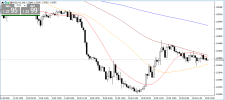
The XAU/USD pair is exhibiting unique movement dynamics. Gold prices have risen above the $4,700 level amid a fragile ceasefire, with tensions escalating again in the past day or two. Gold is currently around $4,733 on the FXOpen chart, up from a low of $4,647.

President Donald Trump officially rejected Iran's counterproposal on May 10-11. Trump called the proposal completely unacceptable. Iran is demanding a gradual lifting of the US naval blockade, continues to demand greater control in the Strait of Hormuz, and rejects several key US conditions regarding its nuclear program.

The latest situation shows that the conflict has not completely subsided. The US rejected Iran's proposal. Tensions in the Strait of Hormuz remain high, and global energy shipping flows are still disrupted. Markets are starting to worry that a prolonged conflict could trigger a new energy crisis.

The current gold market doesn't automatically rise sharply during the Iran war because investors also buy USD as a safe-haven. Rising oil prices due to supply disruptions in the Strait of Hormuz have fueled inflation concerns, and the Fed is likely to remain hawkish. The continued dominance of the US dollar tends to put pressure on gold prices.

Investors are currently adopting a wait-and-see approach, awaiting the release of US CPI and PPI data this week. This data could trigger a potential breakout or a deeper correction in gold. Despite short-term pressure, global central banks' demand for gold remains strong, providing a cushion against drastic falls.

Brent rose above $104 amid concerns about energy supply disruptions in the Strait of Hormuz. Technically, the conflict increases safe-haven demand, but high oil prices tend to increase inflation, prompting the Fed to maintain high interest rates for longer. Rising oil prices and inflation concerns have kept US bond yields high, preventing the USD from weakening significantly, limiting gold's gains.

Gold prices are currently in a volatile phase after previously correcting from their all-time highs. XAUUSD price movement is expected to be within a reasonable range of $4,600 to $4,800. The nearest support is estimated at $4,680, with the next target around $4,650. The nearest resistance is around $4,760 to $4,800. A breakout of this level will open up a further target of around $4,850. This forecast could be wrong. Volatility is expected to remain high during the headline war and ahead of US inflation data.
 
WTI 13 5 2026 H1.png
WTI crude oil prices approach $100, driven by geopolitical uncertainty in the Middle East

XTIUSD price volatility is showing high volatility driven by geopolitical uncertainty in the Middle East. WTI crude oil has now reached $99.28 from $95.40 on the FXOpen chart. Oil prices are currently trending strongly bullish due to several key factors.

The naval blockade in the Strait of Hormuz has caused the market to lose approximately 100 million barrels of supply per week, according to Saudi Aramco, which is the main driver of the price surge.

OPEC+, in its latest meeting on May 3, 2026, agreed to adjust production to maintain market stability. They remain vigilant and ready to respond if supply disruptions worsen. Oil and gold became preferred assets as global stock indices fell due to concerns about war-induced energy inflation.

The US-Iran tensions were highly volatile in May, with contradictory signals. Although President Donald Trump expressed optimism in early May that Iran would agree to abandon its nuclear weapons program, recent talks reportedly reached a deadlock.

Trump called the current ceasefire fragile after the US rejected Tehran's latest proposal. Iran is demanding an end to the naval blockade and the complete lifting of sanctions. The US is reportedly preparing a plan to escort commercial vessels through the Strait of Hormuz, increasing the risk of direct military confrontation if friction occurs in the waterway.

The US government estimates that disruptions to the Strait of Hormuz will continue until the end of May, keeping global supply tight. Reuters reported that global supply losses reached 10-10.8 million barrels per day due to conflicts and export disruptions in the Middle East. These tensions have also driven up US inflation due to soaring energy and fuel prices.

The US has begun releasing its Strategic Petroleum Reserve (SPR) to help stabilize the market. The US government announced on May 11-12 the release of an additional 53.3 million barrels of oil from the SPR to energy companies such as Exxon, Marathon, and Trafigura. This move comes as export disruptions in the Middle East and the risk of a Strait of Hormuz closure have pushed oil prices sharply higher.

The price of WTI crude oil today is estimated to be in a reasonable range of around $93 to $110. As long as the price remains around $99.50, the bias remains bullish. Immediate support is around $97.80, with a strong support target around $93. Resistance is around $103.50, with intermediate resistance targets around $106 to $108. This forecast could be wrong. Current market sentiment is prone to sudden spikes due to geopolitical headlines.
 
GBPUSD 14 5 2026 H1.png
GBPUSD under moderate bearish pressure due to hotter US inflation data

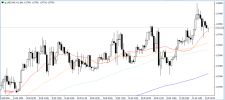
The GBPUSD major currency pair indicates that the market is entering a crucial phase. The current price is around 1.35237 on the FXOpen chart. GBP weakened after US inflation data showed a hotter-than-expected figure. The price fell from a high of around 1.35511 to a low of 1.34848 before rebounding to around 1.35243.

Today's main focus is on the release of UK data, which could determine the Bank of England's next policy direction and the continued impact of US inflation on Fed interest rate expectations.

Today is a crucial day for GBP due to the release of UK GDP data for Q1 2026. The market is awaiting the Q1 GDP growth figure, which is predicted to be +0.6%, a significant jump compared to Q4 2025's growth of only 0.1%.

The Bank of England (BoE) is currently maintaining interest rates at 3.75% and is tending to be hawkish, as inflation is still projected to rise to 3.1%-3.3% for the remainder of the year due to high global energy prices. If today's GDP figure falls below 0.5%, the GBP could come under significant pressure as markets begin to doubt the BoE's ability to raise interest rates amid a slowing economy. Conversely, a strong figure would strengthen the GBP's position against the USD.

The USD is currently strong as markets pare back expectations of a Fed rate cut after US PPI data rose 1.4% month-on-month and annual inflation reached its highest level since 2022. This has pushed USD yields up and supported the US dollar.

The GBP is being pressured by UK political uncertainty and volatility in the UK bond market. However, the GBP is currently receiving some support from expectations that the BoE will likely maintain a tighter policy stance, as energy inflation due to the Iran conflict remains high.

Today's market focus is on UK GDP, US Retail Sales, and Jobless Claims, as well as US-Iran geopolitical developments and oil prices. Rising oil prices could support US inflation and the Fed's hawkish stance.

Today, GBPUSD is expected to be within a reasonable range of around 1.34300 to 1.36200. Immediate support is around 1.34800, with the next support target around 1.33500. Immediate resistance is around 1.36200, with the next resistance target around 1.37800. This forecast could be wrong.
 
NZDUSD 15 5 2026 H1.png
New Zealand Dollar Weakens Amid Domestic Economic Concerns

The NZDUSD currency pair has trended toward bearish candles over the past three days, indicating a weakening New Zealand dollar against the US dollar. The current price of NZDUSD is around 0.59105 on the FXOpen chart, down from a peak of around 0.59910 established on May 6, 2026.

The New Zealand dollar is under significant pressure due to a combination of weak domestic data and a strengthening US dollar.

This week's RBNZ report highlighted concerns about rising business input costs due to surging global energy prices. This has increased the cost of living, squeezing people's purchasing power.

The annual inflation expectations survey jumped sharply from 2.59% to 3.41%. While this would normally lead to an interest rate hike, the market is more focused on the sharp decline in GDP growth projections from 2.03% to 1.58% and the rising unemployment rate.

The market is beginning to split over whether to raise interest rates to curb inflation or to maintain the policy stance to support slowing economic growth. This uncertainty makes the NZD less attractive as a risk asset.

On the other hand, US economic data remains quite resilient. Recently released US retail sales data showed a 0.5% increase, exceeding expectations, indicating that the US consumer remains very strong despite inflationary pressures.

The April US CPI released earlier this week showed a 3.8% year-on-year figure, higher than the 2% target. This reduces the likelihood of an imminent Fed interest rate cut, which automatically maintains the strength of the USD.

Meanwhile, the meeting between Donald Trump and Xi Jinping provided new hope for the global situation. Although no major agreement was reached, several key points emerged.

Both sides agreed to maintain the stability of US-China relations and avoid open escalation of conflict, particularly over Taiwan and the Iran war. For China, the Taiwan issue remains a red line, and it has warned of potential conflict if the US increases military support for Taiwan.

Trump and Xi discussed cooperation in trade, artificial intelligence (AI), energy, and the reopening of the Strait of Hormuz. China is reportedly interested in increasing US oil purchases to reduce dependence on the Middle East, although no final agreement has been reached. Xi also signaled that China would not supply weapons to Iran, something the US viewed positively.

The market considered the meeting's moderately positive outcome, despite the lack of a major agreement, but US-China tensions eased slightly. The USD and stock markets stabilized due to easing trade war concerns. However, relations between the two countries are still considered fragile because Taiwan remains a major flashpoint, and the US technology and chip rivalry remains unresolved. Many major trade tariffs remain unresolved, and the Iran conflict continues to exert global geopolitical pressure.

The forecasted price movement for NZDUSD is around 0.3850 to 0.5940. Immediate support is around 0.5890, with a further support target around 0.5850. Immediate resistance is around 0.5940, with a further resistance target around 0.5975. This forecast could be incorrect.
 
WTI 18 5 2026 H1.png
WTI oil prices reached above $100 amid persistent Hormuz supply risk premium

US WTI oil continued its rally on Friday, reaching 101.50, according to the FXOpen chart. The XTI/USD (WTI Oil) pair remains influenced by developments in the US-Iran conflict and the condition of oil distribution channels in the Strait of Hormuz. Market sentiment remains bullish, but volatility remains high.

The fundamental drivers of XTIUSD today are the lack of a clear resolution to the US-Iran conflict, while market concerns remain about disruptions to Middle Eastern oil supplies. The Strait of Hormuz remains a key focus for the energy market, as it handles approximately 20% of global oil.

The US government and its allies have begun releasing strategic oil reserves to stem price spikes, preventing the oil rally from becoming too extreme. Rumors of new diplomacy and the possibility of a gradual reopening of shipping lanes have led to occasional profit-taking in the market.

Global energy inflation data has begun to rise due to high oil prices, supporting high oil prices.

The US-Iran conflict remains unresolved. Escalation reportedly flared again after a fragile ceasefire. Iran announced it would implement formal tolls in the Strait of Hormuz. The US military reported that the naval blockade of Iranian ports remains tight, with the US diverting 78 commercial vessels and crippling four ships to pressure Iran.

Intelligence reports this weekend indicated that the US and Israel are finalizing intensive preparations for renewed airstrikes on Iran, possibly as early as this week. Military options include bombing vital infrastructure, deploying ground commandos, and even plans to seize Kharg Island, a major oil export hub in the Persian Gulf.

President Trump issued a stark warning that Iran faces a very difficult time if a peace agreement is not reached soon. Meanwhile, Pakistani Interior Minister Mohsin Naqvi, a Pakistani envoy, recently arrived in Tehran to try to re-establish the stalled negotiations.

The threat of an attack on Kharg Island has sparked concerns about a massive risk premium. If it were to occur this week, it would further choke global oil supplies, triggering an exponential price surge. The UAE's withdrawal from OPEC on May 1st to allow for flexible independent production still leaves uncertainty about the oil cartel's unity in responding to the global crisis.

XTIUSD is currently trading in a psychologically high area, with commodity forecasters like Polymarket and Robinhood predicting the price will remain above $100 this week. WTI oil prices are estimated to be in the $95.00 to $106.00 range. The nearest support is around $98.50, with the next around $95.00. WTI oil resistance is estimated at around $102.00 to $106.00. This forecast could be wrong.
 
SILVER 19 5 2026 H1.png
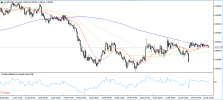
Silver is attempting a bullish consolidation after sharp pressure last week

Silver prices are attempting to recover after sharp pressure last week. Silver is currently hovering around $77,658 on the FXOpen chart. Previously, silver plummeted to around $73,868 due to a strengthening US dollar and rising US bond yields. Silver's also driven by reports of potential progress in US-Iran peace talks. Rumors suggest the US may ease crude oil sanctions if Iran freezes its long-term nuclear program.

The positive momentum from the 90-day tariff reduction between the US and China provides a cushion for silver, keeping the ratio within a tight range.

Current market focus is on the direction of the Fed's interest rate, the movement of the USD and US bond yields, and global industrial demand, particularly from China and the green energy sector.

Current market expectations suggest the Fed will remain hawkish, keeping the USD and US bond yields relatively strong. This puts pressure on silver as a non-yielding precious metal.

However, silver remains supported by very strong industrial demand from solar panels, EVs, AI, data centers, and electronics. The global supply deficit persists for the sixth consecutive year.

Recently, a UBS report significantly cut its annual silver investment demand projection from 400 million ounces to 300 million ounces. UBS predicts the global deficit will narrow to 60-70 million ounces. This is due to increased mine supply and a 19% year-on-year reduction in silver use in the photovoltaic industry due to perceived overpriced silver prices.

Heating US inflation data put pressure on silver. The April CPI, which came in at 3.8% above expectations, coupled with a surge in the PPI, has led the market to reduce expectations for a Fed rate cut this year.

According to CME FedWatch, the probability of the Fed holding rates is at 66.8%, while bets for an additional rate hike before the end of the year have jumped to 32.2%. This triggered a strengthening of the US dollar index (DXY) and US Treasury yields, which structurally put pressure on non-yielding assets like silver.

Today, the silver price is estimated to be within a reasonable range of $75.20 to $79.80. The nearest support is around $76.60, with the next target around $75.20. The nearest resistance is around $79.66, with the next target around $81.20. This forecast could be wrong.
 
GBPUSD 20 5 2026 H1.png
GBP/USD shows shifting sentiment ahead of CPI data release

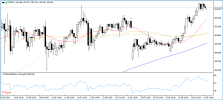
Recent GBPUSD price movements have been under pressure from high volatility. After briefly holding at a key psychological level, recent price dynamics indicate a shift in sentiment, triggering a price correction in GBP.

Last week, GBPUSD tended to be bearish. The price touched a low of 1.33022, then rebounded to 1.34495, and is currently around 1.33989 on the FXOpen chart. Today, the market is focused on the release of key UK inflation data. The Office for National Statistics will release the latest inflation data (CPI). Given that inflation climbed to 3.3% the previous month due to soaring fuel prices stemming from the Middle East conflict, today's release is crucial confirmation of the Bank of England's policy direction. High domestic and service sector inflation has forced the Bank of England to maintain high interest rates for longer, which theoretically supports the sterling but also slows economic growth.

The UK political crisis is also a market focus, becoming a stumbling block for the GBP. Prime Minister Keir Starmer faced immense pressure to resign after the Labour Party's landslide defeat in local elections against Reform UK. Speculation that Manchester Mayor Andy Burnham would take over the leadership fueled fiscal concerns. Burnham's plans to cut income taxes and increase debt for defense spending prompted foreign investors to dump government bonds, forcing yields to soar and depressing the pound sterling due to the risk premium.

Meanwhile, the US dollar regained strength, as solid US economic data and the narrative of US exceptionalism triggered a reversal in the US dollar index (DXY). Global risk-off sentiment due to political uncertainty in Europe prompted market participants to return to the USD as a safe-haven.

The Fed's policy in 2026 is the main anchor supporting the rise of the US Dollar Index, and is also the reason why GBPUSD has struggled to rebound to its highs. After implementing a series of interest rate cuts at the end of last year, the Fed's stance has shifted to a more cautious stance this year due to the heating up of the global macro environment. The aggressive move to continue raising interest rates was forced to be halted as the US economy faced two major headwinds. US inflation crept up to 3.3% due to the conflict with Iran, which disrupted energy prices, and the impact of US-imposed trade tariffs. As inflation drifted away from its ideal 2% target, the Fed opted for a defensive stance. Although the US labor market is not particularly strong, it is still considered resilient enough to prevent the Fed from rushing to cut interest rates.

Technically, GBPUSD recently broke down after failing to hold above the 1.3550 zone. However, buyers are attempting to resist around the psychologically strong 1.3300 level, which is a crucial defensive line for GBPUSD. If broken, a deeper decline towards the intermediate support area around 1.31500 to 1.31400 is likely. The daily range is expected to fluctuate between 1.3300 and 1.34300. This forecast could be wrong.
 
AUDUSD 21 5 2026 H1.png
AUD/USD Recovers Ahead of FOMC Minutes

The AUD/USD commodity currency pair exhibited very interesting dynamics, with both currencies supported by hawkish sentiment from their respective central banks. Awaiting the FOMC minutes, the Australian dollar recovered to around 0.71744 after plunging to 0.70869 on the FXOpen chart.

The Australian dollar received a strong boost following the release of the RBA's May 2026 Statement on Monetary Policy. Due to oil supply disruptions in the Strait of Hormuz, Australian domestic inflation spiked sharply. The headline CPI for March was 4.6%, the highest since 2023. The RBA estimates that inflation will only peak at 4.8% in mid-2026.

To dampen inflation expectations, the RBA has raised its benchmark interest rate to 4.35%. The RBA's internal projections and market expectations now predict the cash rate will continue to climb to 4.70% by the end of 2026.

Although consumer sentiment has been hit by the cost of living, Australia's labor market remains very tight, with unemployment at a low 4.3% and GDP growth of 2.6% annually. This provides the RBA with room to remain aggressive.

On the other hand, the US dollar is resilient thanks to solid economic performance, supported by booming investment in the AI sector. US core inflation (Core PCE) unexpectedly surged to an annual rate of 4.3% at the start of the year. In addition to the effects of energy prices, US inflation was driven by rising prices for computer memory components due to AI and tariffs on goods.

The FOMC has so far maintained the cash rate range of 3.50%-3.75% throughout 2026. Recent economic data has made policymakers reluctant to commit to any imminent easing. Market expectations for an interest rate cut have been pushed back to the end of the year, December 2026.

The market is currently awaiting the release of the FOMC minutes. This document will summarize the proceedings of the Fed's internal meeting on April 28-29, which proved to be far more tense than Jerome Powell's press conference. This release is crucial because it outlines the biggest internal rift since 1992, just before Kevin Warsh was officially inaugurated as Fed Chair on May 15.

The fundamental battle for AUDUSD today is the RBA's interest rate hike versus persistently high US interest rates. Because Australian commodities are positively impacted by rising global raw material prices, the AUD tends to have a short-term tactical advantage against the USD. However, geopolitical uncertainty in the Middle East could at any time trigger a risk-off movement, benefiting the USD as a safe-haven.

Based on the latest closing price and current market volatility, AUDUSD is estimated to be within a reasonable range of around 0.70950 to 0.72100. The nearest support is around 0.7095, with the next target around 0.7050. The nearest resistance is around 0.71850, with the next target around 0.7210. This forecast could be wrong.
 
USDCAD 22 5 2026 H1.png
USD/CAD trending slightly bullish amid optimism over US-Iran negotiations

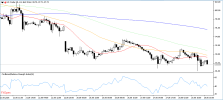
Today's USDCAD price movement is dominated by mild bullish sentiment, with the current price hovering around 1.37785 on the FXOpen chart. The price has drawn a bullish candle with a fairly long body and a short shadow at the top of the candle.

The main factors driving USDCAD price movements today are primarily related to Canadian inflation, geopolitical tensions, and sentiment surrounding today's economic data releases.

The Canadian dollar came under significant selling pressure after the release of Canadian CPI data earlier this week showed softer results, reinforcing market expectations that the BoC would maintain interest rates as inflation is starting to come under control.

The US Dollar Index (DXY) received a boost as a safe-haven asset due to geopolitical tensions in the US-Iran war. Furthermore, the FOMC meeting minutes released midweek showed that Fed officials were in no rush to lower the benchmark interest rate, wanting to ensure inflation truly fell to the 2% target.

Today's market focus is on the release of March/April Canada retail sales data and the producer price index. If Canadian retail sales data is worse than expected, the Canadian dollar could weaken further, pushing the USD/CAD higher. Consensus estimates modest growth in the 0.6% range.

In the US, focus will be on the final University of Michigan (UoM) Consumer Sentiment data, which is expected to be at 48.2, and a speech by Fed Governor Christopher Waller. A hawkish statement from Waller could provide additional fuel for the USD.

Latest updates on the US-Iran war. Iran is reviewing the latest US proposal to de-escalate the conflict. Regional mediation efforts are underway, including involving regional countries. The ceasefire remains in effect, but there have been occasional accusations of violations and limited incidents. The oil market remains highly sensitive, with prices falling briefly on hopes of peace, but uncertainty keeps volatility high.

The situation remains extremely tense as both sides trade threats. Trump warned that if a deal fails in the next few days, the US is ready to launch a military strike. The IRGC has threatened to expand the war beyond the Middle East if they are attacked again.

Technically, USDCAD is attempting to maintain its position above the 50-day moving average (MA). The USDCAD's reasonable range is estimated to be around 0.36600 to 1.38300. Immediate support is around 1.3722, with the next target at 1.36600. Immediate resistance is around 1.38000, with the next target at around 1.38300. This forecast could be wrong
 
SILVER 25 5 2026 H1.png
XAG/USD Amidst Geopolitical Sentiment and US Monetary Policy

Silver prices are trending neutral to mildly bullish today, with geopolitical sentiment and pressure from US interest rates still hampering silver. The latest spot price is around 75.44 on the FXOpen chart after a correction from its highest level.

The biggest pressure on silver currently comes from shifting market expectations regarding the Fed's interest rate policy. The latest release of the FOMC minutes showed that central bank officials remain hawkish, due to high US inflation at 4.6%, driven by surging oil prices. Because silver is a non-yielding asset, sustained high interest rates or the potential for further increases make the opportunity cost of holding silver more expensive, triggering a sell-off from its peak.

Silver price fluctuations in recent days have been highly sensitive to tensions in the Middle East. The postponement of planned US airstrikes and reports of continued diplomatic discussions with Iran temporarily dampened demand for the US dollar as a safe-haven currency. However, the still-stalled negotiations regarding the nuclear program and the Strait of Hormuz have kept the market prepared for sudden risks.

According to recent reports, the US and Iran are nearing an initial framework for a deal, including the reopening of the Strait of Hormuz and a 60-day temporary ceasefire to allow for more detailed negotiations.

The biggest obstacle remains Iran's nuclear program. Conflicting reports have emerged, with some US officials claiming progress on uranium, while Iranian sources say no agreement has been reached on the surrender of its stockpile of highly enriched uranium.

Domestically, both countries are also facing internal criticism. In the US, there is criticism from those who consider the agreement too lenient, while in Iran, there are concerns that the concessions are too large.

In terms of the industrial supply-demand gap, despite macro-monetary pressures, silver's physical fundamentals remain strong. According to the Silver Institute, the solar panel and electric vehicle component industries will continue to record demand through 2026. Meanwhile, global mining output has experienced consecutive supply deficits, providing a strong floor for further silver declines.

Technically, the XAGUSD price is consolidating below the 50- and 100-day moving averages (MAs), but remains well above the 200-day moving average (MA), which projects long-term sentiment.

Silver price movement is expected to remain within a reasonable range of around $74.00 to $77.50. Investors will be wary of US economic data releases and the Fed's statement throughout the New York session, as silver's volatility is currently more aggressive than gold's. The nearest support is around $73.10, with the next target around $70.00. The nearest resistance is around $77.00, with the next target around $81.20. This forecast could be wrong
 
NZDUSD 26 5 2026 H1.png
NZD/USD at the crossroads of global sentiment and monetary policy

The Kiwi (the NZD) traded within a narrow range between 0.58623 and 0.58817 on May 25, 2026. The price formed a Doji candlestick, with the opening and closing prices only a few pips apart. The NZD/USD price is currently hovering around 0.58720 on the FXOpen chart, moving below the middle band line.

Today's price movement of the NZD/USD commodity currency demonstrates an interesting dynamic, as the pair sits at the crossroads of global sentiment and preparations for a crucial domestic monetary policy announcement.

Global markets are currently in a wait-and-see mode ahead of the RBNZ's interest rate announcement tomorrow afternoon. The RBNZ is expected to maintain its benchmark interest rate at 2.25%, but the market is anticipating a very hawkish statement. Relatively high inflation expectations and global energy prices have led the market to project a 25-basis-point rate hike in July at nearly 80%-90%.

The NZD gained additional positive sentiment from domestic data. The release of April's trade balance data showed a record-high surplus due to solid export growth. This provided a cushion for the NZD amidst slowing domestic economic momentum.

Commodity currencies like the NZD typically benefit from improving global market risk appetite. This was fueled by optimism that a peace deal between the US and Iran is nearing completion, which could reopen the Strait of Hormuz. This easing of safe-haven tensions has eased buying pressure on the USD.

Nevertheless, the USD remains relatively resilient as the market still considers the possibility that the Fed will not rush to cut interest rates anytime soon, keeping US yields attractive.

Technically, the NZD/USD pair is just above the 50-day moving average (EMA) on the daily chart, and the RSI is in the 48-day range, reflecting limited upward momentum before any new catalysts emerge.

The NZD/USD pair is expected to move within a reasonable range of 0.58000 to 0.5970. The nearest support is around 0.5830, with the next target around 0.5810. The nearest resistance is around 0.5885, with the next target around 0.5910. This forecast could be wrong.
 
USDJPY 27 5 2026 H1.png
USD/JPY Breaks Through 159.00, Wary of Intervention

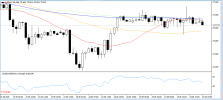
The current USD/JPY price movement is generally bullish, with the price breaking above the psychological level of 159.00. The price at the time of writing was 159.313 on the FXOpen chart, drawing a long-bodied bullish candle with almost no shadow.

Several key macroeconomic factors related to the safe-haven USD/JPY currency pair are currently driving the movement. Recent data showed the Bank of Japan's new core inflation metric jumped to 2.8%, above its 2% target. Bank of Japan Deputy Governor Ryozo Himino took a hawkish stance and stated that the current benchmark interest rate of 0.75% should be raised to a more appropriate level to maintain market confidence. Market participants now estimate there is an approximately 80% probability of the Bank of Japan raising the interest rate to 1.0% at its June 15-16 meeting.

Despite rising Japanese inflation, the yen failed to strengthen due to external factors. Geopolitical tensions in the Middle East triggered a rise in oil prices, which widened Japan's trade deficit, fundamentally weakening the Yen.

On the other hand, the US dollar strengthened amid geopolitical tensions between the US and Iran. Global uncertainty and concerns about renewed inflation due to energy prices made the US dollar sought after as a safe-haven asset. This triggered a broad-based strengthening of the dollar against other major currencies, including the Yen.

The Fed's monetary policy, which tends to keep its benchmark interest rate high, supported the strengthening of the USD. Comments from several Fed officials indicated that if inflation is contained or rises again due to a surge in commodity prices, such as oil, due to geopolitical tensions, the option of a single interest rate hike remains open in the second half of the year, although this is not the main scenario.

US economic data, such as the Non-farm Payrolls (NFP) and consumer spending, have proven more resilient than expected. This strong economic condition gives the Fed room to be patient and focus on combating the risk of new inflation without worrying about triggering a recession in the near future.

As long as the Fed maintains a higher rate for longer, global capital flows will flow more into the USD in search of higher yields. This will fuel USDJPY's push to test the 159.00-160.00 area.

On the one hand, the weakening JPY will be a focus for BoJ officials. If the price reaches the psychological level of 160.00, the market will be wary of the possibility of Japanese intervention, which could cause a sudden weakening of the USD.

USDJPY is expected to move within a reasonable range of 155.00 to 160.00. The nearest support is around 158.24, with the next support target around 155.47. The nearest resistance is around 159.60, with the next target around 160.00. This forecast could be wrong.
 
USDCAD 28 5 2026 H1.png
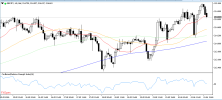
USD/CAD Extends Gains, Targets 1.39000

The USD/CAD commodity currency pair is showing interesting dynamics with a mild bullish trend. The last candlestick drew a long-bodied bullish candle with a slight shadow at the top of the candle. The price reached a high of 1.38518 on the FXOpen chart, targeting the 1.39000 resistance level.

The weakening Canadian dollar was due to the strengthening of the USD and pressure on the CAD due to weakening oil prices and US-Canada trade concerns.

The USD remains relatively strong as the market begins to reduce expectations of a Fed rate cut. Several Fed officials remain hawkish due to the risk of energy inflation and geopolitical tensions. The US Dollar Index (DXY), which measures the USD's performance against six major currencies, is currently at 99.215, slightly up from its previous low of 98.915.

The Canadian dollar is under pressure due to a sharp drop in oil prices following the emergence of the possibility of a de-escalation of the US-Iran conflict. The CAD is highly sensitive to oil prices as Canada is a major energy exporter. WTI oil prices have fallen to a low of 86.82 due to expectations of an easing of the conflict and the reopening of the Strait of Hormuz to commercial trade.

The market is also concerned about the US-Mexico-Canada USMCA negotiations, which are increasing pressure on the Canadian dollar. The Bank of Canada (BoC) is expected to remain dovish and likely hold interest rates at its next meeting as Canadian economic growth begins to slow.

Today's market focus is primarily on the release of US economic data. First-quarter GDP is expected to grow 2.1% compared to the previous period's 0.5%. If the actual data is strong, it could provide a boost to the USD. The Core PCE Price Index is projected to reach 3.3%. A higher-than-expected figure will reduce the likelihood of an interest rate cut in the near future. Unemployment claims will also be monitored by the market to analyze the resilience of the labor market.

Technically, USDCAD is above its 50-day moving average (MA), indicating that buyers still hold short-term control. USDCAD is estimated to be in a reasonable price range of around 1.37100 to 1.38900. Immediate support is around 1.37800, with the next target around 1.37200. Immediate resistance is around 1.38500, with the next target around 1.39000. This forecast could be incorrect.
 
  • 👍
Reactions: Richard64
WTI 29 5 2026 H1.png
WTI oil prices fluctuate amid sentiment about peace diplomacy and military escalation on the ground

The global crude oil price (XTI/USD), or WTI, has fluctuated significantly this week due to the intense tension between hopes for peace and military escalation on the ground. US Crude oil prices have fallen to a low of $86.33 from a previous peak of around $104.56. WTI oil prices are now hovering around $87.97 on the FXOpen chart, drawing a doji candlestick reflecting the tug-of-war between buyers and sellers.

The current oil price movement is driven purely by the risk premium for a US-Iran war and supply chain dynamics in the Strait of Hormuz, beyond US domestic economic data.

WTI oil prices previously surged sharply, triggered by the IRGC's retaliatory attack on a US military base. This was in response to a previous US airstrike near Bandar Abbas that destroyed an Iranian missile site and minesweeper.

Oil prices then plummeted 5.5% to a six-week low after Axios and US Secretary of State Antony Blinken/Marco Rubio confirmed the existence of a draft peace deal awaiting President Donald Trump's final approval.

Meanwhile, US inventory data, based on the latest weekly report, showed that US commercial crude oil inventories fell by -3.327 million barrels, slightly above market expectations of -3.620 million barrels. This significant decline also occurred at the key Cushing storage hub, which dropped -2.794 million barrels. This decline in stocks structurally supports oil prices remaining high above the psychological level of $85.

The latest update on the US-Iran conflict indicates that the conflict is not yet fully resolved. Iran attacked US military bases in the Gulf in retaliation for the latest US attack. Meanwhile, the US is increasing pressure and sanctions on Iranian shipping authorities. However, international mediators are still trying to push for a temporary peace agreement and the reopening of the Strait of Hormuz.

Despite these peace efforts, the market currently perceives the risk of open war as not yet gone. This causes oil prices to tend to rise rapidly and fall rapidly when new rumors emerge.

A recent report from the Center for Strategic and International Studies (CSIS) stated that the US has fired over 1,000 Tomahawk missiles and hundreds of THAAD/Patriot interceptors during this war. The US will need at least until 2029-2030 to restore its advanced weapons stockpile, putting political pressure on the White House to quickly finalize a peace deal.

WTI oil prices are projected to be volatile today, with a reasonable range between $86.10 and $94.50. The nearest support is around $87.00, with the next target around $86.00. The nearest resistance is around $92.00, with the next target around $94.50. This forecast could be wrong.
 
View attachment 28884

Gold soared amid US economic data.

Yesterday gold prices extended their gains amid mixed US economic data. The price of gold rises drawing a body bull's candle with a slight shadow on the top and bottom of the candle. The bullish candlestick formed a low of 2403 and a high of 2450.

Data released yesterday, ADP Non-Farm Employment Change, showed that the actual data was 122k, smaller than the forecast of 147k with the previous revision being 155k. There is a difference between the actual data and the forecast of 25k, which shows an unfavorable value for the USD. ADP (Automatic Data Processing, Inc.) is economic data that measures the estimated change in the number of workers in the previous month, excluding the agricultural and government industries.

Meanwhile, the Employment Cost Index data shows that the actual data is 0.9% smaller than the expected 1.0% from the previous data revision of 1.2%. This economic data is considered important because It is a leading indicator of consumer inflation - when companies pay more for labor, the higher costs are usually passed on to consumers.

In other economic data, Chicago PMI showed actual data of 45.2, slightly greater than the expected 44.8 with the previous data revision of 47.4.

Pending Home Sales data shows actual data of 4.8% greater than expected 1.4% with previous data revision of -1.9%. This data measures changes in the number of contract homes that will be sold but are still waiting for the transaction to close.

Meanwhile, the Fed still left interest rates unchanged at 5.50%, even though Powell said he would cut interest rates once this year, predicted in September. According to the FedWatch tool from CME, the probability of the Fed cutting interest rates in September rose to 90.5%.

Today investors are still waiting for other inflation data, Unemployment Claims, and Manufacturing PMI.
Weak labor data and rising rate-cut expectations continue to give gold plenty of support.
 
SILVER 1 6 2026 H1.png
Silver Prices in a Healthy Consolidation Phase, $75-$76 Range

Silver prices have shown interesting movement after a strong surge to around $89 some time ago. Silver prices are currently consolidating and undergoing a fair correction in the $75-$76 per troy ounce range. The FXOpen chart shows silver prices over the past two weeks hovering between $71 and $78, consolidating near the middle band.

Silver price movements are currently influenced by the tug-of-war between three main factors: geopolitical conditions, US inflation, Fed policy, and industrial demand.

Global markets are currently responding positively to news of a 60-day ceasefire extension between the US and Iran, including the reopening of the Strait of Hormuz. This has triggered a sell-off in traditional safe-haven assets like the USD and limited the precious metal's short-term rally, as investors tend to shift to riskier assets.

THE US PCE Index data last month showed inflation accelerating at its fastest pace in three years. This has fueled speculation that the Fed could raise interest rates in late 2026 or early 2027. Because silver offers no yield, this speculation of high interest rates has weighed on the bullish momentum for silver.

Industrial demand for silver remains strong from solar panels, electric vehicles, electronics, and AI manufacturing. Meanwhile, global silver supply remains relatively tight compared to long-term demand. The structural imbalance between tight mining supply and high global green industry demand has kept silver's long-term foundation solid this year.

This week, traders' primary focus will be on US employment data and service/manufacturing sector activity, which could influence Fed interest rate expectations and directly impact the USD and precious metals like silver. Traders will primarily focus on Friday's Nonfarm Payrolls (NFP), which often impacts financial markets. Current market consensus estimates May employment growth of around 75,000-115,000 new jobs, with the unemployment rate expected to remain around 4.3%.

Silver price movements are sensitive to the performance of the USD. The US Dollar Index (DXY) fell slightly to 98.942 last Friday, causing silver prices to fluctuate in the short term.

Silver prices are projected to remain within a reasonable range of around $70 to $86.50. Nearest support is around $72, with the next target around $70. Immediate resistance is around $78, with the next target around $81.50. This forecast could be wrong.
 
GBPJPY 2 6 2026 H1.png
GBP/JPY Bullish Amidst Monetary Policy Clashes and Geopolitical Sentiment

GBP/JPY has currently risen to its highest peak of 214.999 since May 2026. The pair is in a bullish phase but remains vulnerable to a correction as the market weighs two key factors: relatively high UK interest rates and the potential for a Japanese interest rate hike in the coming months, alongside geopolitical sentiment in the Middle East.

The Bank of Japan currently maintains its interest rate at 0.75%. However, Japan's first-quarter GDP growth surged strongly by 0.5% year-on-year, driven by resilient domestic consumption and exports. This data gives the BoJ the green light to tighten.

BoJ Deputy Governor Ryozo Himino emphasized that Japan's real interest rates remain very low. The BoJ is committed to raising its benchmark interest rate at its June 16 meeting to curb inflation stemming from the Middle East conflict, which has driven up global oil prices.

The Japanese Ministry of Finance recently confirmed a record-breaking foreign exchange intervention to stem the JPY's decline. The USD/JPY psychological level near 160 makes the market wary of sudden selling in cross pairs like GBP/JPY if the JPY suddenly strengthens.

Due to global geopolitical conflict, the UK is facing another energy price shock. Ofgem recently announced a 5% increase in electricity price ceilings and a 24% increase in gas prices, effective July. This situation has sparked concerns that UK inflation will spike again.

KPMG cut its 2026 UK economic growth forecast to just 0.8%, down from 1.4% the previous year. This energy shock puts the Bank of England (BoE) in a tight spot. On the one hand, they must raise interest rates to combat inflation, but on the other hand, the domestic economy is weakening.

Although the Business Confidence Index improved to -53 in May from -64 previously, the majority of business owners remain deeply concerned about the high tax burden and the global economic slowdown.

This week, the market will also be watching NFP and CPI data, the BoJ meeting in mid-June, developments in oil prices, and the geopolitical situation in the Middle East, which will affect Japanese inflation.

The GBPJPY intraday range forecast is around 214.00-216.00. Immediate support is around 214.00, with the next target around 213.00. Immediate resistance is around 215.20, with the next target around 216.00. This forecast could be incorrect.