Technical Analysis Today

GBPUSD 15 1 2026 H1.png
GBP/USD moves near the consolidation line

The GBPUSD movement this week shows limited gains. After falling to 1.33907, the price attempted a rebound to 1.34948, but failed to extend the gains and fell to 1.34173. On Wednesday, January 14th, the GBPUSD drew a bullish candle with a smaller body than the previous bearish candle. The GBPUSD price movement focused within a range near the middle band line, which is the consolidation line for price divergences.

Fundamental factors influencing the GBPUSD price movement from the UK perspective include UK borrowing costs, interest rate policy, and economic data.

Although UK government bonds fell to their lowest level in over a year, reflecting market expectations of a potential BoE interest rate cut, this is typically bearish for the pound as lower yields tend to depress capital inflows.

The Bank of England (BoE) sees inflation approaching its 2% target, making further interest rate cuts likely this year, which could weaken the GBP against the USD in the short term.

UK economic growth is expected to slow, and data through this week, including GDP, could disappoint, reinforcing the monetary easing narrative.

From a USD perspective, US economic data continues to show relative strength, leading to expectations that the Fed's monetary policy could remain tighter than the BoE's, which in turn could support the USD.

Net long dollar positions decreased, reflecting traders' reduced bearishness on the USD, but still showing fundamental support for the USD relative to the GBP.

Today, traders will focus on the important economic data schedule for the GBP and USD. UK data focuses on monthly and annual GDP. This is a key indicator of UK economic growth, crucial for GBP sentiment. Weak growth could strengthen expectations of a BoE interest rate cut, which could pressure the GBP. Besides GDP, other data that may have an impact include the trade balance and industrial and manufacturing production, which provide signals about real UK activity.

In the New York session, traders will focus on manufacturing and employment data. If US jobless claims are higher than expected, the USD could weaken. Philadelphia Fed Manufacturing Index and Empire State Manufacturing Index: These two indexes measure manufacturing conditions in key US regions. Figures above 0 indicate expansion; positive readings can support the USD. Retail sales measure the strength of US household consumption. Strong data will strengthen the case for the Fed to delay interest rate cuts, which supports the USD.

GBPUSD price range forecast: nearest support is around 1.34000-1.34200. Lower support is around 1.33200-1.33500. Nearest resistance is around 1.34600. The next resistance, the upper limit of the current price range, is around 1.35000-1.35200. The daily range is estimated between 1.32970 and 1.3566, with a pivot point around 1.34320.
 
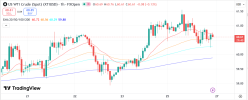
WTI 16 1 2026 H1.png
WTI oil prices retreat amid easing geopolitical tensions and oversupply

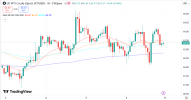
WTI oil prices briefly rose to a high of 62.17 on January 14, 2026, but failed to sustain its bullish momentum and retreated to a low of 58.78 the following day. The price drew a long-bodied bearish candle with almost no shadow, forming a high of 60.94, a low of 58.78, and a close of 58.82.

Current market sentiment is bearish, driven by several key factors, such as easing geopolitical tensions, oversupply, and US dollar sentiment.

Oil prices had surged due to concerns about a US-Iran military conflict. However, Donald Trump's statement indicating that the risk of a direct attack had subsided removed the risk premium from oil prices. This triggered a nearly 5% drop to 59 in yesterday's trading.

The capture of President Nicolas Maduro by US forces in early January created political uncertainty. Although Venezuela has substantial oil reserves, its current production is below 1 million barrels per day, so the direct impact on global supply remains limited.

The International Energy Agency (IEA) projects a supply surplus of around 3.8 million barrels per day in 2026. This is because US production remains high, while OPEC+ has begun to reduce its production, which has put structural downward pressure on prices.

Political tensions between the US government and the Federal Reserve have fueled uncertainty, impacting US dollar fluctuations, sometimes leading investors to turn to gold rather than energy commodities.

According to the latest EIA report, US crude oil inventories are in the range of 419 to 425 million barrels. Despite an unspecified decrease of 3.8 million barrels in the first week of January, the overall figure is considered adequate. Delivery inventories at Cushing, Oklahoma, reportedly increased by around 700,000 barrels, which technically puts negative pressure on WTI futures prices.

The combination of high US domestic inventories and a global supply glut is creating a super glut, also known as a supply glut.

Analysts such as Goldman Sachs project that the average WTI price in 2026 could fall to around $52 per barrel if the buildup continues without drastic cuts from major producers.

Fundamentally, geopolitical issues such as those in Venezuela, Greenland, Denmark, and Iran tend to be temporary impact. Traders often employ a sell-on-strength strategy, selling when prices rise temporarily as oil inventories remain high.

The forecasted WTI oil price range: nearest support is around $58.00-$59.00 after the massive sell-off. Key support is projected to be around $54.00-$57.00. Nearest resistance was around $61.50-$62.80 before the price crash. Key resistance is projected to be around $65.00-$68.00 if a new escalation occurs in the Middle East or Venezuela.
 
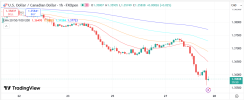
USDCAD 19 1 2026 H1.png
CAD Awaits Crucial Data While US Banks Close

Commodity currency, USD/CAD price movement on Friday last week followed a bullish candle with a shadow at the top of the candle. The price formed a high of 1.39289, a low of 1.38839, and a close of 1.39094.

Overall, USD/CAD is predicted to experience unique volatility today, as the US market is closed for Martin Luther King Jr. Day. On the other hand, Canada will release crucial economic news related to inflation, which could trigger CAD movements.

The Martin Luther King Jr. Day holiday means US banks are closed today, which means trading volumes will likely be lower than usual. The USD's movement is likely to remain stagnant unless there is an unexpected statement from a political figure at an international forum that garners a global market response.

President Donald Trump is scheduled to attend the World Economic Forum (WEF) in Davos today. Comments on trade tariffs or the ongoing Greenland issue could influence market sentiment.

The US dollar remains relatively strong against other currencies due to expectations that the Fed will hold interest rates at its January meeting, and the lack of strong near-term rate cut signals, which has kept pressure on the USD. The US CPI rose as expected, reinforcing the assumption that the Fed is in no rush to cut interest rates this month, which typically supports the USD.

The US dollar index (DXY) is showing bullish sentiment above its 50-day moving average (MA), reaching a high of 99.483 on Friday, January 16, indicating that the USD is still relatively strong.

Canada will release inflation data today, which could potentially be a driver for the CAD. Consensus estimates annual inflation at 2.2%. If the CPI data exceeds consensus, this could support the CAD by reducing the likelihood of the BoC cutting interest rates in the near future. Conversely, if the CPI data falls short of consensus, this could pressure the CAD by confirming an economic slowdown.

As a commodity currency reliant on oil exports, the CAD is also affected by fluctuations in oil prices. WTI prices are currently in the range of $58-$62 per barrel. Concerns about the normalization of Venezuelan oil production under US influence have placed additional pressure on the competitiveness of Canadian heavy oil, fundamentally limiting CAD strength.

The CAD has weakened several times due to weak domestic economic data and a narrower bond yield differential compared to the US, making Canadian investment yields less attractive.

US policy uncertainty, including Fed dynamics and geopolitical volatility, is likely to remain the main driver of risk sentiment. When risk-off increases, the USD, as a safe-haven, is supported. However, there is also bullish sentiment in the CAD stemming from expectations of a recovery in trade relations (UMSCA), which could reduce upward pressure on USDCAD in the medium term.

Today's price range forecast, based on technical data, shows the nearest support is around 1.38700, with the next support target around 1.37800 if a major sell-off occurs in the USD. The nearest resistance is around 1.39850, with the next resistance target around 1.40600. Price forecasts are subject to error due to sudden changes in market dynamics.
 
GBPJPY 20 1 2026 H1.png
GBP/JPY Rebounds at the Start of the Week Awaiting UK Economic Data

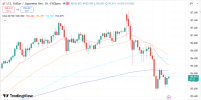
The GBP/JPY cross pair attempted to rise on Monday after three consecutive days of declines the previous week. The pair drew a bullish candle engulfing the previous candle, indicating a strong rebound. The current price formed a high of 212.388, a low of 207.768, and a close of 210.921.

The Japanese yen had weakened sharply due to speculation of a snap general election in Japan that could prompt fiscal stimulus and accommodative monetary policy. However, comments from Japanese officials about the possibility of currency intervention to support the yen have caused the JPY to strengthen again in recent sessions, pressuring GBP/JPY movements.

Japan's interest rate is currently at 0.75%, a 30-year high. The market is highly cautious ahead of the Bank of Japan's policy meeting this Friday.

The yen has weakened significantly recently, raising concerns that the Japanese government will intervene in the market. Governor Ueda is expected to remain hawkish to prevent further yen weakening.

Japanese manufacturing sector data, released yesterday, showed a contraction in core machine orders, which had previously negatively impacted the yen.

On the GBP side, the focus is on employment data. The market is awaiting the UK labor market report. Investors' primary focus is on wage growth. If wages remain high, the Bank of England (BoE) will likely maintain high interest rates for longer to suppress inflation, providing bullish support for the GBP.

Although UK GDP growth in 2025 is projected to slow by around 0.1%, household consumption remains resilient. However, the rising unemployment rate to 5.1% is beginning to put pressure on the long-term attractiveness of the GBP.

The focus of today's economic data in the London session is the Average Earnings Index. If wage growth exceeds the previously forecast range of 4.6%-4.7%, UK inflation is considered persistent, reinforcing expectations that the Bank of England (BoE) will delay interest rate cuts. Claimant Count Change is the second focus of data from the UK. The change in the number of people claiming unemployment benefits, previously at 20,000, is expected to fall to 15.6,000. A lower-than-expected figure indicates a still-tight labor market. The unemployment rate is expected to remain stable at around 5.1%; a surprise increase could weaken the GBP.

The main sentiment in fundamental analysis is that GBP is likely to strengthen due to higher interest rates, but the yen could strengthen at any time if there are strong statements from BoJ officials ahead of Friday's meeting.

Today's GBPJPY price range forecasts the nearest support at 197.60 if a technical correction occurs. The second support target is around 196.10, considered a crucial resistance level if risk-off sentiment or verbal intervention by the BoJ emerges. The nearest resistance is around 212,400, a psychological barrier that could confirm a bullish trend. The second resistance target is around 214,300, a crucial level for yen weakening. This forecast could be incorrect given the flexible market dynamics.
 
Gold 21 1 2026 h1.png
Gold Hits Record Above $4,700 Amid Global Geopolitical Tensions

Gold prices have again shown impressive performance since the beginning of 2026. Gold recently reached a record above $4,700 amid a combination of political uncertainty in the US and global geopolitical tensions. On Tuesday, January 20, gold prices drew a long-bodied bullish candle with virtually no shadows. The price formed a high of $4,766, a low of $4,659, and a close of $4,763.

The market is currently awaiting the announcement of the transition to Federal Reserve leadership, presently led by Jerome Powell as Chairman. Speculation regarding monetary policy under the new leadership has created high volatility in the US dollar index, which traditionally benefits gold.

The heated Greenland tensions in early 2026 were a key factor driving global gold prices to record highs. The connection between Greenland and gold extends beyond the minerals beneath its ice, but more strongly to the geopolitical instability triggered by the United States' ambitions to take over Greenland.

The US considers Greenland crucial for the Golden Dome project. It fears that if it doesn't control the territory, it will fall under the influence of Russia and China. The threat of tariffs to pressure Denmark and its NATO allies poses a threat to European countries that have refused to negotiate the sale of Greenland.

The threat of a new trade war between the US and Europe, the world's two largest economies, has panicked investors, forcing them to shift their capital from stocks and currencies to gold.

This debate has strained NATO's internal relations, and uncertainty about global military alliances has always been a positive catalyst for rising gold prices as the risk of armed conflict increases.

Political issues aside, Greenland is physically a region with substantial gold and rare earth metal reserves that have yet to be fully exploited by production machinery. The melting of the Arctic ice sheet is actually facilitating the exploration of gold and other mineral deposits previously covered by permafrost.

Besides the Greenland issue, other geopolitical risks in the Middle East, such as Trump's military threats against Iran, are also driving demand for safe-haven assets like gold.

Central banks are reportedly continuing to add new gold reserves in early 2026, strengthening the price floor (support level) at a high level. Today, the market is focused on API crude oil stock data and sentiment from the World Economic Forum meeting in Davos, which could influence risk appetite.

The forecast for today's gold price range is bullish, with a range of $4,659-$4,745. The nearest support is around $4,650-$4,665, and the next strong support is around $4,615, which could push the price to the lower support of $4,550. The nearest resistance is in the $4735-$4750 range. If a breakout above $4730 is successful, the next target will be a new high around $4815. This forecast could be incorrect due to the market's fluid dynamics and volatile market sentiment.
 
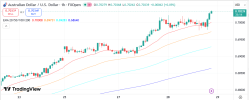
AUDUSD 22 1 2026 H1.png
AUD/USD strengthens as markets await jobs data

The AUD/USD commodity currency pair drew a long-bodied bullish candle on Wednesday, extending its two-day winning streak. AUD/USD briefly reached a high of 0.67778 before pulling back to around 0.67598, creating the impression of a long wick at the top of the price.

Today, AUD/USD is in the market's spotlight due to the release of key economic data from Australia and the United States. The pair is in a fairly solid recovery phase, attempting to break through a key psychological level.

Today's market sentiment will be influenced by the release of Australian jobs data. Strong jobs data, such as higher-than-expected job additions or a decline in the unemployment rate, could strengthen expectations that the RBA will maintain its hawkish stance or maintain interest rates.

Australia's employment change is estimated at 28.3k, up from -21k previously. The unemployment rate is projected at 4.4%, up from 4.3%, according to Forexfactory.

The Reserve Bank of Australia (RBA) is currently maintaining its interest rate at 3.60%, with a 25% market expectation of a future rate hike. Meanwhile, the Fed is expected to hold rates in the 3.50%-3.75% range at its January meeting. The yield differential, which is starting to favor the AUD, is the main driver of the pair's rise.

Trade tensions stemming from US import tariffs on AI chips to China are technically putting pressure on the AUD, as China is Australia's main trading partner. However, the general weakening of the US dollar due to concerns about tariffs on the European Union has given the AUD a boost, allowing it to remain above 0.6700.

The US will release GDP and PCE index data today, both key US economic reports that will determine the direction of the Fed's future policy.

The market projects US GDP growth to be around 4.3%. A higher reading would indicate the US economy remains very resilient despite high interest rates, which could strengthen the USD as investors believe the Fed is in no rush to cut rates. Conversely, disappointing data could pressure the USD and give the AUDUSD a chance to surge higher.

The PCE index is the Fed's most closely watched data. A high PCE index will fuel speculation that the Fed remains hawkish, which could cause sharp selling pressure on the AUDUSD pair as the interest rate spread will remain wide. However, a low PCE index could signal a strengthening scenario for the AUDUSD pair. Subdued inflation data will increase the likelihood of a Fed rate cut in mid-2026, making the AUD pair more attractive.

Today's forecast price range for AUDUSD: nearest support is around 0.6700, a psychological level that maintains the uptrend. The next support is around 0.6660, which serves as the lower limit if the price breaks through the psychological level. The nearest resistance is around 0.6780, the highest area that will be tested. The next resistance target is around 0.6800 if Australian employment data is very positive. Forecasts can be incorrect due to market dynamics.
 
EURJPY 23 1 2026 H1.png
EUR/JPY trending bullish, BoJ interest rate remains at 0.75%

The EUR/JPY cross pair exhibits price dynamics that contrast sharply between monetary policy and political situations in both regions. Overall, the medium-term trend is bullish, but with the risk of high volatility today.

On Thursday, January 22nd, EUR/JPY surged, drawing a higher high with a long-bodied bullish candlestick that successfully crossed the upper band. The price formed a high of 186.106, a low of 184.781, and a close of 186.089.

The main fundamental factor driving recent prices: The Bank of Japan recently released its interest rate decision, which left the pair at 0.75%. Despite gradual policy normalization, the yield differential with the euro remains quite wide, which naturally puts pressure on the Japanese yen.

Political uncertainty in Japan is also a concern for investors. The Japanese Prime Minister officially dissolved the House of Representatives today, January 23, 2026, to allow for elections. This political uncertainty typically weakens the yen as investors tend to avoid volatile Japanese domestic assets.

In the Eurozone, sentiment is positive in Germany. A stronger-than-expected JEW commitment survey boosted the euro. Although Eurozone inflation is starting to slow, the ECB is expected to maintain high interest rates longer than the Bank of Japan.

The threat of US tariffs related to the Greenland issue and other trade disputes is beginning to loom over European markets, which could limit further gains for the euro against safe-haven currencies like the yen.

Currently, market sentiment tends to be moderately risk-on. The euro remains supported by improving industrial data. Meanwhile, the Japanese yen is weighed down by the dissolution of parliament. However, if geopolitical tensions or a trade war suddenly escalate, the Japanese yen could rebound and strengthen as a safe-haven asset.

Today, there are several economic news highlights that could trigger volatility. Real-time data sites show several economic events in the Eurozone, such as manufacturing and services PMIs, among others, which could trigger additional volatility in the EURJPY.

Today's price range forecast: the nearest support is at 183.70 if there is a technical correction. The next support target is around 182.60 as the lower limit of the yen's strengthening if market sentiment turns risk-off. The nearest resistance is around 186.200 as a technical barrier. The next resistance target is around 186.50 if the price successfully breaks through the technical barrier. This forecast could be incorrect due to the dynamic nature of the market.
 
Gold 26 1 2026 h1.png
Gold prices surge towards the $5,000 target

Gold price movements demonstrate very interesting market dynamics, with gold on the verge of psychological and technical levels. Trading on Friday, January 23rd, gold prices surged, further extending the bullish sentiment that has persisted since the beginning of 2026. Gold prices reached $4,989, the path to $5,000. More specifically, the price drew a bullish candle, forming a high of $4,989, a low of $4,899, and a close of $4,987.

Fundamentally, gold price sentiment is dominated by a combination of geopolitical tensions and uncertain US economic policy. Gold prices have approached record highs in the $4,900-$5,000 range. Although there was a slight cooling after President Trump stated he would not use military force regarding the Greenland issue, global trade tensions and tariff threats continue to maintain high demand for safe-haven assets like gold and silver.

The market is currently awaiting clarity regarding the Fed's interest rate decision. 95% of market participants predict an unchanged interest rate, which historically exerts moderate pressure on gold as borrowing costs remain high. However, if there are dovish signals or weakening US economic data, gold could easily break through the $5,000 level. According to the Fedwatch tool, the probability of the Fed keeping interest rates unchanged is 97.2%, with the current fed funds rate in the range of 3.50%-3.75%.

US political events have not escaped the spotlight regarding gold prices. Legal issues involving the Fed Chairman have created institutional uncertainty, prompting investors to shift from riskier assets to precious metals. Fed Chairman Jerome Powell is currently facing legal pressure from the US Department of Justice (DOJ) under the Trump administration.

Today, India, one of the largest gold consumers, is celebrating a regional holiday commemorating Republic Day, which may slightly reduce trading volumes in the Asian session. India competes closely with China as a global gold consumer, as gold has become an integral part of the social, cultural, and economic fabric of its society.

In India, gold jewelry is considered a symbol of prosperity and social status. Gold jewelry is considered a form of material blessing and social status for brides and grooms. Approximately 50% of India's annual gold demand comes from the wedding sector. Gold is often given to brides as a personal possession, providing financial security for the women in the household.

Furthermore, gold is considered auspicious according to Hindu beliefs. Buying gold on the days of the Dhanteres and Diwali festivals is considered a sacred act that will attract prosperity to the household throughout the year.

Gold prices are correlated with the US dollar. The US dollar index (DXY) weakened significantly on Friday, dropping to a low of 97.425. A DXY reading below 100 is often considered to indicate bearish pressure on the US dollar.

Today's gold price range is estimated to be between $4,800 and $5,000. The nearest support level is around $4,881. If the price breaks through this level, the next support target is around $4,790 and $4,800. The nearest resistance is around $5,000, which is currently considered a psychological barrier. If it breaks through, the next resistance target is around $5,052.
 
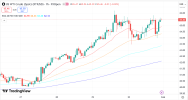
WTI 27 1 2026 H1.png
WTI oil prices are in a consolidation phase.

The XTI/USD pair is currently in a crucial consolidation phase after experiencing a rally at the start of the year. On Monday, January 26, the WTI oil price drew a small bearish candle with shadows at the top and bottom of the candle. The price formed a high of 61.55, a low of 60.25, and a close of 60.72.

Fundamentally, the oil market is currently at a crossroads between supply concerns and slowing global demand.

Recent news regarding President Trump's softening stance on the Greenland and Iran issues has put downward pressure on prices due to a reduction in risk premiums. However, operational disruptions at Kazakhstan's oil fields still provide some cushion for prices. Recent reports indicate that Kazakhstan's Ministry of Energy said on Monday that production at the country's largest oil field has resumed, according to Reuters.

The threat of new US tariffs in early 2026 has sparked concerns about slowing global economic growth, which could automatically reduce demand for crude oil.

Recent data shows a 3.6 million-barrel increase in US oil reserves, reinforcing the narrative that the market will experience a surplus throughout 2026.

According to the latest data, the largest oil consumer is the United States, followed closely by China, India, Saudi Arabia, and Russia.

The United States, as the largest oil consumer, is estimated to require around 20-21 million barrels per day. This is one of the suspected reasons Trump wants to acquire Greenland, as there are reportedly unexplored oil reserves on the island. This follows the US's recent seizure of Venezuela's oil reserves.

Despite the ongoing energy transition to electric vehicles, strong industrial activity and the aviation sector in the US continue to maintain high oil demand. Interestingly, the US is also the largest oil producer, so most of its domestic demand is met by domestic production.

In early 2026, China's demand growth will slow slightly due to the adoption of renewable energy there. Meanwhile, India, with the fastest demand growth, will become a key focus for the oil market in 2026 due to its consistent economic growth above 6%-7%, which could boost oil demand growth.

Today's oil price range is estimated to be between $59.20 and $61.50, with a general signal of neutral to bearish if it fails to break through 61.55. The nearest support is around 59.47, with the next resistance target around $54.87. The nearest resistance is around 61.03, with the next resistance target around $63.20. This forecast could be wrong, given the volatile market dynamics.
 
usdcad 28 1 2026 h1.png
Canadian Dollar Strengthens Amidst Weakening US Dollar

USD/CAD, one of the commodity currency pairs, is exhibiting high volatility amidst a weakening USD. Yesterday, USD/CAD drew a long-bodied bearish candle with shadows at the top and bottom of the candle. The price formed a high of 1.37393, a low of 1.35913, and a close of 1.36092. The Canadian dollar strengthened for two consecutive weeks amidst a decline in the US dollar index.

The US dollar has generally weakened in recent sessions, driven by uncertainty about Fed policy, geopolitical pressures, and expectations of further easing.

The US dollar index is showing a downtrend, pushing USD/CAD lower. Currently, the US dollar index has fallen to around 96.112 from a high of 97.286, indicating the USD's poor performance since mid-January. The weakening of the US dollar index is due to a combination of political uncertainty in the US, changing monetary policy expectations, and global market intervention.

The market is worried about a potential government shutdown. The failure of the Senate budget vote has created negative sentiment, with investors tending to avoid US dollar-denominated assets when the government's financial management capabilities are questioned.

The decline in the DXY was also triggered by the sharp strengthening of the Japanese yen. There are rumors that the Bank of Japan will intervene to pull the yen back from its lows. Because the yen holds a significant weight in the DXY index basket, its strengthening automatically pushed the DXY down to a multi-month low.

The latest US economic data, anticipated by the market, indicates that the Fed is likely to keep interest rates unchanged, but the risk of a rate cut in 2026 remains, dampening demand for the USD.

High market volatility is expected today due to two major monetary policy agendas. The Bank of Canada (BoC) is expected to maintain its benchmark interest rate at 2.25%. The Canadian economy is showing resilience with a solid labor market and inflation remaining above target.

The market will also await the FOMC meeting, which will be the focus of trading in pairs with the USD. The Fed is expected to hold interest rates at its first meeting of the year. Market focus will be on Jerome Powell's statement regarding the schedule for future interest rate cuts, which are rumored to occur in April or September 2026. Political tensions between the Fed and President Trump's tariff policies also add to USD uncertainty.

The CAD is supported by oil prices, as Canada is a major oil exporter and oil prices are currently rising. WTI prices have soared to $62.38 per barrel. As a commodity currency, strengthening oil prices typically provide positive support for the Canadian dollar, which can put downward pressure on the USD/CAD.

Canadian economic activity remains relatively stable despite risks from trade uncertainty and weak employment.
 
AUDUSD 29 1 2026 H1.png
AUDUSD extends gains after Fed announcement to keep interest rates unchanged

The Australian dollar extended its gains for the eighth consecutive day after the Fed announced its unchanged interest rate decision, in line with market expectations. The AUDUSD surged on January 27th, extending its gains after hovering near the peak. The AUDUSD price has now reached a high of 0.70271 from a low of 0.69770.

The rise in the AUDUSD commodity currency pair is a combination of fundamental factors, including strong Australian inflation data and significant US dollar weakness.

The latest data released by the Australian Bureau of Statistics (ABS) showed that annual inflation, or CPI, jumped to 3.8% in December, surpassing the previous figure of 3.4%. This inflation, which is well above the 2-3% target, has led the market to expect an interest rate hike by the RBA at its upcoming February meeting to 3.85%.

Expectations of rising domestic interest rates have increased the attractiveness of Australian asset yields, prompting investors to flock to the AUD, driving up the AUD/USD pair.

As a major commodity exporter, the AUD has benefited significantly from rising global metal prices. Aluminum prices reached new record highs, and gold broke through the psychological level of $5,300 per troy ounce. USD-pegged commodities have become cheaper due to the weakening US dollar.

In the US, the US Dollar Index (DXY), which measures the performance of the USD against six major currencies, is under severe pressure, even touching its lowest level in four years. The DXY is currently at 96.372, rebounding from a low of 95.551.

The weakening of the US dollar index is due to various factors. President Trump's comments suggesting comfort with a weak US dollar have triggered a massive USD sell-off, with the hashtag "Sell America."

The market also anticipates that the Fed may become more accommodative in the face of global trade policy uncertainty, in contrast to the RBA's aggressive stance.

Powell emphasized that interest rate decisions are based on the latest data, not political pressure or external agendas. He said the Fed will continue to monitor inflation data, the labor market, and overall economic conditions to determine its next move. This means there is no firm signal yet about when interest rates will decrease or increase next; everything depends on incoming data.

The AUDUSD price range is expected to move within the main support range of 0.69800-0.70000 and the resistance range of 0.70500-0.71000.
 
NZDUSD 30 1 2026 H1.png
NZD/USD trending higher amid structural US dollar weakness

The NZD/USD commodity currency pair is experiencing significant bullish sentiment. For ten consecutive days, the New Zealand dollar has drawn bullish candles, reflecting significant strength amidst a weakening US dollar. On January 29, the NZD/USD pair formed a bullish candle with shadows at the top and bottom of the candle. The price formed a high of 0.60924, a low of 0.60227, and a close of 0.80736.

NZD/USD shows an interesting dynamic between structural US dollar weakness and regional sentiment in the Pacific.

The New Zealand dollar has received support from recent positive trade balance data. The conclusion of free trade negotiations between India and New Zealand by the end of 2025 also provides long-term positive sentiment for the NZD, opening up new market access amidst global trade fragmentation.

New Zealand's inflation rate is higher than expected at around 3.7% year-on-year, putting pressure on the Reserve Bank of New Zealand (RBNZ) to maintain interest rates or even raise them if inflation remains strong. More positive global risk sentiment has fueled demand for riskier currencies like the NZD. The New Zealand dollar is supported by relatively strong domestic data and expectations of a less dovish monetary policy stance.

The US dollar is currently weakening sharply against most currencies, including the euro and commodity currencies, after President Donald Trump's political comments suggesting he appears unconcerned about the weakening US dollar, putting selling pressure on the USD. The US Dollar Index (DXY) is currently trading between 96.10 and 96.40, nearing a four-year low.

The Fed recently held its first policy meeting in 2026, deciding to maintain interest rates in the 3.50%-3.75% range after a series of cuts last year. This has provided a breather for the USD, but the dovish tone remains.

The US also faces the risk of a government shutdown over the weekend due to funding deadlines for key federal departments, adding to the uncertainty that is holding back USD strength.

The Fed is likely to be more dovish than the RBNZ if US inflation continues to weaken, depressing the USD relative to the NZD. On the other hand, the RBNZ has indicated a slower tightening pace, but inflation is stable above target, giving the NZD room to remain strong.

The NZDUSD price range today is estimated to be between 0.5980 and 0.6120, with fundamentals consolidating to a bullish trend, with the US dollar weakening, driven by US political rhetoric.
 
WTI 2 2 2026 H1.png
Oil prices are in a cautious bullish phase.

Oil price volatility increased last week as global geopolitical tensions escalated. On Friday, WTI prices fell as low as 63.46, then closed higher at 65.46. Oil prices had just recorded their best price since July 2023, but were under pressure from the prospect of abundant supplies in 2026.

Concerns about military escalation between the United States and Iran were the main driver of price increases. The market was concerned that these tensions would disrupt traffic in the Strait of Hormuz, a crucial passageway for 20 million barrels of oil per day.

US President Donald Trump warned Iran to reach a nuclear deal or face military action. Trump stated on Wednesday that the US ships he had ordered to the region were ready to carry out their mission, swiftly and violently, if necessary. Iran responded by threatening to retaliate against the US, Israel, and those who support them.

Another fundamental factor, President Trump's announcement of new import tariffs against several trading partners, has created uncertainty. On the one hand, tariffs could slow the economy, but on the other hand, the threat of supply disruptions from major producers places a risk premium on oil prices.

While geopolitical tensions support rising oil prices, analysts are projecting a potential oversupply of 0.75 to 3.5 million barrels per day in 2026. This limits an overly aggressive price rally in the long term. EIA data and projections indicate that global supply will likely exceed demand throughout 2026. Many major banks and official institutions forecast oil prices in the $50-$60 range this year.

The recent weakening of the US dollar has provided room for USD-pegged commodities, including oil, to remain competitive in the global market. The US Dollar Index (DXY) briefly fell to a low of 95.551 before rebounding to 97.147.

Production disruptions in Kazakhstan due to infrastructure issues also helped reduce actual market supply, supporting prices. Some analysts believe demand from China and geopolitical factors could keep prices from falling too low.

The daily range for WTI crude oil is estimated to be between $58 and $66 per barrel. The nearest support is around $63.64; a breakout would target the next support at $62.10. The nearest resistance is around $66.11; a breakout would target the next resistance at $67.50. This forecast could be wrong amidst market dynamics.
 
audusd 3 2 2026 h1.png
AUD/USD Corrects Sharply Ahead of RBA Interest Rate Announcement

The Australian dollar briefly strengthened to around 0.70940 amid significant US dollar weakness at the end of January. However, volatile markets have caused the pair to correct sharply to a low of 0.69084. As a commodity pair, the AUD/USD pair exhibits a contrasting dynamic between domestic monetary policy and global sentiment from the United States.

Today's market focus will be entirely on the RBA interest rate announcement. After the fourth-quarter inflation data released at the end of January remained strong, the market is speculating on a hawkish stance. If the RBA raises interest rates or signals a future increase, the Australian dollar has the potential to strengthen significantly.

On the other hand, the USD gained renewed momentum after President Trump nominated Kevin Warsh as the next Federal Reserve Chairman, to replace Jerome Powell. The market perceives Warsh as a likely supporter of a strong dollar policy or more measured tightening, which fueled the USD rally late last week.

As a country reliant on commodity exports, the Australian dollar is correlated with commodity markets. Gold and silver prices experienced extreme volatility in early February, falling from their peaks. As commodity currencies, falling metal prices could limit the AUD's upside potential, despite domestic support.

The USD stabilized overall after its recent sharp decline, which was its weakest yearly decline, but then stabilized ahead of the Fed meeting. The DXY is currently trading at 97.574, having rebounded in the four days after the price drop to 95.551.

The market is currently predicting a possible RBA rate hike from 3.60% to 3.85%. The RBA's press conference following the decision is also important as it provides additional information about Australia's economic outlook.

Today, the US will also release important news that could have a significant impact on the AUD/USD pair. The JOLTS data, related to US job openings, could be a catalyst for the US dollar. Market expectations are for an increase in job openings compared to the previous revision.

The AUD/USD price range is estimated to be within the immediate support range of 0.6910, which will act as a resistance level if the RBA performs below expectations. The next support range is 0.6950, which is a crucial boundary for the medium-term trend. The nearest resistance range is 0.7010 if the trend is bullish. The next resistance target is 0.7090, the January high.