International oil prices rose by more than 3% on Friday at their highest in more than six months. Despite the fact that the third round of US-Iran nuclear talks has shown some signs of progress and will continue next week, Trump’s words that "he would have to use force" caused panic in the oil markets, and geopolitical risk premiums were sustained. Moreover, the unstable US trade policy, the permanent ban on Russian oil imports proposed by the EU, and the unexpected increase in US crude oil inventories by 16 million barrels also added to the uncertainty. In the short term, oil prices will remain volatile at high levels, while their future direction will depend on the result of the negotiations and the situation in the Middle East.
In the context of the dynamically developing global energy landscape, the international oil market is facing a fierce struggle, driven by geopolitical factors and economic policy. Every step forward or stalemate in the negotiations on the US-Iran nuclear deal directly affects the prices of crude oil futures, while the recent escalation of US trade tariffs has caused significant damage to the global trade landscape and expectations for energy prices. This week, the prices of oil have been fluctuating repeatedly in the first few days of trading, owing to the rise in inventories and the tug of war over the delayed negotiations. However, the prices rose by almost 3% on Friday, February 27, when the US crude oil touched a near seven-month high of $67.83 per barrel, eventually closing at $67.83 per barrel, gaining by almost 1.48% for the week and by 2.36% for the month. Similarly, the prices of Brent crude oil also rose by 3% on Friday, reaching a high of $73.52 per barrel, eventually closing at $73.12 per barrel, gaining by almost 2.15% for the week and by 4.8% for the month, marking two successive months of gains.
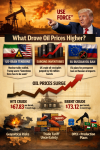
The US-Iran nuclear negotiations were undoubtedly the driving force for the fluctuations in the prices of oil this week. Since February 26th, the third round of talks between the US and Iran has been underway in Geneva, where Iran has shown an unprecedented level of willingness to make concessions by stating that it is willing to compromise over its nuclear program in exchange for the removal of sanctions and the recognition of its rights over uranium enrichment. This was a welcome sight for the market, with Iran’s Deputy Foreign Minister stating that the country was ready to do what was necessary in order to reach an agreement. Oman’s Foreign Minister also positively pointed out the fact that considerable progress had been made in the negotiations, which helped alleviate the market’s concerns about a military conflict to a certain extent.
However, the positive sentiment was not sustained for long. As the negotiations continued, the US insisted on Iran’s zero-enriched uranium and the shipping of the 60% enriched uranium to the US. As a result, the negotiations came to a halt. President Trump’s comments on Friday also fueled the fire when he stated his disappointment with the progress of the negotiations and the fact that "sometimes force has to be used." These comments directly led to panic in the market, and the chances of conflict between the US and Iran resulted in an increase in oil prices by almost 3% on Friday, with Brent oil rising to $73.12 a barrel and US oil rising to $67.29 a barrel.

Analysts pointed out that this uncertainty is already reflected in a geopolitical risk premium of $3-4 per barrel in US crude oil prices. If the negotiations fail, the likelihood of disruptions in the supply of oil from the Middle East could rise substantially. As the third largest oil producer in the OPEC group of nations, any instability in Iran could influence the exports of crude oil in the region, thereby adding volatility to the oil market.
In addition, the shifts in US tariff policies could be considered a time bomb, which further increased the pressures on the oil market. Earlier in the week, the US Supreme Court overturned an important part of President Trump’s tariff policies, which should have provided some stability. However, Trump responded promptly by stating on Saturday that he would increase temporary tariffs on imports from all countries from 10 percent to 15 percent, which is the maximum level allowed by law. Even though the US Customs and Border Protection suspended the collection of tariffs early Tuesday morning, the series of policy shifts has once again increased the level of uncertainty.
Bob Jaeger, who is the director of energy futures at Mizuho, stated that this tariff uncertainty not only led to the decline of the stock market but also directly influenced the oil market, which could result in catastrophic consequences in the short term. The global oil market is facing volatility, especially regarding the import-dependent oil market of the US, where tariff increases result in increased energy costs.
Another major variable is inventory data. In its report released this week, the United States Energy Information Administration reported that U.S. crude oil inventory jumped by 16 million barrels last week, far beyond analysts' expectations of an increase of 1.5 million barrels, mainly because of declining refinery utilization and increasing imports. Although this is considered a bearish market sentiment, UBS commodities analyst Giovanni Stanovo commented that its impact is minimal because the market is currently being driven by geopolitical tensions in the Middle East. Although it is true that the rise in inventory should have put downward pressure on oil prices, tensions regarding potential oil supply disruptions because of the U.S.-Iran conflict are currently being felt.
Comments made by the director of the North Dakota Department of Mineral Resources affirm our view that oil prices should be kept at around $70 per barrel to expand oil production because North Dakota is the third largest oil-producing state in the United States. Its energy executives commented that the oil industry needs oil priced at around $70 per barrel to expand oil production. These tensions are heightened because of the impending peak summer oil consumption period. Additionally, the market is awaiting reports on inventory from the American Petroleum Institute (API) and the EIA on a weekly basis to gather more information on market trends. In conclusion, it is clear that the negative effect of inventory data was countered by geopolitics, which ensured that oil prices were flat on Wednesday and lower after fluctuating on Thursday but rose strongly on Friday.
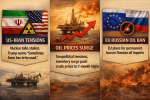
As a result of the escalating tensions between the US and Iran, OPEC+ has not been idle either. In this regard, sources close to the matter have indicated that a plan to raise oil production and exports in the short term has been initiated by Saudi Arabia to cushion the market against a possible US strike on Iran, which would cause a disruption in oil supplies. In addition to this, the UAE has also planned to raise production in April.
It is also possible that OPEC+ could set a production hike of 137,000 barrels a day for April when it meets on March 1st to end a three-month pause in production hikes. These countries include eight oil-producing nations: Saudi Arabia, Russia, the UAE, Kazakhstan, Kuwait, Iraq, Algeria, and Oman.