

You are using an out of date browser. It may not display this or other websites correctly.
You should upgrade or use an alternative browser.
You should upgrade or use an alternative browser.
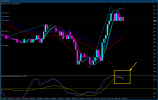
the chart below is what i look at the most...... it will make complete sense once i explain it.......
many will say it's too much....... maybe...... it really depends on how accurate you want to be on entries and exits.....
there is more to it than is visible...... will post charts here.......
needs to be explained in a video...... would take me weeks to type it out......
tend to use few words.....h
//------
many will say it's too much....... maybe...... it really depends on how accurate you want to be on entries and exits.....
there is more to it than is visible...... will post charts here.......
needs to be explained in a video...... would take me weeks to type it out......
tend to use few words.....h
//------
when the market is not open or tends to be slow, it seems to help me wondering of next week or month......
such as right now, march the 11th....... i'm wondering where the eur and jpy might be on the 20th and 27th..... and also where they might be on april 30th......
this why 3 months ago i began mentioning corn, soybeans, soybean oil and soybean meal....... it was not technical, it was historically fundamental.......
technicals and fundamentals should work together......
//-----
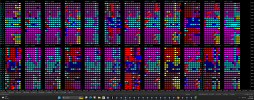
the chart above has 24 groups...... each group is representing at least 1 indicator on 8 timeframes with the exception of the zigzag which only has 7.......
they are, 1, 5, 15, 30, 60, 240, 1440, 10080........ first square is the 1 minute, second the 5 and so on.......
the first group is raghee horners 34 ema wave...... if the price is below the 34 wave the color is magenta..... if it just crossed below it's red...... if it's above the 34 wave, it's aqua...... if it just crossed above it's blue...... if it's inside, it's yellow....
so at a glance i can see if the wave's action on all major tf's......
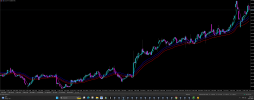
my screens are large so i never know what you will see...... the 240 chart below is soybeans for this year..... often times when the 34 wave is trending higher so is the price....... here we had historical common sense fundamentals on our side......
if you traded nothing but the agriculture's on the uptrend you could possibly be the richest person in tallulah.......
or at least make minimum wage which is what this thread is all about......
i would not sell the downtrends...... with a single a rumor that china was going to buy soybeans, you'd be the poorest person in talluah......
and just so you know, tallulah is a very poor town.......h
//-------

such as right now, march the 11th....... i'm wondering where the eur and jpy might be on the 20th and 27th..... and also where they might be on april 30th......
this why 3 months ago i began mentioning corn, soybeans, soybean oil and soybean meal....... it was not technical, it was historically fundamental.......
technicals and fundamentals should work together......
//-----
the chart above has 24 groups...... each group is representing at least 1 indicator on 8 timeframes with the exception of the zigzag which only has 7.......
they are, 1, 5, 15, 30, 60, 240, 1440, 10080........ first square is the 1 minute, second the 5 and so on.......
the first group is raghee horners 34 ema wave...... if the price is below the 34 wave the color is magenta..... if it just crossed below it's red...... if it's above the 34 wave, it's aqua...... if it just crossed above it's blue...... if it's inside, it's yellow....
so at a glance i can see if the wave's action on all major tf's......
my screens are large so i never know what you will see...... the 240 chart below is soybeans for this year..... often times when the 34 wave is trending higher so is the price....... here we had historical common sense fundamentals on our side......
if you traded nothing but the agriculture's on the uptrend you could possibly be the richest person in tallulah.......
or at least make minimum wage which is what this thread is all about......
i would not sell the downtrends...... with a single a rumor that china was going to buy soybeans, you'd be the poorest person in talluah......
and just so you know, tallulah is a very poor town.......h
//-------
the second indicator group is the alma...... the previous chart below now has the alma on it......
all these indicators i've mentioned hundreds or thousands of times.......
something else i've mentioned a thousand times is 0.01...... if you search envid's entire site for "0.01", i would probably said it more than every one else combined...... there is no need to trade excessive sizes..... try to cover the cost of a hamburger first........
if the alma is falling the square is magenta, if it just now started falling it's red....... if it's rising, aqua.... if just now started rising blue...... this gives emphasis on new signals...... that same logic is on much of the dashboard.....
it has always seemed to me. if the alma was going up and 34 wave was going up, the price should be trending up......
this brings up the "what follows a red 13" mentioned long ago....... we need to know the average length in bars of every indicator signal on every symbol on every timeframe....... if the alma has been aqua for 7 bars, what might be on bar 8.......
by knowing the average length we can better prepared for the change.......
so let's say the average length is 5 bars........ we are long, the color has been aqua 7 bars and just now switched to red...... we need to weigh the likelihood of a countertrend that will wipe out our earnings.......
another view, suppose the color has been aqua for 8 bars, do we really want to buy....... fomo.......
can't we wait for a better time......h
//-------
all these indicators i've mentioned hundreds or thousands of times.......
something else i've mentioned a thousand times is 0.01...... if you search envid's entire site for "0.01", i would probably said it more than every one else combined...... there is no need to trade excessive sizes..... try to cover the cost of a hamburger first........
if the alma is falling the square is magenta, if it just now started falling it's red....... if it's rising, aqua.... if just now started rising blue...... this gives emphasis on new signals...... that same logic is on much of the dashboard.....
it has always seemed to me. if the alma was going up and 34 wave was going up, the price should be trending up......
this brings up the "what follows a red 13" mentioned long ago....... we need to know the average length in bars of every indicator signal on every symbol on every timeframe....... if the alma has been aqua for 7 bars, what might be on bar 8.......
by knowing the average length we can better prepared for the change.......
so let's say the average length is 5 bars........ we are long, the color has been aqua 7 bars and just now switched to red...... we need to weigh the likelihood of a countertrend that will wipe out our earnings.......
another view, suppose the color has been aqua for 8 bars, do we really want to buy....... fomo.......
can't we wait for a better time......h
//-------
this is jumping ahead but important cause it is now........... you might be able to see the thin lime line..... tradovate will show your trades like metatrader.......
i have 20 apex papex accounts...... almost all are 300k...... you can clearly see all i had was 1 micro mym short in 2 accounts......
3 questions.......
why not trade large sizes in all accounts.......
why a single micro in only 2.......
why did i sell where i sold and why did i close where i closed just seconds ago........h
//------

i have 20 apex papex accounts...... almost all are 300k...... you can clearly see all i had was 1 micro mym short in 2 accounts......
3 questions.......
why not trade large sizes in all accounts.......
why a single micro in only 2.......
why did i sell where i sold and why did i close where i closed just seconds ago........h
//------
the next group is the hma..... aka the hull ma........ the chart below now has the hma added......
moving averages by themselves can show trends at times.......
comparing 2 moving averages can show momentum at times...... an example of that is the macd.....
notice how the gap between the alma and hma becomes more pronounced........ this is momentum.....
same color logic as noted with alma.......
it has always seemed to me, that when the 34 wave is rising, the alma is rising and the hma is rising, it is fair to say the price is rising......
this brings up a point about why the 8 timeframes.......
imagine if 7 of the 8 hma's are aqua, rising..... only the 60 is magenta and has been for 5 bars.......
would it be reasonable to assume the 60 hma will change..... and move higher......
the timeframes signals get out of sync daily....... there is an advange in that......
don't forget about average length......h
//------

moving averages by themselves can show trends at times.......
comparing 2 moving averages can show momentum at times...... an example of that is the macd.....
notice how the gap between the alma and hma becomes more pronounced........ this is momentum.....
same color logic as noted with alma.......
it has always seemed to me, that when the 34 wave is rising, the alma is rising and the hma is rising, it is fair to say the price is rising......
this brings up a point about why the 8 timeframes.......
imagine if 7 of the 8 hma's are aqua, rising..... only the 60 is magenta and has been for 5 bars.......
would it be reasonable to assume the 60 hma will change..... and move higher......
the timeframes signals get out of sync daily....... there is an advange in that......
don't forget about average length......h
//------
the position of each group in the dashboard above is very important...... raghee is first, alma is second , hma is third and so on to 24.......
the headings are something like jfatl >< jfatl...... which simply means whether or not the current jfatl is > or < past jfatl....... not a lot of thought in it.....
so why is the position important.......
imagine we had 20 indicators displayed in dots, blue if up, red if down........ i'm sure you've seen this before....... i've posted many in mq4........
when displayed in that manner we can see which indicator alerts us first of a possible trend change...... we can see the most reliable.....
if one is unreliable, many are, it can be replaced by a better one.......
below is the euro futures 240 and 1440 chart with the 34 wave....... in the next window is our 20 indicators......
it has always seemed to me, if the 34 wave is rising and most dots are blue, i really don't want to be selling.......
wouldn't it be better to wait for the wave to be falling and most were red to sell........
this brings me to the next 4 in the dashboard...... jfatl, zigzag, stochastic and jjma.......
those are important......
equally important, as mentioned above, have you given any thought as to where the eur and jpy will be on the 20 and 27th..... how about april 30th......h
//----


the headings are something like jfatl >< jfatl...... which simply means whether or not the current jfatl is > or < past jfatl....... not a lot of thought in it.....
so why is the position important.......
imagine we had 20 indicators displayed in dots, blue if up, red if down........ i'm sure you've seen this before....... i've posted many in mq4........
when displayed in that manner we can see which indicator alerts us first of a possible trend change...... we can see the most reliable.....
if one is unreliable, many are, it can be replaced by a better one.......
below is the euro futures 240 and 1440 chart with the 34 wave....... in the next window is our 20 indicators......
it has always seemed to me, if the 34 wave is rising and most dots are blue, i really don't want to be selling.......
wouldn't it be better to wait for the wave to be falling and most were red to sell........
this brings me to the next 4 in the dashboard...... jfatl, zigzag, stochastic and jjma.......
those are important......
equally important, as mentioned above, have you given any thought as to where the eur and jpy will be on the 20 and 27th..... how about april 30th......h
//----

Dear hayseed,
thank you for your posts. Yes, your heatmaps were hard to miss - but I must admit that your underlying perspective escaped me at first. I find it quite interesting that you assign a kind of priority weighting to the indicators. Do you base that on some objective rule or decision process?
So far I think I understand the following: a color change in the panel can be interpreted as an early warning of a possible trend change. And something similar can be inferred from the average duration of indicator signals. However, this is exactly where I run into some difficulties:
Also, how can you use the average signal duration at all when different indicators - or even the same indicator on different timeframes - may produce the same signal at different times, or even contradict each other? In earlier videos and posts you also mentioned that many indicator signals are strongly correlated. In that case, reaching a consensus is obviously easier - but how would you treat conflicting signals? Especially considering that the indicators themselves have different priority weights.
For that reason, my first step was to use several EMAs to define a higher-level trend. I only considered the trend valid when the EMAs (with periods of 1440 & 7200) were properly ordered by their responsiveness and their slopes pointed in the same direction, indicating either an uptrend (+1) or downtrend (-1); otherwise the market was classified as ranging (0).
After that, I was inspired by Peyton’s lecture, where I focused simply on the slopes of EMAs on the M1 timeframe with periods 15, 30, 60, 120, and 240.
Many thanks for your insightful explanations!
Best,
AC
thank you for your posts. Yes, your heatmaps were hard to miss - but I must admit that your underlying perspective escaped me at first. I find it quite interesting that you assign a kind of priority weighting to the indicators. Do you base that on some objective rule or decision process?
So far I think I understand the following: a color change in the panel can be interpreted as an early warning of a possible trend change. And something similar can be inferred from the average duration of indicator signals. However, this is exactly where I run into some difficulties:
- By definition, about 50% of signals will last shorter than the average, while the other 50% may last significantly longer.
- Every signal change is associated with some degree of lag. Doesn't that imply that a trend reversal could already be underway before the average signal duration is even reached?
Also, how can you use the average signal duration at all when different indicators - or even the same indicator on different timeframes - may produce the same signal at different times, or even contradict each other? In earlier videos and posts you also mentioned that many indicator signals are strongly correlated. In that case, reaching a consensus is obviously easier - but how would you treat conflicting signals? Especially considering that the indicators themselves have different priority weights.
For that reason, my first step was to use several EMAs to define a higher-level trend. I only considered the trend valid when the EMAs (with periods of 1440 & 7200) were properly ordered by their responsiveness and their slopes pointed in the same direction, indicating either an uptrend (+1) or downtrend (-1); otherwise the market was classified as ranging (0).
After that, I was inspired by Peyton’s lecture, where I focused simply on the slopes of EMAs on the M1 timeframe with periods 15, 30, 60, 120, and 240.
Many thanks for your insightful explanations!
Best,
AC
Attached File(s)

- By definition, about 50% of signals will last shorter than the average, while the other 50% may last significantly longer.
- Every signal change is associated with some degree of lag. Doesn't that imply that a trend reversal could already be underway before the average signal duration is even reached?
//-----
you assign a kind of priority weighting to the indicators. Do you base that on some objective rule or decision process?
the weighting is based on the indicators quickness in response..... the jfatl , jjma and stochastic seem the fastest.....
//-----
Also, how can you use the average signal duration at all when different indicators - or even the same indicator on different timeframes - may produce the same signal at different times, or even contradict each other? In earlier videos and posts you also mentioned that many indicator signals are strongly correlated. In that case, reaching a consensus is obviously easier - but how would you treat conflicting signals? Especially considering that the indicators themselves have different priority weights.
multicollinearity...... don't stress over it but keep it in mind......
yes, signals on different timeframes will contradict at times..... that has to be..... it's not a big deal for me......
if the signals disagree, i simply wait.......
//----
If I understand correctly, after identifying a potential trend based on signal consensus, you then deploy a grid of 0.01-lot trades. Do you typically close those trades once either the average signal duration is reached, or when certain indicators/timeframes signal a reversal?
grid trading is not suited for futures....... even the smallest contract size is too large.......
in typical forex i would most often exit on the zigzag leg....... such as if the last 15 minute zigzag leg was up but the higher trend was down, i would place 0.01 sells...... have several videos on it...... once the zigzag leg formed down, i would exit........ seem to remember mentioning that in a video.......
grid trading is not something i'd suggest....... a lot can go wrong.....
//-----
bottom line,
it seems best for me to trade when things agree......
if they don't, i work on the sawmill......h
//------

keep in mind that dashboard is nothing more than a large scale version of typical dashboard...... each square represents the timeframe and that indicators current state..... if the 5 minute hma is falling, the 5 minute hma square will be magenta......
jurik research has developed a lot of indicators which react fast...... the jjma, jfatl, and jma are jurik's indicators....... jurik research offers those indicators in 6 popular platforms but metatrader is not one....... i use nikolay kosition's version in mq5.......
same color logic as before.......
it seems better to me, when the wave is falling and both the jjma and jfatl are falling, to focus on selling only........ chart below has them on it......
however, there might come a time when the risk of buying in a downtrend is appealing....... such as a reversion to mean trade, backed up by fundamentals........
these are dangerous trading times....... maybe not worth the risk....... my trades have all but dried up.......
a single rate check by the boj could send the jpy flying...... so no selling for me.......
all i have right now are a few 6e_m futures trades, eurusd, all 1000$ in the red....... will not add........
and 6j_m futures trades, usdjpy...... all deep red....... adding......
might take a month with boj's help......h
//------

jurik research has developed a lot of indicators which react fast...... the jjma, jfatl, and jma are jurik's indicators....... jurik research offers those indicators in 6 popular platforms but metatrader is not one....... i use nikolay kosition's version in mq5.......
same color logic as before.......
it seems better to me, when the wave is falling and both the jjma and jfatl are falling, to focus on selling only........ chart below has them on it......
however, there might come a time when the risk of buying in a downtrend is appealing....... such as a reversion to mean trade, backed up by fundamentals........
these are dangerous trading times....... maybe not worth the risk....... my trades have all but dried up.......
a single rate check by the boj could send the jpy flying...... so no selling for me.......
all i have right now are a few 6e_m futures trades, eurusd, all 1000$ in the red....... will not add........
and 6j_m futures trades, usdjpy...... all deep red....... adding......
might take a month with boj's help......h
//------
"why not trade large sizes in all accounts......."3 questions.......
why not trade large sizes in all accounts.......
why a single micro in only 2.......
why did i sell where i sold and why did i close where i closed just seconds ago........h
//------
"why a single micro in only 2......."
Can I assume that you don't use exactly the same signals across all three accounts? With the small-lot accounts, you can probably absorb incorrect signals more easily and quickly counter them with additional trades, giving you more financial flexibility.
At the same time, could those two small-lot accounts also be used to offset poor decisions on the large-lot account by placing multiple smaller counter-trades?
In short, is the idea to scale into good trade decisions from the large-lot account with the smaller trades to achieve better average entry prices, and, in the case of weaker trade decisions, to use the smaller trades to help mitigate potential losses?
"why did i sell where i sold and why did i close where i closed just seconds ago........h"
Entry because the channel and the pink line both point downward, and the stochastic crosses below its MA.
Exit, presumably because the stochastic crosses back again, although it seems to me that this may have already happened one candle earlier (even if it’s hard to see visually).
//------"why not trade large sizes in all accounts......."
"why a single micro in only 2......."
Can I assume that you don't use exactly the same signals across all three accounts? With the small-lot accounts, you can probably absorb incorrect signals more easily and quickly counter them with additional trades, giving you more financial flexibility.
At the same time, could those two small-lot accounts also be used to offset poor decisions on the large-lot account by placing multiple smaller counter-trades?
In short, is the idea to scale into good trade decisions from the large-lot account with the smaller trades to achieve better average entry prices, and, in the case of weaker trade decisions, to use the smaller trades to help mitigate potential losses?
"why did i sell where i sold and why did i close where i closed just seconds ago........h"
Entry because the channel and the pink line both point downward, and the stochastic crosses below its MA.
Exit, presumably because the stochastic crosses back again, although it seems to me that this may have already happened one candle earlier (even if it’s hard to see visually).
exactly......
trade small....... even though those accounts are 300k, i still trade 1 mym which is only 50 cents a point........ and only in 2 accounts...... most would say that is ridiculously small..... it is........ the dow has to move 200 points for me to make 100$......
the signals are the same the entry was staggered in the other account...... if i get a good signal, i will enter in one account...... then place limit trades in others in grid fashion..... this spreads out the risk......
some complain about the spread at times...... i always buy at the bid and sell at the ask...... this cuts the spread cost out completely of that signal...... over the course of a year that's a fair savings...... i see the limit orders in the other accounts as even a further reduction of the spread cost......
same signal, just spread out entrys......
those 300k accounts are mine for life...... unless i blow them....... i feel no need to lose then in the first month trading recklessly.....h
Dear hayseed,
it's still a bit of a mystery to me how you manage to produce successful trades using indicators like the Stochastic, as in your recent examples. Of course, any indicator can occasionally generate great signals - but just as often it doesn't.
As you know, my initial idea was to try to improve the odds by trading swings in the same direction as the prevailing trend. Last night I ran a small test using ZigZag swings, comparing results when defining swings with ZigZag and trends either with another ZigZag or with an EMA of the same period.
The setup was roughly this: I used ZigZag(12) on M5 for swings and ZigZag(12) on M15 for the trend. The idea was that the lower timeframe would typically signal a potential change earlier, which might later be confirmed on the higher timeframe. Entries were taken on the first signal of a new swing, and exits occurred either when the next opposite swing signal appeared (bullish vs. bearish, and vice versa) or when the trend signal changed first.
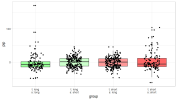
I plotted the collected results as boxplots. In the figure, "t:" refers to the trend and "s:" on the x-axis refers to the swing. Unfortunately, the averages of the pip returns across the different trend–swing combinations are clearly clustered very close to zero - sometimes slightly above, sometimes slightly below.
In a way this also seems logically consistent - especially considering your point that it's enough to enter somewhere in the middle of a trend rather than catching the exact tops or bottoms. If a swing or trend is only recognized mid-move, the same kind of lag will also occur when the next swing or trend begins. In that case, the expected value should naturally gravitate toward around zero, which is more or less what the data seem to show.
I obtain essentially the same result when using an EMA to define the trend as well. (The figure I mentioned actually shows the case where both trend and swing are defined with ZigZags.) Nevertheless, the somewhat positive result is that longer swings can be detected during trend-identical swing directions (but unfortunately also higher losses, too.)
That's why I still find your results in the videos - where you ran similar tests in MQL - quite impressive. I performed my analysis in R, but so far the outcome remains puzzling to me. It still feels like a phenomenon I haven't fully managed to understand. But you already mentioned that you'd have to explain a lot. Thus - please don't let distract your plans of explanations - I just were going to mention this again.)
Nevertheless, so far that's a lot!!!
it's still a bit of a mystery to me how you manage to produce successful trades using indicators like the Stochastic, as in your recent examples. Of course, any indicator can occasionally generate great signals - but just as often it doesn't.
As you know, my initial idea was to try to improve the odds by trading swings in the same direction as the prevailing trend. Last night I ran a small test using ZigZag swings, comparing results when defining swings with ZigZag and trends either with another ZigZag or with an EMA of the same period.
The setup was roughly this: I used ZigZag(12) on M5 for swings and ZigZag(12) on M15 for the trend. The idea was that the lower timeframe would typically signal a potential change earlier, which might later be confirmed on the higher timeframe. Entries were taken on the first signal of a new swing, and exits occurred either when the next opposite swing signal appeared (bullish vs. bearish, and vice versa) or when the trend signal changed first.
I plotted the collected results as boxplots. In the figure, "t:" refers to the trend and "s:" on the x-axis refers to the swing. Unfortunately, the averages of the pip returns across the different trend–swing combinations are clearly clustered very close to zero - sometimes slightly above, sometimes slightly below.
In a way this also seems logically consistent - especially considering your point that it's enough to enter somewhere in the middle of a trend rather than catching the exact tops or bottoms. If a swing or trend is only recognized mid-move, the same kind of lag will also occur when the next swing or trend begins. In that case, the expected value should naturally gravitate toward around zero, which is more or less what the data seem to show.
I obtain essentially the same result when using an EMA to define the trend as well. (The figure I mentioned actually shows the case where both trend and swing are defined with ZigZags.) Nevertheless, the somewhat positive result is that longer swings can be detected during trend-identical swing directions (but unfortunately also higher losses, too.)
That's why I still find your results in the videos - where you ran similar tests in MQL - quite impressive. I performed my analysis in R, but so far the outcome remains puzzling to me. It still feels like a phenomenon I haven't fully managed to understand. But you already mentioned that you'd have to explain a lot. Thus - please don't let distract your plans of explanations - I just were going to mention this again.)
Nevertheless, so far that's a lot!!!
Attached File(s)
//-----Dear hayseed,
it's still a bit of a mystery to me how you manage to produce successful trades using indicators like the Stochastic, as in your recent examples. Of course, any indicator can occasionally generate great signals - but just as often it doesn't.
odds are most traders don't like being told what to do...... probably same goes for most people...... and some will not like having to wait for permission...... having to do so seems so subservient......
those things don't bother me......
to me, it's not a stochastic signal, it's a stochastic permission...... i'm ok with that......
when the 1440, 240 and 60 trends are down, the stochastic indicator gives me permission to sell...... if and only if it's reading is high.......
if i try to sell when the 1440, 240 and 60 trends are up and stochastic is rising, i'll get what i deserve....... that would be counter trend trading, a whole different subject......
trading systems can be the shallow type...... they might buy or sell every time the stochastic crosses something....... those will seldom work long term......
don't think i never have losses..... took a bunch last week.......
no harm in walking away......h
//-----
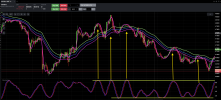
the next 2 are the gaussian filters....... an example of it used in a trading strategy can be read here.......
it's a complicated but interesting to read about moving average.......
my approach is simple...... if they are moving up, i resist selling...... if they are moving down, i resist buying....... it's the exact some principle as everything mentioned prior and future....... trade in the direction your given permission......
if it's a downtrend as suggested by the 34 ma wave, such as the jpy is now, quite often it will pull back into the wave......
i use the 10, 20, and 30 periods....... it seems best to trade when all three the same color........
the 10 needs to be above the 20 to buy....... 10 >< 20 column on that chart above...... the 10, 20 and 30 need to in proper order...... 10>20>30 to buy.......
//------
that whole dashboard can be seen as a large crowd of indicator people in front of 2 doors...... one says buy and other says sell......
if i walk up and reach for the buy door, and 1 guy hollers, "don't open that door" , there's a good chance i might ignore him and open it......... but the entire crowd screams , "don't open it" , i'll listen........
the whole is greater than the sum of the parts.......
listen.....h
//-------

a lot noise on a long term trend......

it's a complicated but interesting to read about moving average.......
my approach is simple...... if they are moving up, i resist selling...... if they are moving down, i resist buying....... it's the exact some principle as everything mentioned prior and future....... trade in the direction your given permission......
if it's a downtrend as suggested by the 34 ma wave, such as the jpy is now, quite often it will pull back into the wave......
i use the 10, 20, and 30 periods....... it seems best to trade when all three the same color........
the 10 needs to be above the 20 to buy....... 10 >< 20 column on that chart above...... the 10, 20 and 30 need to in proper order...... 10>20>30 to buy.......
//------
that whole dashboard can be seen as a large crowd of indicator people in front of 2 doors...... one says buy and other says sell......
if i walk up and reach for the buy door, and 1 guy hollers, "don't open that door" , there's a good chance i might ignore him and open it......... but the entire crowd screams , "don't open it" , i'll listen........
the whole is greater than the sum of the parts.......
listen.....h
//-------
a lot noise on a long term trend......
Thank you very much for your posts I truly enjoy reading every single one of them. Even if the article on Gaussian filters may be somewhat technical, that's exactly the kind of material one wants to read when trying to understand how this Ehlers concept works, including both its strengths and its limitations.the next 2 are the gaussian filters....... an example of it used in a trading strategy can be read here.......
it's a complicated but interesting to read about moving average.......
my approach is simple...... if they are moving up, i resist selling...... if they are moving down, i resist buying....... it's the exact some principle as everything mentioned prior and future....... trade in the direction your given permission......
if it's a downtrend as suggested by the 34 ma wave, such as the jpy is now, quite often it will pull back into the wave......
i use the 10, 20, and 30 periods....... it seems best to trade when all three the same color........
the 10 needs to be above the 20 to buy....... 10 >< 20 column on that chart above...... the 10, 20 and 30 need to in proper order...... 10>20>30 to buy.......
//------
that whole dashboard can be seen as a large crowd of indicator people in front of 2 doors...... one says buy and other says sell......
if i walk up and reach for the buy door, and 1 guy hollers, "don't open that door" , there's a good chance i might ignore him and open it......... but the entire crowd screams , "don't open it" , i'll listen........
the whole is greater than the sum of the parts.......
listen.....h
//-------
View attachment 36640
a lot noise on a long term trend......
View attachment 36641
View attachment 36640View attachment 36641
I also found your perspective on indicator signals very refreshing - especially the idea of personifying them. Viewing a large set of signals as a kind of crowd, much like market participants, each with their own opinion, creating a diversified "sentiment" about the market - that's not something I had really considered before.
Of course, if out of a group of 24 people only 1 or 2 disagree, it's easy to follow a majority rule approach. But what about a closer split - say 11 vs. 13 votes? At what point would you personally be influenced enough to deviate from simply following the majority?
Many thanks,
AC
//----Of course, if out of a group of 24 people only 1 or 2 disagree, it's easy to follow a majority rule approach. But what about a closer split - say 11 vs. 13 votes? At what point would you personally be influenced enough to deviate from simply following the majority?
there is no need for me to trade without a clear direction..... things change every 5 to 10 bars so it's often best to wait.....
with a large pool of things to trade, usually at least one is ok......
if not, i'll work on the sawmill.....h
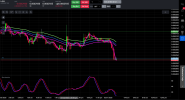
Lift off after scrubbing for another days. ... 0

Hello hayseed, glad to see you in good health and in good fortunes in the market. I am loving the last few pages of this forum. It speaks to your unwavering patience - which holds multi-fold significance.
I smile to see the same questions AntiCre asking that I asked as well. Your answers are as patient and thoughtful as they were when I asked them 10 years ago (crazy to me). And, without question, this same patience allows you to wait for proper setups. I think the hardest element for me to reconcile has been understanding your view of "waiting for alignment/agreement" and the fact that you still remain so active in your trades and so accurate.
I have dipped my toe back into forex, trying to relearn what I forgot, trying to apply it.
I smile to see the same questions AntiCre asking that I asked as well. Your answers are as patient and thoughtful as they were when I asked them 10 years ago (crazy to me). And, without question, this same patience allows you to wait for proper setups. I think the hardest element for me to reconcile has been understanding your view of "waiting for alignment/agreement" and the fact that you still remain so active in your trades and so accurate.
I have dipped my toe back into forex, trying to relearn what I forgot, trying to apply it.
Similar threads
- Replies
- 0
- Views
- 867

- Replies
- 18
- Views
- 9K

- Replies
- 3
- Views
- 4K


- Replies
- 0
- Views
- 1K