Weekly Rundown with PlexyTrade

Wednesday 18 March 2026

Gold Declines Over 5% as CPI Spike Reverses, Fed Expectations Reprice, and Geopolitical Premium Unwinds​

Gold (XAUUSD) is the world’s primary monetary safe-haven asset, widely held by central banks and institutional investors as a hedge against inflation, currency debasement, and geopolitical instability. Its valuation is closely tied to real interest rates, U.S. dollar dynamics, and expectations around Federal Reserve policy.

During periods of macro uncertainty, gold reflects a balance between safe-haven demand and the opportunity cost of holding non-yielding assets. This dynamic becomes particularly complex when geopolitical shocks simultaneously drive inflation higher, constraining the Federal Reserve’s ability to ease policy.

Gold moved sharply during the period of 9–17 March 2026, driven by Middle East tensions, U.S. inflation and labour market data, and a significant repricing of Federal Reserve expectations.

Gold opened at 5191.15 on March 9, marking the starting point of the move.

By Wednesday, March 11, the metal reached an intraday high of 5238.59 following the release of U.S. Consumer Price Index (CPI) data, establishing the peak of the period.

By March 16, gold had declined to a low of 4967.67 before stabilising, and closed at 5005.53 on March 17, representing a decline of 5.17% from the high to the low, and a net move of –3.57% from open to close.

Measured from the low to the high, the total range reached approximately 5.45%, highlighting elevated volatility across the period.


Geopolitical Tensions Established the Initial Premium​

Gold entered the period supported by elevated geopolitical risk, particularly tensions involving Iran, Israel, and the United States.

Concerns around potential disruption to energy flows through the Strait of Hormuz pushed crude oil prices higher and reinforced demand for safe-haven assets. As a result, gold held firm above the 5,150 level early in the week.

However, the same oil-driven dynamics also pushed inflation expectations higher, introducing a structural constraint: rising inflation reduced the likelihood of near-term Federal Reserve rate cuts, limiting gold’s upside despite the geopolitical bid.


CPI Spike Marks the Peak and Triggers Reversal​

The key turning point occurred on Wednesday, March 11, with the release of February CPI data (2.4% YoY headline, 2.5% core).

Gold initially spiked to 5238.59 on the release, as markets reacted to the inflation print. However, the move reversed sharply as the U.S. dollar strengthened and positioning shifted.

The reaction reflected a forward-looking reassessment: while the CPI print itself was relatively contained, it was viewed as backward-looking and failed to capture the surge in oil prices that had developed into March. As a result, markets began to price a more constrained path for monetary easing.

The reversal from the highs indicated exhaustion of the geopolitical and data-driven bid, rather than continuation.


Consolidation as Stagflation Narrative Builds​

Following the CPI-driven reversal, gold entered a consolidation phase between March 11 and March 13.

During this period, the macro narrative shifted toward stagflation risk — slowing growth alongside persistent inflation pressures driven by energy markets.

This environment reduced directional conviction. Markets were increasingly faced with a policy dilemma: growth was weakening, but inflation risks remained elevated, complicating expectations for Federal Reserve action.


NFP Shock Fails to Drive Gold Higher​

On Friday, March 13, U.S. Non-Farm Payrolls printed at –92,000, marking a sharp contraction and a significant miss relative to expectations.

Under normal conditions, such a print would be unambiguously bullish for gold, as it would accelerate expectations of Federal Reserve rate cuts.

However, the reaction was muted.

Fed funds futures reflected a rapid repricing across the week, with expected rate cuts for 2026 falling from approximately 55 basis points to around 26 basis points. At the same time, markets priced a 99.2% probability that the Federal Reserve would hold rates unchanged at the March 18 FOMC meeting.

This repricing reflected not a shift toward hawkishness, but toward policy paralysis — a Federal Reserve constrained by conflicting signals of weakening growth and persistent inflation.

As a result, gold failed to sustain upside momentum, highlighting the breakdown of the traditional macro relationship.


Geopolitical De-escalation Triggers the Sharpest Move​

The most significant move of the period occurred on March 16, when signs of potential diplomatic engagement involving Iran reduced immediate geopolitical tensions.

This triggered a rapid unwinding of the geopolitical premium that had supported gold earlier in the week.

Gold broke below the 5,000 level, reaching a low of 4967.67 before stabilising.

Despite the sharp decline, the 5,000 level acted as a key psychological and structural support, with repeated buying interest emerging on dips.


A Structured Repricing Driven by Competing Forces​

The price action across the period reflected a structured, multi-driver repricing:

  • Initial support from geopolitical risk and elevated oil prices
  • CPI-driven spike and reversal on March 11
  • Consolidation as stagflation concerns emerged
  • Weak NFP data failing to trigger sustained upside
  • Sharp sell-off driven by geopolitical de-escalation
Rather than a single directional trend, gold moved through successive phases as markets adjusted to conflicting macro signals.


Conclusion​

Between March 9 and March 17, gold declined from a high of 5238.59 to a low of 4967.67, marking a 5.17% drop across the period, with a net decline of 3.57% from open to close.

The period began with strong geopolitical support but transitioned into a more complex macro environment, where rising inflation expectations and weakening growth created a policy constraint for the Federal Reserve.

The most decisive move came from the unwinding of geopolitical risk, which removed a key pillar of support and triggered the sharpest decline of the period.

Despite this, the consistent defence of the 5,000 level indicated that underlying demand remained intact, suggesting a rebalancing phase rather than a structural breakdown.

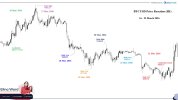
The chart below illustrates XAUUSD price movement between 9 March and 17 March, based on 1-hour candlesticks.

XAUUSD.jpg
 
Thursday 19 March 2026


Brent Crude Rises Over 9% as Geopolitical Escalation and Supply Shock Drive Multi-Stage Repricing

Date of Analysis: 19 March 2026 | Asset: ICE Brent Crude Front-Month Futures | Window: 16–19 March 2026 | Price Source: Candlestick Chart
Classification: Macro Research — For Informational Purposes Only.
Price Summary — ICE Brent Crude (16–19 March 2026, chart-sourced)
DateOpenSession HighSession LowClose / LastChange
Mon 16 Mar$103.99~$106.50 (est.)$103.99 (open)$103.99 (close est.)Week baseline
Tue 17 Mar~$104.50$105.05$99.69 (wk low)~$100.20 (est.)−3.79 / −3.6%
Wed 18 Mar~$100.50$111.95~$100.50~$109.00 (est.)+$8.80 / +8.8%
Thu 19 Mar~$111.00$119.18~$111.00$113.85 (12:00 GMT)+$4.85 / +4.4%
4-Day Net$103.99 open$119.18 high$99.69 low$113.85 last+$9.86 / +9.5%
Note: Session open and close levels for 16–18 March are estimated from candlestick body positioning. Annotated values — open $103.99 (Mon); high $105.05 and low $99.69 (Tue); high $111.95 (Wed); high $119.18 and last $113.85 at 12:00 GMT (Thu) — are sourced directly from chart annotations and treated as precise.
Brent crude oil is the global benchmark for seaborne crude pricing, widely used to value oil flows from Europe, Africa, and the Middle East. Its price reflects not only physical supply-demand conditions but also geopolitical risk, transportation constraints, and financial market positioning. In periods of conflict, Brent often embeds a geopolitical risk premium — a probability-weighted adjustment reflecting potential disruptions to supply chains, infrastructure, and transit routes.

During the week of 16–19 March 2026, Brent crude prices were driven by an evolving geopolitical crisis in the Middle East, centered around the closure of the Strait of Hormuz and escalating military actions involving Iran, Israel, and the United States. The move unfolded in stages, combining an initial consolidation, a midweek shakeout, and a sharp repricing following confirmed upstream energy infrastructure strikes.

Brent opened the week at $103.99 on Monday 16 March, establishing the baseline for the move. By Thursday 19 March, prices reached an intraday high of $119.18 before trading at $113.85 at 12:00 GMT, representing a gain of $9.86, or +9.5%, from the weekly open, and a peak advance of approximately +14.6% from open to high. Measured from the weekly low of $99.69 to the Thursday peak, the full range of the move reached $19.49, equivalent to a +19.6% swing within four trading sessions.

Initial Consolidation as Market Absorbs Existing Risk​

The week began with Brent trading at $103.99, reflecting a market that had already repriced significantly following the late-February escalation in the region. Monday's price action was largely consolidative. Despite ongoing disruptions — including confirmed mine-laying in the Strait of Hormuz, GPS interference, and a sharp reduction in tanker movement — prices failed to extend meaningfully higher. Instead, the session reflected institutional positioning and profit-taking after a rapid rally from pre-conflict levels near $60–65 per barrel. The absence of a fresh catalyst kept the market in a holding pattern, even as physical supply constraints remained severe.

Midweek Shakeout Tests $100 Structural Floor​

On Tuesday 17 March, Brent reached an early-session high of $105.05 before reversing sharply to a weekly low of $99.69. This move represented a decline of approximately 5% within a single session and marked the most volatile price action of the week. The sell-off was driven by a combination of headline-driven factors, including the European Union's rejection of participation in a Hormuz security coalition and diplomatic signals suggesting limited Western military expansion. These developments provided a short-term de-escalation narrative, prompting profit-taking in a market that had rallied aggressively in preceding weeks.

However, the rejection of sub-$100 prices proved structurally significant. The $99.69 level acted as a firm floor, indicating that the underlying supply disruption — including an estimated 7–10 million barrels per day of constrained output — continued to dominate pricing dynamics.

Upstream Strike Triggers Structural Repricing​

The decisive shift occurred on Wednesday 18 March, when Israel and the United States conducted confirmed strikes on Iran's South Pars gas field. This marked the first direct attack on upstream energy infrastructure during the conflict and represented a qualitative escalation from transit disruption to production risk. Following this development, Brent surged from the weekly low of $99.69 to a session high of $111.95 — a move of $12.26, or +12.3%, in less than 24 hours.

The magnitude of the move reflected a rapid reassessment of supply risk. South Pars is a critical energy hub, and any disruption introduced second-order risks across both oil and global gas markets. At the same time, Iran publicly identified energy infrastructure targets in Saudi Arabia and the UAE, expanding the potential scope of disruption across key producing regions. The repricing was further reinforced by macro conditions, including a Federal Reserve rate hold and rising inflation expectations, which supported continued strength in both oil and the US dollar.

Continuation Move Extends Rally Before Profit-Taking​

On Thursday 19 March, Brent extended its rally to a weekly high of $119.18 before retracing to $113.85 by midday. The continuation from Wednesday's high represented an additional gain of approximately 6.5%, confirming sustained buying pressure following the upstream escalation. The subsequent pullback of roughly 4–5% reflected short-term profit-taking rather than a change in the underlying trend. With no confirmed ceasefire and ongoing threats to Gulf energy infrastructure, the structural bid remained intact. From the Tuesday low of $99.69 to the Thursday peak of $119.18, Brent advanced nearly 20% in under two days — one of the sharpest short-term moves in recent market history.

A Multi-Phase Repricing, Not a Linear Rally​

The week's price action developed through distinct phases: initial consolidation following prior gains; a midweek shakeout testing and rejecting sub-$100 levels; a sharp upward repricing driven by upstream energy disruption; and continued gains supported by escalating geopolitical risk. Rather than a single directional surge, the move reflected a layered adjustment process as new information was incorporated into market pricing. The rejection of the $99.69 low confirmed a structurally higher price floor, while the rapid recovery highlighted the market's sensitivity to incremental escalation in supply risk.

Conclusion​

Between 16 March and 19 March 2026, Brent crude advanced more than 9%, reaching multi-day highs as markets reassessed the scale and scope of potential supply disruption in the Middle East. The move was driven by a transition from transit-related disruption to direct upstream risk, alongside expanding geopolitical threats to major Gulf energy infrastructure. From $103.99 at the Monday open to a peak of $119.18 on Thursday, the progression reflected a structured repricing process rather than a one-off spike — demonstrating how successive escalation signals can drive sustained and meaningful adjustments in commodity markets.


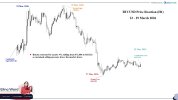
The chart below reflects Brent crude’s price action from 16–19 March, capturing the intraday structure of the week’s move.


Brent Crude.jpg
 
Monday 23 March 2026

Tesla Shares Fall Nearly 7% as Failed Breakout and Macro Risks Drive Stepwise Decline​

Tesla (NASDAQ: TSLA) is a U.S.-based electric vehicle and technology company founded in 2003, with operations spanning automotive manufacturing, energy storage, and artificial intelligence infrastructure. In recent years, Tesla’s stock has increasingly behaved like a high-growth, rate-sensitive asset, with valuation shaped not only by company developments but also by interest rates, liquidity conditions, and broader market sentiment.
Tesla shares declined during the week of March 16–20, with the move unfolding in stages as investors reacted to a failed breakout above a key resistance level, tightening financial conditions, and rising geopolitical uncertainty.

Price Summary — Tesla (16–20 March 2026, chart-sourced)​

DateOpenHighLowCloseComment
Mon 16 Mar$396.48$403.64Break above $400 fails; Terafab optimism
Tue 17 Mar$402.98$393.43Lower high forms
Wed 18 Mar$392.94Gradual decline
Thu 19 Mar$379.62Selling accelerates
Fri 20 Mar$364.39$367.73Weekly low and close
5-Day Net:
Open $396.48 → High $403.64 → Low $364.39 → Close $367.73
Net Change: −$28.75 / −7.24% (open to close)
Peak-to-Low Range: $39.25 / −9.7% swing
Note: Intermediate opens and closes are derived from the annotated chart.

Tesla opened the week on Monday, March 16 at $396.48, and quickly rallied to a weekly high of $403.64, briefly breaking above the $400 level as investors reacted to Elon Musk’s indication that the Terafab AI chip factory project could launch within about a week.
However, the breakout failed to hold.
By the end of Monday and into early Tuesday, Tesla began forming a lower high, signaling that buying momentum was fading.

Failed Break Above $400 Sets the Initial Direction​

The move began with the attempted breakout above $400 on March 16.
This level acted as both a psychological threshold and a key technical resistance zone. While the initial push higher suggested strength, the inability to sustain gains quickly shifted sentiment.
Buyers who entered near the breakout lacked follow-through, and selling pressure began to build.
On March 17, Tesla printed a lower high at $402.98, confirming the rejection and establishing the first clear sign of weakness.

Fed Decision and Market Focus Limit Upside​

On Tuesday, March 17, markets turned their attention to the Federal Reserve’s two-day policy meeting.
Although equities were relatively stable, trading conditions were subdued. Tesla’s intraday range — with a high of $402.98 and a low of $393.43 — reflected hesitation, as the earlier breakout failed to attract new buyers.
Without fresh bullish catalysts, the stock began to drift lower.

Federal Reserve Holds Rates as Oil Surge Shifts Sentiment​

By Wednesday, March 18, the macro environment became more challenging.
The Federal Reserve held interest rates steady, as expected, but signaled a cautious outlook with limited scope for future rate cuts. At the same time, rising geopolitical tensions pushed oil prices sharply higher, with Brent crude briefly reaching around $110 per barrel.
Higher energy prices and inflation concerns weighed on markets. The Nasdaq turned lower, and Tesla’s price declined further, reaching $392.94, as the broader market began to weaken.
In this environment, Tesla’s high-growth valuation came under pressure.

Regulatory Pressure and Macro Stress Accelerate the Move​

On Thursday, March 19, additional pressure emerged.
U.S. regulators escalated their probe into Tesla’s Full Self-Driving system, expanding the review to cover approximately 3.2 million vehicles. This development added to concerns around Tesla’s autonomy business.
At the same time, geopolitical developments kept oil prices volatile, with Brent briefly rising above $119 before stabilizing near $108.
With both oil prices and bond yields rising, risk assets weakened further. Tesla extended its decline, reaching $379.62, as selling pressure intensified alongside the broader market.

Conflict Escalation Drives Final Leg Lower​

On Friday, March 20, geopolitical tensions escalated further, increasing uncertainty across global markets.
Oil prices rose to their highest levels since early 2022, while U.S. Treasury yields climbed, with the 10-year yield reaching approximately 4.38%. Equity markets declined for a third consecutive session, with technology stocks under particular pressure.
Tesla fell to a weekly low of $364.39 before closing at $367.73, marking its weakest level of the week as demand remained limited.

Conclusion​

Tesla’s decline during March 16–20 was not driven by a single dominant company-specific event, but by a combination of factors.
The failed breakout above $400 triggered a shift in positioning, while the Federal Reserve’s cautious stance, rising oil prices, and geopolitical tensions created a more challenging macro environment. Additional regulatory developments further weighed on sentiment.

In this context, Tesla’s stock moved lower in a structured, stepwise decline — from $403.64 at the weekly high to $364.39 at the low — illustrating how technical rejection, macro pressure, and market positioning can combine to drive sustained downside movement.

TSLA.jpg
 
24th March 2026

USD/CHF Drops Over 100 Pips as Iran De-escalation Signals Trigger Broad USD Selling

USD/CHF is a major foreign exchange pair reflecting the value of the U.S. dollar against the Swiss franc, a currency traditionally viewed as a safe-haven during periods of geopolitical uncertainty. As a result, the pair is highly sensitive to shifts in global risk sentiment and rapid changes in market positioning.
During the European session on March 23, USD/CHF experienced a sharp and extended intraday decline, driven by a sudden shift in geopolitical expectations.
The pair initially traded near 0.79395 before entering a sustained downward move, eventually reaching a daily low of 0.78345. This marked a decline of approximately 105 pips, equivalent to a 1.32% drop from the initial level to the session low.


Price Action Summary

MetricValue
Pre-move Level0.79395
Intraday Low0.78345
Total Move−105 pips
Percentage Move−1.32%
StructureTwo-phase move (spike + continuation)
SessionEuropean session

Iran De-escalation Signals Trigger the Initial Move

The decline was triggered by comments from Donald Trump indicating that discussions with Iran were “productive” and aimed at reducing hostilities.
The remarks signaled a potential easing of geopolitical tensions in the Middle East, prompting a rapid reassessment of defensive positioning. As a result, demand for the U.S. dollar weakened, initiating the first leg lower in USD/CHF.


Initial Spike Followed by Extended Downside

The price action developed in two distinct phases.
The first phase consisted of a sharp, aggressive drop immediately following the geopolitical headlines, reflecting a fast repricing of USD exposure.
This was followed by a second phase, where the pair continued to grind lower toward the session low of 0.78345, driven by continued position unwinding rather than a fresh catalyst.


Market Structure Accelerated the Move

As USD/CHF moved lower, price broke below intraday support levels, triggering a cascade of stop-loss orders positioned beneath key technical zones.
This amplified the decline, accelerating the move beyond the initial reaction and contributing to the full 105-pip range observed.


A Repricing Event Driven by Sentiment Shift

The overall move reflected a classic sequence:
  • Geopolitical de-escalation signals triggered USD selling
  • Initial spike following headline release
  • Continued downside from position unwinding
  • Acceleration through technical levels

Conclusion

On March 23, USD/CHF declined from approximately 0.79395 to 0.78345, marking a 105-pip (1.32%) move during the European session.
The move was driven by a shift in geopolitical sentiment following signals of easing tensions between the United States and Iran, with market structure amplifying the decline as key levels were breached.

The chart below illustrates USD/CHF price action on a 5-minute timeframe for March 23, 2026.

USDCHF.jpg
 
24th March 2026​

BTC/USD Drops Over 10% as Hawkish Fed Signals and Risk-Off Shift Trigger Crypto Repricing

BTC/USD represents the value of Bitcoin against the U.S. dollar, a high-beta asset that is highly sensitive to global liquidity conditions, interest rate expectations, and broader risk sentiment. As a result, Bitcoin often reacts sharply to macroeconomic developments and shifts in institutional positioning.
During the week of March 16 to March 22, BTC/USD experienced a sharp and extended decline, driven by a shift in macro expectations following the Federal Reserve’s policy decision and broader risk-off sentiment.

Bitcoin initially traded near 71,712.22, before rallying toward a weekly high of 75,981.51 on March 17. However, momentum failed to hold, and price entered a sustained downward move, eventually reaching a weekly low of 68,092.54, before stabilizing into the weekly close near 68,165.77.

This marked a decline of approximately 7,888.97 points, equivalent to a −10.38% move from the high to the low.

Price Action Summary​

MetricValue
Weekly Open71,712.22
Weekly High75,981.51
Weekly Low68,092.54
Weekly Close68,165.77
Total Move (High → Low)−7,888.97
Percentage Move−10.38%
StructureTwo-phase move (spike + continuation)
SessionMulti-session (week-wide repricing)

Hawkish Fed Signals Trigger the Initial Move​

The decline was driven primarily by macroeconomic developments, particularly the outcome of the Federal Reserve meeting held on March 17–18.
While the Fed kept interest rates unchanged, policymakers raised their inflation outlook, citing rising energy prices linked to Middle East tensions. This “hawkish hold” signaled that interest rates would remain higher for longer, reducing expectations for near-term monetary easing.

As a result, risk appetite weakened across global markets, triggering selling pressure in Bitcoin and other risk-sensitive assets.

Initial Spike Followed by Extended Downside​

The price action developed in two distinct phases.

The first phase consisted of an early-week rally toward 75,981.51, supported by strong positioning, institutional flows, and short covering.

However, following the Fed decision, the second phase emerged, with Bitcoin reversing sharply and entering a sustained decline toward 68,092.54, as macro conditions deteriorated and sentiment shifted.

Institutional Flows and Market Structure Accelerated the Move​

As the market moved lower, institutional positioning played a key role in accelerating the decline.
Significant outflows from Bitcoin ETFs signaled a shift toward risk reduction, while derivatives markets showed defensive positioning, with long positions unwinding and short exposure increasing.

At the same time, the failure to sustain price above the 75,000 resistance zone triggered a reversal from short-covering-driven highs, amplifying downside momentum.

A Repricing Event Driven by Macro and Positioning Shift​

The overall move reflected a classic sequence:
  • Hawkish Fed signals reduced expectations for monetary easing
  • Initial upside driven by positioning and short covering
  • Sharp reversal following macro reassessment
  • Continued downside driven by institutional outflows and risk reduction

Conclusion​

Between March 16 and March 22, BTC/USD declined from approximately 75,981.51 to 68,092.54, marking a −10.38% move.
The move was driven primarily by a shift in macroeconomic expectations following the Federal Reserve’s hawkish stance, which reduced risk appetite and triggered a broad repricing across risk assets. Market structure and institutional positioning then amplified the decline, extending the move throughout the week.
BTCUSD.jpg
 
25th March 2026

XAU/USD Drops Over 18% as Hawkish Fed Signals and Inflation Pressures Drive Sharp Repricing

XAU/USD represents the price of Gold (XAUUSD) against the U.S. dollar, a traditional safe-haven asset that is highly sensitive to interest rates, inflation expectations, and broader risk sentiment. As a non-yielding asset, gold is particularly impacted by changes in monetary policy expectations and real yields.
Between March 16 and March 24, XAU/USD experienced a sharp and extended decline, driven by a shift in macroeconomic expectations following the Federal Reserve’s policy decision and rising inflation pressures linked to energy markets.
Gold initially traded near 5011.75, before entering a sustained downward move, eventually reaching a low of 4099.15 on March 23. The metal later recovered partially, closing near 4474.10 on March 24.
This marked a decline of approximately 91,260 ticks, equivalent to an −18.21% move from the opening level to the period low. On a net basis, gold declined 53,765 ticks (−10.73%) from open to close, reflecting a partial recovery after the sharp sell-off.


Price Action Summary

MetricValue
Weekly Open5011.75
Period Low4099.15
Weekly Close4474.10
Total Move (Open → Low)−91,260 ticks
Percentage Move (Open → Low)−18.21%
Net Move (Open → Close)−53,765 ticks
Percentage Move (Open → Close)−10.73%
StructureTwo-phase move (sell-off + recovery)
SessionMulti-session (macro-driven repricing)

Hawkish Fed Signals Trigger the Initial Move

The decline was driven primarily by macroeconomic developments, particularly the outcome of the Federal Reserve meeting on March 18.
While the Fed held interest rates steady, policymakers emphasized elevated inflation risks and uncertainty linked to geopolitical tensions in the Middle East. Rising energy prices contributed to inflation concerns, reinforcing expectations that interest rates would remain higher for longer.
As a result, gold came under pressure, as higher interest rate expectations reduce the attractiveness of non-yielding assets.


Initial Stability Followed by Extended Downside

The price action developed in two distinct phases.
The first phase showed relative stability near the 5000 level, as safe-haven demand provided temporary support amid geopolitical uncertainty.
However, following the Fed decision and the shift in macro expectations, the second phase emerged, with gold entering a sustained decline toward 4099.15, as markets repriced interest rate expectations and risk conditions.


Market Structure Accelerated the Move

As XAU/USD moved lower, price broke through key support levels, triggering a cascade of stop-loss orders and accelerating downside momentum.
This amplified the decline, extending the move beyond the initial reaction and contributing to the full −91,260 tick range observed.
The sharp move into March 23 reflected a liquidity-driven extension rather than a disorderly collapse.


A Repricing Event Driven by Macro and Inflation Dynamics

The overall move reflected a clear sequence:
  • Geopolitical tensions initially supported gold demand
  • Rising energy prices increased inflation expectations
  • Hawkish Fed signals reinforced a higher-for-longer rate outlook
  • Gold sold off as macro conditions outweighed safe-haven demand
  • Partial recovery followed as markets stabilized

Conclusion

Between March 16 and March 24, XAU/USD declined from approximately 5011.75 to 4099.15, marking an −18.21% move, before recovering to close near 4474.10. On a net basis, this represented a −10.73% decline from the opening level, highlighting that while gold experienced a sharp macro-driven sell-off, part of the move was later retraced as market conditions stabilized.
The move was driven primarily by macroeconomic repricing following the Federal Reserve’s cautious stance, with inflation pressures—partly linked to energy markets—reinforcing expectations of sustained higher interest rates. Market structure then amplified the decline as key levels were breached, while the subsequent recovery reflected a partial normalization in sentiment.


The chart below illustrates XAU/USD price action on a 1-hour timeframe for March 16–24, 2026.

XAUUSD.jpg
 
26 March 2026

Brent Crude Oil Drops Over 15% as De-Escalation Signals Trigger Sharp Risk Repricing

Brent crude represents the global benchmark for oil prices and is highly sensitive to geopolitical developments, supply disruption risks, and shifts in market sentiment. As a key energy commodity, oil reacts rapidly to changes in expectations around conflict, particularly when critical supply routes such as the Strait of Hormuz are involved.

Between March 23 and March 26, 2026, Brent crude experienced a sharp and volatile decline, driven by a sudden shift in geopolitical expectations following headlines suggesting potential de-escalation in the Middle East.

Brent initially traded near 112.07, before rallying to a weekly high of 114.41. However, the market quickly reversed, entering an aggressive sell-off that pushed price down to a weekly low of 96.53 on March 23. The market later stabilized and recovered, with price rebounding toward 104.85, trading near 104.32 as of March 26 (09:00 GMT).

This marked a decline of approximately 1,788 ticks, equivalent to a −15.63% move from the high to the low. On a net basis, Brent declined 775 ticks (−6.91%) from the March 23 open to current levels on March 26, reflecting a partial recovery following the sharp liquidation phase.


Price Action Summary

MetricValue
Period Open (23 Mar)112.07
Weekly High114.41
Weekly Low96.53
Current Price (26 Mar 09:00)104.32
Total Move (High → Low)−1,788 ticks
Percentage Move (High → Low)−15.63%
Net Move (Open → Current)−775 ticks
Percentage (Open → Current)−6.91%
Rebound (Low → Current High)+832 ticks
Percentage (Low → High)+8.62%
StructureTwo-phase move (liquidation + recovery)
SessionMulti-session (headline-driven repricing)

De-Escalation Headlines Trigger the Initial Move

The decline was driven primarily by geopolitical developments, particularly headlines on March 23 indicating that U.S.–Iran talks were described as “very good and productive,” although Iran later denied that discussions had taken place.

This triggered an immediate shift in market expectations, as traders interpreted the headlines as a potential easing of conflict and a reduced probability of supply disruption.

As a result, Brent came under intense pressure, with geopolitical risk premium rapidly unwound and price collapsing from the 114.41 high toward the 96.53 low, marking a panic-driven liquidation phase.


Initial Stability Followed by Structured Recovery

The price action developed in two distinct phases.

The first phase was characterized by a sharp and aggressive sell-off toward 96.53, driven by panic selling and forced liquidations.

Following this, the second phase emerged, where price began to stabilize. On March 24, Brent formed a base with a daily low of 98.18, signaling that selling pressure had started to ease after the initial shock.

This stabilization phase reflected exhaustion in downside momentum and the early formation of support.


Market Structure and Range Formation

On March 25, Brent continued to trade within a defined range, reaching a daily high of 102.44 and a daily low of 97.12.
This phase reflected:
  • Lack of strong directional conviction
  • Ongoing uncertainty around geopolitical developments
  • Market reassessing fair value after the extreme move
As price moved through intraday levels, short-term volatility remained elevated, reinforcing a choppy consolidation structure.


Recovery as Risk Premium Gradually Rebuilds

By March 26, Brent began to recover more decisively.
Price pushed higher toward a current high of 104.85, with the session opening at 104.32 (09:00 GMT).
The recovery was driven by:
  • Re-emerging uncertainty around diplomatic progress
  • Market recognition that de-escalation was not confirmed
  • Gradual rebuilding of geopolitical risk premium

A Repricing Event Driven by Geopolitics and Positioning

The overall move reflected a clear sequence:
  • Elevated geopolitical risk initially supported higher oil prices
  • De-escalation headlines triggered a rapid unwind of risk premium
  • Panic selling and liquidation accelerated the downside move
  • Market stabilized after selling pressure was exhausted
  • Partial recovery followed as uncertainty persisted

Market Note (Weekend Risk Focus)

As the weekend approaches, geopolitical risk remains elevated and skewed toward further escalation. The U.S. is preparing to deploy airborne troops into the region, signaling a potential shift toward direct military involvement, while Iran continues to deny that any peace talks with Washington are taking place despite ongoing diplomatic claims . At the same time, Gulf states have hardened their stance, stating they are ready to act in self-defense following repeated attacks on energy infrastructure, increasing the risk of broader regional participation . Meanwhile, Iran and Israel are intensifying strikes on each other’s territory, reinforcing the likelihood of continued volatility .

Overall, markets are heading into the weekend with heightened uncertainty, rising military involvement, and no confirmed diplomatic breakthrough, leaving oil and broader risk assets vulnerable to gap risk and headline-driven price action at the next open.


Conclusion

Between March 23 and March 26, Brent crude declined from a high of 114.41 to a low of 96.53, marking a −15.63% move, before recovering to trade near 104.32 as of March 26. On a net basis, this represents a −6.91% decline from the March 23 opening level, highlighting that while the market experienced a sharp geopolitical-driven sell-off, part of the move was later retraced.

From the weekly low of 96.53 to the current high of 104.85, Brent rebounded approximately +832 ticks, equivalent to a +8.62% recovery, reflecting a partial rebuilding of geopolitical risk premium as uncertainty around diplomatic outcomes persisted.

The move was driven primarily by rapid shifts in geopolitical expectations, with de-escalation signals triggering a sharp unwinding of risk premium. Market structure then amplified the decline as key levels were breached, while the subsequent recovery reflected a partial stabilization in sentiment and positioning.


The chart Below illustrates Brent crude oil price action on a 1-hour timeframe for March 23–26, 2026.

Oil.jpg
 
30 March 2026

Exxon Mobil (XOM CFD) Rallies Over 10% as Oil Surge and Geopolitical Escalation Drive Strong Repricing​

Exxon Mobil represents one of the world’s largest integrated energy companies, with operations spanning upstream oil production, refining, and global energy distribution. As a result, its stock is highly sensitive to crude oil prices, geopolitical developments, and shifts in global energy supply expectations.

Between March 23 and March 27, 2026, Exxon Mobil experienced a strong and sustained rally, driven by a sharp increase in oil prices and escalating geopolitical tensions in the Middle East.

Exxon Mobil initially traded near 154.68, before entering a sustained upward move, reaching a weekly high of 171.09 on March 27. The stock later consolidated near highs, closing at 170.94.

This marked a total move of approximately +16.41 points, equivalent to a +10.61% increase from the opening level to the period high. On a net basis, Exxon Mobil advanced +16.26 points (+10.52%) from open to close, reflecting sustained bullish momentum throughout the week.

Price Action Summary

MetricValue
Weekly Open154.68
Period High171.09
Weekly Close170.94
Total Move (Open → High)+16.41
Percentage Move (Open → High)+10.61%
Net Move (Open → Close)+16.26
Percentage Move (Open → Close)+10.52%
StructureTrend continuation (impulsive rally)
SessionMulti-session (geopolitical repricing)

Oil Surge and Geopolitical Escalation Trigger the Move

The rally was driven primarily by geopolitical developments, particularly escalating tensions involving the U.S., Israel, and Iran, which significantly increased fears of supply disruption.

Market focus centered on the Strait of Hormuz, a critical global oil transit route responsible for a large share of global crude flows.
As tensions intensified, oil prices surged sharply, as markets began pricing in the risk of supply constraints. This directly supported Exxon Mobil, as higher crude prices improve revenue expectations and profitability across its upstream operations.

Sustained Momentum and Trend Development

The price action developed as a continuous bullish trend, rather than a two-phase structure.

The initial phase began with a breakout from the 154.68 opening level, supported by rising oil prices and early geopolitical concerns.
As the week progressed, the second phase emerged as momentum accelerated, with Exxon forming consistent higher highs and higher lows, ultimately pushing toward the 171.09 high.

The move into the end of the week reflected strong continuation rather than exhaustion, with price holding near highs into the close at 170.94.

Market Structure Reinforced the Upside Move

As Exxon Mobil moved higher, the structure of the rally remained orderly and trend-driven.
Unlike panic-driven moves, this advance showed:
  • Controlled pullbacks
  • Strong bullish continuation candles
  • Gradual expansion in price range
The breakout into March 27 represented a momentum-driven extension, supported by continued inflows into energy equities.
The consolidation near highs suggests:
  • Limited selling pressure
  • Strong positioning into the weekend
  • Market holding gains rather than reversing

A Repricing Event Driven by Oil and Energy Market Dynamics

The overall move reflected a clear sequence:
  • Geopolitical tensions increased supply disruption risks
  • Oil prices surged sharply
  • Energy sector attracted strong institutional inflows
  • Exxon Mobil repriced higher based on improved earnings expectations
  • Trend continuation followed as momentum strengthened

Conclusion

Between March 23 and March 27, 2026, Exxon Mobil rallied from 154.68 to 171.09, marking a +10.61% move, before closing near highs at 170.94. On a net basis, this represented a +10.52% increase from the opening level, highlighting a strong, trend-driven move with minimal retracement.

The move was driven primarily by geopolitical escalation and the resulting surge in oil prices, which increased expectations of supply disruption and boosted the outlook for energy companies. Exxon Mobil’s strong upstream exposure amplified the impact of rising crude prices, while sustained institutional demand reinforced the upward trend.

Overall, the move represents a clean geopolitical-driven repricing event, where oil market dynamics and capital rotation combined to drive strong upside momentum in Exxon Mobil.

EXXON.jpg
 
31 March 2026

BTC/USD Falls Over 6,400 Points as Geopolitics and Macro Shift Trigger Broad Risk-Off Move

BTC/USD represents the price of Bitcoin against the U.S. dollar and is widely viewed as a high-beta risk asset, often reacting sharply to changes in global liquidity, macro expectations, and investor sentiment. As a result, Bitcoin tends to perform strongly during periods of risk appetite, while facing pressure when markets shift toward defensive positioning.

Between March 23 and March 29, 2026, BTC/USD experienced a volatile week that transitioned from bullish momentum into a sharp risk-off driven decline.

The pair initially opened near 68,157.86 before rallying into a weekly high of 72,008.00 on March 25, followed by a strong reversal that pushed price down to a weekly low of 65,532.82 on March 27. Bitcoin later stabilized, closing the week at 66,575.50.

This marked a total range of approximately 6,475 points, equivalent to a ~9.5% move from high to low, while posting a net decline of approximately −2.32% from open to close, highlighting elevated volatility and a clear shift in market dynamics.


Price Action Summary

MetricValue
Weekly Open68,157.86
Weekly High72,008.00 (25 March)
Weekly Low65,532.82 (27 March)
Weekly Close66,575.50
Total Range6,475 points
High → Low Move~9.5%
Open → Close Move−2.32%
StructureRally → Reversal → Liquidation
PeriodMarch 23–29

Early Week Rally Driven by Crypto Flows and Breakout Momentum

The initial move higher into March 25 was driven primarily by internal market dynamics rather than external catalysts.

Bitcoin broke above short-term resistance levels, triggering momentum buying and short liquidations. This created a strong upward push toward the 72,000 level, supported by continued institutional demand narratives and bullish positioning carried over from previous sessions.

The move into the weekly high reflected a classic breakout extension fueled by liquidity rather than macroeconomic developments.


Rejection at Highs Signals Shift in Market Control

The failure to sustain price above 72,000 marked a turning point in the week.

Selling pressure emerged aggressively at highs, indicating distribution rather than continuation. At the same time, broader macro conditions began to weigh on risk assets, including rising U.S. yields and a firmer dollar tone.

This combination led to a transition from bullish momentum into a reversal phase, as buyers failed to maintain control above key levels.


Geopolitical Risk and Liquidations Drive Sharp Selloff

The most significant move occurred between March 26 and March 27, when BTC/USD dropped sharply toward the 65,532.82 low.
This decline was primarily driven by:
  • Escalating Middle East geopolitical tensions, increasing global uncertainty
  • A broader risk-off shift across financial markets
  • Bitcoin behaving in line with other risk assets rather than as a safe haven
As price broke below key support levels, a cascade of stop-loss orders and long liquidations accelerated the downside move, extending the decline beyond the initial macro-driven reaction.


Stabilization Follows Exhaustion of Selling Pressure

After reaching the weekly low, Bitcoin entered a consolidation phase into the weekend.

Price stabilized as selling pressure eased, with short-term participants taking profits and volatility compressing. The market closed the week at 66,575.50, reflecting a partial recovery but no clear return to bullish structure.

This phase was driven more by positioning adjustments than by new fundamental catalysts.


A Multi-Driver Move Across Crypto, Macro, and Geopolitics

The overall weekly structure reflected a layered sequence of drivers:
  • Initial rally supported by crypto-specific flows and technical breakout
  • Reversal triggered by macro pressure (rates and USD strength)
  • Sharp decline driven by geopolitical risk and liquidation cascades
  • Final stabilization driven by technical exhaustion and repositioning

Conclusion

Between March 23 and March 29, BTC/USD moved from an open of 68,157.86 to a weekly high of 72,008.00, before reversing sharply to a low of 65,532.82 and closing at 66,575.50, marking a −2.32% decline from open to close.

The move was driven by a transition from crypto-led bullish momentum into a macro- and geopolitics-driven risk-off environment, with market structure amplifying the decline as key technical levels were breached.

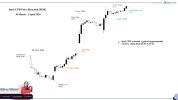
The chart illustrates BTC/USD price action on the H1 timeframe between March 23 and March 29, highlighting the shift from breakout conditions to liquidation-driven downside.

BTCUSD.jpg
 
Thursday 2 April 2026

Brent Crude Oil Swings Over $11 as Conflicting U.S.–Iran Signals Drive Extreme Two-Way Repricing

Brent crude represents the global benchmark for oil prices and is highly sensitive to geopolitical developments, supply disruption risks, and shifts in market sentiment. As a key energy commodity, oil reacts rapidly to changes in expectations around conflict, particularly when critical supply routes such as the Strait of Hormuz are involved.

Between March 30 and April 2, 2026, Brent crude experienced a sharp multi-session move, driven by rapid shifts in geopolitical expectations surrounding the Iran–Israel conflict, with conflicting U.S. policy signals triggering both a full liquidation and subsequent recovery.
Brent initially traded near 111.92, rising to a local high of 113.27, before entering a sharp sell-off that pushed price down to 101.63. The market then reversed aggressively, rebounding toward 112.37, with price trading near 112.22 in the latest session.

This marked a decline of approximately 1,164 ticks (−10.28%) from the high to the low. On a net basis, Brent moved +30 ticks (+0.27%) from the March 30 open to current levels, reflecting a full retracement of the prior downside move.


Price Action Summary


MetricValue
Period Open (30 Mar)111.92
Period High113.27
Period Low101.63
Current Price112.22
Total Move (High → Low)−1,164 ticks
Percentage Move (High → Low)−10.28%
Net Move (Open → Current)+30 ticks
Percentage (Open → Current)+0.27%
Rebound (Low → High)+1,074 ticks
Percentage (Low → High)+10.57%
StructureThree-phase move (risk premium unwind + liquidation + recovery)
SessionMulti-session (headline-driven repricing)


Timeline-Driven Geopolitical Repricing

The dominant driver throughout the period was geopolitical repricing linked to the Iran–Israel conflict, with price direction closely tracking day-by-day changes in perceived escalation risk.
  • March 30: Expansion of the conflict, including Houthi involvement, reinforced supply disruption fears, keeping Brent supported near the highs.
  • March 31: Unconfirmed de-escalation signals (including potential war-ending discussions) pushed prices higher, as markets briefly priced in reduced conflict risk.
  • April 1: A decisive shift occurred after U.S. comments signaling a near-term end to the war, triggering a sharp collapse as the geopolitical risk premium was rapidly unwound.
  • April 2: The narrative reversed, with renewed U.S. threats targeting Iran’s energy infrastructure, leading to a strong rebound as risk premium was reintroduced.
This clear day-by-day cause → reaction mapping explains the full two-way structure observed in price.

De-escalation Signals Trigger the Liquidation Phase

The most aggressive move occurred on April 1, when markets rapidly repriced expectations following signals that the U.S. could exit the conflict.
This led to:


  • Immediate unwinding of geopolitical risk premium
  • Rapid liquidation of long positioning
  • A sharp move from 113.27 → 101.63 (−10.28%)
The move reflected a transition from conflict pricing → normalization pricing.

Liquidation Extended by Positioning

As the move developed, price action shifted from reaction to forced liquidation dynamics.
This phase was characterized by:


  • Sustained downside momentum
  • Limited structural support
  • Acceleration driven by positioning rather than new information
This confirms the move was not purely headline-driven, but also structure-amplified.

Supporting Factors Reinforced the Price Floor

While geopolitics defined direction, secondary factors played a critical role in stabilizing price:

  • OPEC production decline (~7.5 mbpd) tightened supply expectations
  • IEA warnings of further disruptions reinforced underlying risk
  • China directing refiners to maintain output signaled resilient demand
  • U.S. inventory and supply data contributed to short-term fluctuations
These factors acted as a support layer, preventing continued downside extension and enabling stabilization.

Recovery as Risk Premium Rebuilds

On April 2, Brent reversed sharply higher, recovering toward 112.37.
This move was driven by:


  • Re-emerging geopolitical uncertainty
  • Renewed U.S. escalation rhetoric
  • Repricing of supply disruption risk
As a result, the market transitioned back into risk-premium pricing, driving a strong recovery from the lows.

A Repricing Event Driven by Geopolitics and Positioning

The overall move followed a clear institutional sequence:

  • Conflict escalation supported elevated pricing
  • De-escalation signals triggered a rapid unwind
  • Liquidation accelerated the downside move
  • Market stabilized as selling pressure exhausted
  • Recovery followed as escalation risk returned

Conclusion

Between March 30 and April 2, 2026, Brent crude moved from a high of 113.27 to a low of 101.63, marking a −10.28% move, before recovering to trade near 112.22.

On a net basis, Brent recorded a marginal gain of +0.27%, indicating that the full sell-off was effectively retraced.
From the low of 101.63 to the high of 112.37, Brent rebounded approximately +10.57%, reflecting a full rebuilding of geopolitical risk premium as uncertainty persisted.

The move was driven primarily by geopolitical expectation shifts, with U.S. policy signals acting as the key catalyst, while supply-side dynamics and market positioning amplified both the downside liquidation and subsequent recovery.


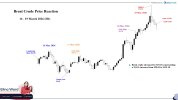
The chart below illustrates Brent Crude Oil price action on a 1-Hour timeframe from March 30 to April 2, 2026 (current time).


Brent Crude 2 Apr. 2026.jpg
 

Monday 6 April 2026

Intel Surged Over 24% as Strategic Buyback Triggered Sharp Repricing​

Intel represents one of the largest semiconductor manufacturers globally, with its stock highly sensitive to sector sentiment, capital allocation decisions, and developments tied to artificial intelligence demand and chip supply dynamics. As a core technology stock, Intel reacts strongly to strategic announcements that impact long-term growth expectations and earnings outlook.

Between March 30 and April 2, 2026, Intel experienced a sharp and extended upside move, driven by a shift in market expectations following a major corporate announcement.

Intel initially traded near 43.40, before declining to a low of 40.56 on March 30. The stock then reversed sharply, entering a strong bullish phase, eventually reaching a high of 50.42 and closing near 50.34 on April 2.

This marked a move of approximately +9.86 points, equivalent to a +24.31% rally from the period low to the high. On a net basis, Intel gained +6.94 points (+15.99%) from open to close, reflecting a strong continuation following the initial recovery phase.

Price Action Summary

MetricValue
Weekly Open43.40
Period Low40.56
Weekly Close50.34
Total Move (Low → High)+9.86
Percentage Move (Low → High)+24.31%
Net Move (Open → Close)+6.94
Percentage Move (Open → Close)+15.99%
StructureTwo-phase move (sell-off + breakout)
SessionMulti-session (event-driven repricing)

Strategic Buyback Triggered the Initial Move

The move was driven primarily by a corporate development, particularly Intel’s April 1 announcement that it would repurchase a 49% stake in its Fab 34 joint venture in Ireland for $14.2 billion.

This announcement shifted market expectations immediately, as it signaled:
  • Stronger control over key manufacturing assets
  • Improved financial positioning
  • Confidence in long-term semiconductor demand
As a result, Intel came under strong buying pressure, with the market rapidly repricing the stock higher following the announcement.

Initial Weakness Followed by Aggressive Upside Expansion

The price action developed in two distinct phases.
The first phase showed downside pressure toward 40.56, driven by broader semiconductor sector weakness and profit-taking following a prior rally.

However, following the buyback announcement, the second phase emerged, with Intel entering a sustained upside move toward 50.42, as market participants repositioned aggressively.

Market Structure Accelerated the Move

As Intel moved higher, price broke through key resistance levels, triggering momentum-driven buying and likely short covering.
This accelerated the move, extending gains beyond the initial reaction and contributing to the full +24.31% range observed.
The strong continuation into April 2 reflected a structured breakout, supported by sustained demand rather than a temporary spike.

A Repricing Event Driven by Strategy and Positioning

The overall move reflected a clear sequence:
  • Semiconductor sector weakness triggered initial downside
  • Selling pressure exhausted near support levels
  • Strategic buyback shifted valuation expectations
  • Strong buying and repositioning drove a breakout
  • Momentum extended as market conditions improved
This reflects a classic event-driven repricing, where a fundamental catalyst resets valuation expectations and drives sustained directional movement.

Conclusion

Between March 30 and April 2, Intel declined from 43.40 to 40.56, before rallying to 50.42, marking a +24.31% move, and closing near 50.34.
On a net basis, this represented a +15.99% gain from the opening level, highlighting that while the stock initially experienced downside pressure, the move was later dominated by a strong bullish repricing phase.

The move was driven primarily by the Fab 34 stake buyback announcement, which triggered a sharp shift in market expectations. Market structure then amplified the move as resistance levels were broken, while the sustained rally reflected continued buying interest and repositioning within the semiconductor sector.

The chart below illustrates Intel price action on a 30-minute candlestick timeframe for March 30–April 2, 2026.

Intel.jpg