XAUUSD (Gold) Rebounds After Early Selloff as Geopolitics and Oil Drive Macro Repricing
Gold (XAUUSD) is a globally traded precious metal widely regarded as a safe-haven asset and an inflation hedge. It is highly sensitive to movements in the U.S. dollar, Treasury yields, and macroeconomic expectations, particularly those linked to inflation and central bank policy.
Prices advanced during the week of April 13–17, recovering from an early decline as shifting developments around U.S.–Iran tensions, oil price volatility, and changing Federal Reserve expectations drove a broad repricing across markets.
Gold opened at 4,670.19 and declined early to a weekly low of 4,644.43 on April 13, following the collapse of U.S.–Iran talks and the announcement of a U.S. naval blockade. This triggered a surge in oil prices and supported the U.S. dollar, increasing inflation expectations and reducing the likelihood of near-term rate cuts. As a result, gold came under pressure despite heightened geopolitical risk — a dynamic confirmed by major news coverage.
The trend reversed sharply on April 14, with prices rising to 4,846.15. The rebound was driven by renewed optimism around diplomatic negotiations and softer-than-expected U.S. producer inflation data. At the same time, oil prices declined and the dollar weakened, creating favorable conditions for gold as markets shifted toward a less restrictive policy outlook.
Gains proved temporary, however, as gold retraced over the next two sessions to 4,786.25 on April 15 and 4,772.62 on April 16. This pullback reflected profit-taking and a consolidation phase, with mixed geopolitical signals — including comments suggesting the conflict was “close to over” — and stable U.S. jobless claims limiting directional momentum. This midweek behavior was consistent with broader news reporting describing subdued volatility and positioning adjustments.
Buying interest returned later in the week, lifting gold sharply from the midweek lows to a weekly high of 4,889.27. The rally coincided with confirmation that the Strait of Hormuz remained open, which triggered a sharp drop in oil prices of roughly 9–10%. Lower energy prices eased inflation concerns, weakened the U.S. dollar, and pushed Treasury yields lower, creating strong tailwinds for gold. These developments were widely reported and directly aligned with the observed price spike.
Prices later eased slightly to close at 4,833.98 on April 17, marking a +163.79 point (+3.51%) weekly gain. From low to high, gold advanced +244.84 points (+5.27%).
Price Action Summary
Metric
Value
Weekly Open
4,670.19
Weekly Low
4,644.43
Weekly High
4,889.27
Weekly Close
4,833.98
Total Move (Low → High)
+244.84
Percentage Move (Low → High)
+5.27%
Net Move (Open → Close)
+163.79
Percentage Move (Open → Close)
+3.51%
Overall, the week’s price action suggested that the early decline was driven by inflationary pressure and dollar strength following geopolitical escalation, the midweek movement reflected a consolidation phase, and the late rally was supported by easing oil prices and a shift toward a more dovish Federal Reserve outlook.
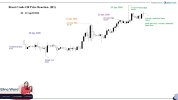
The chart below illustrates the movement of XAUUSD (Gold) from April 13 to April 17, 2026, based on 1-hour candlesticks.
Brent Crude Extends Rally Above $106 as Middle East Risk Premium Builds
Brent crude oil advanced sharply through the week of April 20–23, rebounding from early losses to multi-day highs as geopolitical tensions in the Middle East drove a sustained repricing of supply risk.
The week opened near $97.52 on April 20, with prices initially softening to a weekly low of $93.60 amid cautious sentiment and the absence of immediate disruption signals. However, the tone shifted decisively on April 21, when Brent reversed higher and broke through the $100 threshold, reaching an intraday high of $101.85.
The move marked a clear inflection point in market positioning. Rather than reacting to a single headline, oil markets began gradually pricing in rising uncertainty around Gulf shipping routes and ongoing U.S.–Iran tensions. This resulted in a steady, structured advance rather than a sharp, news-driven spike.
Momentum carried into April 22, with Brent extending gains to $102.89, before accelerating further into April 23. Prices climbed to a weekly high of $106.59, reflecting a +12.99 move (+13.88%) from the weekly low. The contract was last seen with a current candlestick open around $104.45 during the European session.
Technically, the rally remained well-supported, with a consistent sequence of higher highs and higher lows reinforcing bullish structure. The absence of aggressive pullbacks suggested the move was driven by sustained institutional positioning rather than short-term speculative flows.
The broader backdrop remained anchored in geopolitical developments, including unresolved negotiations between the United States and Iran, as well as persistent concerns around potential disruptions to oil flows in the Gulf. While no major oil company announcements materially shifted supply expectations during the period, the geopolitical risk premium continued to build.
Price Action Summary (20–23 April 2026)
Metric
Value
Weekly Open
97.52
Period High
106.59
Period Low
93.60
Latest Price (Apr 23 Open)
104.45
Total Move (Low → High)
+12.99 (+13.88%)
Net Move (Open → Latest)
+6.93 (+7.10%)
Total Range
12.99 (~1,299 ticks)
Summary
Oil markets once again demonstrated how strongly geopolitical developments influence price action. From a weekly low of $93.60 to a high of $106.59, Brent crude recorded a +12.99 move, equivalent to +13.88%, as markets steadily priced in rising uncertainty rather than reacting to a single event.
Geopolitics plays a critical role in oil because a large portion of global supply flows through politically sensitive regions, particularly the Middle East. Any escalation, disruption risk, or breakdown in diplomatic progress directly affects expectations around supply availability, prompting markets to reprice risk in real time.
In this case, the absence of a clear resolution, combined with ongoing tensions and shipping concerns, led to a sustained build-up of risk premium. The result was a structured upward move, highlighting how oil markets are driven not just by actual disruptions, but by the evolving probability of them.
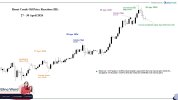
The chart below represents Brent crude oil price action on an H1 timeframe, covering the period from April 20 to the current movement on April 23, 2026.
XAUUSD Declines −3.77% from Peak as Oil Shock, Rising Yields, and Fed Expectations Trigger Gold Repricing
Introduction
XAUUSD (Gold vs U.S. Dollar) serves as one of the world’s leading safe-haven assets, typically responding to shifts in geopolitical tensions, inflation expectations, Federal Reserve policy, Treasury yields, and broader macroeconomic sentiment. Between April 27 and April 29, 2026, gold initially benefited from geopolitical uncertainty surrounding escalating Middle East tensions, but market psychology quickly shifted. Rather than functioning purely as a defensive haven, gold became increasingly pressured by surging oil prices, inflation concerns, elevated Treasury yields, and expectations that the Federal Reserve would maintain restrictive monetary policy for longer.
Price Action Overview
Between April 27 and April 29, XAUUSD experienced a failed bullish extension followed by a decisive bearish repricing.
Price opened at 4692.94 on April 27 and initially advanced to a period high of 4729.96, reflecting an early upside extension of approximately +0.79%. However, bullish momentum failed to hold, and price reversed sharply lower as macroeconomic pressure intensified. Gold declined to a period low of 4551.54 before stabilizing near 4569.77 by April 29 at 12:00 GMT.
From its 27 April opening price of 4692.94 to the 29 April current open price of 4569.77, XAUUSD recorded a decline of 12,317 ticks (−2.62%), while the broader move from the period high of 4729.96 to the period low of 4551.54 reflected a deeper bearish repricing of 17,842 ticks (−3.77%).
Price Action Summary Table
Metric
Value
Period Open
4692.94
Period High
4729.96
Period Low
4551.54
Latest Price (Apr 29)
4569.77
Total Move (High → Low)
−17,842 ticks
Percentage Move
−3.77%
Net Move (Open → Latest)
−12,317 ticks
Net Percentage
−2.62%
Macro & Geopolitical Drivers
The move was driven primarily by macroeconomic repricing rather than pure safe-haven demand:
Geopolitical tensions (Middle East / Iran conflict)
Escalating regional tensions initially supported gold, but markets increasingly interpreted the crisis through the lens of oil supply disruption rather than direct haven demand.
Oil shock and inflation expectations
Brent crude surged above $111–$114 during the same period, intensifying inflation fears and increasing expectations that elevated energy costs could delay monetary easing.
Federal Reserve policy expectations
During the pre-meeting blackout period leading into April 29, U.S. 10-year Treasury yields remained elevated near 4.35%, keeping the opportunity cost of holding bullion relatively high and reinforcing bearish pressure on gold.
Treasury yields and real yields
Elevated nominal and real yields directly reduced gold’s attractiveness as a non-yielding asset.
U.S. dollar firmness
A moderately stronger dollar added secondary downside pressure, reinforcing bearish sentiment.
Positioning and technical liquidation
Heavy speculative long exposure combined with the break below key support zones likely accelerated systematic selling pressure.
Conclusion
Between April 27 and April 29, XAUUSD declined −3.77% from peak to trough, with a net move of −2.62% from open to the latest open level.
The move was driven primarily by macroeconomic repricing, as markets transitioned from viewing geopolitical instability as bullish for gold toward pricing it as an oil-driven inflation shock that strengthened yields, elevated the dollar, and reinforced expectations of prolonged restrictive monetary policy.
While the initial phase reflected safe-haven demand, the broader decline represented a contraction in gold’s defensive premium as oil, inflation, Treasury yields, and Federal Reserve expectations became the dominant drivers.
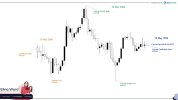
The chart below shows XAUUSD price action on a 1-hour candlestick chart covering the period from April 27 to April 29, 2026.
Geopolitical Supply Shock Reprices Global Oil as Brent Surges on Hormuz Crisis, Fed Inflation Risks, and Physical Market Tightening
Executive Summary
Between Monday, April 27, and Thursday, April 30, 2026, Brent crude experienced one of its sharpest four-day geopolitical repricings in recent years, climbing from an opening price of $107.36 on April 27 to a current intraday high of $120.33 on April 30 before moderating later in the session.
This move represented:
Brent Price Expansion:
From Monday Open (107.36) → Thursday Current Intraday High (120.33):
+12.97 points | +12.08%
From Monday Intraday Low (105.88) → Thursday Current Intraday High (120.33):
+14.45 points | +13.65%
The scale of this rally reflected a dramatic expansion in geopolitical risk premium rather than a conventional growth-driven commodity rally.
Brent’s rise was overwhelmingly driven by escalating fears of prolonged Middle East supply disruption, centered on the effective impairment of the Strait of Hormuz after stalled U.S.–Iran diplomacy, military escalation risk, and mounting concerns that a major share of global oil transit could remain structurally constrained longer than markets had initially anticipated.
While macroeconomic developments — particularly the Federal Reserve’s April 29 policy hold — influenced inflation expectations, Treasury yields, and the U.S. dollar, those forces were secondary. Instead, markets largely interpreted Fed hawkishness as confirmation that rising energy prices themselves were becoming an inflationary macro threat.
At the same time, a major U.S. crude inventory draw and record exports reinforced tightening physical fundamentals, validating Brent’s rally beyond geopolitics alone. The UAE’s decision to leave OPEC effective May 1 added longer-term strategic significance but had limited immediate influence on the week’s explosive price action.
Brent Price Action Snapshot (H1 Chart-Based)
Date
Session
Key Price Point
Brent Price
27 Apr 2026
Monday
Opening Price
107.36
27 Apr 2026
Monday
Intraday Low
105.88
28 Apr 2026
Tuesday
Intraday High
111.91
29 Apr 2026
Wednesday
Intraday High
117.70
30 Apr 2026
Thursday
Current Intraday High
120.33
Daily Breakdown: How Brent Repriced Higher
Monday, April 27 – Structural Risk Premium Begins
Brent opened at $107.36, briefly fell to $105.88, then reversed sharply higher as markets absorbed worsening geopolitical headlines.
Reports that U.S.–Iran negotiations had stalled and Strait of Hormuz shipping disruption remained unresolved triggered the week’s first major repricing wave.
Institutional Interpretation:
Markets began shifting from temporary geopolitical uncertainty to structural supply impairment.
This distinction mattered: Brent was no longer simply reacting to headlines — it was beginning to price duration.
Tuesday, April 28 – Diplomatic Weakness Deepens, Brent Reaches $111.91
Brent climbed further to $111.91, extending gains as traders increasingly assumed no near-term resolution to Middle East supply tensions.
Although the UAE’s planned OPEC departure generated headlines, markets largely treated it as strategically relevant for future supply discipline rather than a direct short-term catalyst.
Institutional Interpretation:
Immediate shipping disruption through Hormuz outweighed symbolic production policy shifts.
Wednesday, April 29 – Fed Hold, Inventory Shock, Brent Accelerates to $117.70
Wednesday marked the week’s decisive momentum phase.
Brent surged to $117.70 as three major catalysts aligned:
1. Federal Reserve Holds Rates at 3.50–3.75%
The Fed maintained rates but delivered a more inflation-sensitive tone, with internal hawkish dissents reinforcing concern that rising energy prices could sustain inflationary pressure.
2. Massive U.S. Inventory Draw
EIA data revealed a significant surprise crude draw and record exports, confirming that physical oil markets were tightening in real time.
3. Extended Blockade / Military Escalation Fears
Reports that Washington could intensify or prolong supply pressure on Iranian flows sharply expanded Brent’s geopolitical premium.
Institutional Interpretation:
This was the pivotal session where paper-market fear aligned with physical-market validation.
Thursday, April 30 – Brent Peaks at $120.33
Brent reached its highest point of the week at $120.33, completing a nearly vertical four-day repricing cycle.
This move reflected peak market anxiety over:
Prolonged Strait of Hormuz paralysis
U.S.–Iran diplomatic deadlock
Potential broader military intervention
Structural global supply shortages
At this stage, Brent was no longer trading primarily on conventional economic metrics.
Institutional Interpretation:
Oil had shifted from cyclical commodity pricing into geopolitical survival pricing.
Primary Drivers Behind Brent’s Surge
1. Strait of Hormuz Disruption (Dominant Driver)
As one of the world’s most critical oil chokepoints, any prolonged disruption immediately threatens global energy security.
2. Collapse of U.S.–Iran Diplomatic Momentum
Failed negotiations increased the market’s expectation that supply disruption would persist.
3. Physical Tightening (Inventory Draw + Record Exports)
The EIA draw transformed geopolitical fear into physical confirmation.
4. Federal Reserve Hawkish Hold (Secondary)
Rather than suppressing Brent, the Fed reinforced inflation fears connected to rising oil.
5. UAE Exit from OPEC (Medium-Term)
Strategically relevant, but not a major short-term price driver during acute supply crisis conditions.
Why Brent Rose Despite Hawkish Fed Conditions
Under ordinary circumstances:
Higher Rates + Stronger Dollar = Commodity Pressure
But this week was different.
Supply Shock > Monetary Headwind
When markets fear structural supply shortages, physical scarcity can overpower:
Higher yields
Stronger USD
Demand-side macro pressure
In this case, the Fed did not stop oil’s rise — it indirectly validated oil’s inflationary consequences.
Strategic Market Lesson
This week’s Brent rally was not a classic demand expansion story.
It was a geopolitical supply repricing event, where markets aggressively transitioned from pricing temporary disruption toward pricing prolonged strategic impairment of a critical global energy artery.
Bottom Line:
Brent rose because markets stopped asking whether disruption existed — and started pricing how long global oil supply could remain structurally constrained.
Forward-Looking Risk Factors
Brent’s next major directional phase will remain highly sensitive to:
Geopolitical:
Strait of Hormuz shipping functionality
U.S.–Iran negotiations
Military escalation headlines
Structural:
OPEC+ quota decisions
UAE post-OPEC production strategy
Macro:
U.S. inventory trends
Summer demand strength
Inflation and central bank policy
Final Conclusion
Between April 27 and April 30, Brent crude transformed from a rising commodity into a geopolitical macro asset.
The move from $107.36 → $120.33 (+12.08%) — or $105.88 → $120.33 (+13.65%) from the weekly low — reflected one dominant institutional reality:
When supply security is threatened at the geopolitical core, oil stops trading primarily on economics — and begins trading on strategic survival.
The chart below illustrates Brent Crude Oil’s 1-hour candlestick price reaction from April 27 through April 30, including the move into the current candlestick that opened at 08:00 AM GMT.
Apple Shares Rise on Record Q2 Earnings Beat and $100B Buyback Authorization
Apple Inc. (AAPL) shares climbed 5.14% during the late April trading window, fueled by a strong fiscal Q2 earnings beat, record iPhone and Services performance, and a new $100 billion share repurchase authorization.
Executive Summary
During the week of April 27–May 1, 2026, Apple Inc. (AAPL) exhibited a strong price reversal, rising 5.14% from its weekly low following the release of its fiscal second-quarter results. The company reported $111.2 billion in revenue, representing a 17% year-over-year increase, alongside earnings per share of $2.01, both exceeding Wall Street expectations.
While the week began with pre-earnings caution and broader market softness, the post-market announcement on April 30 served as the primary catalyst. CEO Tim Cook described the period as the “best March quarter ever,” highlighting record iPhone revenue and continued strength in Services.
Investor sentiment was further supported by Apple’s decision to authorize an additional $100 billion share repurchase program and increase its quarterly dividend by 4%, offsetting concerns related to rising memory costs and ongoing supply constraints for AI-capable Mac hardware.
Key Takeaways
Fiscal Q2 revenue reached $111.2B (+17% YoY), driven by record iPhone and Services performance.
Apple authorized a $100 billion share repurchase program and raised its quarterly dividend to $0.27.
Strong demand for AI-related use cases led to supply shortages in high-end Mac configurations.
Major financial institutions, including Morgan Stanley and Wells Fargo, raised price targets following the results.
Drivers Behind the Move
Fundamental Earnings Beat
Apple delivered a significant beat on both top and bottom lines, with revenue reaching $111.2 billion versus consensus estimates near $109.7 billion.
Capital Return Program
The authorization of a $100 billion buyback, alongside a dividend increase, supported investor sentiment and reinforced shareholder return expectations.
iPhone Momentum
Strong demand contributed to a record March-quarter performance for iPhone, reinforcing the strength of Apple’s core product segment.
AI-Driven Hardware Demand
Elevated demand for AI-related Mac hardware outpaced production capacity, signaling continued strength in the upgrade cycle while contributing to short-term supply constraints.
Price Action Summary Table (Apr 27 – May 1, 2026)
Metric
Value
Period Open
266.43
Period High
287.14
Period Low
265.63
Period Close
280.13
Total Move (Low → High)
+21.51
Percentage Move
+8.10%
Net Move (Open → Close)
+13.70
Net Percentage
+5.14%
Macro Backdrop
Monetary Policy Stability
The Federal Reserve maintained interest rates on May 1, providing a stable environment for equities, particularly large-cap technology.
Yield Environment
U.S. 10-year Treasury yields remained near 4.3%, continuing to weigh on high-growth valuations, though Apple’s strong cash flow profile helped mitigate these pressures.
Outlook
Apple’s late-April rally reflected strong fundamental performance and effective capital allocation. The stock remained above its 50-day moving average following the earnings-driven move, with resistance observed near the 287–290 range.
While supply-chain constraints and rising input costs remain factors to monitor, continued demand across core products and services supports the current positioning.
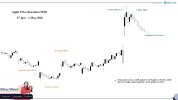
The chart below illustrates Apple’s price movement from April 27 to May 1, 2026, on a 30-minute candlestick timeframe.
Gold Slid as Fed Uncertainty, Oil-Driven Inflation Fears and Treasury Yields Pressured Bullion
XAUUSD declined sharply between 27 April and 1 May 2026 as elevated oil prices, rising Treasury yields and shifting Federal Reserve expectations triggered a broad macro repricing across precious metals markets
Introduction
XAUUSD (Gold vs U.S. Dollar) remained one of the most macro-sensitive assets during the week of 27 April to 1 May 2026, as markets reacted to escalating Middle East tensions, elevated oil prices, inflation fears, Treasury yield volatility and changing Federal Reserve expectations.
Gold initially benefited from safe-haven demand linked to intensifying geopolitical tensions involving Iran and fears surrounding energy-market disruption.
However, the narrative shifted rapidly. Rather than functioning purely as a defensive asset, gold increasingly traded as a macro-sensitive interest-rate instrument as investors focused on the inflationary consequences of elevated oil prices and the possibility that the Federal Reserve would maintain restrictive monetary policy for longer than previously expected.
Rising Treasury yields, firmer U.S. dollar conditions and weakening expectations for near-term rate cuts ultimately became the dominant drivers behind gold’s repricing cycle throughout the week.
Price Action Overview
Between 27 April and 1 May 2026, XAUUSD experienced a failed bullish extension followed by an aggressive bearish repricing cycle.
Gold opened at 4692.94 on 27 April before rallying toward an intraday high of 4729.96 as geopolitical uncertainty initially supported haven demand.
However, bullish momentum quickly deteriorated as markets increasingly interpreted the Middle East crisis through the lens of oil-driven inflation risk rather than direct defensive demand.
Selling pressure intensified into the 29 April Federal Reserve meeting and accelerated following Jerome Powell’s press conference, where markets interpreted the overall communication as less dovish than expected.
Gold later declined sharply toward an intraday low of 4510.19 on 29 April before stabilizing.
By 1 May, bullion partially recovered and closed near 4616.40 as easing oil-market fears and short-covering activity supported moderate rebound buying.
From the 27 April opening price of 4692.94 to the 1 May closing level of 4616.40, XAUUSD recorded a net decline of approximately 7,654 ticks (−1.63%).
Meanwhile, the broader move from the intraday high of 4729.96 to the intraday low of 4510.19 reflected a deeper bearish repricing cycle of approximately 21,977 ticks (−4.65%).
Price Action Summary (27 April – 1 May 2026)
Metric
Value
Date Range
27 Apr – 1 May 2026
Period Open
4692.94
Intraday High
4729.96
Intraday Low
4510.19
Period Close
4616.40
Total Move (High → Low)
−21,977 ticks
Percentage Move
−4.65%
Net Move (Open → Close)
−7,654 ticks
Net Percentage
−1.63%
What Drove the Move
Oil Prices and Inflation Concerns
The dominant driver behind gold’s reversal was the market’s reassessment of inflation risk linked to elevated oil prices.
As tensions involving Iran escalated, markets feared prolonged disruption across Middle East energy supply chains. Rising crude prices intensified concerns that inflation pressures could remain elevated longer than expected.
Rather than supporting gold through haven demand alone, the geopolitical crisis indirectly pressured bullion by reinforcing expectations that interest rates would stay elevated for longer.
Federal Reserve and Treasury Yield Pressure
The 29 April FOMC meeting became the central macro catalyst of the week.
Although the Federal Reserve kept rates unchanged at 3.50%–3.75%, investors interpreted Jerome Powell’s comments as relatively cautious regarding inflation risks tied to geopolitical instability and energy markets.
Markets subsequently reduced expectations for aggressive near-term rate cuts.
At the same time, elevated Treasury yields increased the opportunity cost of holding non-yielding assets such as gold, while a firmer U.S. dollar added additional bearish pressure on bullion.
Macro Data Reinforced the Higher-for-Longer Narrative
Stronger consumer confidence figures, resilient GDP data and elevated inflation readings reinforced expectations that restrictive monetary policy conditions could remain in place longer than previously anticipated.
Combined with the oil-driven inflation pressure, the broader macro environment further pressured precious metals markets.
Recovery Phase After 1 May
Following the 1 May close near 4616.40, XAUUSD later staged a strong recovery into 6 May.
By 6 May at 10:00 AM GMT, gold had rebounded toward approximately 4701.81.
The recovery reflected a rebound of roughly 8,541 ticks (+1.85%) from the 1 May closing level.
The move higher was supported by partial stabilization in geopolitical sentiment, softer oil-market fears and renewed dip-buying demand after the aggressive selloff earlier in the week.
Recovery Movement Summary (1 May – 6 May 2026)
Metric
Value
Date Range
1 May – 6 May 2026
1 May Closing Price
4616.40
Current Opening Price (6 May 2026)
4701.81
Recovery Move
+8,541 ticks
Recovery Percentage
+1.85%
Conclusion
Gold’s movement between 27 April and 1 May 2026 reflected a major shift in market psychology as XAUUSD recorded a sharp −4.65% peak-to-trough repricing cycle and ended the week lower by −1.63%.
While geopolitical instability initially supported traditional haven demand, the dominant narrative quickly shifted toward persistent inflation concerns, elevated Treasury yields, firmer dollar conditions and reduced expectations for rapid Federal Reserve easing, which ultimately pressured bullion markets throughout the week.
Following the selloff phase, XAUUSD later stabilized and recovered between 1 May and 6 May, rebounding +1.85% as oil-market fears eased, geopolitical sentiment partially stabilized and dip-buying activity returned to precious metals markets.
The chart below shows XAUUSD price action on a 1-hour candlestick chart covering the period from 27 April to 6 May 2026.
Brent Crude Spiked on Hormuz Risk Before Sliding as Trump-Iran Deal Hopes Eased Oil Fears
Brent crude moved sharply between 4 May and 7 May 2026 as the market shifted from pricing Middle East supply disruption to pricing a potential easing of Strait of Hormuz risks.
Introduction
Brent crude oil remained highly sensitive to Middle East headlines between Monday 4 May and Thursday 7 May 2026, as markets reacted to Iran-related supply risks, the Strait of Hormuz standoff, U.S. military activity, Trump administration comments, inventory pressure and renewed hopes for a possible U.S.–Iran agreement.
The period began with a strong risk-premium rally as fears grew that disruption around the Strait of Hormuz could tighten global energy supply. However, that bullish pressure quickly reversed after markets began pricing in the possibility of a gradual reopening of the waterway and a diplomatic breakthrough between the United States and Iran.
Price Action Overview
Between 4 May and 7 May 2026, Brent crude initially rallied before entering a sharp bearish repricing cycle.
Brent opened the period near 112.94 on 4 May and advanced to a weekly high of 120.05, marking an early upside move of approximately +6.30% as geopolitical risk supported oil prices.
However, the rally failed to hold. Selling pressure intensified after reports of progress toward a potential U.S.–Iran agreement reduced fears of prolonged disruption around the Strait of Hormuz.
By 6 May, Brent had fallen to an intraday low of 101.10, representing a peak-to-trough decline of approximately −15.79% from the weekly high.
By 7 May at 10:00 AM GMT, Brent traded near a current open price of 103.13, leaving the market down approximately −8.69% from the 4 May opening level, while still rebounding about +2.01% from the 6 May intraday low.
Price Action Summary: 4 May – 7 May 2026
Metric
Value
Date Range
4 May – 7 May 2026
Period Open
112.94
Weekly High
120.05
Intraday Low
101.10
Current Open
103.13
Open → Weekly High
+6.30%
Weekly High → Intraday Low
−15.79%
Open → Current Open
−8.69%
Intraday Low → Current Open
+2.01%
What Drove the Move
Strait of Hormuz Risk Drove the Initial Rally
The early move higher was driven by supply-risk pricing around the Strait of Hormuz. Reports of attacks involving ships in the Middle East Gulf and UAE energy infrastructure increased fears that disruption around one of the world’s most important energy chokepoints could deepen.
Reuters reported that crude prices had surged and slumped in line with headlines surrounding the U.S.–Iran war, while the disruption around Hormuz continued affecting physical refined-fuel flows across Asia. Reuters also noted that roughly 20% of the world’s crude and refined products had moved through the Strait of Hormuz before the closure.
That made the strait the central risk point for Brent. Any sign of deeper disruption raised fears of tighter crude flows, higher freight risk, insurance pressure and broader supply instability.
Oil Eased as Markets Looked Past Immediate Escalation
On 5 May, oil prices began easing even though tensions remained elevated. The move marked the first major shift in tone as traders started reducing part of the panic premium that had built into crude after the earlier supply-risk rally.
The market still remained concerned about disruption, but the reaction showed that traders were no longer pricing only immediate escalation risk.
Trump’s Project Freedom Pause Changed the Market Tone
The market narrative shifted further after Donald Trump announced that the United States would temporarily pause Project Freedom, the operation guiding vessels through the Strait of Hormuz.
This came before Trump said “great progress” had been made toward a deal with Iran.
The pause mattered because Project Freedom had been tied directly to the movement of stranded vessels through one of the world’s most important energy chokepoints. The Guardian reported that Trump put Project Freedom on hold so he could work on a deal with Tehran, which helped shift the market focus from military escalation toward diplomacy.
“Great Progress” With Iran Triggered a Risk-Premium Unwind
After the Project Freedom pause, oil selling accelerated as Trump signaled progress toward a potential Iran agreement.
The Guardian reported that Brent fell sharply after Trump softened his tone and spoke of “great progress” toward a final agreement with Iran, while separate reports showed oil prices falling on hopes that the Strait of Hormuz could reopen.
The selloff reflected a major shift in market psychology. Traders began pricing the possibility that even a partial agreement could lead to a gradual reopening of the Strait of Hormuz and reduce the geopolitical premium embedded in crude prices.
This helped drive Brent into a sharp bearish repricing phase, with the broader peak-to-trough movement reaching approximately −15.79%.
Inventory Draws Limited the Bearish Case
Even though peace-deal optimism pressured Brent, the physical supply picture remained tight.
Reuters reported that U.S. crude inventories fell by 2.3 million barrels to 457.2 million barrels in the week ended 1 May, while gasoline and distillate stocks also declined.
That helped explain why Brent remained volatile rather than moving in a straight line lower. The market was no longer pricing only supply disruption, but it was also not fully convinced that physical flows would normalize immediately.
Conclusion
Between 4 May and 7 May 2026, Brent crude shifted from a geopolitical risk rally into a sharp peace-deal repricing cycle.
The initial rally was driven by fears that Iran-related attacks and Strait of Hormuz disruption could tighten global crude supply. However, the move reversed after the United States paused Project Freedom and Trump later signaled progress toward a potential Iran agreement, reducing the immediate war-risk premium in oil.
By 7 May at 10:00 AM GMT, Brent remained down approximately −8.69% from the 4 May opening level, despite rebounding +2.01% from the 6 May intraday low. The broader movement showed that traders were no longer pricing only disruption risk, but also the possibility that diplomacy could gradually ease pressure on one of the world’s most important energy chokepoints.
The chart below shows Brent Crude Oil price movement on a 1-hour candlestick chart from 4 May to 7 May 2026.e.
Intel CFD Rallied Sharply as Apple Foundry Hopes Fueled a 26% Weekly Gain
Intel CFD Stock Price Reaction: 4–8 May 2026
Intel CFD delivered a strong bullish reaction during the week of 4–8 May 2026, moving from an early-week dip into a sharp upside breakout by the end of the period. According to the CFD chart, price opened at 98.65 on 4 May, briefly moved lower to a weekly low of 95.55, then reversed strongly as buyers stepped back into the market.
The first major shift in sentiment came after reports said Apple had held exploratory discussions with Intel and Samsung about producing main processors for its devices in the United States. The talks were described as early-stage, but they gave the market a fresh reason to focus on Intel’s foundry business and its potential role in U.S.-based chip manufacturing.
Intel also entered the week with a stronger earnings backdrop. The company had recently reported Q1 2026 revenue of $13.6 billion, up 7% year-over-year, with non-GAAP EPS of $0.29, while guiding for Q2 2026 revenue of $13.8 billion to $14.8 billion. That helped support confidence around Intel’s turnaround narrative before the sharp price reaction developed further.
The strongest move appeared on 8 May 2026, when reports said Intel had reached a preliminary agreement to manufacture some chips for Apple devices. This triggered a major bullish reaction, with Intel shares reportedly rising around 15% as investors priced in the potential impact of a high-profile foundry partnership.
However, it is important to note that the Apple-related developments were reported market stories, not officially confirmed announcements from Intel or Apple at the time. Therefore, the price reaction reflected investor response to reported developments and foundry expectations, rather than a fully confirmed commercial agreement. Article 1 also noted that official INTC market prices were slightly different from the CFD chart values, which is normal because CFD pricing can vary slightly from the underlying listed stock.
On the CFD chart, this buying pressure pushed Intel to a weekly high of 130.47 before price cooled slightly and closed at 124.61. Even after the pullback from the high, the weekly structure remained strongly positive, as price closed far above both the opening level and the early-week low.
Price Action Summary
Movement
From
To
Point Move
Tick Move*
% Move
Open to Close Net Move
98.65
124.61
+25.96
+2,596 ticks
+26.31%
Weekly Low to Weekly High
95.55
130.47
+34.92
+3,492 ticks
+36.55%
Final Takeaway
Intel CFD opened the week at 98.65, dropped to a weekly low of 95.55, then rallied sharply to a weekly high of 130.47 before closing at 124.61. From open to close, the stock gained +25.96 points, equal to +26.31%. From the weekly low to the weekly high, the full movement reached +34.92 points, equal to +36.55%..
Overall, Intel CFD’s strong move from 4–8 May 2026 was mainly driven by renewed confidence in Intel’s foundry story, a stronger earnings backdrop, and Apple-related chip manufacturing reports. The explanation is clear and market-relevant, but the Apple catalyst should be understood as a reported development that influenced sentiment, not as an officially confirmed deal at the time.
The chart below illustrates Intel Stock’s price action on a 30-minute timeframe during the trading period from 4 May to 8 May 2026.
BTCUSD Rallied as U.S.–Iran Headlines and ETF Flows Fueled a 3.69% Weekly Gain
BTCUSD Price Reaction: 4–10 May 2026
BTCUSD delivered a positive weekly reaction during the period of 4–10 May 2026, moving from an early-week low into a strong midweek rally before closing the week above its opening level. According to the BTCUSD H1 chart, price opened at 78,553.86 on 4 May, briefly moved lower to a weekly low of 78,184.68, then reversed as buyers stepped back into the market.
One major reported catalyst behind the move was geopolitical sentiment. Bitcoin rallied as optimism around a possible U.S.–Iran deal helped ease energy-market concerns and improved broader risk appetite. Market reports noted that BTC reached the $82,700 area during the move, while short-covering pressure, stronger spot demand, and a weaker U.S. dollar helped accelerate the reaction. Reuters also reported that U.S. and global stocks jumped on 5 May while oil prices eased, even as markets continued to monitor U.S.–Iran tensions around the Strait of Hormuz.
Bitcoin-specific flows also played an important role. U.S. spot Bitcoin ETFs recorded strong inflows early in the week, with Farside data showing +$532.3 million on 4 May, +$467.3 million on 5 May, and +$46.2 million on 6 May. These inflows supported the move higher and helped explain why BTCUSD pushed toward its weekly high.
The strongest upside point appeared on 6 May 2026, when BTCUSD reached a weekly high of 82,827.39. This move aligned with improving risk sentiment, strong ETF demand, short-covering momentum, and the breakout above the psychological 80,000 level.
However, the rally did not continue in a straight line. After reaching the weekly high, BTCUSD pulled back into 8 May, touching an intraday low of 79,163.26. This cooling phase was linked to profit-taking, weaker ETF-flow momentum, and renewed macro caution. Farside data showed ETF flows turned negative later in the week, with -$268.5 million on 7 May and -$145.7 million on 8 May.
Macro news also influenced the market. On 8 May, the U.S. Bureau of Labor Statistics reported that nonfarm payroll employment rose by 115,000 in April, while unemployment stayed at 4.3%. The labor-market reading reduced urgency for near-term Fed rate cuts, adding a pressure point for risk assets. The Federal Reserve had also kept the federal funds target range at 3.50%–3.75% at its 29 April meeting, keeping monetary policy restrictive.
Another Bitcoin-related support came from U.S. crypto regulation headlines. Reuters reported that the Senate Banking Committee was set to consider the CLARITY Act, a bill designed to create a clearer regulatory framework for cryptocurrency and clarify financial regulators’ jurisdiction over digital assets. This added a supportive regulatory backdrop, although it was not the main driver of the weekly price move.
On the BTCUSD chart, buying pressure returned after the 8 May pullback, and price recovered into 10 May before closing at 81,452.22. Even though BTCUSD failed to hold the full weekly high, the structure remained positive because price closed well above both the opening level and the weekly low.
Price Action Summary
Movement
From
To
Point Move
Tick Move*
% Move
Open to Close Net Move
78,553.86
81,452.22
+2,898.36
+289,836 ticks
+3.69%
Weekly Low to Weekly High
78,184.68
82,827.39
+4,642.71
+464,271 ticks
+5.94%
Final Takeaway
BTCUSD opened the week at 78,553.86, dropped to a weekly low of 78,184.68, then rallied to a weekly high of 82,827.39 before closing at 81,452.22. From open to close, Bitcoin gained +2,898.36 points, equal to +3.69%. From the weekly low to the weekly high, the full movement reached +4,642.71 points, equal to +5.94%.
Overall, BTCUSD’s move from 4–10 May 2026 was mainly supported by early-week U.S.–Iran deal optimism, strong spot Bitcoin ETF inflows, and short-covering momentum. Later ETF outflows, profit-taking, stronger U.S. labor data, and Fed-rate expectations limited follow-through after the weekly high.
The chart below illustrates BTCUSD’s price action on a 1-hour timeframe during the trading period from 4 May to 10 May 2026.
XAUUSD Turned Volatile as Iran War Risk Clashed With Hot U.S. Inflation and Fed Rate Pressure
XAUUSD Gold Price Reaction: 11–13 May 2026
XAUUSD moved through a highly volatile trading structure between 11 May and 13 May 2026, as gold was pulled between safe-haven demand from Middle East geopolitical risk and selling pressure from stronger U.S. inflation data. According to the chart, gold opened at 4697.82 on 11 May, dropped to an early intraday low of 4648.04, then recovered as buyers returned to the market.
The first major pressure on gold came from renewed inflation concerns linked to the Iran war and elevated oil prices. Reuters reported that weak progress in U.S.–Iran peace negotiations pushed oil prices higher and raised concerns that inflation could keep interest rates higher for longer. This mattered for gold because higher interest-rate expectations tend to pressure non-yielding assets such as bullion.
The strongest upside reaction appeared on 12 May 2026, when XAUUSD pushed to a current weekly high of 4773.32. This move aligned with safe-haven demand as traders continued to monitor the Iran conflict, the Strait of Hormuz disruption, and broader geopolitical uncertainty. However, the move failed to hold as the market shifted focus back toward inflation and Federal Reserve policy pressure.
The key macro catalyst was the April U.S. CPI report. The Bureau of Labor Statistics reported that CPI rose 0.6% month-on-month in April and 3.8% year-on-year, while core CPI rose 2.8% year-on-year. Energy prices rose 17.9% over the year, confirming that energy-market stress had fed directly into inflation.
That inflation reading strengthened the higher-for-longer Fed narrative. The Federal Reserve had already kept the target range for the federal funds rate at 3.50%–3.75% on 29 April, while noting that inflation remained elevated partly because of higher global energy prices and that Middle East developments had created a high level of uncertainty.
By 13 May 2026, XAUUSD had pulled back from the weekly high and opened the current 08:00 GMT candlestick at 4702.46. Reuters reported that gold slipped as firm U.S. inflation data reduced hopes for Fed rate cuts, with spot gold down around 0.3% near $4,701.98 per ounce.
It is important to note that gold’s movement was not driven by one single event. The chart reflected a two-sided market reaction: geopolitical risk supported gold as a safe-haven asset, while stronger inflation, higher oil prices, firmer yields, and reduced Fed rate-cut expectations limited the upside. Reuters also reported that the U.S. Energy Information Administration expected the Strait of Hormuz disruption to remain a key pressure point through May, keeping energy-market risk in focus.
On the chart, this conflict produced a sharp rally to 4773.32, followed by a reversal toward the current weekly low of 4638.34, before price stabilized near the 4702.46 reference level.
Price Action Summary
Movement
From
To
Point Move
Tick Move*
% Move
Visual Move
Open to Current Reference Move
4697.82
4702.46
+4.64
+464 ticks
+0.10%
+4.64 ↗ / +0.10% ↗
Weekly High to Current Weekly Low
4773.32
4638.34
-134.98
-13,498 ticks
-2.83%
-134.98 ↘ / -2.83% ↘
Final Takeaway
XAUUSD opened the period at 4697.82, dropped to an early intraday low of 4648.04, then rallied sharply to a current weekly high of 4773.32 before reversing lower. From the weekly high to the current weekly low of 4638.34, gold fell -134.98 points, equal to -2.83%. From the original open to thecurrent08:00 GMT candlestick open at 4702.46, gold was only slightly higher by +4.64 points, showing how much of the safe-haven rally had been retraced.
Overall, XAUUSD’s movement from 11 May to 13 May 2026 was mainly driven by the clash between Iran-war safe-haven demand and U.S. inflation-driven Fed pressure. Gold initially benefited from geopolitical uncertainty, but stronger CPI data, elevated oil prices, firmer yields, and reduced rate-cut expectations prevented the rally from holding.
The chart below illustrates XAUUSD price action on a 1-hour timeframe during the trading period from 11 May to 13 May 2026.
Brent Crude Oil Turned Volatile as Hormuz Supply Risk Clashed With U.S. Inflation Pressure
Brent Crude Oil Price Reaction: 11–14 May 2026
The chart below illustrates the movement of Brent Crude Oil on a 1-hour candlestick timeframe from 11 to 14 May 2026.
Brent Crude Oil moved through a volatile trading structure between 11 May and 14 May 2026, as the market was pulled between Middle East supply-risk pricing, inflation pressure, and uncertainty around diplomatic progress. According to the chart, Brent opened at 108.17 on 11 May, dropped to a period low of 106.06, then rallied sharply as buyers returned to the market.
The first major support for Brent came from renewed concerns around the Iran war and the Strait of Hormuz disruption. Reuters reported that oil prices rose as U.S.-Iran negotiations remained fragile, while Tehran emphasized sovereignty over the Strait of Hormuz, a route that handles about one-fifth of global oil and liquefied natural gas flows.
The strongest upside reaction appeared on 12 May 2026, when Brent pushed to the chart’s current period high of 111.47. This move aligned with fading hopes for peace in the Middle East and continued concern that restricted physical flows through the Strait of Hormuz could keep crude prices supported. Reuters also reported that both major oil benchmarks had gained nearly 2.8% on the previous session as supply concerns remained in focus.
However, the move failed to hold near the high. By 13 May, Brent started to pull back as traders shifted attention toward U.S. inflation pressure, possible interest-rate hikes, and demand concerns. Reuters reported that oil contracts fell on Wednesday as investors worried that higher fuel prices could spur inflationary pressure and raise the risk of U.S. rate hikes.
By 14 May 2026, Brent had stabilized below the 12 May high. The chart showed the current 11:00 AM GMT candlestick opening at 108.28. On the same day, Reuters reported that oil prices were flat after earlier gains faded, while markets also watched the Trump-Xi meeting in Beijing for any signs of diplomatic progress around Iran, China’s role, and keeping energy flows through the Strait of Hormuz open.
It is important to note that Brent’s movement was not driven by one single event. The chart reflected a two-sided market reaction: supply-route disruption supported crude prices, while inflation pressure, interest-rate concerns, and uncertainty over diplomatic progress limited the upside. The IEA also reported that global observed oil inventories fell by 129 million barrels in March and another 117 million barrels in April, confirming that the market backdrop remained tight.
On the chart, this conflict produced a sharp rally from 106.06 to 111.47, followed by a reversal toward the 108.28 reference level by 14 May.
Price Action Summary
Movement
From
To
Price Move
Tick Move*
% Move
Visual Move
Open to Current Reference Move
108.17
108.28
+0.11
+11 ticks
+0.10%
+0.11 ↗ / +0.10% ↗
Period Low to Period High
106.06
111.47
+5.41
+541 ticks
+5.10%
+5.41 ↗ / +5.10% ↗
Period High to Current Reference
111.47
108.28
-3.19
-319 ticks
-2.86%
-3.19 ↘ / -2.86% ↘
Final Takeaway
Brent Crude Oil opened the period at 108.17, dropped to an early low of 106.06, then rallied sharply to a current period high of 111.47 before reversing lower. From the period low to the period high, Brent gained +5.41 points, equal to +5.10%. From the high to the current 14 May 11:00 AM GMT reference level at 108.28, Brent fell -3.19 points, equal to -2.86%, showing that a large part of the geopolitical-risk rally had been retraced.
Overall, Brent’s movement from 11 May to 14 May 2026 was mainly driven by the clash between Strait of Hormuz supply risk and macro pressure from inflation and interest-rate concerns. Crude initially benefited from geopolitical uncertainty, but inflation concerns, possible Fed rate pressure, and uncertainty over diplomatic progress prevented the rally from holding near the 111.47 high.
The chart below illustrates the movement of Brent Crude Oil on a 1-hour candlestick timeframe from 11 to 14 May 2026.
Apple Climbed as Strong Earnings, Buybacks, and China Optimism Outweighed Inflation Pressure
Apple Price Reaction: 11–15 May 2026
Apple moved through a strong upward trading structure between 11 May and 15 May 2026, as the stock was supported by company-specific momentum while the broader market faced inflation and geopolitical pressure. According to the chart, Apple opened at 292.17 on 11 May, dropped to a period low of 290.16, then rallied sharply as buyers returned to the stock.
The first upside reaction appeared on 12 May 2026, when Apple reached an intraday high of 295.16. This move came despite a difficult macro backdrop, as U.S. CPI rose 0.6% month over month and 3.8% year over year in April, while Treasury yields climbed and U.S. stock indexes weakened after the inflation release.
The strongest continuation appeared on 13 May 2026, when Apple pushed to an intraday high of 300.84. This move aligned with company-specific support from Apple’s latest fiscal Q2 results. Apple reported revenue of $111.2 billion, up 17% year over year, while diluted EPS rose 22% to $2.01. The company also reported March-quarter records for total revenue, iPhone revenue, and EPS, while Services revenue reached a new all-time high.
Investor sentiment was also supported by Apple’s capital-return announcement. Apple declared a $0.27 per-share dividend, payable on 14 May 2026, to shareholders of record as of 11 May 2026. More importantly, the board authorized an additional $100 billion share repurchase program, which helped reinforce confidence in the stock during a macro-heavy week.
Another supportive factor came from the China narrative. Reuters reported that Apple CEO Tim Cook joined President Donald Trump’s China visit alongside other major U.S. executives. For Apple, this mattered because China remained central to both its manufacturing chain and consumer market exposure.
However, the China visit was not a clean bullish catalyst. Reuters later reported that America’s most powerful CEOs had little to show from the trip, with limited clarity around confirmed commercial outcomes. This meant Apple’s China-related support was more about sentiment, market-access optimism, and investor positioning than a confirmed Apple-specific breakthrough.
Macro pressure worked against the stock during the same period. On 13 May, U.S. PPI rose 1.4% month over month and 6.0% year over year, its largest monthly gain since March 2022 and biggest annual rise since December 2022. Reuters linked the inflation pressure partly to the Iran war and disruption around the Strait of Hormuz, which kept bond yields and rate concerns in focus.
By 15 May 2026, Apple reached the chart’s highest point at 303.11 before pulling back slightly and closing at 300.34. The chart therefore showed a strong rally from 290.16 to 303.11, followed by a modest reversal into the final close.
It is important to note that Apple’s movement was not driven by one single event. The chart reflected a two-sided market reaction: strong earnings, iPhone and Services momentum, the $100 billion buyback, and China-related optimism supported the price, while hot CPI, hot PPI, higher yields, Iran-related energy inflation, and limited clarity from the Trump-Xi summit prevented the rally from extending further.
Apple’s broader investment story also remained part of the background. Earlier in 2026, Apple said it was expanding U.S. manufacturing, including Mac mini production in Houston, advanced AI server production, and plans to purchase well over 100 million advanced chips from TSMC’s Arizona facility. This was not a fresh 11–15 May catalyst, but it reinforced Apple’s supply-chain and investment narrative.
On the chart, this conflict produced a rally from 290.16 to 303.11, followed by a partial pullback toward the 300.34 closing reference level by 15 May.
Price Action Summary
Movement
From
To
Price Move
Tick Move*
% Move
Visual Move
Open to Weekly Close
292.17
300.34
+8.17
+817 ticks
+2.80%
+8.17 ↗ / +2.80% ↗
Period Low to Period High
290.16
303.11
+12.95
+1,295 ticks
+4.46%
+12.95 ↗ / +4.46% ↗
Final Takeaway
Apple opened the period at 292.17, dropped to an early low of 290.16, then rallied strongly to a period high of 303.11 before closing at 300.34. From the period low to the period high, Apple gained +12.95 points, equal to +4.46%. From the high to the final 15 May close, Apple fell -2.77 points, equal to -0.91%, showing that most of the weekly rally remained intact.
Overall, Apple’s movement from 11 May to 15 May 2026 was mainly driven by the clash between strong company-specific support and heavy macro pressure. Earnings strength, iPhone and Services momentum, the $100 billion buyback, and optimism around Tim Cook’s presence in China helped Apple move higher. At the same time, hot CPI, hot PPI, higher Treasury yields, Iran-related energy inflation, and limited clarity from the Trump-Xi summit prevented the rally from extending further.
The chart below illustrates the movement of Apple Inc. on a 1-hour candlestick timeframe from 11 to 15 May 2026.
BTCUSD Turned Lower as Inflation Pressure, ETF Outflows, and Geopolitical Risk Overpowered Crypto Regulation Optimism
BTCUSD Price Reaction: 11–17 May 2026
BTCUSD moved through a volatile but clearly bearish trading structure between 11 May and 17 May 2026, as the market was pulled between crypto-regulation optimism, U.S. inflation pressure, rising Treasury yields, spot Bitcoin ETF outflows, and renewed geopolitical risk. According to the chart, Bitcoin opened at 82,241.49 on 11 May, briefly reached a period high of 82,361.68, then dropped sharply to a period low of 76,715.78 before closing the period at 77,191.32 on 17 May.
The first major pressure point came from macroeconomics. The U.S. Consumer Price Index report showed that inflation rose 0.6% in April, while the annual inflation rate increased to 3.8%. Energy prices rose 3.8% month-on-month and 17.9% year-on-year, which kept inflation risk firmly in focus for markets. For BTCUSD, this mattered because hotter inflation reduced risk appetite and strengthened the case for a higher-rate environment.
Inflation pressure strengthened further after the U.S. Producer Price Index report. The BLS reported that final demand prices rose 1.4% in April and 6.0% over the previous 12 months, while final demand goods increased 2.0%. More than three-quarters of the goods increase was linked to a 7.8% jump in final demand energy, with gasoline rising 15.6%. This reinforced the view that energy-driven inflation was still feeding into the broader economy.
The bond market also confirmed the tighter macro backdrop. The Federal Reserve’s H.15 data showed the U.S. 10-year Treasury yield rising from 4.42% on 11 May to 4.59% on 15 May, while the 2-year yield rose from 3.95% to 4.09% across the same period. Rising yields weighed on high-volatility assets because they made the broader risk environment less supportive for speculative markets such as crypto.
Geopolitics added another layer of pressure through the energy channel. Reuters reported that oil prices settled almost 3% higher on 11 May after President Donald Trump said the Iran ceasefire was “on life support,” leaving the Strait of Hormuz largely closed with no clear end to the war. This mattered for Bitcoin because the oil shock fed directly into inflation concerns, which then pressured risk assets through the rates channel.
Bitcoin-specific news was mixed. On the positive side, the U.S. Senate Banking Committee advanced long-awaited crypto legislation on 14 May, a milestone for digital-asset regulation. Reuters reported that the bill would create cryptocurrency regulations and proceed to the full Senate after receiving support from two Democrats. This helped explain why BTCUSD attempted to stabilize and rebound during the middle of the week.
However, that positive reaction failed to hold because spot Bitcoin ETF flows turned sharply negative. Farside Investors data showed U.S. spot Bitcoin ETF flows of +$27.2M on 11 May, followed by -$233.2M on 12 May, -$630.4M on 13 May, +$131.3M on 14 May, and -$290.4M on 15 May. Across the trading week, this created nearly $1.0B in net ETF outflows, which directly weakened institutional demand for Bitcoin.
It is important to note that BTCUSD’s movement was not driven by one single event. The chart reflected a two-sided market reaction: crypto-regulation progress supported sentiment temporarily, while inflation pressure, rising Treasury yields, oil-linked geopolitical risk, and heavy ETF outflows dominated the broader weekly direction.
On the chart, this conflict produced a move from the 82,361.68 period high down to the 76,715.78 period low, followed by a 17 May close at 77,191.32.
Price Action Summary
Movement
From
To
Price Move
Point Move
% Move
Visual Move
Open to Close Move
82,241.49
77,191.32
-5,050.17
-5,050.17 pts
-6.14%
-5,050.17 ↘ / -6.14% ↘
Period High to Period Low
82,361.68
76,715.78
-5,645.90
-5,645.90 pts
-6.86%
-5,645.90 ↘ / -6.86% ↘
Final Takeaway
BTCUSD opened the period at 82,241.49, briefly reached a period high of 82,361.68, then reversed sharply to a period low of 76,715.78 before closing at 77,191.32 on 17 May 2026. From the 11 May open to the 17 May close, Bitcoin fell -5,050.17 points, equal to -6.14%. From the period high to the period low, BTCUSD dropped -5,645.90 points, equal to -6.86%, showing that the week’s structure was clearly bearish despite temporary rebound attempts.
Overall, BTCUSD’s movement from 11 May to 17 May 2026 was mainly driven by the clash between crypto-regulation optimism and a heavier macro backdrop. The CLARITY Act helped Bitcoin sentiment temporarily, but hotter U.S. inflation data, rising Treasury yields, oil-linked geopolitical risk, and nearly $1B in weekly U.S. spot Bitcoin ETF outflows prevented the recovery from holding.
The strongest driver was macroeconomics, followed by Bitcoin ETF outflows. Geopolitical risk acted as an inflation amplifier through oil prices, while Bitcoin-specific regulation news was supportive but short-lived.
The chart below illustrates the movement of BTCUSD on a 1-hour candlestick timeframe from 11 to 17 May 2026.
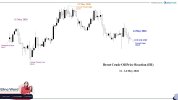
Brent Crude Oil Turned Volatile as U.S.–Iran Peace Hopes Clashed With Hormuz Supply Risk
Brent Crude Oil Price Reaction: 18–21 May 2026
Brent Crude Oil moved through a highly volatile trading structure as oil was pulled between Middle East supply-risk pricing, U.S.–Iran peace headlines, and tightening inventory conditions. According to the chart, Brent opened at 112.23 on 18 May, climbed to a current weekly high of 114.43, then reversed sharply toward a current weekly low of 104.59 on 20 May, before opening the current 08:00 GMT candlestick at 106.98 on 21 May.
The first major support for Brent came from renewed supply concerns linked to the Iran war and the Strait of Hormuz disruption. Reuters reported that oil rose around 3% on 18 May as supply-disruption fears outweighed reports that the U.S. could waive sanctions on Iranian crude during talks. The Strait of Hormuz remained the key risk point because it normally handled around 20% of global oil and LNG shipments.
The strongest downside reaction appeared on 20 May 2026, when Brent fell sharply as optimism increased around a possible U.S.–Iran agreement. Reuters reported that Brent settled at 105.02, down $6.26, or 5.63%, after President Trump said negotiations with Iran were in the “final stages.” This reduced the immediate geopolitical risk premium and matched the chart’s sharp decline toward 104.59.
The move lower was also supported by signs that limited tanker traffic was starting to move through the Strait of Hormuz. Reports showed that three supertankers carrying around 6 million barrels of Middle East crude were crossing the strait, which helped ease some short-term supply fears. However, this did not mean the route had fully normalized, and the market remained sensitive to any change in U.S.–Iran headlines.
Macro data did not explain the selloff by itself. In fact, U.S. inventory data was supportive for oil prices. Reuters reported that the United States withdrew a record 17.8 million barrels of crude from total inventories, including 7.86 million barrels from commercial stocks and 9.9 million barrels from the Strategic Petroleum Reserve. This showed that physical supply conditions remained tight even while Brent sold off on peace-deal optimism.
By 21 May 2026, Brent had rebounded from the weekly low and opened the current 08:00 GMT candlestick at 106.98. Reuters reported that oil recovered by more than 1% as traders reassessed uncertainty around the U.S.–Iran peace deal, while inventory drawdowns and unresolved Hormuz risks kept supply concerns active.
It is important to note that Brent’s movement was not driven by one single event. The chart reflected a two-sided market reaction: geopolitical risk and Middle East supply disruption supported oil early in the period, while U.S.–Iran peace optimism and limited tanker movement triggered a sharp risk-premium unwind.
Price Action Summary
Movement
From
To
Point Move
Tick Move*
% Move
Visual Move
Open to Current Reference Move
112.23
106.98
-5.25
-525 ticks
-4.68%
-5.25 ↘ / -4.68% ↘
Weekly High to Current Weekly Low
114.43
104.59
-9.84
-984 ticks
-8.60%
-9.84 ↘ / -8.60% ↘
Final Takeaway
Brent Crude Oil opened the period at 112.23, rallied to a current weekly high of 114.43, then reversed sharply to a current weekly low of 104.59 before stabilizing near the 106.98 reference level on 21 May. From the weekly high to the current weekly low, Brent fell -9.84 points, equal to -8.60%. From the original 18 May open to the current 08:00 GMT candlestick open, Brent was lower by -5.25 points, equal to -4.68%.
Overall, Brent’s movement from 18 May to 21 May 2026 was mainly driven by the clash between Middle East supply-risk pricing and U.S.–Iran peace-deal optimism. Oil initially remained supported by Hormuz disruption and tight inventories, but the rally failed to hold as peace headlines and limited tanker movement reduced the immediate geopolitical risk premium.
The chart below illustrates Brent Crude Oil price action on a 1-hour timeframe during the trading period from 18 May to the current 08:00 GMT session on 21 May 2026.